
Chef Juliette
Various Almond Preparations
Five almond preparations, one discipline: remove the skins cleanly, dry every kernel through, then cut, toast, or cloak it in pale caramel without letting its fragrant oils escape.
A cooking platform built around craft, culture, and the stories behind what we eat.

Created by Chef Juliette
Based on No. 2571, Tangerines à la Palikare, from Le Guide Culinaire (1907) by Auguste Escoffier
Saffron-gold entremets rice fills six tangerine shells and rises in a glazed citrus-clad dome at their center, a grand French dessert translated cleanly for the home table.
Tangerines à la Palikare (tangerines with saffron rice and apricot glaze) teaches that a cold molded dessert depends on texture, not force. The rice must be tender enough to cling together yet dry enough to release as a clean dome. Before you touch a pan, know the rule that decides the dish: skin the tangerine sections raw. Heat loosens their delicate flesh into threads, and no glaze can put them back.
The original assumed a pastry station with rice for entremets already prepared, apricot syrup waiting in a pot, a small dome mold, and a carved cushion made solely for presentation. One cook needs none of that scaffolding. A saucepan makes the rice, smooth apricot preserves become the syrup, a cereal bowl supplies the dome, and a handsome platter replaces the carved support. What stays is the dish itself: saffroned rice inside the peels, the same rice molded at the center, raw-skinned sections laid over it, and a clear apricot gloss.
Finished properly, the dome shines amber and tangerine-orange above a ring of filled fruit skins, generous enough to serve from the middle of the table. Take your time with the raw sections. Once their membranes come away cleanly, the rest is patient assembly, one cook, one stove, one evening.
Tangerines à la Palikare belongs to the composed entremets of Parisian grande cuisine, where molded sweet rice, preserved-fruit glazes, and whole citrus skins became edible table architecture. Its title uses the French palikare, borrowed from Greek for a brave young man and historically a fighter, an evocative name rather than evidence that the preparation came from Greece. The defining composition remains saffroned rice, raw-skinned tangerine flesh, and apricot syrup; the carved cushion was display work, not part of the flavor.
Quantity
6 (about 1½ lb / 680 g)
Quantity
½ cup (120 ml / 100 g)
Quantity
2 cups (480 ml / 490 g)
Quantity
Up to ¼ cup (60 ml / 62 g)
kept hot for adjustment
Quantity
½ cup (120 ml / 100 g)
Quantity
2 tablespoons (30 ml / 28 g)
divided
Quantity
⅛ teaspoon (0.6 ml / 0.1 g)
Quantity
⅛ teaspoon (0.6 ml / 0.8 g)
Quantity
½ cup (120 ml / 160 g)
Quantity
3 tablespoons (45 ml / 45 g)
| Ingredient | Quantity |
|---|---|
| medium seedless tangerines | 6 (about 1½ lb / 680 g) |
| short-grain white rice | ½ cup (120 ml / 100 g) |
| whole milk | 2 cups (480 ml / 490 g) |
| additional whole milk (optional)kept hot for adjustment | Up to ¼ cup (60 ml / 62 g) |
| granulated sugar | ½ cup (120 ml / 100 g) |
| unsalted butterdivided | 2 tablespoons (30 ml / 28 g) |
| saffron threads | ⅛ teaspoon (0.6 ml / 0.1 g) |
| fine sea salt | ⅛ teaspoon (0.6 ml / 0.8 g) |
| smooth apricot preserves | ½ cup (120 ml / 160 g) |
| water | 3 tablespoons (45 ml / 45 g) |
Wash and dry the tangerines. Slice a thin lid from each one, cutting parallel to the base so the open rims will sit flat when inverted. Slip a demitasse spoon between the white pith and the fruit, rotate the shell in your hand, and ease the sections out in two or three clusters without piercing the peel. Keep all six shells and steady them upright in a muffin tin. If you make a small nick, press a scrap of peel from the removed lid against it from inside; the chilled rice will hold the patch, and the opening will face downward at service.
Separate the tangerine sections over a bowl to catch their juice. With the tip of a very sharp paring knife, nick the membrane along the straight inner seam of each raw section, then peel it gently toward the curved outer edge. Remove any seeds and arrange the bare sections in a single layer. Do not blanch or poach them. Cooked tangerine flesh tears into threads, while the raw sections remain plump enough to tile the dome. If a few split, keep them for the lower part of the dome and cover their joins with whole sections. Ça se rattrape.
Bring a saucepan of water to a full boil, add the rice, and blanch it for 2 minutes. Drain thoroughly without rinsing. Blanching clears away excess surface starch while leaving enough behind to bind the finished entremets rice. Meanwhile, crumble the saffron into 2 tablespoons of the measured milk and let it stand for 10 minutes, until the milk turns deep yellow.
Bring the remaining measured milk and the salt just below a boil in a heavy saucepan. Stir in the blanched rice and saffron milk, lower the heat, and cook at the barest simmer for 22 to 28 minutes, stirring along the bottom every few minutes. Once the grains are completely tender, stir in the sugar and 1½ tablespoons (22 ml / 21 g) of the butter; sugar goes in now because adding it before the rice softens can keep the center stubbornly firm. Cook uncovered for another 3 to 5 minutes, until a spoon drawn through the rice leaves a path that closes slowly. If the rice tightens before it is tender, add the reserved hot milk one spoonful at a time. If it remains loose after the grains soften, keep it uncovered over gentle heat. Should the bottom catch, lift the clean rice into another pan without scraping up the scorched layer.
Let the rice cool for 10 minutes, just until warm and pliable. Spoon it into the six tangerine shells, pressing gently so there are no hollow pockets, and level each one at the rim. Coat a 1¼ to 1½ cup (300 to 360 ml) bowl with the remaining ½ tablespoon (8 ml / 7 g) butter. Pack the remaining rice into it, tap the bowl once against a folded towel to settle the rice, and smooth the top. Cover the rice surfaces directly and refrigerate the bowl and filled shells for at least 2 hours. Put them into the refrigerator promptly; cooked rice does not wait about on a warm counter.
Combine the apricot preserves and water in a small saucepan. Bring to a gentle simmer for 2 minutes, whisking until smooth, then press the mixture through a fine sieve. Let the syrup cool until it remains fluid but no longer feels hot. If it sets too thick to brush, loosen it with a teaspoon of water; if it runs like juice, simmer it for another 30 seconds. This small strained batch replaces the apricot syrup a pastry kitchen would have held ready.
Chill a flat 12-inch (30 cm) serving platter. Run a thin knife around the molded rice, invert it onto the center of the platter, and lift away the bowl. If it resists, wrap the bowl in a warm towel for 5 seconds and try again. Press any small crack closed with the back of a damp spoon; the fruit will cover it. Starting at the base, cover the dome with overlapping raw-skinned tangerine sections, curved sides outward, then brush them lightly and evenly with the apricot syrup. Arrange the six rice-filled peels around the dome with their open sides undermost, exactly as the source directs. The platter takes the place of the carved cushion, which was brigade display scaffolding and added nothing to the dessert. Serve cool, cutting the dome into six portions and giving each guest one filled shell. À table!
1 serving (about 230g)
Culinary guides, cultural storytelling, and the editorial depth that makes cooking meaningful.
Discover Culinary ExplorerChef Juliette
Five almond preparations, one discipline: remove the skins cleanly, dry every kernel through, then cut, toast, or cloak it in pale caramel without letting its fragrant oils escape.

Chef Juliette
A pastry pantry lesson in one tray: filberts warmed only until their red skins release, rubbed clean, cooled, and chopped into a fragrant mise-en-place for cakes, creams, pralines, and petits fours.

Chef Juliette
The smallest pâtisserie discipline decides whether a cake leaves its mould intact: clarified butter in every corner, followed by the lightest veil of dry flour or fécule.
Chef Juliette
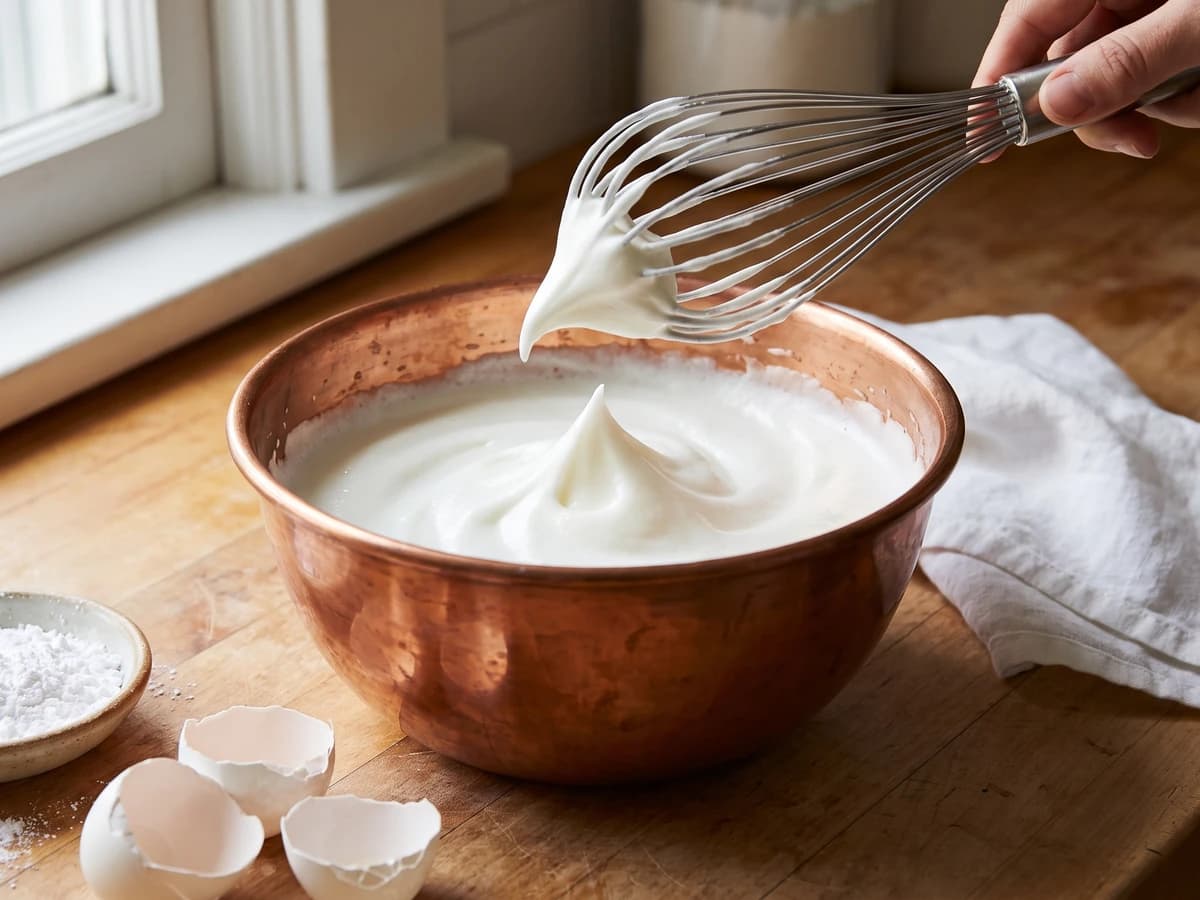
Four whites, one spotless bowl, and a patient change of speed: whisk gently until loosened, then briskly to glossy stiffness, with powdered sugar waiting if the foam begins to granulate.