
Chef Juliette
Various Almond Preparations
Five almond preparations, one discipline: remove the skins cleanly, dry every kernel through, then cut, toast, or cloak it in pale caramel without letting its fragrant oils escape.
A cooking platform built around craft, culture, and the stories behind what we eat.

Created by Chef Juliette
Based on No. 2565, Souffléd Bananas, from Le Guide Culinaire (1907) by Auguste Escoffier
Bananes soufflées turn four bananas into their own serving dishes: silken sieved fruit, a real cream base, and whites folded at the last moment, rising gold in precisely six minutes.
Bananes soufflées (souffléd bananas) teach the central truth of every hot Soufflé: the air goes in last, and the dish goes into the oven at once. Banana gives perfume and body, but it also gives weight. Fold the whites late and gently or no rise comes; that is the one true thing to know before touching the pan.
The original entry assumed a pastry station with appareil à soufflé à la crème (cream soufflé base) already made, a fine sieve ready, and an oven holding fierce heat through service. At home, the honest equivalent is a small roux built with butter and cream in one saucepan, a fully preheated ordinary oven, and four bananas instead of a service platter's worth. The ready base was brigade scaffolding, so it goes; the sieve, the late-folded whites, the star of filled skins, and the six-minute bake are the dish, so they stay. One cook, one stove, one evening.
Done well, the peels darken slightly while cream-gold crowns swell above them, tender at the center and fragrant enough to announce themselves across the table. The decisive moment comes after the whites reach their peaks: fold only until the large white pockets disappear, fill the skins at once, and keep that oven door shut.
Bananes soufflées belong to the Parisian grand-kitchen dessert repertoire, where hollowed fruit cases served as both vessel and announcement of flavor at the dining-room table. Despite their modern placement beside mousses and parfaits, they are a hot Soufflé: whipped egg whites provide the lift, while sieved banana and the cream appareil provide structure and flavor. The star of filled peels is not a regional folk custom; it is a service arrangement that also braces the soft skins upright.
Quantity
4 medium (about 1¼ lb / 560 g in their skins)
ripe and fragrant but still firm
Quantity
2 teaspoons (10 ml / 9 g)
Quantity
1 tablespoon (15 ml / 8 g)
Quantity
¼ cup (60 ml / 60 g)
Quantity
3 tablespoons (45 ml / 38 g)
divided
Quantity
⅛ teaspoon (0.6 ml / 0.75 g)
Quantity
1
Quantity
3 large (about 6 tablespoons / 90 ml / 90 g)
at room temperature
Quantity
1
only for rescuing deflated batter
| Ingredient | Quantity |
|---|---|
| bananasripe and fragrant but still firm | 4 medium (about 1¼ lb / 560 g in their skins) |
| unsalted butter | 2 teaspoons (10 ml / 9 g) |
| all-purpose flour | 1 tablespoon (15 ml / 8 g) |
| heavy cream | ¼ cup (60 ml / 60 g) |
| granulated sugardivided | 3 tablespoons (45 ml / 38 g) |
| fine sea salt | ⅛ teaspoon (0.6 ml / 0.75 g) |
| large egg yolk | 1 |
| large egg whitesat room temperature | 3 large (about 6 tablespoons / 90 ml / 90 g) |
| additional large egg white (optional)only for rescuing deflated batter | 1 |
Set a rack in the middle of the oven and heat it to 475°F / 245°C conventional, or 450°F / 230°C fan, for a full 25 minutes. Line a 12-inch / 30 cm round metal ovenproof platter or flat baking tray with parchment. The six-minute bake depends on fierce, stored heat, so let the oven come fully ready. Do not use the broiler; it colors the crowns before their centers can set.
Melt the butter in a small heavy saucepan over medium-low heat. Stir in the flour and cook this pale roux for 1 minute, until it smells faintly of biscuits but takes no color. Add the cream in three small pours, whisking each one smooth before the next; the mixture will seize into a stiff, glossy paste, which is exactly right. Stir in 2 tablespoons of the sugar and the salt, let the appareil à soufflé à la crème bubble for 30 seconds, then remove it from the heat and whisk in the yolk. Spread it in a wide bowl and cool for 5 to 8 minutes, until barely warm.
Wash and dry the bananas because their skins are the serving vessels. With each banana resting on its outer curve, cut away one long strip of peel, roughly one quarter of its circumference, from near the stem to near the tip. Slide a narrow teaspoon between pulp and peel, then coax the pulp out in two or three pieces without puncturing the remaining skin. Press every bit of pulp through a fine sieve, scraping the smooth purée from its underside, and stir it into the cooled appareil. A small split in a peel can be held closed by setting that side against the neighboring banana in the star.
Whisk the three egg whites in a spotless bowl until they hold soft peaks. Add the remaining tablespoon of sugar in a thin rain and continue only until the whites are glossy and form medium peaks whose tips bend slightly. Stir one quarter of the whites briskly into the banana appareil to lighten it, then fold in the rest in two additions, cutting through the center, sweeping across the bottom, and turning the bowl. Stop as soon as the large white pockets disappear. If overfolding has left the batter thin enough to pour instead of mound, ça se rattrape: whip the optional extra white to a medium peak and fold it through in two broad additions. The late, gentle fold is the dish; a mixer cannot do it for you.
Spoon the batter into the banana skins immediately, dividing all of it evenly and mounding each crown about ¾ inch / 2 cm above the cut edge. Wipe away any drips on the outside of the peels. Arrange the filled skins cut-side up in a four-point star on the prepared platter, with their narrow tips meeting at the center and their stems pointing outward. The arrangement preserves the original service and lets the soft skins brace one another.
Bake for 6 minutes without opening the oven door. The crowns should swell above their skins, turn cream-gold along the ridges, and tremble softly at the center. Judge doneness by that tremble, not by deep browning; if the center still sloshes, give it 60 seconds more, but do not bake until firm. Carry the whole star to the table at once. Every hot Soufflé begins settling as its air cools, which is its nature, not a failure. À table!
1 serving (about 130g)
Culinary guides, cultural storytelling, and the editorial depth that makes cooking meaningful.
Discover Culinary ExplorerChef Juliette
Five almond preparations, one discipline: remove the skins cleanly, dry every kernel through, then cut, toast, or cloak it in pale caramel without letting its fragrant oils escape.

Chef Juliette
A pastry pantry lesson in one tray: filberts warmed only until their red skins release, rubbed clean, cooled, and chopped into a fragrant mise-en-place for cakes, creams, pralines, and petits fours.

Chef Juliette
The smallest pâtisserie discipline decides whether a cake leaves its mould intact: clarified butter in every corner, followed by the lightest veil of dry flour or fécule.
Chef Juliette
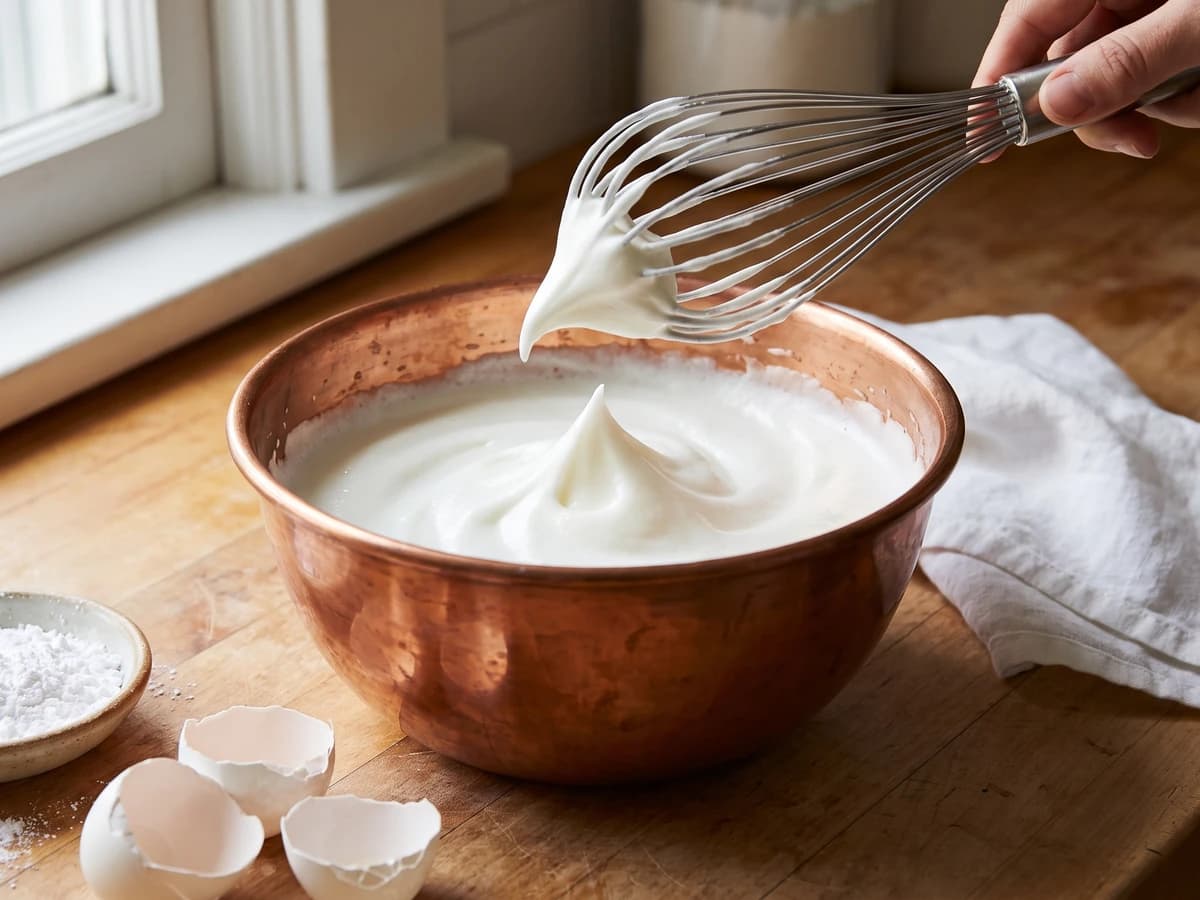
Four whites, one spotless bowl, and a patient change of speed: whisk gently until loosened, then briskly to glossy stiffness, with powdered sugar waiting if the foam begins to granulate.