
Chef Juliette
Flan aux Carottes
A pale short-paste shell holds silken, lightly sweet carrot purée beneath neat glazed half-discs, their butter syrup catching the light: a classical tart poised between vegetable course and sweet.
A cooking platform built around craft, culture, and the stories behind what we eat.
Created by Chef Juliette
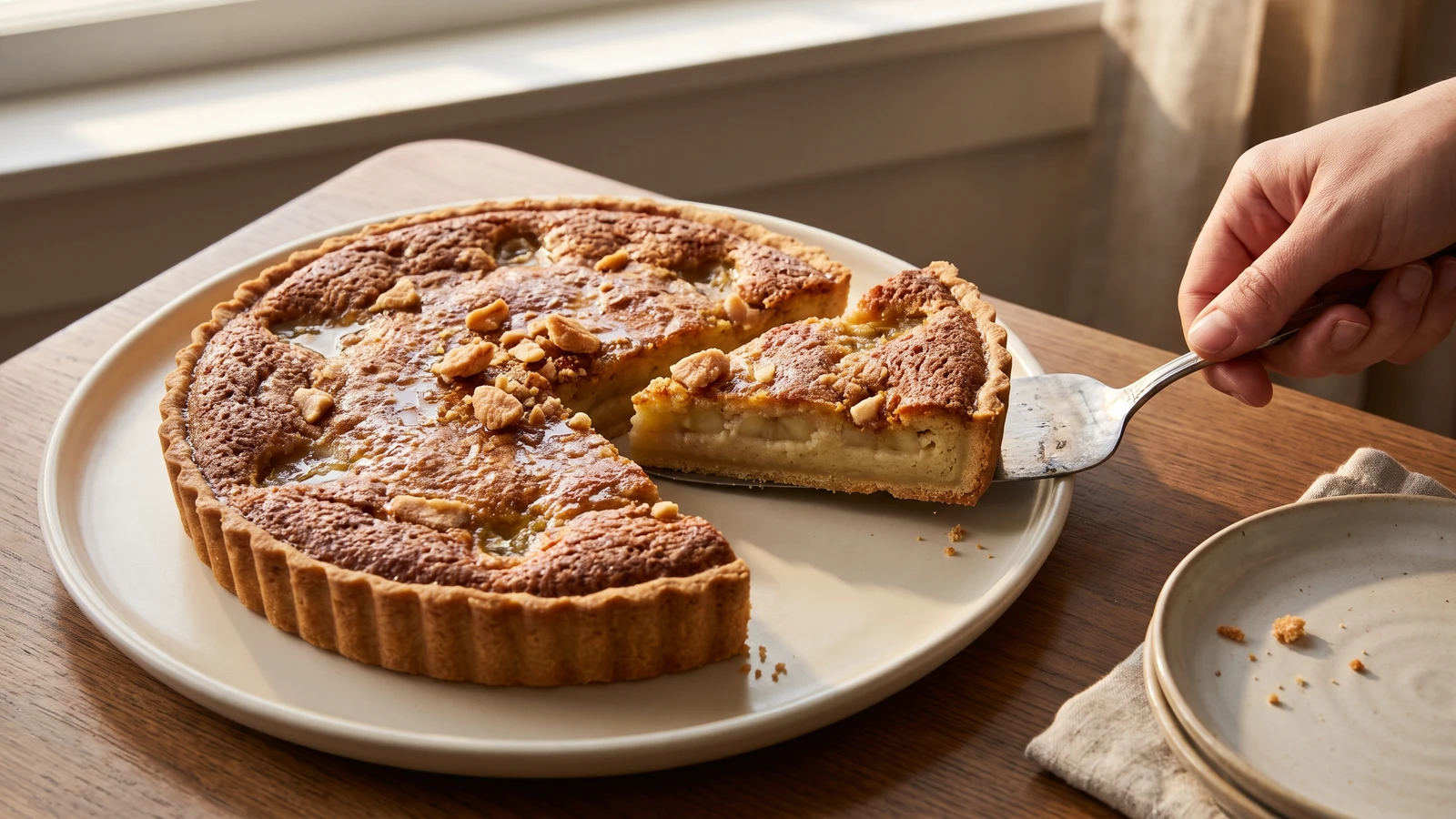
Based on No. 2561, Bananas à la Bourdaloue, from Le Guide Culinaire (1907) by Auguste Escoffier
Vanilla-poached bananas lie between two thin layers of frangipane in a pale Bourdaloue crust, finished with crushed macaroons, butter, and a quick bronzed gratin. Barely tremble the syrup, and the fruit stays whole.
Bananes à la Bourdaloue (vanilla-poached banana tart) teaches restraint before anything else: the syrup must barely tremble once the fruit enters. A hard simmer takes a ripe banana to purée before you can turn it, while a gentle poach perfumes it with vanilla and leaves it whole enough to carry between two layers of crème frangipane (almond pastry cream). That poach is the one true thing to know before you touch the pan.
The source sends the cook to Apricots à la Bourdaloue (No. 2549) for its pale flawn crust, thin crème frangipane enriched with crushed macaroons, layered fruit, and macaroon-butter gratin (a quickly browned top). It assumed a pastry bench with those parts waiting, syrup held for service, and a salamander for rapid colouring. At home, a 9-inch tart tin, a shallow pan, and the broiler do the same work. A large quantity of held syrup and separate hands for pastry, cream, and fruit are brigade scaffolding, so those go; the pale shell, two thin cream layers, delicate poach, and quick gratin stay, because they are the dish.
One cook, one stove, one evening. Follow the cited preparation whole and change only the fruit, exactly as the entry commands. Watch the syrup more closely than the clock; the moment the bananas yield slightly but still lift cleanly, they are ready.
À la Bourdaloue belongs to the pastry shops of Paris and takes its name from rue Bourdaloue, though accounts differ on which shop first attached the street name to the preparation. Pears became its most familiar fruit, but the classical repertoire treated Bourdaloue as a method as much as a single tart: poached fruit, crème frangipane, crushed almond macaroons, butter, and a quick gratin. The banana version shows the method moving through the grand kitchen's fruit repertoire, changing the fruit while keeping the Parisian structure intact.
Quantity
1 tart-sized preparation Apricots à la Bourdaloue (No. 2549)
followed exactly with the vanilla-poached bananas replacing its apricots
Quantity
4 medium (about 1¼ pounds / 560 g unpeeled; about 15½ ounces / 440 g peeled)
peeled immediately before poaching
Quantity
2 cups (480 ml / 480 g)
Quantity
1 cup (240 ml / 200 g)
Quantity
2 teaspoons (10 ml / 10 g)
| Ingredient | Quantity |
|---|---|
| Apricots à la Bourdalouefollowed exactly with the vanilla-poached bananas replacing its apricots | 1 tart-sized preparation Apricots à la Bourdaloue (No. 2549) |
| just-ripe medium bananaspeeled immediately before poaching | 4 medium (about 1¼ pounds / 560 g unpeeled; about 15½ ounces / 440 g peeled) |
| water | 2 cups (480 ml / 480 g) |
| granulated sugar | 1 cup (240 ml / 200 g) |
| pure vanilla extract | 2 teaspoons (10 ml / 10 g) |
Prepare Apricots à la Bourdaloue (No. 2549) exactly as its own entry directs, stopping only at the point where its poached apricot halves would be set over the lower layer of cream. Keep the flawn crust pale, the lower cream thin, and the remaining cream, crushed macaroons, and melted butter ready. The cross-reference carries those formulas whole; this entry changes only the fruit. Position an oven rack about 6 inches (15 cm) below the broiler, but leave the broiler off for now.
Combine the water and sugar in a wide, shallow saucepan. Bring them to a boil, stirring only until the sugar dissolves, then lower the heat and simmer for 3 minutes. Stir in the vanilla. The boiling belongs before the fruit, not after it; once the bananas enter, the surface must barely move.
Peel the bananas and lower them whole into the syrup in a single layer. Hold the liquid just below a simmer for 3 to 5 minutes, turning each banana once with two spoons, until its surface yields slightly but the fruit still supports its own weight. If the syrup begins bubbling hard, pull the pan from the heat immediately. If a banana starts to split, lift it out and leave it untouched while it cools; set the split side downward in the tart later. Ça se rattrape.
Lift the bananas with a broad slotted spatula and place them on a rack set over a tray. Let them drain and cool for 15 minutes. Do not blot, squeeze, or slice them thinly. The surface syrup must drain away so it cannot soak the crust, while the fruit itself remains plump. Reserve the vanilla syrup for another use.
At the fruit-setting stage of Apricots à la Bourdaloue (No. 2549), arrange the cooled bananas in one snug layer over the lower cream, following their natural curves. Leave them whole where they fit; if the tart's circle demands it, cut them crosswise into large pieces and use the trimmed ends to fill the gaps. Cover them with the upper layer directed by the cited preparation, spreading gently so you do not crush the fruit or force syrup into the crust.
Complete the crushed-macaroon and melted-butter finish directed in Apricots à la Bourdaloue (No. 2549). Heat the broiler fully, then set the tart beneath it for 45 seconds to 2 minutes, watching without stepping away, until the top bronzes in small patches and the butter gives it a clear gloss. This brief upper heat is the home equivalent of the salamander. If the rim colours first, shield it with a ring of foil; if one patch catches too quickly, rotate the tart. Glaze quickly, because prolonged heat turns the bananas soft.
Let the tart settle for 20 minutes so the cream holds cleanly around the fruit. Remove the tart ring, slide the Bourdaloue onto a plain platter, and cut it with a thin serrated knife, wiping the blade between slices. Serve warm or at room temperature, while the crust remains crisp and the vanilla-poached bananas are still distinct. À table!
1 serving (about 170g)
Culinary guides, cultural storytelling, and the editorial depth that makes cooking meaningful.
Discover Culinary ExplorerChef Juliette
A pale short-paste shell holds silken, lightly sweet carrot purée beneath neat glazed half-discs, their butter syrup catching the light: a classical tart poised between vegetable course and sweet.
Chef Juliette
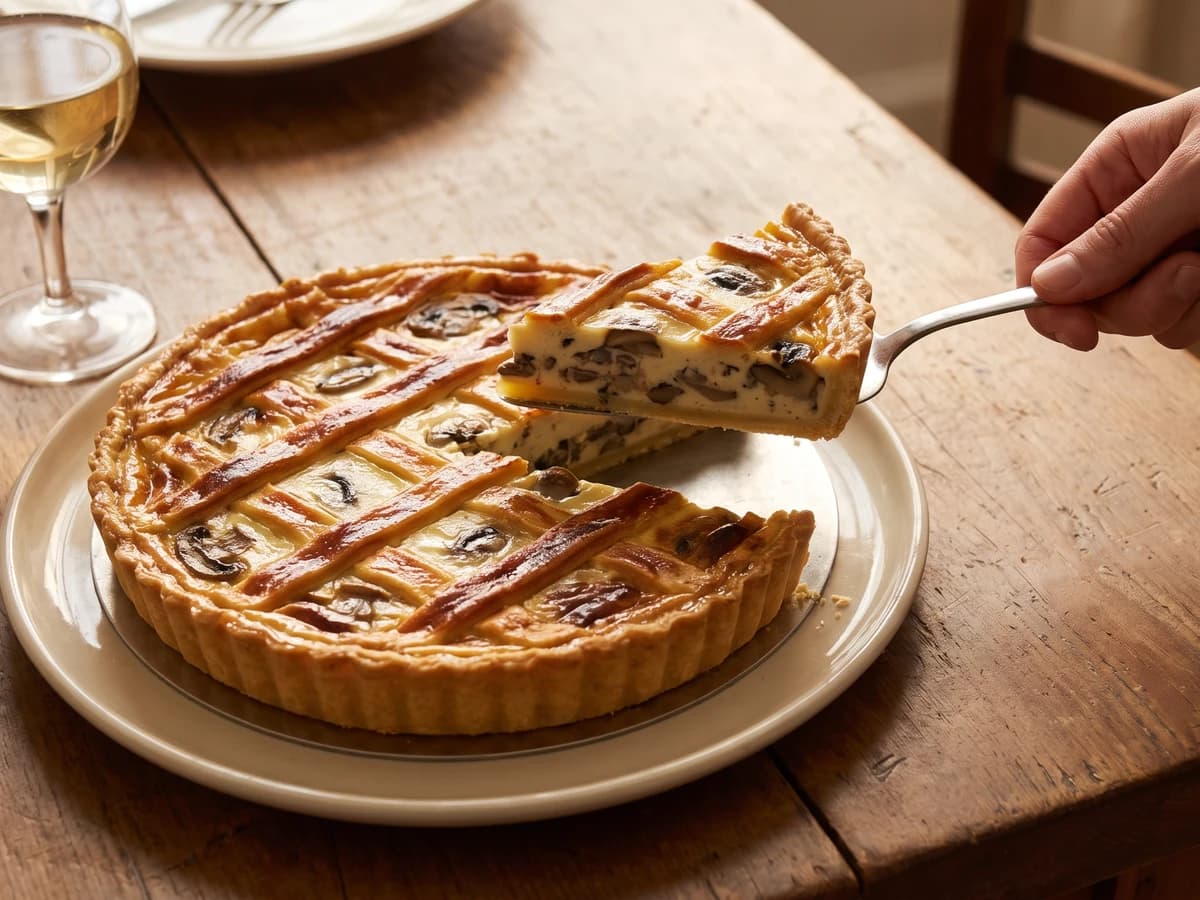
A hot mushroom flan under a butter-gold lattice, with cream reduced close around barely opened caps and a crisp short-paste base protected by one discipline: cool the filling completely.
Chef Juliette
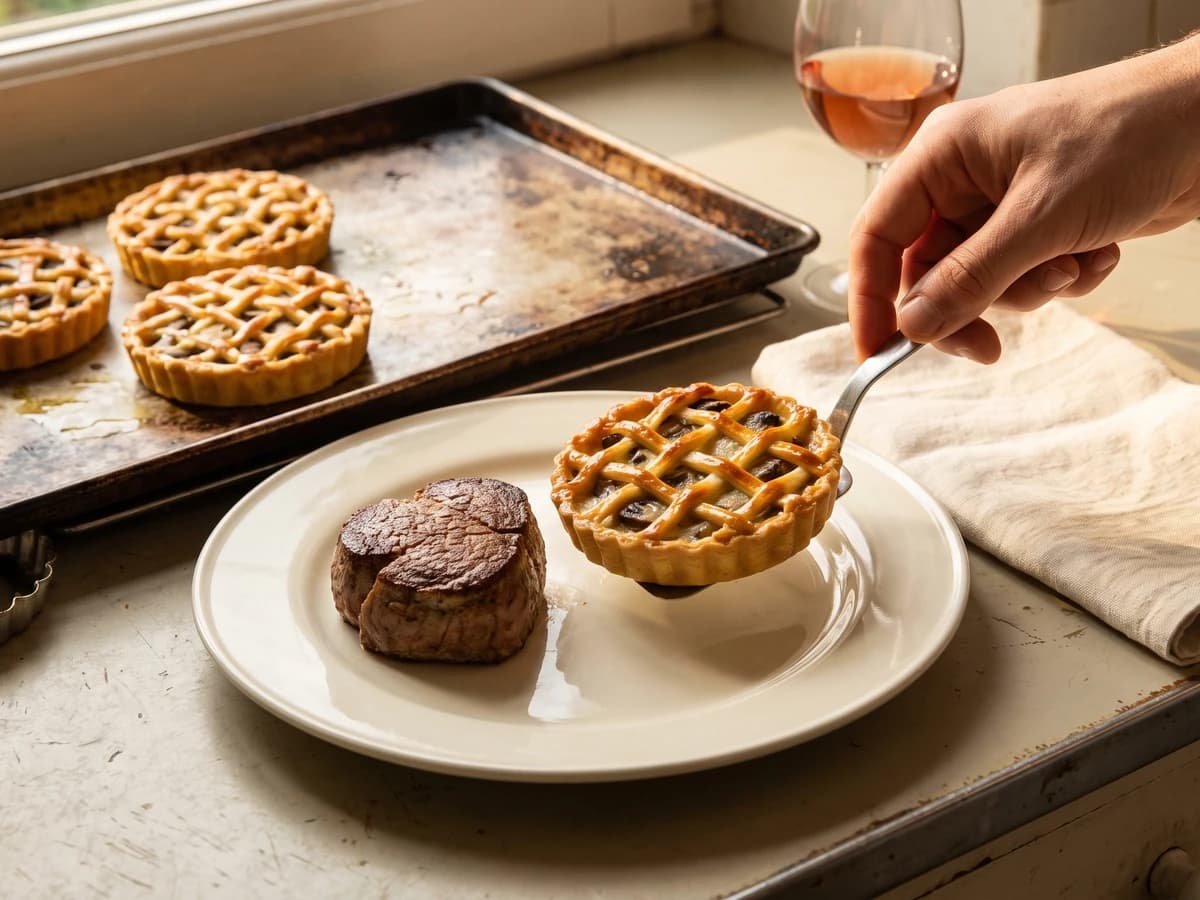
Four little mushroom flans, latticed and gilded, baked hard and fast until butter-gold: a classical garnish scaled to the meat it accompanies and served before its crispness has time to fade.

Chef Juliette
Morels surrender their liquor, then take it back as a glossy cream-and-butter sauce inside burnished puff pastry. The lesson is simple and absolute: reduce with patience, then heat gently and never boil.