
Chef Juliette
Flan aux Carottes
A pale short-paste shell holds silken, lightly sweet carrot purée beneath neat glazed half-discs, their butter syrup catching the light: a classical tart poised between vegetable course and sweet.
A cooking platform built around craft, culture, and the stories behind what we eat.
Created by Chef Juliette
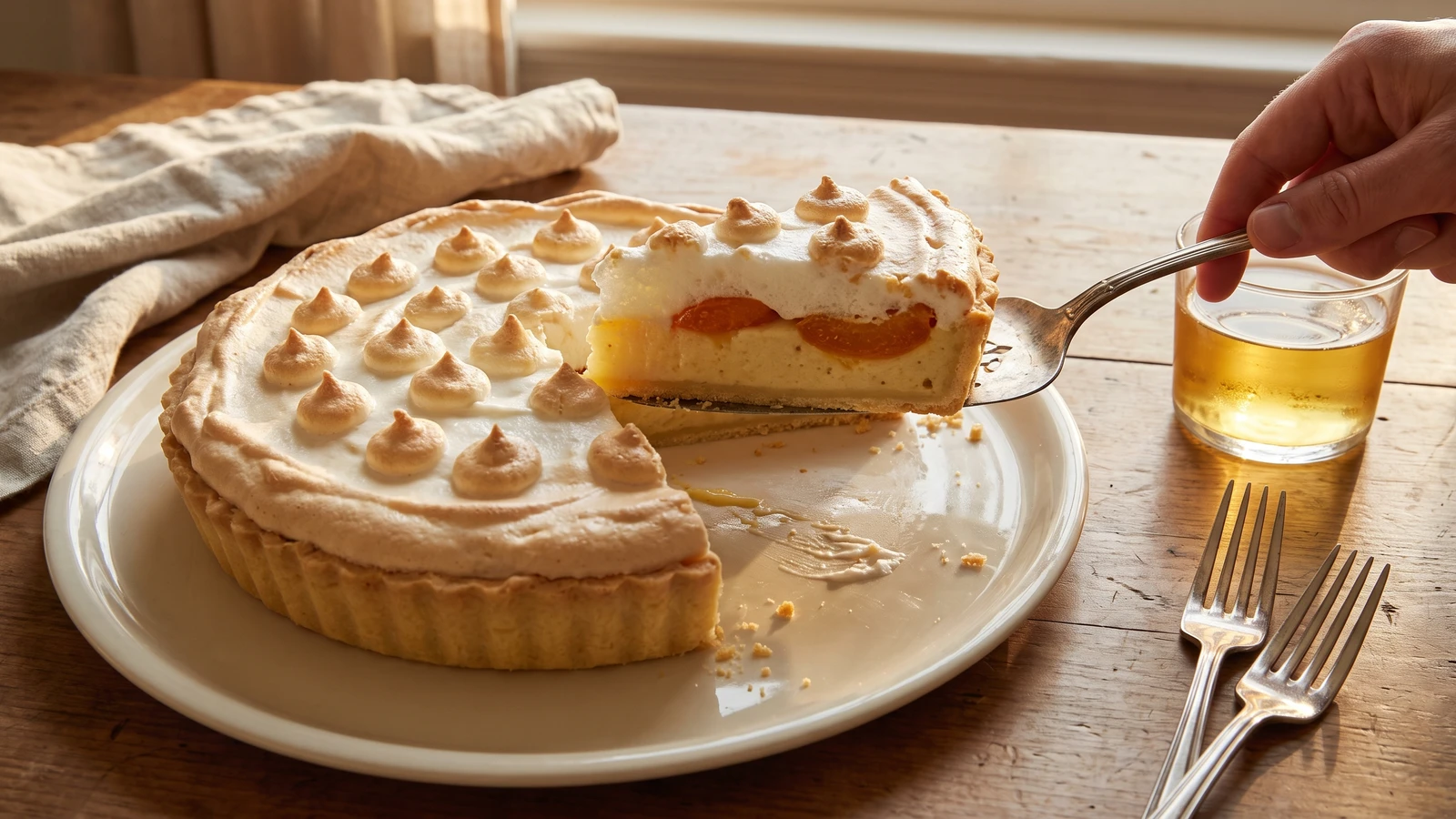
Based on No. 2556, Abricots Meringués (another method), from Le Guide Culinaire (1907) by Auguste Escoffier
A pale flawn crust, cool vanilla semolina, tender poached apricots, and a meringue crown smoothed before it is piped: the old pastry lesson that good decoration begins with sound structure.
Abricots Meringués, autre méthode (meringued apricot tart), teaches a rule every decorated meringue tart obeys: build the smooth coat before the ornament. Poached apricots make a rolling landscape, and piping placed directly upon them slips into every hollow. Cover and level the fruit first, then pipe onto a surface capable of carrying the design.
The old pastry kitchen assumed a deep flawn ring, poached fruit waiting at the pastry station, a basin of Ordinary Meringue (No. 2382), and a salamander ready to set the piping. The referenced batch is sized for eight egg whites; a 20 cm tart needs three-eighths of it, while a loose-bottomed tin and steady domestic oven replace the ring and salamander. The oversized batch and separate pastry hands are brigade scaffolding. The pale shell, cooled foundation, poached halves, smooth coat, and small even piping must stay. One cook, one stove, one evening.
This version uses the source's vanilla semolina option, scaled to a thin, steady layer beneath the fruit. Before assembly, make certain the shell, semolina, and apricots are cool, and drain the fruit until no syrup clings to it. Then smooth the meringue with the flat of a knife over the entire tart before the piping bag comes near it. That foundation decides the dish.
Abricots meringués belong to the Parisian pâtisserie and bourgeois entremets table, where poached fruit, prepared cream, and meringue were assembled into composed sweets. This alternate method moves the fruit into a deep, colourlessly baked flawn crust over frangipane, vanilla semolina, or sweet rice, turning the entremets into a tart that travels neatly to the table. Flawn here names the pastry case, not a custard filling, and its pale baking is deliberate because the shell returns to the oven beneath the meringue.
Quantity
1 3/4 cups (420 ml / 220 g)
Quantity
1/3 cup (80 ml / 40 g)
Quantity
1/4 teaspoon (1.25 ml / 1.5 g)
Quantity
1/2 cup (120 ml / 115 g)
cut into small cubes
Quantity
1
Quantity
1 tablespoon (15 ml / 15 g)
use only if needed
Quantity
1 teaspoon (5 ml / 5 g)
for the tin
Quantity
2 cups (480 ml / 480 g)
Quantity
1 cup (240 ml / 200 g)
Quantity
8 medium (about 500 g)
halved and pitted
Quantity
1 cup (240 ml / 245 g)
Quantity
1/4 cup (60 ml / 40 g)
Quantity
2 tablespoons (30 ml / 25 g)
Quantity
1/8 teaspoon (0.6 ml / 0.75 g)
Quantity
1 tablespoon (15 ml / 14 g)
Quantity
1 teaspoon (5 ml / 5 g)
Quantity
3/8 batch Ordinary Meringue (No. 2382), about 3 1/2 cups (840 ml / 260 g)
prepared from its separate entry and held at room temperature
| Ingredient | Quantity |
|---|---|
| all-purpose flour | 1 3/4 cups (420 ml / 220 g) |
| confectioners' sugar | 1/3 cup (80 ml / 40 g) |
| fine sea salt | 1/4 teaspoon (1.25 ml / 1.5 g) |
| cold unsalted buttercut into small cubes | 1/2 cup (120 ml / 115 g) |
| large egg | 1 |
| ice water (optional)use only if needed | 1 tablespoon (15 ml / 15 g) |
| softened unsalted butterfor the tin | 1 teaspoon (5 ml / 5 g) |
| water | 2 cups (480 ml / 480 g) |
| granulated sugar for poaching | 1 cup (240 ml / 200 g) |
| fresh apricotshalved and pitted | 8 medium (about 500 g) |
| whole milk | 1 cup (240 ml / 245 g) |
| fine semolina | 1/4 cup (60 ml / 40 g) |
| granulated sugar for semolina | 2 tablespoons (30 ml / 25 g) |
| fine sea salt | 1/8 teaspoon (0.6 ml / 0.75 g) |
| unsalted butter | 1 tablespoon (15 ml / 14 g) |
| vanilla extract | 1 teaspoon (5 ml / 5 g) |
| Ordinary Meringueprepared from its separate entry and held at room temperature | 3/8 batch Ordinary Meringue (No. 2382), about 3 1/2 cups (840 ml / 260 g) |
Make the pâte sucrée, the sweet tart pastry. Mix the flour, confectioners' sugar, and salt, then rub in the cold butter until the mixture resembles fine crumbs with no large pieces remaining. Add the egg and bring the dough together with a light hand, using the ice water only if dry flour remains. Flatten it into a disc, wrap, and chill for 1 hour. Do not knead it smooth; working the dough develops gluten, and gluten makes a deep shell shrink.
Bring the water and granulated sugar to a clear, gentle simmer. Add the apricot halves in a single layer and poach for 2 to 4 minutes, turning once, until a knife enters with slight resistance. Lift them onto a rack or several layers of kitchen paper, cut side down, and cool completely. Pat them dry before assembly. If a tender half tears, fit the pieces together in the shell later; the meringue will cover the evidence.
Bring the milk, sugar, and salt just to a simmer. Sprinkle in the semolina slowly while whisking, then cook over low heat for 4 to 5 minutes, stirring constantly, until it becomes a thick cream and the spoon leaves a clear trail across the pan. Remove from the heat and beat in the butter and vanilla. Spread it in a shallow dish, cover its surface directly, and cool completely. If small lumps appear, whisk firmly while the semolina is still warm with a teaspoon of milk.
Heat the oven to 175°C (350°F). Butter a 20 cm loose-bottomed tart tin about 4 cm deep. Roll the chilled pastry to about 3 mm thick, line the tin, and press it carefully into the corner without stretching. Leave a little pastry above the rim, prick the base, and chill for 20 minutes. Line with baking paper, fill completely with baking weights, and bake for 18 to 20 minutes. Remove the paper and weights, then bake for another 6 to 8 minutes, until the base is dry and set but remains ivory rather than brown. Pale is not raw. If a small crack appears, press in a scrap of raw pastry while the shell is warm and return it to the oven for 2 minutes.
Let the shell cool in its tin. Spread the cold vanilla semolina evenly across the bottom in a layer about 1 cm deep. Arrange the drained apricot halves closely over it, cut side down and rounded side upward, keeping the fruit below the pastry rim. The layer should feel generous but stable; leave no large hollows that would swallow the meringue.
Spoon about two-thirds of the Ordinary Meringue (No. 2382) over the apricots. First press a thin coat into the gaps and against the inner rim, sealing the fruit, then add enough to cover the top and all round with an even layer. Smooth it with the flat blade of a table knife or offset spatula. This undercoat is what supports the piping. If the meringue slides or beads, stop and scrape it gently back into the bowl. Ça se rattrape: blot the apricots again, apply one thin anchoring spoonful, smooth it, and only then replace the rest.
Reduce the oven to 150°C (300°F). Fit a piping bag with a small plain round tip, about 6 mm, and fill it with the remaining Ordinary Meringue (No. 2382). Pipe close, even ropes, loops, or small rosettes over the smoothed surface, keeping the decoration low enough to bake evenly. Bake for 22 to 28 minutes, until the meringue feels dry to a light touch and only the highest ridges have turned pale biscuit-gold. If those ridges darken too quickly, lower the oven to 135°C (275°F) and continue until the broad surface is set.
Cool the tart in its tin for 35 to 45 minutes so the semolina settles and the meringue releases cleanly from the knife. Remove the tin and transfer the tart to a serving plate. Cut with a fine serrated knife, using a gentle sawing motion and wiping the blade after every slice. Serve slightly warm or at room temperature, when the apricots remain tender and the meringue is crisp at its piped edges and soft beneath. À table!
1 serving (about 225g)
Culinary guides, cultural storytelling, and the editorial depth that makes cooking meaningful.
Discover Culinary ExplorerChef Juliette
A pale short-paste shell holds silken, lightly sweet carrot purée beneath neat glazed half-discs, their butter syrup catching the light: a classical tart poised between vegetable course and sweet.
Chef Juliette
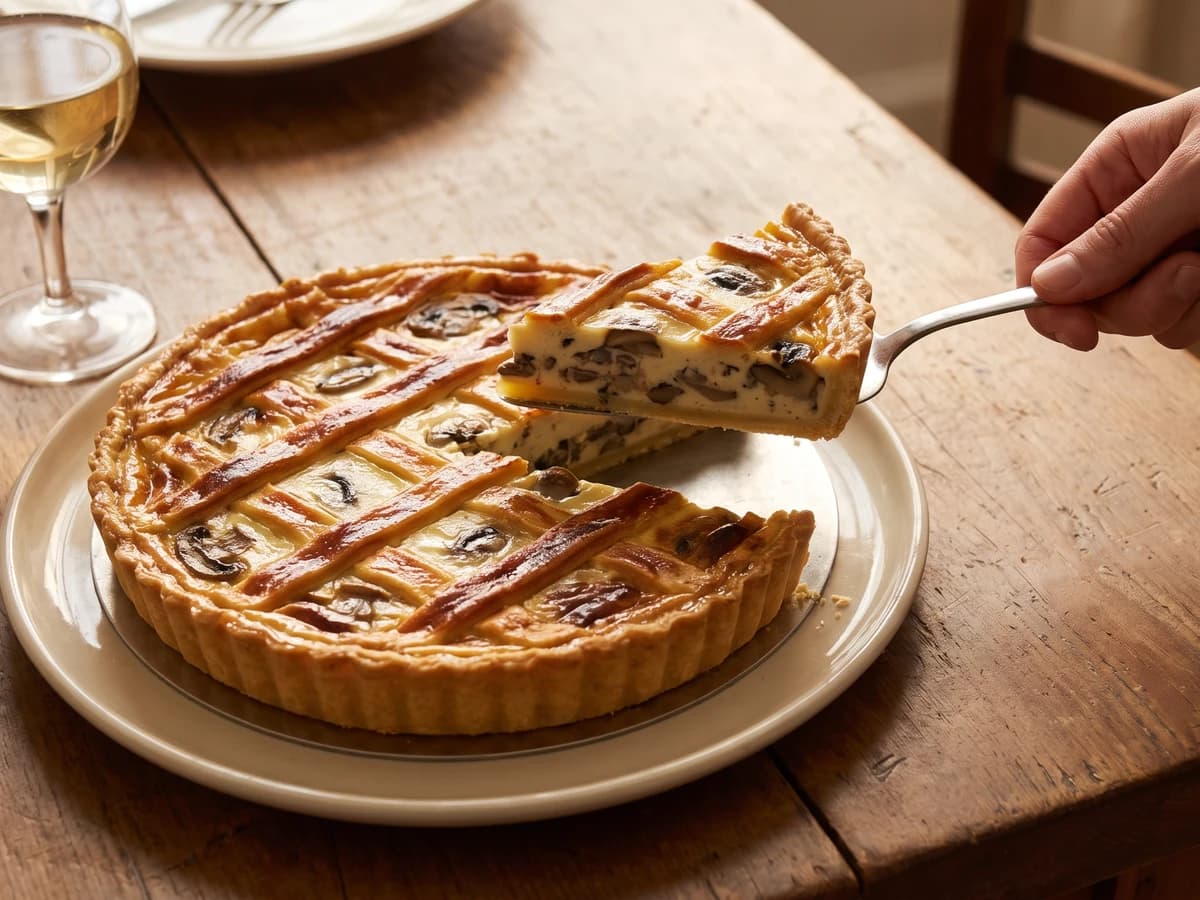
A hot mushroom flan under a butter-gold lattice, with cream reduced close around barely opened caps and a crisp short-paste base protected by one discipline: cool the filling completely.
Chef Juliette
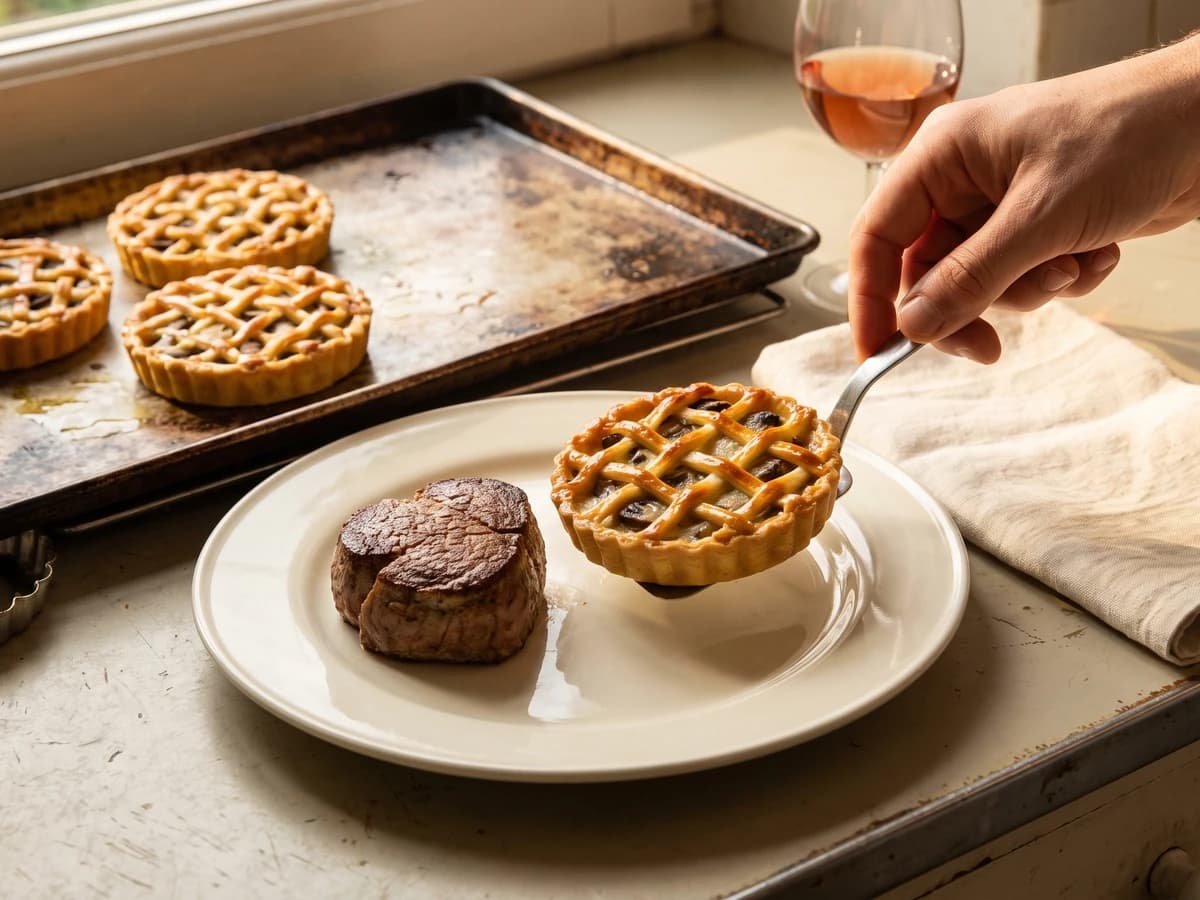
Four little mushroom flans, latticed and gilded, baked hard and fast until butter-gold: a classical garnish scaled to the meat it accompanies and served before its crispness has time to fade.

Chef Juliette
Morels surrender their liquor, then take it back as a glossy cream-and-butter sauce inside burnished puff pastry. The lesson is simple and absolute: reduce with patience, then heat gently and never boil.