
Chef Juliette
Flan aux Carottes
A pale short-paste shell holds silken, lightly sweet carrot purée beneath neat glazed half-discs, their butter syrup catching the light: a classical tart poised between vegetable course and sweet.
A cooking platform built around craft, culture, and the stories behind what we eat.
Created by Chef Juliette
Based on No. 2543, Bourdaloue Timbale, from Le Guide Culinaire (1907) by Auguste Escoffier
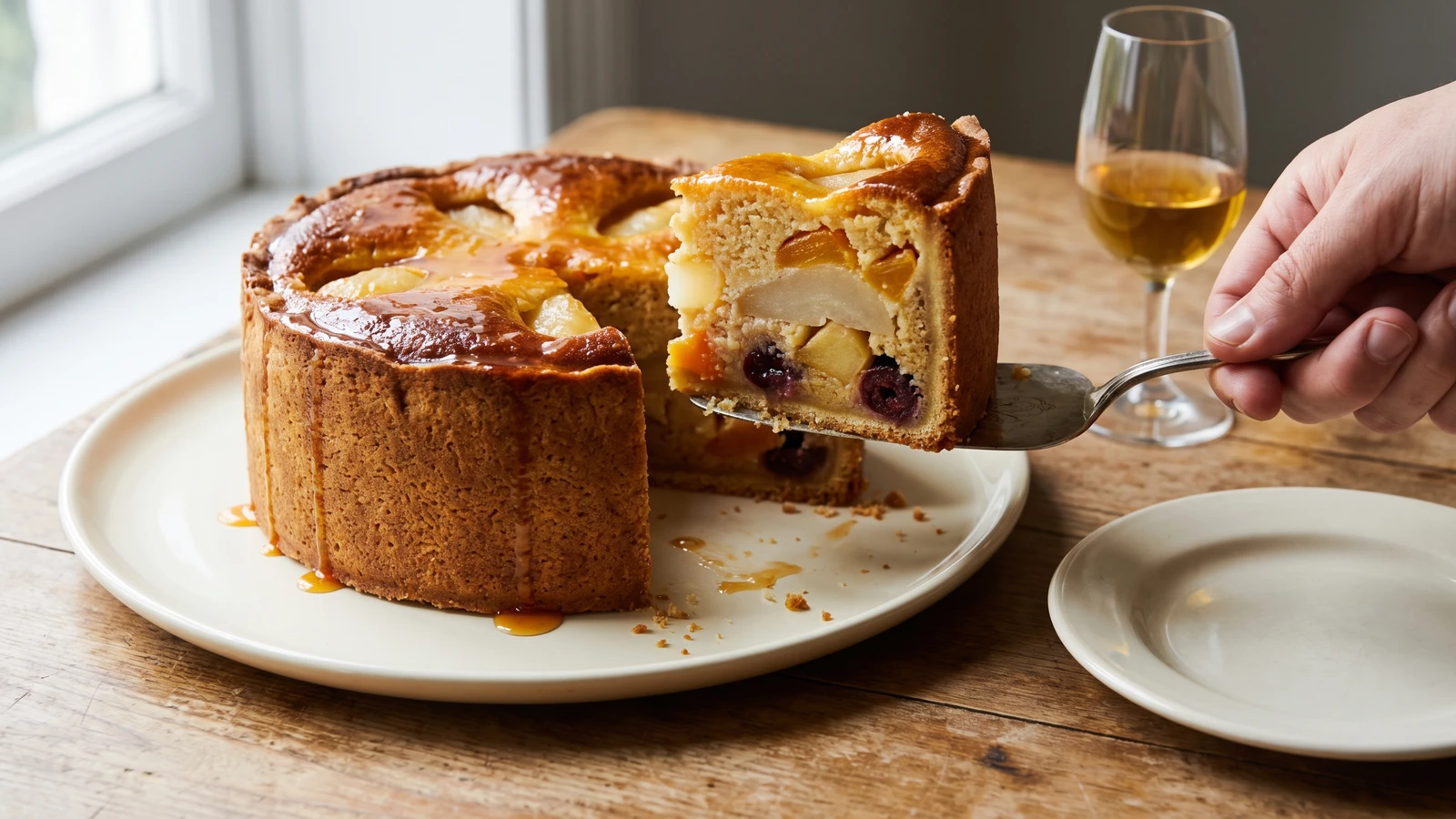
A tall almond pastry case hides layers of tender stewed fruit and firm frangipane, then turns out whole beneath a vanilla-apricot glaze, proof that a sealed crust succeeds by controlling moisture.
Timbale Bourdaloue (a closed almond-pastry fruit timbale) teaches one truth before you touch a pan: moisture must be governed. The fruit must be tender but dry, and the crème frangipane, an almond cream bound with pastry cream, must mound on the spoon. If either runs, the pastry case drinks it and goes soft.
The original entry assumed a pastry section with its dry paste, several stewed fruits, frangipane, and apricot syrup already waiting, plus a tall timbale mould sized for service. Here the flour base is reduced from one pound to 200 grams, enough for one 18 cm timbale, while the original four-to-one ratio of flour to chopped almonds stays exact. One saucepan cooks the fruits in sequence, a metal charlotte mould replaces the professional timbale mould, and strained apricot preserves supply the glaze pot. Separate pans for every fruit were brigade scaffolding and can go. The almonded case, alternating layers, closed lid, moderate oven, and vanilla-apricot coating are the dish and must stay. One cook, one stove, one evening.
Turned out, the timbale stands tall and burnished, with ruby cherries, pale pear, apple, and apricot held between rich layers of frangipane. The one step that decides it is the draining: before the fruit meets the mould, let it cool and dry until it leaves no syrup beneath it.
Timbale Bourdaloue belongs to Paris and takes its name from rue Bourdaloue, whose pastry trade attached the street's name to combinations of fruit and almond cream. The better-known Bourdaloue is an open pear tart, but the classical name was not confined to that shape: this preparation encloses several stewed fruits and frangipane in a tall pastry case, then turns it out whole. Its apricot coating is practical as well as handsome, sealing crumbs, lending shine, and sharpening the fruit beneath.
Quantity
1⅔ cups (400 ml / 200 g)
Quantity
½ cup (120 ml / 50 g)
finely chopped
Quantity
⅓ cup (80 ml / 40 g)
Quantity
½ cup (120 ml / 115 g)
cubed
Quantity
¼ teaspoon (1.25 ml / 1.5 g)
Quantity
1
Quantity
1 tablespoon plus 1 teaspoon (20 ml / 20 g)
divided
Quantity
1 tablespoon (15 ml / 14 g)
Quantity
2 medium, about 2 cups (480 ml / 320 g) prepared
peeled, cored, and cut into 2 cm pieces
Quantity
1 large, about 1½ cups (360 ml / 180 g) prepared
peeled, cored, and cut into 2 cm pieces
Quantity
⅔ cup (160 ml / 100 g)
quartered
Quantity
1 cup (240 ml / 150 g)
thawed if frozen
Quantity
2 cups (480 ml / 480 g)
Quantity
½ cup (120 ml / 100 g)
Quantity
⅓ cup (80 ml / 82 g)
Quantity
1½ tablespoons (22.5 ml / 19 g)
Quantity
1
Quantity
2 teaspoons (10 ml / 5 g)
Quantity
2 teaspoons (10 ml / 9 g)
Quantity
⅓ cup (80 ml / 75 g)
Quantity
⅓ cup (80 ml / 67 g)
Quantity
¾ cup (180 ml / 75 g)
Quantity
1
Quantity
1 tablespoon (15 ml / 8 g)
Quantity
⅛ teaspoon (0.6 ml / 0.75 g)
Quantity
½ cup (120 ml / 160 g)
Quantity
¼ cup (60 ml / 60 g)
Quantity
½
split lengthwise
| Ingredient | Quantity |
|---|---|
| all-purpose flour for the pastry | 1⅔ cups (400 ml / 200 g) |
| blanched almonds for the pastryfinely chopped | ½ cup (120 ml / 50 g) |
| confectioners' sugar | ⅓ cup (80 ml / 40 g) |
| cold unsalted buttercubed | ½ cup (120 ml / 115 g) |
| fine sea salt for the pastry | ¼ teaspoon (1.25 ml / 1.5 g) |
| large egg | 1 |
| ice waterdivided | 1 tablespoon plus 1 teaspoon (20 ml / 20 g) |
| softened unsalted butter for the mould | 1 tablespoon (15 ml / 14 g) |
| firm pearspeeled, cored, and cut into 2 cm pieces | 2 medium, about 2 cups (480 ml / 320 g) prepared |
| tart applepeeled, cored, and cut into 2 cm pieces | 1 large, about 1½ cups (360 ml / 180 g) prepared |
| dried apricotsquartered | ⅔ cup (160 ml / 100 g) |
| pitted sour cherriesthawed if frozen | 1 cup (240 ml / 150 g) |
| water for stewing | 2 cups (480 ml / 480 g) |
| granulated sugar for stewing | ½ cup (120 ml / 100 g) |
| whole milk | ⅓ cup (80 ml / 82 g) |
| granulated sugar for the pastry cream | 1½ tablespoons (22.5 ml / 19 g) |
| large egg yolk | 1 |
| all-purpose flour for the pastry cream | 2 teaspoons (10 ml / 5 g) |
| unsalted butter for the pastry cream | 2 teaspoons (10 ml / 9 g) |
| softened unsalted butter for the almond cream | ⅓ cup (80 ml / 75 g) |
| granulated sugar for the almond cream | ⅓ cup (80 ml / 67 g) |
| finely ground blanched almonds | ¾ cup (180 ml / 75 g) |
| large egg for the almond cream | 1 |
| all-purpose flour for the almond cream | 1 tablespoon (15 ml / 8 g) |
| fine sea salt for the almond cream | ⅛ teaspoon (0.6 ml / 0.75 g) |
| smooth apricot preserves | ½ cup (120 ml / 160 g) |
| water for the glaze | ¼ cup (60 ml / 60 g) |
| vanilla beansplit lengthwise | ½ |
Whisk the 200 g flour with the finely chopped almonds, confectioners' sugar, and salt. Rub in the cold butter until the mixture resembles coarse sand with a few small flakes of butter remaining. Beat the egg with 1 tablespoon of the ice water, add it, and press the mixture together without kneading. If it still falls apart when squeezed, add the remaining water a few drops at a time, reserving about 1 teaspoon for sealing the lid. If the pastry turns greasy or sticky, the butter has warmed. Ça se rattrape: flatten the dough, chill it for 15 minutes, then bring it together with cool hands. Form a disc, wrap it, and chill for 45 minutes.
Bring the water and 100 g sugar to a bare simmer in a wide saucepan. Cook the dried apricots for 6 to 8 minutes, then lift them into a sieve. Cook the pears in the same syrup for 4 to 6 minutes, the apple for 3 to 4 minutes, and the cherries for only 30 to 60 seconds, removing each fruit while it still holds its shape. Drain the fruits separately, spread them on a tray, and let them cool for at least 30 minutes before blotting them dry. If syrup pools beneath them, return the fruit to a wide dry pan for a minute or two to evaporate the excess, then cool it again. Wet fruit is the danger here, not modest fruit.
Warm the milk until it just begins to tremble at the edge. Whisk the egg yolk with the 19 g sugar and 5 g flour, pour in half the warm milk while whisking, then return everything to the saucepan. Cook over gentle heat, whisking constantly, until the crème pâtissière becomes very thick and bubbles for a full minute. Whisk in the 9 g butter, spread the cream on a plate, cover its surface, and cool completely. In a bowl, beat the 75 g softened butter with the 67 g sugar until smooth but not airy. Beat in the ground almonds, then the egg, followed by the 8 g flour and salt. Fold in the cold pastry cream to make the crème frangipane. It must mound on a spoon rather than pour. If warm pastry cream loosens the butter and the mixture flows, chill it for 20 to 30 minutes before filling the mould.
Butter an 18 cm wide, 8 cm deep metal charlotte or timbale mould thoroughly, especially where the base meets the wall. Set aside one third of the pastry for the lid. Roll the larger piece between sheets of parchment to about 3.5 mm thick, then ease it into the mould without stretching it. Press it firmly into the base and wall, leaving a 2 cm overhang. Patch any tear with a thin scrap of dough and press the edges together until no seam remains. Chill the lined mould for 15 minutes. Do not blind-bake it; the source bakes the closed timbale as one piece, and that sequence stays.
Spread a 1 cm layer of frangipane over the base. Arrange a layer of pear and apricot above it, keeping the fruit about 1 cm from the pastry wall, then cover it completely with another layer of frangipane. Follow with apple and cherries, then more frangipane, repeating the layers if the mould allows. Finish with frangipane and leave 2 cm clear beneath the rim so the filling can rise without forcing open the lid. Press gently as you work to remove large air pockets, but don't crush the fruit.
Heat the oven to 175°C (350°F) with a heavy baking sheet on the lower-middle rack. Roll the reserved pastry to 3.5 mm thick and slightly wider than the mould. Brush the exposed pastry rim lightly with the reserved ice water, lay the lid over it, and press firmly to seal. Trim the excess, fold the joined edge inward, and press once more. Cut a small vent in the centre. If the pastry has softened during filling, chill the closed timbale for 10 minutes while the oven finishes heating; cold butter gives the case its clean shape.
Set the mould on the hot baking sheet and bake for 70 to 80 minutes. The top should be a deep almond gold, the pastry should look dry around the vent, and a thin skewer pushed through the centre should emerge without a streak of raw frangipane. If the lid browns before the filling has set, cover it loosely with foil and keep baking. A pale bottom cannot be repaired after unmoulding, so give it the full time it needs; the heated sheet supplies the decisive bottom heat of a professional pastry oven.
Rest the timbale in its mould on a rack for 25 minutes. Run a thin knife only around the upper rim, place the serving plate over the mould, and invert both together in one confident movement. Lift the mould straight up. If the timbale refuses to release, wrap the outside of the mould with a hot damp towel for 30 seconds and try again. If a small piece of pastry loosens, press it back while warm; the apricot coating will secure the crumb and hide the join.
Bring the apricot preserves, glaze water, and split vanilla bean to a lively simmer for 3 to 4 minutes, stirring until smooth. Remove the vanilla and press the syrup through a fine sieve. This nappage à l'abricot, or apricot coating, should run from the spoon in a thick ribbon. If it is sticky like jam, loosen it with a teaspoon of water; if watery, simmer it another minute. Brush the warm timbale generously from crown to base and let the glaze settle for 10 minutes before cutting thick wedges. Serve warm or at room temperature. À table!
1 serving (about 210g)
Culinary guides, cultural storytelling, and the editorial depth that makes cooking meaningful.
Discover Culinary ExplorerChef Juliette
A pale short-paste shell holds silken, lightly sweet carrot purée beneath neat glazed half-discs, their butter syrup catching the light: a classical tart poised between vegetable course and sweet.
Chef Juliette
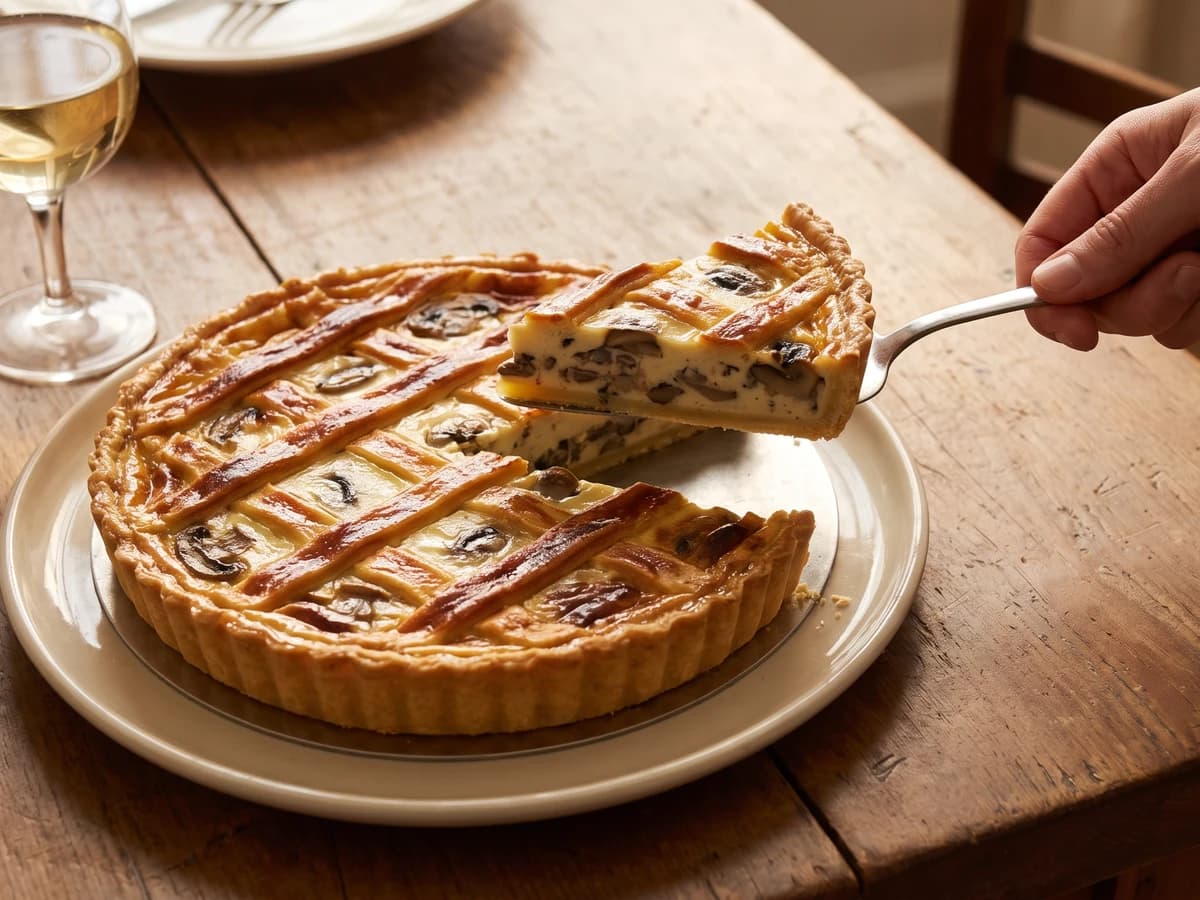
A hot mushroom flan under a butter-gold lattice, with cream reduced close around barely opened caps and a crisp short-paste base protected by one discipline: cool the filling completely.
Chef Juliette
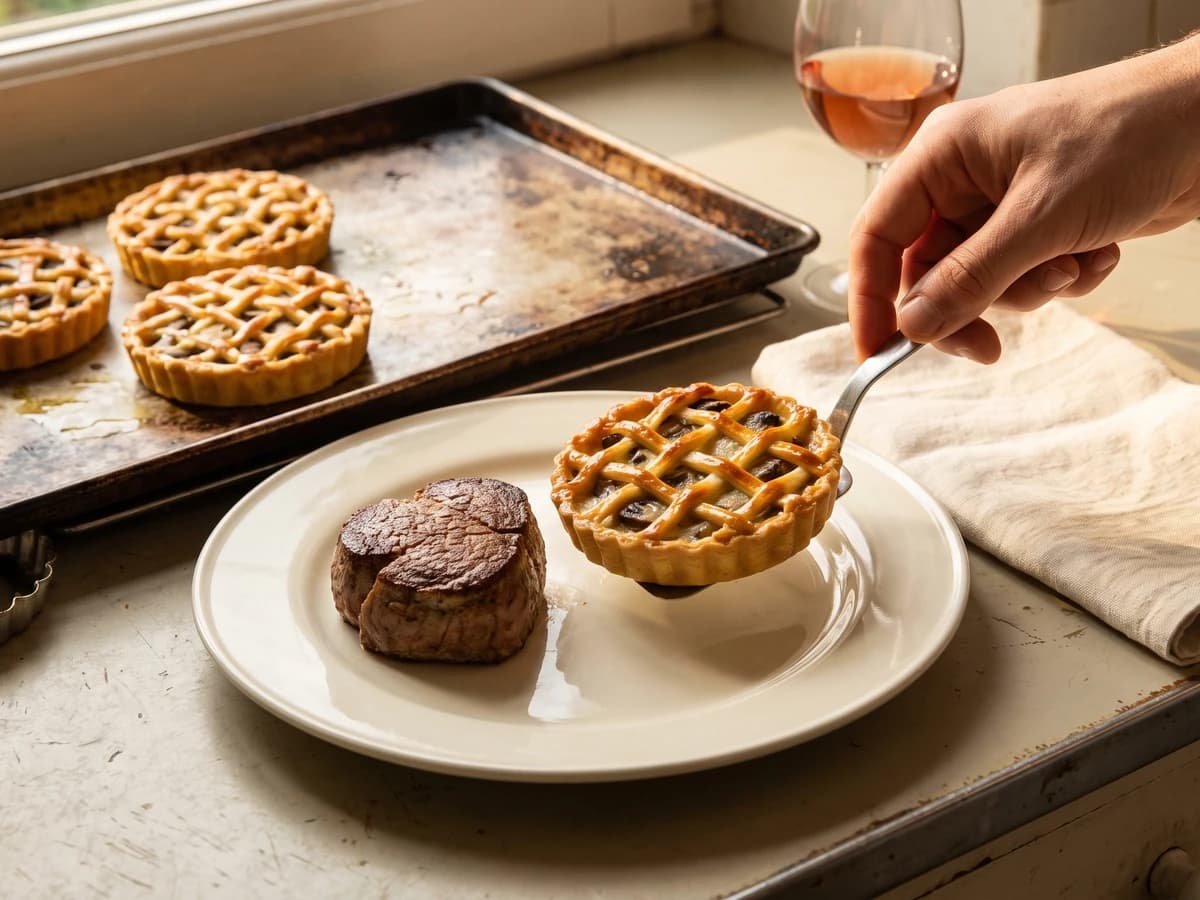
Four little mushroom flans, latticed and gilded, baked hard and fast until butter-gold: a classical garnish scaled to the meat it accompanies and served before its crispness has time to fade.

Chef Juliette
Morels surrender their liquor, then take it back as a glossy cream-and-butter sauce inside burnished puff pastry. The lesson is simple and absolute: reduce with patience, then heat gently and never boil.