
Chef Juliette
Various Almond Preparations
Five almond preparations, one discipline: remove the skins cleanly, dry every kernel through, then cut, toast, or cloak it in pale caramel without letting its fragrant oils escape.
A cooking platform built around craft, culture, and the stories behind what we eat.

Created by Chef Juliette
Based on No. 2531, Soufflé with Liqueur, from Le Guide Culinaire (1907) by Auguste Escoffier
A high, tender Soufflé à la Liqueur built on the right foundation: cream for rum, curaçao, or anisette; fruit for kirsch or kümmel. Match the bottle to the base, then guard the egg whites.
Soufflé à la Liqueur (hot liqueur soufflé) teaches one truth before you touch a pan: the base carries the bottle. Rum, orange curaçao, and anisette need the roundness of the cream preparation; kirsch and kümmel belong to the fruit preparation, where acidity keeps their perfume clear. Match by structure, not fashion.
The original entry assumed a pastry station where both bases could wait in brigade quantities while another pair of hands whipped the whites. This dessert needs neither a saucier's stockpot nor a salamander, which would scorch its crown. The honest home equivalent is one chosen base, four portions, a straight-sided dish, an electric mixer, and an oven heated thoroughly before dinner ends. Keeping two preparations ready was service scaffolding; the thick base, supple whites, careful folding, and immediate bake are the dish itself.
Properly made, the Soufflé rises above its dish with a butter-gold crown, a faintly crisp sugared edge, and a centre as tender as warm custard. The decisive step is the meringue: stop while the whites are glossy and flexible, because dry whites cannot expand gracefully in the oven.
Sweet soufflés found their classical home in the grand pastry kitchens and dining rooms of Paris, then traveled naturally to bistros and bourgeois home tables as dependable ovens became part of ordinary cooking. The French word soufflé describes a preparation made to swell, but the canon includes both hot versions raised with egg whites and cold versions lightened with whipped cream; Soufflé à la Liqueur belongs firmly to the hot family. Its bottle pairings were never arbitrary: cream preparations received rum, curaçao, anisette, or vanilla, while fruit preparations carried kirsch and the more surprising kümmel.
Quantity
1 tablespoon (15 ml / 14 g)
softened
Quantity
2 tablespoons (30 ml / 25 g)
Quantity
¾ cup (180 ml / 185 g)
Quantity
3 (about 3 tablespoons / 54 g)
Quantity
¼ cup (60 ml / 50 g)
Quantity
3 tablespoons (45 ml / 24 g)
Quantity
1 tablespoon (15 ml / 14 g)
Quantity
¾ cup (180 ml / 180 g)
Quantity
¼ cup (60 ml / 50 g)
Quantity
2 tablespoons (30 ml / 16 g)
Quantity
⅛ teaspoon (0.6 ml / 0.8 g)
Quantity
2 tablespoons (30 ml / about 30 g)
rum, orange curaçao, or anisette for the cream base; kirsch or kümmel for the fruit base
Quantity
4 (about ½ cup / 120 g)
at room temperature
Quantity
¼ cup (60 ml / 50 g)
Quantity
1
Quantity
1 tablespoon (15 ml / 8 g)
| Ingredient | Quantity |
|---|---|
| unsalted butter, for the dishsoftened | 1 tablespoon (15 ml / 14 g) |
| granulated sugar, for coating the dish | 2 tablespoons (30 ml / 25 g) |
| whole milk, cream-base option | ¾ cup (180 ml / 185 g) |
| large egg yolks, cream-base option | 3 (about 3 tablespoons / 54 g) |
| granulated sugar, cream-base option | ¼ cup (60 ml / 50 g) |
| all-purpose flour, cream-base option | 3 tablespoons (45 ml / 24 g) |
| unsalted butter, cream-base option | 1 tablespoon (15 ml / 14 g) |
| smooth unsweetened fruit purée, fruit-base option | ¾ cup (180 ml / 180 g) |
| granulated sugar, fruit-base option | ¼ cup (60 ml / 50 g) |
| cornstarch, fruit-base option | 2 tablespoons (30 ml / 16 g) |
| fine sea salt | ⅛ teaspoon (0.6 ml / 0.8 g) |
| chosen liqueurrum, orange curaçao, or anisette for the cream base; kirsch or kümmel for the fruit base | 2 tablespoons (30 ml / about 30 g) |
| large egg whitesat room temperature | 4 (about ½ cup / 120 g) |
| superfine sugar, for the egg whites | ¼ cup (60 ml / 50 g) |
| additional large egg white, for rescue (optional) | 1 |
| confectioners' sugar, for serving (optional) | 1 tablespoon (15 ml / 8 g) |
Set a rack in the lower-middle of the oven, place a heavy baking sheet on it, and heat the oven to 400°F (200°C) for at least 25 minutes. Butter a 1¼-quart (1.2-litre) straight-sided soufflé dish with upward strokes, coat it completely with the granulated sugar, and tap out the excess. The butter gives flavour; the sugar gives the batter a dry, climbable wall.
If using rum, orange curaçao, or anisette, make the cream base. Heat the milk just until small bubbles gather at the edge. In a bowl, whisk the yolks with the cream-base sugar, flour, and salt until pale and smooth, then pour in the warm milk gradually while whisking. Return everything to the saucepan and cook over medium-low heat, whisking constantly, until very thick; once it bubbles, continue for 1 minute so the flour loses its raw taste. Remove from the heat and beat in the butter. If the base forms lumps, whisk it hard and pass it through a fine sieve while warm. Ça se rattrape. Spread it in a shallow bowl and let it cool until barely warm.
If using kirsch or kümmel, make the fruit base instead. Whisk the cold fruit purée with the fruit-base sugar, cornstarch, and salt in a saucepan before applying heat. Cook over medium heat, whisking continuously, until it becomes a glossy paste that holds a trail from the whisk, then let it bubble gently for 1 minute. If it catches into small lumps, pass it through a fine sieve at once. Spread it in a shallow bowl and cool until barely warm.
Stir the chosen liqueur into the barely warm base. Use rum, orange curaçao, or anisette only with the cream preparation; use kirsch or kümmel only with the fruit preparation. The base should fall heavily from the spatula, not pour like custard. If it is still warm enough to heat the bowl, wait, because a hot base collapses the whites before the oven can lift them.
Whip the 4 egg whites in a perfectly clean bowl until they form soft hooked peaks. Add the superfine sugar gradually and continue only until the meringue is glossy and holds a medium peak whose tip bends slightly. Stop there. If the whites become dry, clumpy, or chalky, whisk in the optional fresh white a little at a time until they turn supple again. Ça se rattrape, but only before folding.
Beat one-quarter of the meringue firmly into the chosen base to loosen it. Add half the remaining whites and fold with a flexible spatula, cutting through the centre, sweeping along the bowl, and turning the mixture over itself. Fold in the final whites just until no large white pockets remain. A few pale streaks are better than a perfectly uniform batter beaten flat.
Spoon the batter into the prepared dish, filling it to about ¾ inch (2 cm) below the rim. Level the top lightly, then run a clean thumb around the inside edge to make a shallow channel that helps the crown rise evenly. Set the dish on the heated baking sheet, close the oven, and immediately lower the temperature to 375°F (190°C). Bake without opening the door for 18 minutes, then continue for 4 to 8 minutes, until the crown is deep butter-gold, the edges are set, and the centre still quivers slightly. A thin skewer should emerge with moist crumbs but no liquid batter; the centre should reach at least 160°F (71°C).
Dust the crown lightly with confectioners' sugar and carry the Soufflé directly to the table. It will begin settling within minutes because that is what a properly tender soufflé does. Seat the guests before it leaves the oven, not after. À table!
1 serving (about 120g)
Culinary guides, cultural storytelling, and the editorial depth that makes cooking meaningful.
Discover Culinary ExplorerChef Juliette
Five almond preparations, one discipline: remove the skins cleanly, dry every kernel through, then cut, toast, or cloak it in pale caramel without letting its fragrant oils escape.

Chef Juliette
A pastry pantry lesson in one tray: filberts warmed only until their red skins release, rubbed clean, cooled, and chopped into a fragrant mise-en-place for cakes, creams, pralines, and petits fours.

Chef Juliette
The smallest pâtisserie discipline decides whether a cake leaves its mould intact: clarified butter in every corner, followed by the lightest veil of dry flour or fécule.
Chef Juliette
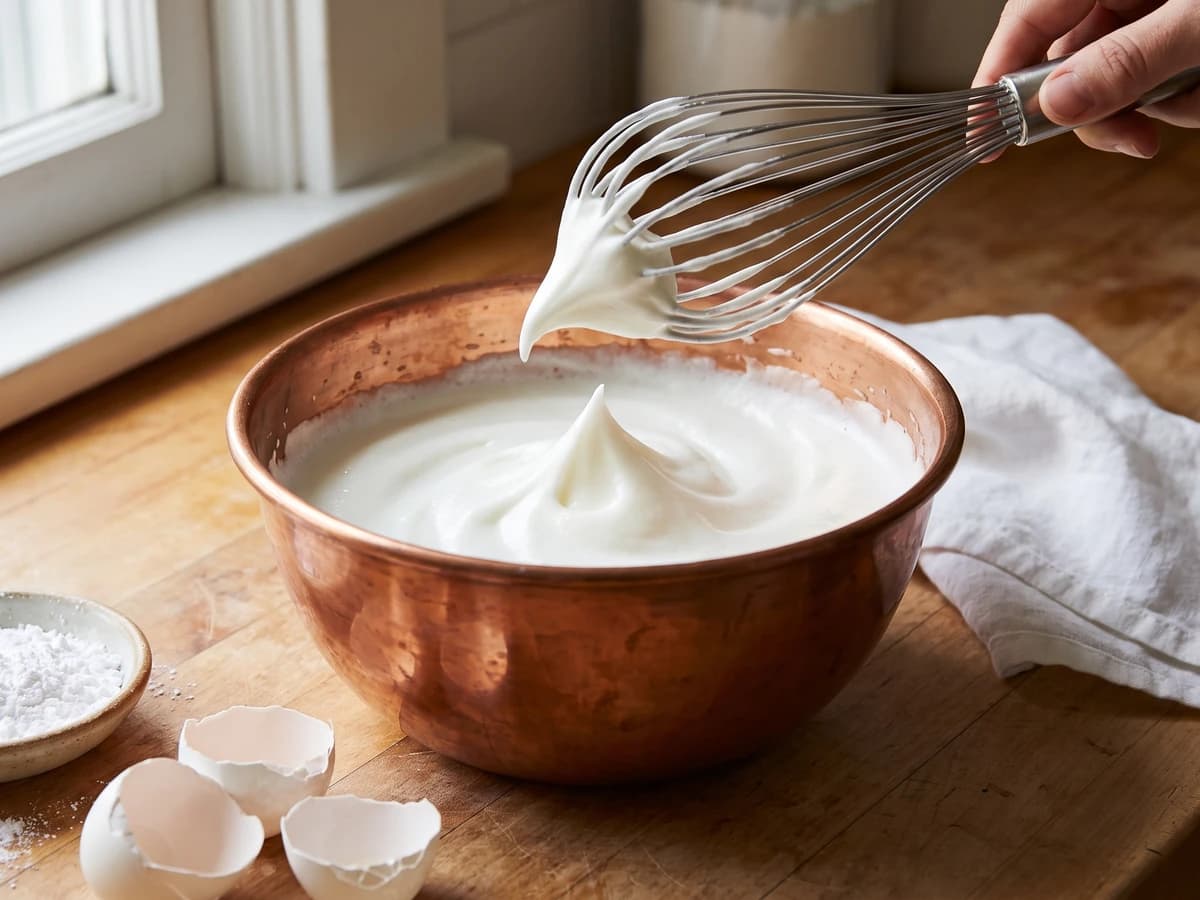
Four whites, one spotless bowl, and a patient change of speed: whisk gently until loosened, then briskly to glossy stiffness, with powdered sugar waiting if the foam begins to granulate.