
Chef Juliette
Various Almond Preparations
Five almond preparations, one discipline: remove the skins cleanly, dry every kernel through, then cut, toast, or cloak it in pale caramel without letting its fragrant oils escape.
A cooking platform built around craft, culture, and the stories behind what we eat.

Created by Chef Juliette
Based on No. 2529, Java Soufflé, from Le Guide Culinaire (1907) by Auguste Escoffier
Strong black tea replaces milk in this high, bronzed Soufflé Java, while the book’s full measure of chopped pistachios runs through its tender centre. Brew boldly, fold gently, and serve at once.
Soufflé Java (tea and pistachio soufflé) teaches the one truth behind every hot soufflé: the rise is made in the bowl, then protected in the oven. Brew the tea with conviction, build a smooth panade, and fold the whites without knocking out the air you worked to create. A weak infusion disappears beneath sugar and eggs, so strength here is balance, not excess.
The source assumes its general Soufflé preparation is already understood and that enough hands exist to brew, strain, whip, bake, and send dessert without delay. One cook needs the whole sequence in one place. This version doubles the stated ratio to four portions, exactly 190 ml tea with 85 g pistachios, and uses an ordinary one-quart dish in a domestic oven. Nothing essential was obsolete; the honest changes are the scale and a parchment collar that gives the rising batter a little insurance.
The finished Soufflé Java rises above its dish with a bronzed, irregular crown, an ivory centre, and green pistachios running generously through it. The one step that decides the dish is the folding: loosen the dense base with the first quarter of the whites, then protect the remaining air with broad, deliberate turns.
Soufflé Java belongs to the Parisian grand-kitchen table, where named sweet soufflés turned the standard baked preparation toward perfumes drawn from the wider pantry. The title can mislead: in this formula Java means strongly brewed tea, not coffee, with chopped pistachios fixed at one and a half ounces for every one-sixth pint of infusion. It travels readily to the home oven because its essential equipment is only a straight-sided dish and a whisk; the drama comes from timing, not specialized machinery.
Quantity
1 tablespoon (15 ml / 14 g)
softened
Quantity
2 tablespoons (30 ml / 25 g)
Quantity
2 tablespoons (30 ml / 12 g)
Quantity
1 cup (240 ml / 240 g), enough to yield 3/4 cup plus 2 teaspoons (190 ml / 190 g) strained tea
Quantity
2/3 cup (160 ml / 85 g)
finely chopped
Quantity
3 tablespoons (45 ml / 42 g)
Quantity
1/3 cup (80 ml / 40 g)
Quantity
1/2 cup (120 ml / 100 g)
divided
Quantity
1/8 teaspoon (0.6 ml / 0.8 g)
Quantity
4
separated
| Ingredient | Quantity |
|---|---|
| unsalted butter for the dishsoftened | 1 tablespoon (15 ml / 14 g) |
| superfine sugar for coating the dish | 2 tablespoons (30 ml / 25 g) |
| loose-leaf black tea | 2 tablespoons (30 ml / 12 g) |
| freshly boiled water | 1 cup (240 ml / 240 g), enough to yield 3/4 cup plus 2 teaspoons (190 ml / 190 g) strained tea |
| unsalted shelled pistachiosfinely chopped | 2/3 cup (160 ml / 85 g) |
| unsalted butter | 3 tablespoons (45 ml / 42 g) |
| plain flour | 1/3 cup (80 ml / 40 g) |
| superfine sugardivided | 1/2 cup (120 ml / 100 g) |
| fine sea salt | 1/8 teaspoon (0.6 ml / 0.8 g) |
| large eggsseparated | 4 |
Heat the oven to 400°F (200°C) with a rack in the lower third. Brush the inside of a 1-quart (950 ml) straight-sided soufflé dish with the softened butter, working upward from base to rim, then coat it evenly with the 2 tablespoons (25 g) sugar. Fasten a buttered parchment collar around the outside so it stands about 3 inches (8 cm) above the rim. The collar is useful home scaffolding, not the dish itself; if your mould is deep enough to leave 2 inches (5 cm) of headroom, you may omit it.
Pour the freshly boiled water over the black tea and infuse for 5 minutes. Strain through a fine-mesh sieve without pressing the leaves, then measure exactly 3/4 cup plus 2 teaspoons (190 ml / 190 g). Top it up with a little hot water if the leaves absorbed too much, or discard any excess. Strain it a second time if leaf dust remains. The infusion should taste stronger than tea poured for drinking; sugar, eggs, and pistachios will soften it.
Melt the 3 tablespoons (42 g) butter in a medium saucepan over gentle heat. Stir in the flour and cook for 1 minute without letting it colour. Add the hot tea gradually, whisking smooth after each addition, then cook for 2 to 3 minutes until the panade, the starch-thickened base, becomes glossy and pulls cleanly from the sides of the pan. If it forms lumps, don't throw it out. Ça se rattrape: press it through the fine-mesh sieve while it is still warm, then return it to the pan.
Remove the panade from the heat and whisk in half the superfine sugar, 1/4 cup (60 ml / 50 g), and the salt. Let it stand for 5 minutes, until warm rather than fiercely hot, then whisk in the yolks one at a time. If a yolk begins forming cooked threads, immediately pass the base through the sieve before proceeding. Fold in all the chopped pistachios and transfer the mixture to a broad bowl.
Whisk the egg whites in a perfectly clean bowl until they form soft peaks. Add the remaining 1/4 cup (60 ml / 50 g) sugar gradually and continue whisking only until the whites are glossy and hold a medium peak whose tip bends slightly. Stop there. Dry, clotted whites cannot expand properly; if you have taken them a little too far, whisk in 1 tablespoon (15 ml) of the pistachio base to restore some suppleness before folding.
Stir one-quarter of the whites firmly into the pistachio base to loosen it. This first addition is allowed to lose its air. Fold in the rest in two additions, cutting the spatula down through the centre, sweeping across the bottom, and turning the mixture over itself while rotating the bowl. Stop as soon as no large white pockets remain. A few pale streaks are safer than ten unnecessary turns.
Spoon the batter into the prepared dish and level the surface gently. Run a clean thumb around the inside edge to make a shallow channel, which encourages an even crown. Place the dish in the oven and immediately lower the heat to 375°F (190°C). Bake without opening the door for 22 minutes, then check through the glass. It is ready after 25 to 30 minutes, when the crown stands well above the rim, the top is deeply golden, and the centre gives a soft tremble rather than a liquid slosh.
Remove the parchment collar and carry the Soufflé Java directly to the table. Break the crown with two serving spoons and reach down for both the browned top and tender centre in every portion. Settling is not failure; every hot soufflé begins to relax once it leaves the oven. The guests wait for the soufflé, never the reverse. À table!
1 serving (about 155g)
Culinary guides, cultural storytelling, and the editorial depth that makes cooking meaningful.
Discover Culinary ExplorerChef Juliette
Five almond preparations, one discipline: remove the skins cleanly, dry every kernel through, then cut, toast, or cloak it in pale caramel without letting its fragrant oils escape.

Chef Juliette
A pastry pantry lesson in one tray: filberts warmed only until their red skins release, rubbed clean, cooled, and chopped into a fragrant mise-en-place for cakes, creams, pralines, and petits fours.

Chef Juliette
The smallest pâtisserie discipline decides whether a cake leaves its mould intact: clarified butter in every corner, followed by the lightest veil of dry flour or fécule.
Chef Juliette
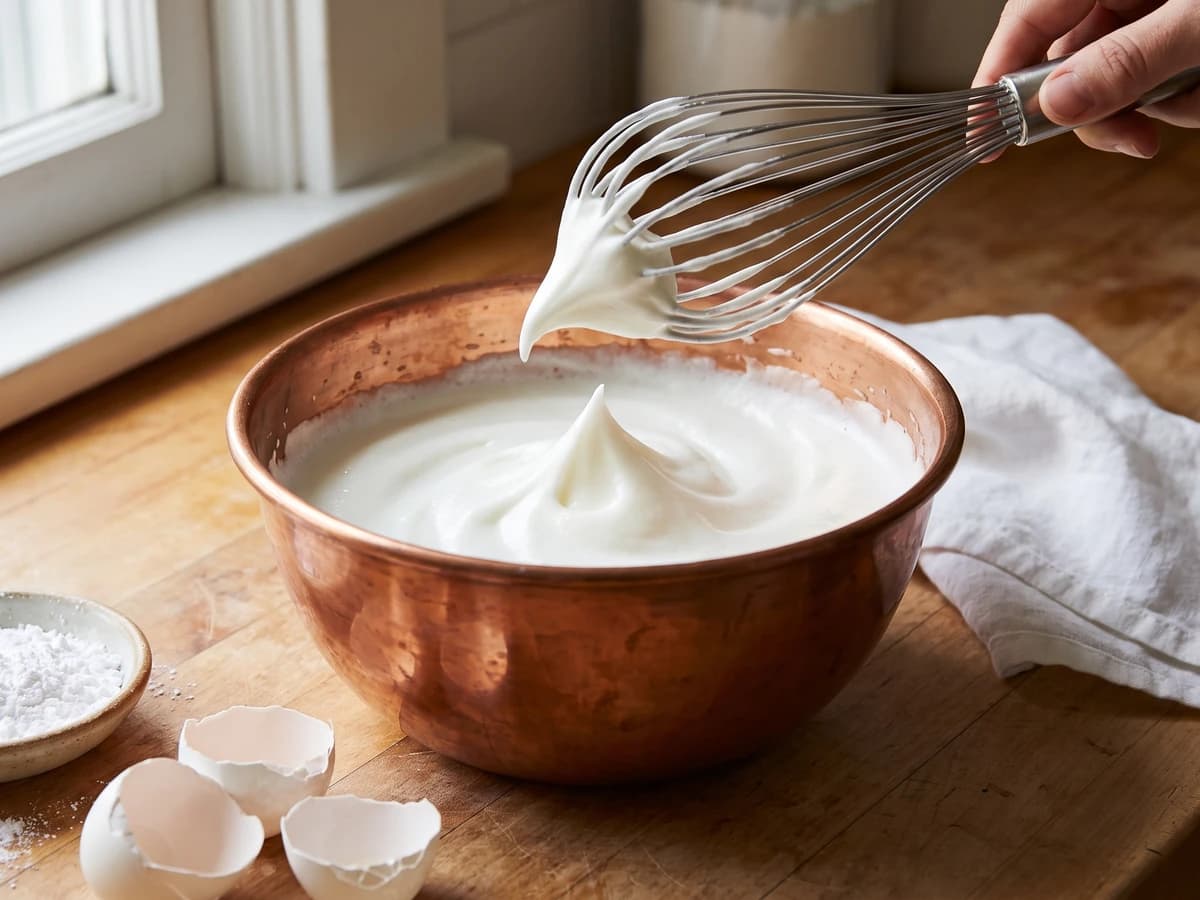
Four whites, one spotless bowl, and a patient change of speed: whisk gently until loosened, then briskly to glossy stiffness, with powdered sugar waiting if the foam begins to granulate.