
Chef Juliette
Various Almond Preparations
Five almond preparations, one discipline: remove the skins cleanly, dry every kernel through, then cut, toast, or cloak it in pale caramel without letting its fragrant oils escape.
A cooking platform built around craft, culture, and the stories behind what we eat.
Created by Chef Juliette
Based on No. 2523, Soufflé with Filbert, from Le Guide Culinaire (1907) by Auguste Escoffier
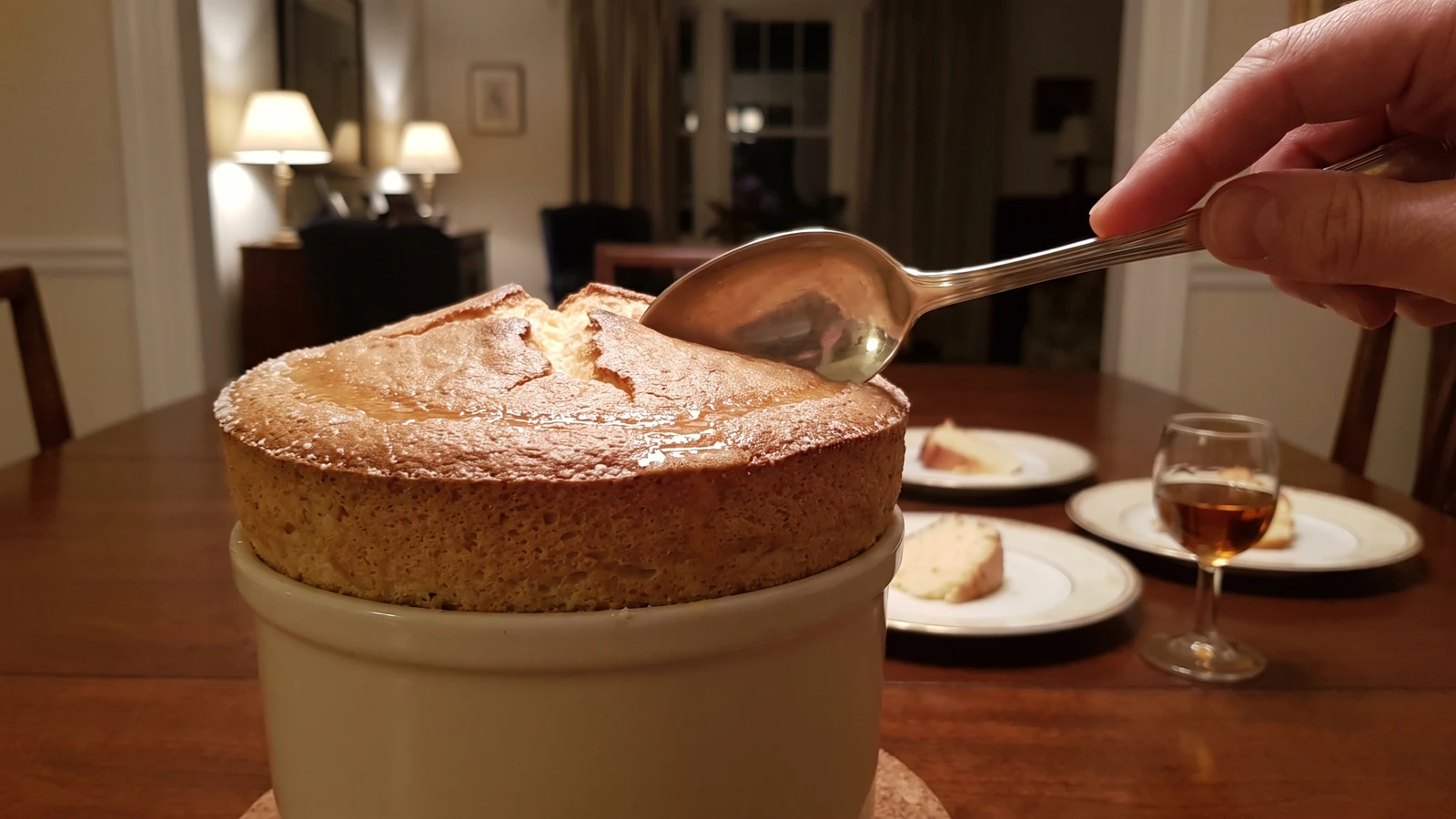
Filbert Pralin (No. 2352) perfumes the milk, the fine sieve keeps the base silken, and properly folded whites lift one generous soufflé high above its dish for a celebration served without delay.
Soufflé aux avelines (hot filbert soufflé) teaches one true thing: lightness begins with a smooth foundation. The milk must take the caramel and hazelnut perfume of the filbert Pralin (No. 2352), then pass through a fine sieve before flour touches it. Leave the smallest grit behind and the finished soufflé will tell on you.
The original entry assumed a pastry pantry already holding finished Pralin (No. 2352), a fine sieve, and hands free to beat whites at the last instant. At home, use that finished referenced preparation, an electric mixer, and one 1.2-liter dish in a thoroughly preheated oven. No saucier or stockpot enters the matter, and no salamander is needed. A brigade's standing mise en place is scaffolding; infusing, straining, folding, and baking without delay are the dish. This version is scaled for four, one cook, one stove, one evening.
When it is right, the crown rises well above the rim, bronze over ivory, with the fragrance of toasted filberts and caramel reaching the table before the spoon does. Take most care over the straining. Once that milk is perfectly smooth, the rest is disciplined folding and the nerve to leave the oven door closed.
Hot sweet soufflés found their natural home at Parisian grand tables and then the bourgeois dining room, where the final course depended upon cook and guests keeping time together. Aveline is a precise French name for a large filbert, while noisette is the broader everyday word for hazelnut. In this preparation, Pralin (No. 2352) means pounded caramel-and-nut nougat intended to perfume soufflés and custards, not the softer almond coating also known by that name.
Quantity
3 tablespoons (45 ml / 42 g)
softened and divided
Quantity
3 tablespoons (45 ml / 38 g)
divided
Quantity
¾ cup (180 ml / 185 g)
Quantity
¾ cup (180 ml / 108 g)
Quantity
¼ cup (60 ml / 30 g)
Quantity
4
separated
Quantity
⅛ teaspoon (0.6 ml / 0.7 g)
| Ingredient | Quantity |
|---|---|
| unsalted buttersoftened and divided | 3 tablespoons (45 ml / 42 g) |
| granulated sugardivided | 3 tablespoons (45 ml / 38 g) |
| whole milk | ¾ cup (180 ml / 185 g) |
| Pralin (No. 2352), nougat-powder form prepared with dried filberts (hazelnuts) | ¾ cup (180 ml / 108 g) |
| plain flour | ¼ cup (60 ml / 30 g) |
| large eggsseparated | 4 |
| fine salt | ⅛ teaspoon (0.6 ml / 0.7 g) |
Heat the oven to 400°F (200°C), or 375°F (190°C) with a fan, with a heavy baking sheet on the lower-middle rack. Brush a straight-sided 1.2-liter soufflé dish with 1 tablespoon (14 g) of the butter, working from base to rim, then coat it with 1 tablespoon (13 g) of the sugar. Tap out the excess and chill the dish while you make the base. Separate the eggs, keeping every trace of yolk away from the whites.
Bring the milk just to the first quiver in a small saucepan, then remove it from the heat. Stir in the Pralin (No. 2352), cover, and leave it to infuse for 15 minutes. Pass the milk through a very fine sieve lined with damp cheesecloth, pressing gently enough to recover the liquid without forcing nut particles through. Rub a drop between two fingers. If you feel grit, strain it again through fresh damp cloth. Ça se rattrape now; once the flour goes in, that sandy texture stays.
Rinse and dry the saucepan. Melt the remaining 2 tablespoons (28 g) butter over medium-low heat, stir in the flour, and cook this pale roux, the butter-and-flour foundation, for 1 minute without letting it color. Add the strained filbert milk gradually, whisking after each addition. Cook for 2 to 3 minutes, stirring firmly, until the base is glossy, very thick, and leaves a clean trail across the pan. If it forms lumps, take it off the heat and whisk hard; if any remain, press the warm base through a clean fine sieve. Let it cool for 5 minutes, then beat in the yolks one at a time.
Put the egg whites and salt in a spotless bowl. Whisk at medium speed until they form soft peaks that bend at their tips, then add the remaining 2 tablespoons (25 g) sugar gradually. Continue only until the whites are glossy and hold medium-firm peaks. Stop before they turn dry or clotted. Supple whites stretch in the oven; overbeaten whites break into pellets and cannot lift the base evenly.
Whisk one-quarter of the whites into the filbert base to loosen it. Add half the remaining whites and fold with a broad spatula, cutting down through the center, sweeping along the bottom, and turning the mixture over itself. Repeat with the final whites just until no large white streaks remain. A few fine threads are safer than stirring the air away.
Spoon the mixture into the chilled dish and smooth the top without pressing. Run a clean thumb around the inside edge to make a shallow channel, which frees the crown to rise cleanly. Set the dish on the hot baking sheet and bake for 22 to 26 minutes without opening the door during the first 18 minutes. It is ready when it stands 4 to 5 cm above the rim, the top is deep filbert gold, and the center gives a slight tremor rather than a liquid slosh.
Bring the soufflé to the table in its baking dish and divide it with a large spoon, reaching down for the tender center and the sugared edge in every serving. Plates and guests must already be waiting. The soufflé waits for no speech. À table!
1 serving (about 135g)
Culinary guides, cultural storytelling, and the editorial depth that makes cooking meaningful.
Discover Culinary ExplorerChef Juliette
Five almond preparations, one discipline: remove the skins cleanly, dry every kernel through, then cut, toast, or cloak it in pale caramel without letting its fragrant oils escape.

Chef Juliette
A pastry pantry lesson in one tray: filberts warmed only until their red skins release, rubbed clean, cooled, and chopped into a fragrant mise-en-place for cakes, creams, pralines, and petits fours.

Chef Juliette
The smallest pâtisserie discipline decides whether a cake leaves its mould intact: clarified butter in every corner, followed by the lightest veil of dry flour or fécule.
Chef Juliette
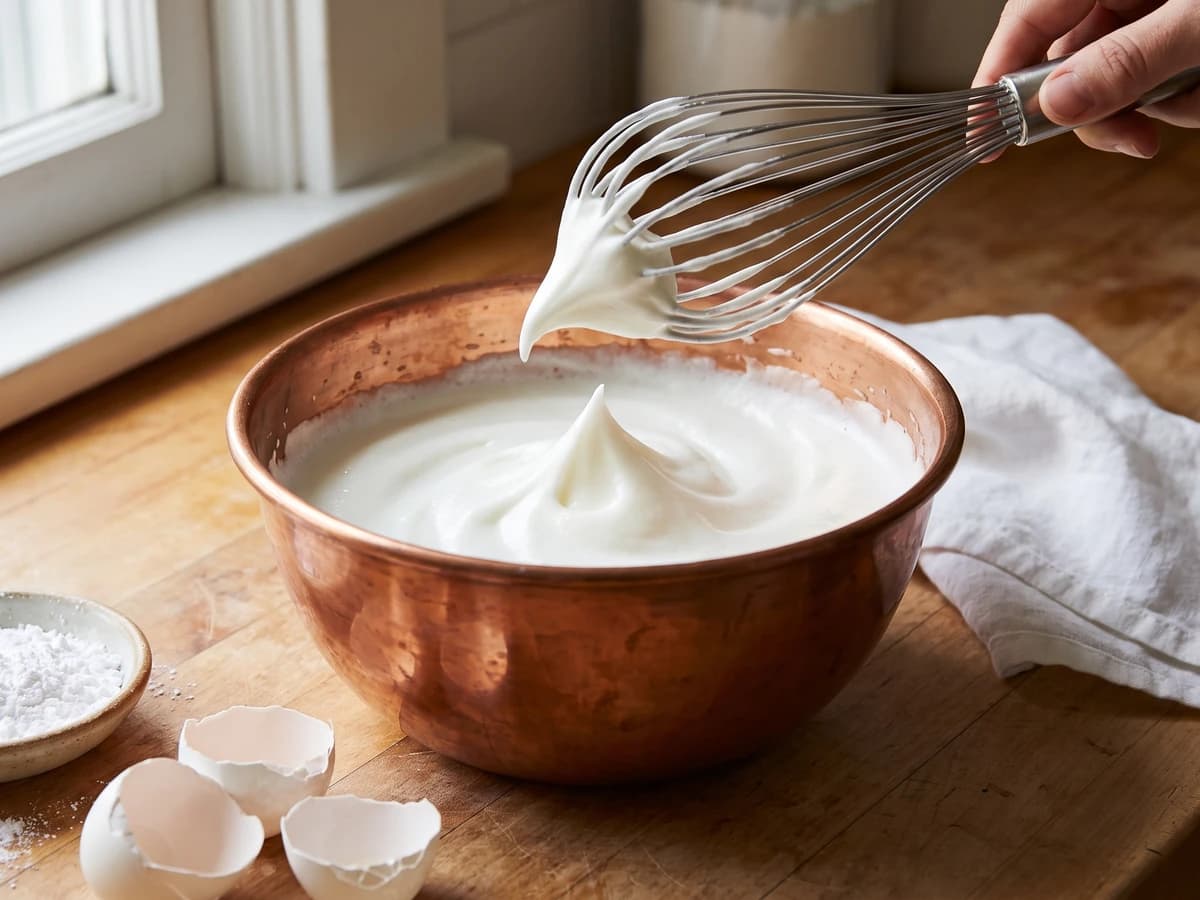
Four whites, one spotless bowl, and a patient change of speed: whisk gently until loosened, then briskly to glossy stiffness, with powdered sugar waiting if the foam begins to granulate.