
Chef Juliette
Various Almond Preparations
Five almond preparations, one discipline: remove the skins cleanly, dry every kernel through, then cut, toast, or cloak it in pale caramel without letting its fragrant oils escape.
A cooking platform built around craft, culture, and the stories behind what we eat.
Created by Chef Juliette
Based on No. 2522, Soufflé with Fresh Almonds, from Le Guide Culinaire (1907) by Auguste Escoffier
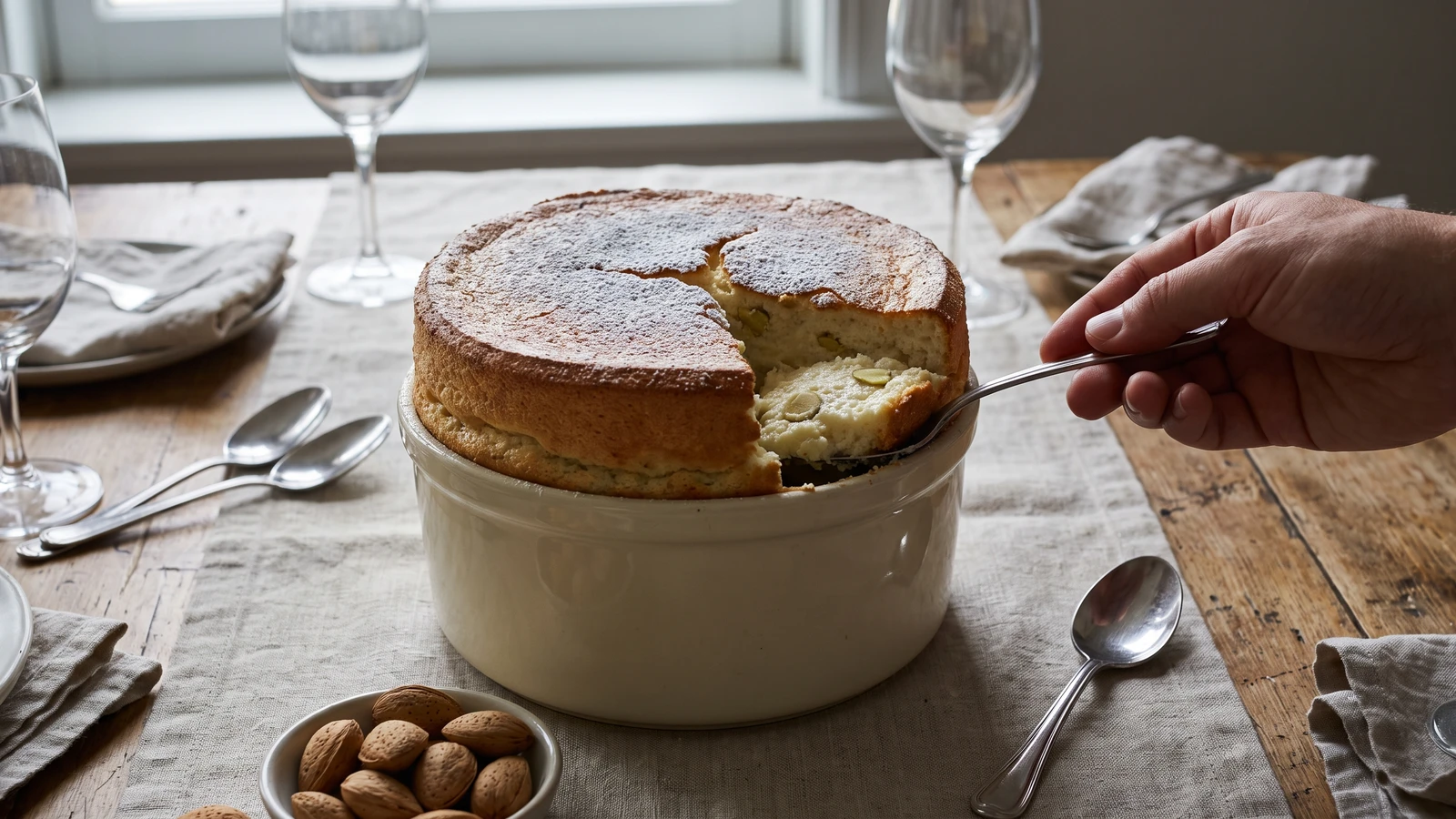
A golden Soufflé aux Amandes Fraîches rises on a tender vanilla base, carrying milky green almond splinters through its airy crumb. Fold gently, bake boldly, and bring everyone to the table first.
Soufflé aux Amandes Fraîches (fresh almond soufflé) teaches the one law every soufflé obeys: it rises on the air you preserve, not on luck. The fresh kernels remain in slender splinters, never grilled or chopped, so their milky, faintly green flavor stays distinct inside the warm vanilla crumb.
The original formula assumed a pastry brigade mixing service quantities and an oven reserved for immediate firing. There is no saucier's work or stockpot here, and a salamander would only scorch the crown. For one cook, the honest equivalent is a single 1.5-quart straight-sided dish, a handheld mixer, and a thoroughly preheated home oven. The brigade's batch mixing and last-minute portioning are scaffolding and can go; the roux base, fresh almond splinters, whipped whites, immediate baking, and immediate service are the dish, so they stay.
When it arrives, the crown should be butter-gold and delicately fissured, with a tender centre that trembles under the spoon. Have your guests seated before you fold the whites. That fold is the step that matters most: lighten the base firmly with the first portion, then handle the remaining foam as though every bubble belongs to you, because it does.
Soufflés belong to the Parisian classical and bourgeois table, where a carefully cooked base and whipped whites turned pantry staples into an entremets, a sweet course served at the instant of its rise. The fresh-almond version links that urban technique to the short almond harvests of Provence and Languedoc, whose newly shelled kernels are tender, milky, and faintly green rather than dry and nutty. It is not almond paste in a lighter costume: the kernels stay splintered, allowing their fresh character to punctuate the soufflé instead of dissolving into it.
Quantity
3 tablespoons (45 ml / 42 g)
softened and divided
Quantity
1/2 cup (120 ml / 100 g)
divided
Quantity
1 cup (240 ml / 245 g)
divided
Quantity
1/2 bean
split and scraped
Quantity
1/4 cup (60 ml / 30 g)
Quantity
1/2 cup (120 ml / 70 g)
peeled, dried thoroughly, and splintered lengthwise
Quantity
4
separated
Quantity
1 additional
Quantity
1 pinch
Quantity
1 tablespoon (15 ml / 8 g)
| Ingredient | Quantity |
|---|---|
| unsalted buttersoftened and divided | 3 tablespoons (45 ml / 42 g) |
| superfine sugardivided | 1/2 cup (120 ml / 100 g) |
| whole milkdivided | 1 cup (240 ml / 245 g) |
| vanilla beansplit and scraped | 1/2 bean |
| all-purpose flour | 1/4 cup (60 ml / 30 g) |
| fresh sweet almond kernelspeeled, dried thoroughly, and splintered lengthwise | 1/2 cup (120 ml / 70 g) |
| large eggsseparated | 4 |
| large egg white | 1 additional |
| fine sea salt | 1 pinch |
| confectioners' sugar | 1 tablespoon (15 ml / 8 g) |
Remove the green hulls and shells from the fresh sweet almonds, then slip away the thin skins with a small knife. If the skins cling, lower the kernels into simmering water for fifteen seconds, chill them at once, and rub them clean. Pat them completely dry, then split each kernel lengthwise into slender splinters. Do not toast them. Their raw, milky freshness is the reason for making this seasonal soufflé.
Set a rack in the lower-middle of the oven, place a heavy baking sheet on it, and heat the oven to 375°F (190°C), or 355°F (180°C) with a fan. Brush a 1.5-quart (1.4-litre) straight-sided soufflé dish with 1 tablespoon (15 ml / 14 g) of the butter, making upward strokes from base to rim. Coat it evenly with 1 tablespoon (15 ml / 13 g) of the superfine sugar, tap away the excess, and chill the dish while you make the batter.
Reserve 1 tablespoon (15 ml / 15 g) of the milk. Heat the rest with the vanilla seeds and pod until small bubbles gather at the edge, then cover and leave it for five minutes. Remove the pod. Melt the remaining 2 tablespoons (30 ml / 28 g) butter in a saucepan, stir in the flour, and cook this pale roux for one minute without letting it color. Whisk in the hot milk gradually, then cook for two to three minutes, stirring firmly, until the panade, the thick cooked base, turns smooth and pulls cleanly from the pan. Stir in 1/4 cup (60 ml / 50 g) of the superfine sugar. If the base seizes into lumps, take it off the heat, whisk in the reserved cold milk, and pass it through a fine sieve if needed. Ça se rattrape.
Let the panade cool for five minutes, until warm rather than hot. Beat in the four yolks one at a time, making the base smooth before adding the next, then stir in the fresh almond splinters. The base must remain supple enough to accept the whites. If it has cooled into a stiff paste, warm it over the gentlest heat for a few seconds while stirring, then take it off the stove before proceeding.
Whip the five egg whites with the salt in a spotless bowl until they hold soft peaks. Add the remaining superfine sugar gradually and continue just until the whites are glossy and hold a medium-firm peak whose tip bends slightly. Dry, clotted whites are overbeaten and difficult to fold. Stir one quarter of the whites briskly into the almond base to loosen it; this first portion is sacrificed deliberately. Fold in the rest in three additions with a broad spatula, cutting down through the centre and lifting the base over the top. Stop when only an occasional white streak remains. If the batter begins losing volume, stop folding and fill the dish immediately; a slightly uneven soufflé rises better than one polished flat.
Spoon the batter into the prepared dish, filling it no more than three quarters full. Level the surface gently, then run the tip of your thumb around the inside rim to make a shallow channel that frees the crown to rise evenly. Set the dish on the hot baking sheet and bake for 24 to 28 minutes without opening the oven during the first twenty. It is ready when the crown stands well above the rim, the surface is deep butter-gold, and the centre trembles slightly when nudged. The middle should be tender, not liquid. No salamander is needed; the oven gives the crown all the color it wants.
Dust the crown lightly with the confectioners' sugar and carry the whole dish directly to the table. Cut down through the centre with two serving spoons, opening the tender crumb and almond splinters, then serve at once. A soufflé does not wait for the table; the table waits for the soufflé. À table!
1 serving (about 160g)
Culinary guides, cultural storytelling, and the editorial depth that makes cooking meaningful.
Discover Culinary ExplorerChef Juliette
Five almond preparations, one discipline: remove the skins cleanly, dry every kernel through, then cut, toast, or cloak it in pale caramel without letting its fragrant oils escape.

Chef Juliette
A pastry pantry lesson in one tray: filberts warmed only until their red skins release, rubbed clean, cooled, and chopped into a fragrant mise-en-place for cakes, creams, pralines, and petits fours.

Chef Juliette
The smallest pâtisserie discipline decides whether a cake leaves its mould intact: clarified butter in every corner, followed by the lightest veil of dry flour or fécule.
Chef Juliette
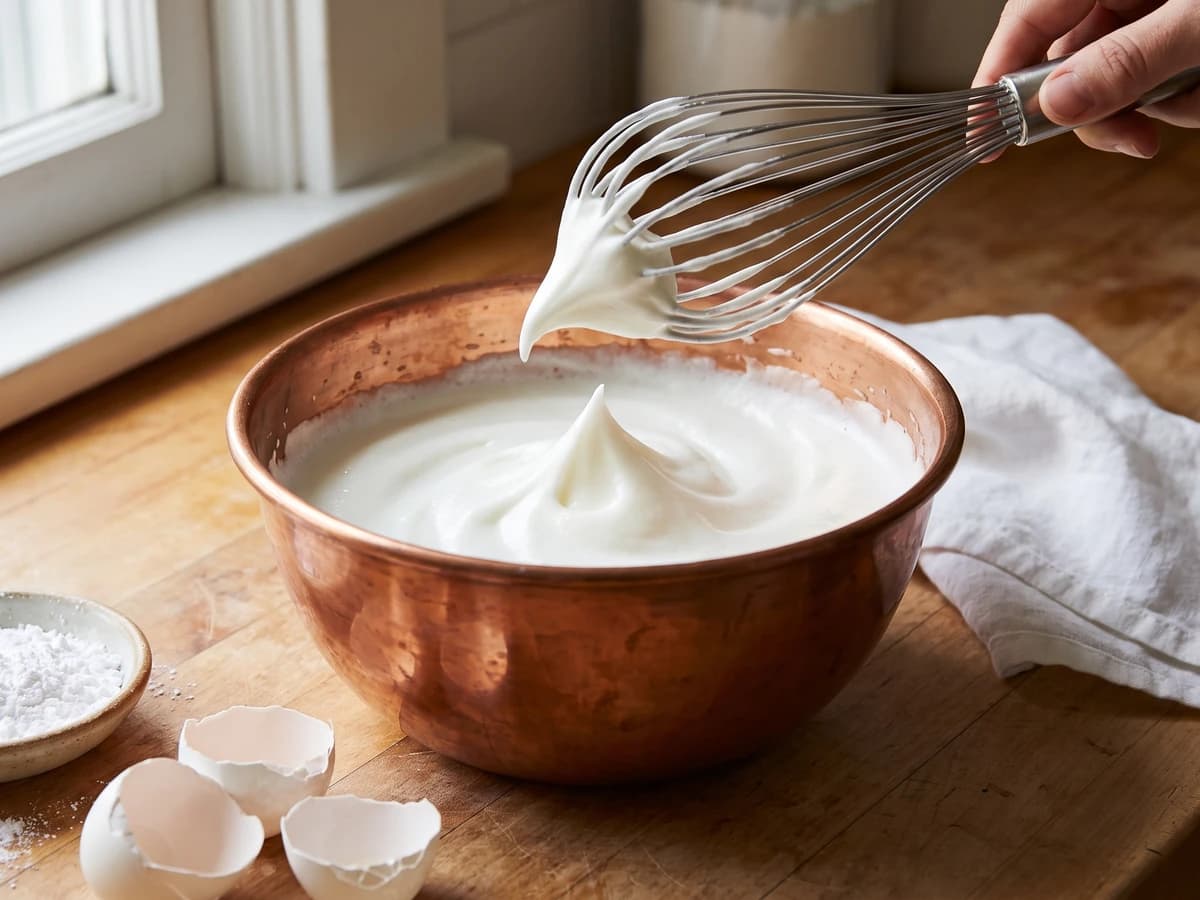
Four whites, one spotless bowl, and a patient change of speed: whisk gently until loosened, then briskly to glossy stiffness, with powdered sugar waiting if the foam begins to granulate.