
Chef Juliette
Various Almond Preparations
Five almond preparations, one discipline: remove the skins cleanly, dry every kernel through, then cut, toast, or cloak it in pale caramel without letting its fragrant oils escape.
A cooking platform built around craft, culture, and the stories behind what we eat.

Created by Chef Juliette
Based on No. 2514, Souffléd Pudding à la Royale, from Le Guide Culinaire (1907) by Auguste Escoffier
Pouding Soufflé à la Royale hides a tender, airy custard inside a mosaic of jam spirals, then arrives with apricot-Marsala sauce: a grand moulded pudding made possible by careful lining and gentle heat.
Pouding Soufflé à la Royale (a souffléd pudding inside a jam-spiral Charlotte) teaches that a moulded dessert is decided before the filling ever goes in: the biscuit rounds must meet edge to edge. Leave one gap and the batter slips behind them, welding the pouding to the mould and blurring its pinwheel coat. Close the lining and the rest is gentle heat and patience.
The original entry assumes a pastry brigade with sheets of biscuit, soufflé preparation, apricot sauce, and Charlotte moulds already waiting. The home equivalent is one thin sponge baked on a small rimmed tray, one 1.25-litre mould serving six, and a quick apricot sauce prepared while the pouding poaches in its bain-marie (hot-water bath). Making separate components in brigade quantities and holding them for service was scaffolding, so that goes; the tight jam roll, egg-white lift, bain-marie, and Marsala-scented sauce are the dish, so every one stays. One cook, one stove, one evening.
When it is right, the mould lifts away to reveal close red spirals around a tender ivory centre, with the warm apricot sauce poured from its own jug at the table. Before you touch the soufflé base, finish the step that decides everything: slice the roll evenly and patch every gap in the mould.
Pouding Soufflé à la Royale belongs to the Parisian grand-kitchen repertory of moulded entremets, where French pastry cooks absorbed the British pudding and remade it through soufflé technique and formal unmoulding. Its jam-spiral casing shares the architecture of charlotte royale, but this is not the familiar cold, cream-filled charlotte; it is a warm poached pouding accompanied by apricot sauce scented with Marsala. The title à la Royale signals a grand presentation rather than a documented royal household provenance, and the dish traveled naturally from professional pastry rooms to celebration tables.
Quantity
2 tablespoons (30 ml / 28 g)
softened
Quantity
3 large eggs
at room temperature and separated
Quantity
⅓ cup (80 ml / 70 g)
divided
Quantity
⅔ cup (160 ml / 75 g)
sifted
Quantity
⅛ teaspoon (0.6 ml / 0.7 g)
Quantity
1 tablespoon (15 ml / 14 g)
melted and cooled
Quantity
½ cup (120 ml / 160 g)
Quantity
1 cup (240 ml / 245 g)
Quantity
3 tablespoons (45 ml / 42 g)
Quantity
⅓ cup (80 ml / 40 g)
Quantity
⅓ cup (80 ml / 70 g)
Quantity
4 large eggs
separated
Quantity
2 tablespoons (30 ml / 25 g)
Quantity
⅛ teaspoon (0.6 ml / 0.7 g)
Quantity
¾ cup (180 ml / 240 g)
Quantity
⅓ cup (80 ml / 80 g)
Quantity
3 tablespoons (45 ml / 45 g)
Quantity
as needed
| Ingredient | Quantity |
|---|---|
| unsalted butter for the tray and Charlotte mouldsoftened | 2 tablespoons (30 ml / 28 g) |
| large eggs for the biscuitat room temperature and separated | 3 large eggs |
| superfine sugar for the biscuitdivided | ⅓ cup (80 ml / 70 g) |
| cake floursifted | ⅔ cup (160 ml / 75 g) |
| fine sea salt for the biscuit | ⅛ teaspoon (0.6 ml / 0.7 g) |
| unsalted butter for the biscuitmelted and cooled | 1 tablespoon (15 ml / 14 g) |
| thick seedless raspberry or redcurrant jam | ½ cup (120 ml / 160 g) |
| whole milk | 1 cup (240 ml / 245 g) |
| unsalted butter for the soufflé base | 3 tablespoons (45 ml / 42 g) |
| all-purpose flour | ⅓ cup (80 ml / 40 g) |
| superfine sugar for the panade | ⅓ cup (80 ml / 70 g) |
| large eggs for the soufflé baseseparated | 4 large eggs |
| superfine sugar for the egg whites | 2 tablespoons (30 ml / 25 g) |
| fine sea salt for the soufflé base | ⅛ teaspoon (0.6 ml / 0.7 g) |
| smooth apricot preserves | ¾ cup (180 ml / 240 g) |
| water | ⅓ cup (80 ml / 80 g) |
| dry or semisecco Marsala | 3 tablespoons (45 ml / 45 g) |
| boiling water for the bain-marie | as needed |
Heat the oven to 400°F (200°C). Butter a 9-by-13-inch (23-by-33-cm) rimmed baking tray, line it with parchment, and butter the parchment lightly. Set a second sheet of parchment on the worktop for turning out the biscuit.
Beat the three yolks with half the biscuit sugar until pale, thick, and able to leave a ribbon for several seconds. In a clean bowl, beat the three whites with the salt until they hold soft peaks, then add the remaining sugar gradually and continue until glossy medium peaks form. Fold one-third of the whites into the yolks to loosen them, then fold in the rest. Sift the cake flour over the bowl in two additions and fold only until no dry streaks remain. Stir a generous spoonful of batter into the melted butter, then fold that mixture back through the bowl. Spread the batter about ¼ inch (6 mm) thick and bake for 8 to 10 minutes, until pale gold and springy under a fingertip. Do not let it dry or darken, because an overbaked biscuit cracks instead of rolling.
Turn the hot biscuit onto the waiting parchment and peel away its baking paper. Trim only the dry edges, then roll the biscuit and clean parchment together from a short end while it is still warm. Leave it curled for 5 minutes, unroll it gently, and spread the jam in a thin, even layer to within ¼ inch (6 mm) of the edges. Roll it again without the parchment, keeping the cylinder tight but not crushing it. Chill seam-side down for 20 minutes. If a small crack appears, press it closed while the biscuit is warm and continue; the damaged slice can be used as a patch inside the mould.
Lower the oven to 325°F (160°C). Butter a 5-cup (1.25-litre) Charlotte mould thoroughly. Slice the chilled roll across into even ¼-inch (6-mm) rounds. Arrange the prettiest rounds closely over the bottom and sides, with their cut pinwheel faces against the metal. They must touch. If any metal remains visible, trim a small wedge from a spare round or press in biscuit crumbs moistened with a trace of jam. Ça se rattrape. A gap left open lets the soufflé preparation run behind the lining, spoiling both the pattern and the unmoulding. Chill the lined mould while you make the filling.
Warm the milk with the ⅓ cup (70 g) sugar until the sugar dissolves and the milk is hot but not boiling. Melt the three tablespoons of butter in a saucepan, stir in the all-purpose flour, and cook for 90 seconds without allowing the roux to colour. Pour in the hot milk gradually while whisking. Cook over medium-low heat for 2 to 3 minutes, stirring firmly, until the panade is smooth, very thick, and pulls cleanly from the sides of the pan. If it forms lumps, beat it hard while hot or press it through a fine sieve; ça se rattrape. Let it cool for 5 minutes, then beat in the four yolks one at a time.
Beat the four egg whites with the salt until they hold soft peaks. Add the two tablespoons of sugar gradually and continue only until the whites are glossy and hold medium peaks with tips that bend. Stir one-third into the warm panade to lighten it, then fold in the remaining whites in two additions. Keep the strokes broad and stop when the mixture is evenly ivory; streaks of white mean it needs another fold, while a loose, flat batter means it has been worked too far.
Spoon the soufflé preparation into the lined mould without knocking the mould against the counter, filling it no higher than 1 inch (2.5 cm) below the rim. Cover with a round of buttered parchment, buttered side down, then tent the mould loosely with foil so the pouding has room to rise. Set the roasting pan on the oven rack, place the mould inside it, and carefully pour in boiling water until it reaches halfway up the mould. Poach for 45 to 50 minutes. The water should barely tremble, never boil hard; if it begins bubbling strongly, add a cup of cool water to the bain-marie and lower the oven slightly. The pouding is ready when the centre feels resilient, a thin skewer carries moist crumbs but no liquid batter, and the centre reaches at least 165°F (74°C).
While the pouding poaches, combine the apricot preserves and water in a small saucepan. Bring them to a gentle simmer and cook for 5 minutes, stirring until smooth and pourable. Press the sauce through a fine sieve, return it briefly to the pan, then remove it from the heat and stir in the Marsala. If it is too thick to pour, loosen it with hot water one tablespoon at a time; if too thin, simmer the apricot mixture a little longer before adding the Marsala. Keep the sauce warm, but do not boil it after the wine goes in or its aroma disappears.
Lift the mould carefully from the bain-marie and let it stand for 8 minutes. Remove the foil and parchment, loosen only the uncovered top edge with a thin knife, then place a warm serving platter over the mould and invert both together. Wait 30 seconds before lifting the mould straight upward. If it resists, lay a warm, damp cloth around the outside for 20 seconds and try again. Bring the pouding to the table promptly, with the warm apricot-Marsala sauce in a separate jug so each serving receives its own generous spoonful. À table!
1 serving (about 220g)
Culinary guides, cultural storytelling, and the editorial depth that makes cooking meaningful.
Discover Culinary ExplorerChef Juliette
Five almond preparations, one discipline: remove the skins cleanly, dry every kernel through, then cut, toast, or cloak it in pale caramel without letting its fragrant oils escape.

Chef Juliette
A pastry pantry lesson in one tray: filberts warmed only until their red skins release, rubbed clean, cooled, and chopped into a fragrant mise-en-place for cakes, creams, pralines, and petits fours.

Chef Juliette
The smallest pâtisserie discipline decides whether a cake leaves its mould intact: clarified butter in every corner, followed by the lightest veil of dry flour or fécule.
Chef Juliette
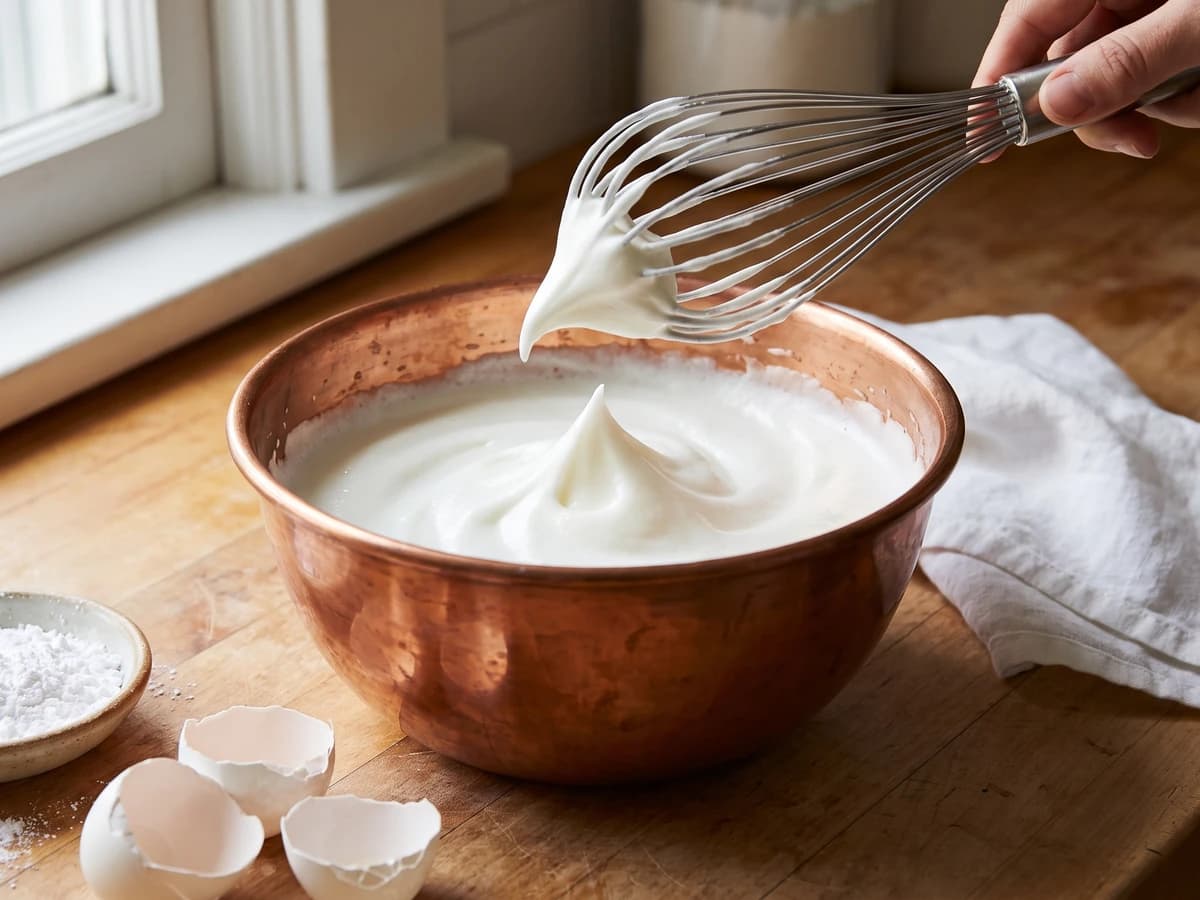
Four whites, one spotless bowl, and a patient change of speed: whisk gently until loosened, then briskly to glossy stiffness, with powdered sugar waiting if the foam begins to granulate.