
Chef Juliette
Various Almond Preparations
Five almond preparations, one discipline: remove the skins cleanly, dry every kernel through, then cut, toast, or cloak it in pale caramel without letting its fragrant oils escape.
A cooking platform built around craft, culture, and the stories behind what we eat.

Created by Chef Juliette
Based on No. 2482, Biscuit Pudding, from Le Guide Culinaire (1907) by Auguste Escoffier
Pouding aux biscuits turns crushed ladyfingers, hot milk, kirsch-soaked fruit, butter, and yolks into a tender pudding, with five late-folded whites keeping every spoonful light beneath warm apricot sauce.
Pouding aux biscuits (ladyfinger custard pudding) teaches the late fold. Its base is deliberately dense, a paste of biscuits, sweetened milk, yolks, butter, and kirsched fruit. Five stiffly beaten whites enter only at the end, giving that rich mixture enough air to poach into a tender pudding rather than settling into a heavy slab.
The original recipe assumed a low Charlotte mould, a deep poaching vessel, and another pair of hands tending the apricot sauce. One cook, one stove, one evening: a shallow ceramic pie dish sits inside an ordinary roasting pan, and the biscuit paste leaves the burner before the yolks go in because a home burner holds fierce heat. The source quantity already fits one home dish, so its five whites and stated proportions stay whole. I specify one ounce of currants where the entry gives no amount. The separate sauce station is brigade scaffolding and can go; the bain-marie and late fold are the dish and must stay.
Expect a butter-gold top, a soft ivory crumb jeweled with candied fruit, and warm apricot sauce pooling around each serving. The moment that decides everything is the folding: use the first quarter of foam to loosen the base, then handle the rest as little as possible.
Pouding aux biscuits belongs to the Parisian classical dessert repertory rather than to a single provincial larder. Its name records the journey of the English pudding family into French kitchens, where cooks used biscuits à la cuillère, enriched the mixture with butter and yolks, lightened it with whipped whites, and poached it gently in a mould. Kirsch-soaked preserved fruit and apricot sauce place it at the well-stocked dessert table, not among the plainer bread puddings with which it is often confused.
Quantity
About 32 (about 4 cups crushed / 950 ml / 227 g)
crushed into fine crumbs
Quantity
1 imperial pint (2⅓ US cups / 568 ml / 585 g)
Quantity
⅔ cup plus 2 teaspoons (170 ml / 142 g)
Quantity
About ¾ cup (180 ml / 142 g)
cut into small dice
Quantity
3 tablespoons (45 ml / 28 g)
Quantity
¼ cup (60 ml / 57 g)
Quantity
5
separated, using 3 yolks and all 5 whites
Quantity
½ cup (120 ml / 113 g)
melted and cooled slightly
Quantity
1 teaspoon (5 ml / 5 g)
softened
Quantity
1 cup (240 ml / 250 g)
warmed for serving
| Ingredient | Quantity |
|---|---|
| crisp ladyfingerscrushed into fine crumbs | About 32 (about 4 cups crushed / 950 ml / 227 g) |
| whole milk | 1 imperial pint (2⅓ US cups / 568 ml / 585 g) |
| granulated sugar | ⅔ cup plus 2 teaspoons (170 ml / 142 g) |
| mixed candied fruitcut into small dice | About ¾ cup (180 ml / 142 g) |
| dried currants | 3 tablespoons (45 ml / 28 g) |
| kirsch | ¼ cup (60 ml / 57 g) |
| large eggsseparated, using 3 yolks and all 5 whites | 5 |
| unsalted buttermelted and cooled slightly | ½ cup (120 ml / 113 g) |
| unsalted butter for the dishsoftened | 1 teaspoon (5 ml / 5 g) |
| apricot saucewarmed for serving | 1 cup (240 ml / 250 g) |
Combine the diced candied fruit, currants, and kirsch in a small bowl. Cover and leave for at least 30 minutes, stirring once so every piece drinks some of the kirsch. Heat the oven to 325°F (160°C), or 300°F (150°C) with convection, and butter a shallow 1½-quart (1.4-liter) Charlotte mould or 10-inch (25 cm) pie dish. Set the dish inside a deep roasting pan and bring a kettle of water to the boil.
Put the crushed ladyfingers in a heavy 3-quart (3-liter) saucepan. Bring the milk and sugar just to the boil in a second pan, stirring until the sugar dissolves, then pour the sweetened milk over the crumbs. Set the saucepan over medium-low heat and stir continuously for 5 to 7 minutes, until the biscuits become a smooth, thick paste that parts briefly behind the spoon. Keep the heat modest. If the base catches, lift it off immediately and transfer the clean-tasting portion to another pan without scraping the dark film from the bottom. Ça se rattrape, provided the mixture does not smell burnt.
Take the pan off the heat and stir in the macerated fruit, currants, and any kirsch remaining in the bowl. Let the mixture stand for 5 minutes, until hot but no longer bubbling, then beat in the 3 yolks one at a time. Add the melted butter in three additions, stirring each one fully into the paste before adding the next. The butter may shine at the edges at first; keep stirring off the heat and the starch and yolks will draw it into a smooth emulsion. Spread the mixture in a wide bowl and leave it until barely warm, about 10 minutes. A hot base cooks the whites on contact and steals their lift.
Put all 5 whites in a spotless, dry bowl. Beat at medium speed until foamy, then at medium-high speed until they form stiff, glossy peaks whose tips hold upright. Stop there. Whites beaten until dry and grainy refuse to fold; if the surface begins to look rough, stop the machine and finish with a few turns of the whisk by hand.
Stir one quarter of the whipped whites firmly into the biscuit base to loosen it. This first portion is allowed to lose its air. Fold in the rest in two additions with a broad spatula, cutting down through the centre, sweeping along the bottom, and turning the mixture over itself. If the first addition seems to vanish, don't keep working it. Ça se rattrape: add the remaining foam gently and stop while a few pale streaks remain. Overfolding is what makes the pudding poach heavy.
Spoon the batter into the buttered dish and level it with no more than two strokes. Place the roasting pan in the oven, then pour in enough boiling water to reach halfway up the dish. This is the bain-marie, a hot-water bath that lets the eggs set gently and evenly. Bake for 50 to 60 minutes, until the pudding is risen, butter-gold on top, firm around the edges, and softly trembling at the centre. A skewer should emerge with moist crumbs but no liquid batter, or the centre should register about 170°F (77°C). If the water begins boiling hard, add a cup of cool water to the bath and lower the oven slightly; fierce heat tightens the custard.
Lift the pudding dish carefully from the bain-marie and let it rest for 15 minutes. The centre will finish setting while the crumb stays tender. Bring it to the table in its baking dish and serve generous spoonfuls with the warm apricot sauce passed separately. À table!
1 serving (about 275g)
Culinary guides, cultural storytelling, and the editorial depth that makes cooking meaningful.
Discover Culinary ExplorerChef Juliette
Five almond preparations, one discipline: remove the skins cleanly, dry every kernel through, then cut, toast, or cloak it in pale caramel without letting its fragrant oils escape.

Chef Juliette
A pastry pantry lesson in one tray: filberts warmed only until their red skins release, rubbed clean, cooled, and chopped into a fragrant mise-en-place for cakes, creams, pralines, and petits fours.

Chef Juliette
The smallest pâtisserie discipline decides whether a cake leaves its mould intact: clarified butter in every corner, followed by the lightest veil of dry flour or fécule.
Chef Juliette
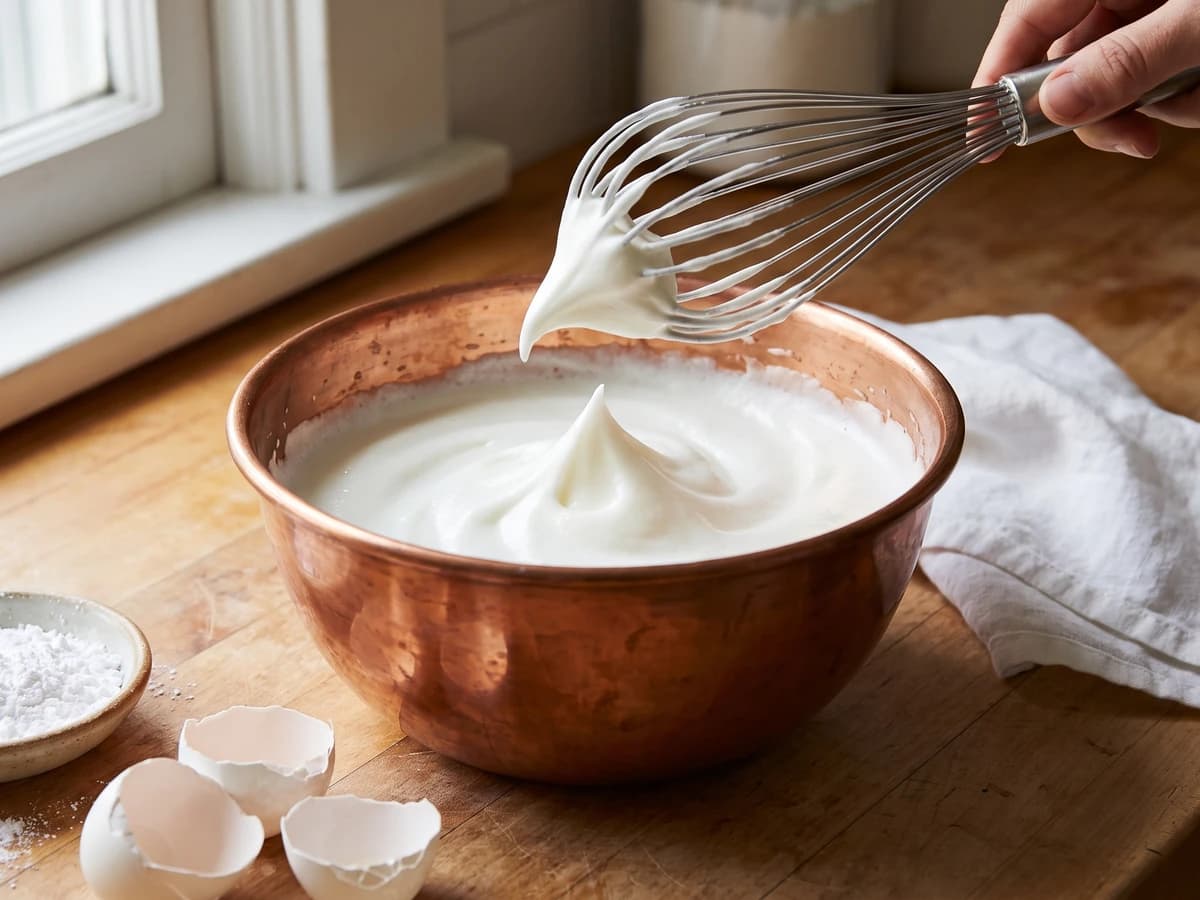
Four whites, one spotless bowl, and a patient change of speed: whisk gently until loosened, then briskly to glossy stiffness, with powdered sugar waiting if the foam begins to granulate.