
Chef Juliette
Various Almond Preparations
Five almond preparations, one discipline: remove the skins cleanly, dry every kernel through, then cut, toast, or cloak it in pale caramel without letting its fragrant oils escape.
A cooking platform built around craft, culture, and the stories behind what we eat.

Created by Chef Juliette
Based on No. 2464, Xmas Omelet, from Le Guide Culinaire (1907) by Auguste Escoffier
A butter-gold sweet omelette wrapped around warm, spice-dark mincemeat, rolled while its centre stays creamy, then glossed with rum and set alight at the Christmas table.
Omelette de Noël teaches the nerve every sweet omelette requires: roll it before it looks finished. The centre must still be baveuse (soft and creamy) when the warm mincemeat goes in, because the eggs keep setting from the pan, the filling, and their own heat. Wait for certainty and you get a dry wrapper around preserved fruit. Move while it glistens.
The original formula is already written per six eggs, so its ratio remains intact as one generous dessert for four. It assumed a range cook rolling at the stove and a dining-room hand waiting with a long dish and heated rum. At home, warm the filling, platter, and measured rum before the eggs meet the pan, then one cook can carry both jobs safely. That handoff is brigade scaffolding and can go; the six-egg base, copious mincemeat, creamy centre, and tableside flambé are the dish and must stay. One cook, one stove, one evening.
The decisive moment comes just before the roll. The omelette should be set underneath, glossy above, and supple enough to fold without cracking. If it catches or tears, don't panic; the method gives you the rescue at the pan. Ça se rattrape.
Omelette de Noël belongs to the cosmopolitan dining-room branch of the French classical canon, especially the grand-hotel tables of Paris, rather than to a regional farmhouse tradition. Its fruit mincemeat is English in character, showing how French kitchens absorbed a British Christmas preparation and carried it through the French method of the sweet rolled omelette. The tableside rum flambé turned a quick pan dessert into celebration, but the dish remains an omelette first, not a pudding baked until firm.
Quantity
1 cup (240 ml / 300 g)
Quantity
6
Quantity
1/8 teaspoon (0.6 ml / 0.75 g)
Quantity
1 tablespoon (15 ml / 13 g)
Quantity
2 tablespoons (30 ml / 30 g)
Quantity
1/4 teaspoon (1.25 ml / 0.5 g)
finely grated
Quantity
1 tablespoon (15 ml / 14 g)
for the eggs
Quantity
2 tablespoons (30 ml / 28 g)
Quantity
3 tablespoons (45 ml / 42 g)
for flambéing
| Ingredient | Quantity |
|---|---|
| prepared fruit mincemeat | 1 cup (240 ml / 300 g) |
| large eggs | 6 |
| fine salt | 1/8 teaspoon (0.6 ml / 0.75 g) |
| granulated sugar | 1 tablespoon (15 ml / 13 g) |
| heavy cream | 2 tablespoons (30 ml / 30 g) |
| orange rindfinely grated | 1/4 teaspoon (1.25 ml / 0.5 g) |
| dark rumfor the eggs | 1 tablespoon (15 ml / 14 g) |
| unsalted butter | 2 tablespoons (30 ml / 28 g) |
| dark rumfor flambéing | 3 tablespoons (45 ml / 42 g) |
Warm the fruit mincemeat in a small saucepan over low heat for 3 to 4 minutes, stirring until it is soft and spoonable but neither frying nor reducing. Cover and keep it warm. Warm a 12 to 14-inch (30 to 35 cm) heatproof platter in a low oven, or fill it with hot water and dry it thoroughly just before plating. Measure the flambé rum into a small heatproof metal cup, cover it, and stand the cup in a bowl of very hot water. Put the rum bottle away before any flame appears.
Beat the eggs with the salt and sugar until no streaks of white remain. Add the cream, orange rind, and the rum reserved for the eggs, then beat only until combined. Don't whip in a cloud of air; this omelette needs a tender, flexible body that will roll, not a spongy one.
Heat a 12-inch (30 cm) nonstick or well-seasoned skillet over medium heat. Add the butter and let it foam without browning, then pour in the eggs. Shake the pan while stirring briskly in small circles for 20 to 30 seconds, drawing the setting egg into soft curds. Stop stirring and spread the mixture evenly. Cook only until the underside has knitted together and the surface remains glossy and baveuse, about 30 to 60 seconds more. If the edges seize before the centre thickens, lift the pan from the heat, fold those edges inward, and swirl the loose egg into the spaces. Ça se rattrape.
Spoon the warm mincemeat copiously in a thick band across the centre, leaving a 1-inch (2.5 cm) border at each end. Fold the far third of the omelette over the filling. Tilt the pan toward the warmed platter and coax the omelette forward, rolling the remaining third over as it leaves the pan. Land it seam-side down. If a small tear opens, tuck the torn flap underneath and return any escaped mincemeat through the open end; the seam-down roll will hold.
Carry the platter to a broad, cleared serving area away from candles, paper decorations, greenery, curtains, and overhead fabric. Turn off the stove burners and keep guests at arm's length. Uncover the warmed rum and pour it evenly over the omelette from the measured cup. Never pour alcohol directly from its bottle onto the dish.
Keep the room bright enough to see the pale blue flame, then touch a long match or utility lighter to the rum at one end of the platter. Leave the platter still while the flame crosses the omelette and dies naturally. If the rum does not catch, don't add more alcohol or attempt repeated lighting; spoon away any deep pool and serve, because the omelette itself is sound. Cut it crosswise at once, while the centre remains creamy and the mincemeat warm. À table!
1 serving (about 175g)
Culinary guides, cultural storytelling, and the editorial depth that makes cooking meaningful.
Discover Culinary ExplorerChef Juliette
Five almond preparations, one discipline: remove the skins cleanly, dry every kernel through, then cut, toast, or cloak it in pale caramel without letting its fragrant oils escape.

Chef Juliette
A pastry pantry lesson in one tray: filberts warmed only until their red skins release, rubbed clean, cooled, and chopped into a fragrant mise-en-place for cakes, creams, pralines, and petits fours.

Chef Juliette
The smallest pâtisserie discipline decides whether a cake leaves its mould intact: clarified butter in every corner, followed by the lightest veil of dry flour or fécule.
Chef Juliette
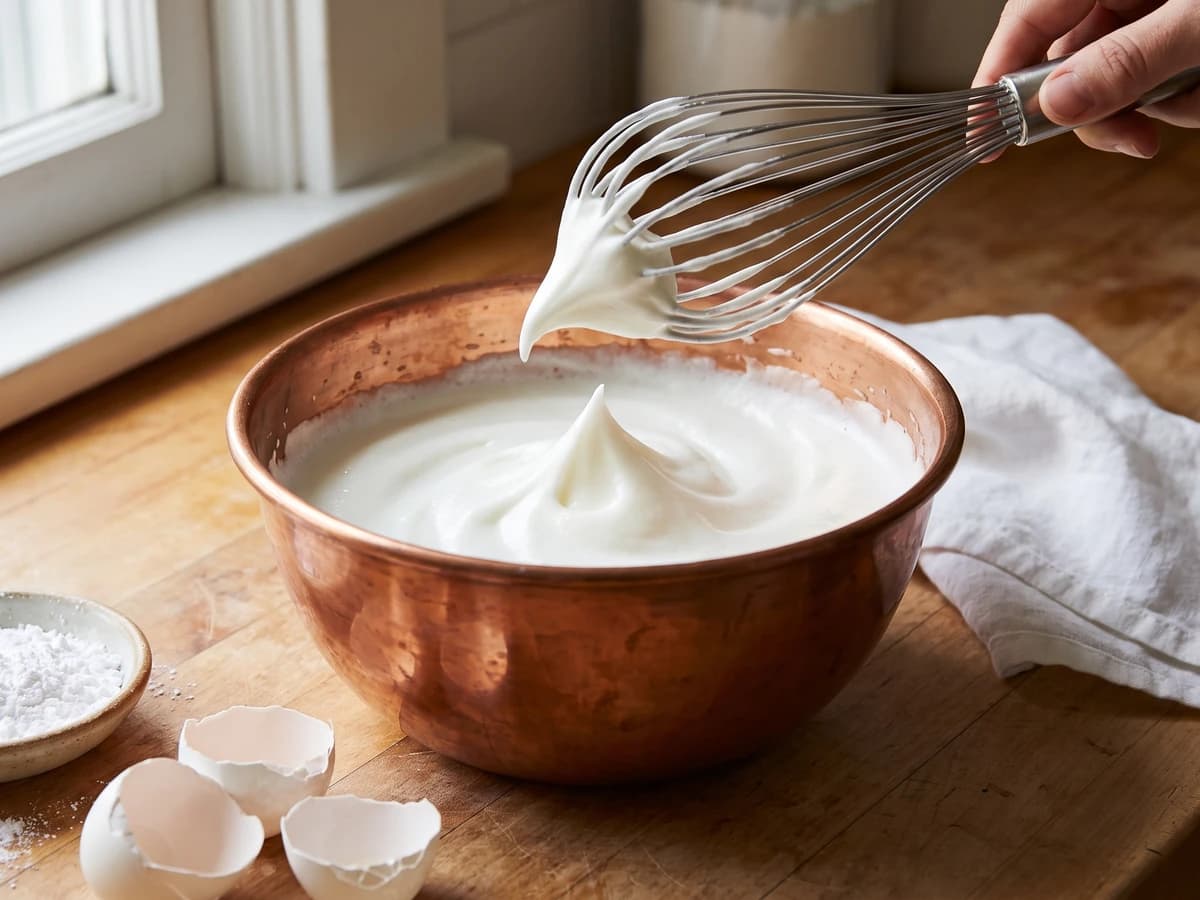
Four whites, one spotless bowl, and a patient change of speed: whisk gently until loosened, then briskly to glossy stiffness, with powdered sugar waiting if the foam begins to granulate.