
Chef Juliette
Various Almond Preparations
Five almond preparations, one discipline: remove the skins cleanly, dry every kernel through, then cut, toast, or cloak it in pale caramel without letting its fragrant oils escape.
A cooking platform built around craft, culture, and the stories behind what we eat.

Created by Chef Juliette
Based on No. 2442, Custard Pudding, from Le Guide Culinaire (1907) by Auguste Escoffier
Crème aux œufs turns milk, whole eggs, sugar, and vanilla into a softly set pudding: gentle bain-marie heat keeps it smooth, while the egg count decides between milkiness and firmness.
Crème aux œufs (whole-egg custard pudding) teaches the first law of every baked custard: it sets through gentle, even heat, not force. Whole eggs give this relation of Crème Anglaise (No. 2397) enough structure to stand in its dish, while plenty of milk keeps the spoonful soft and trembling. Before you touch a pan, know this one thing: boiling water or a fierce oven tightens the eggs into curds.
The brigade formula assumes a quart of milk, several pie dishes, and an oven or steamer kept ready for service. Here its six-egg quart becomes three eggs to a pint in one shallow pie dish, an exact half batch for four people. The extra dishes and steamer are service scaffolding and go. The immediate straining and gentle bain-marie (hot-water bath) are the dish itself, so they stay. One cook, one stove, one evening.
Remove the custard while the edges are set and the center still trembles. It will finish in the dish as it cools. If the water begins to boil before then, lower the heat and cool the bath with a little cold water; ça se rattrape.
Crème aux œufs belongs to the French family and bourgeois table, where poached custards are served as entremets rather than pouring sauces. The classical repertory openly presents custard pudding as a whole-egg branch of English custard, Crème Anglaise (No. 2397), replacing yolks with whole eggs so the mixture can set in its serving dish. Its journey from sauce to pudding is a change of purpose more than flavor: milk, sugar, vanilla, and eggs, held gently in a bain-marie.
Quantity
2 cups (475 ml / 490 g), for Crème Anglaise (No. 2397)
Quantity
6 tablespoons plus 2 teaspoons (100 ml / 85 g)
Quantity
3
Quantity
½
split lengthwise and seeds scraped
| Ingredient | Quantity |
|---|---|
| whole milk | 2 cups (475 ml / 490 g), for Crème Anglaise (No. 2397) |
| granulated sugar | 6 tablespoons plus 2 teaspoons (100 ml / 85 g) |
| large eggs | 3 |
| vanilla beansplit lengthwise and seeds scraped | ½ |
Heat the milk, sugar, vanilla seeds, and pod in a small saucepan, stirring until the sugar dissolves. Bring it just to the boil, remove it from the heat, cover, and infuse for 20 minutes. Lift out the pod, then return the milk to the heat only until it approaches the boil again.
Heat the oven to 325°F (160°C). Stir the whole eggs in a heatproof bowl until the whites and yolks are completely combined, but don't beat them into a foam. Pour the hot sweetened milk over the eggs little by little, whisking steadily. This is the uncooked whole-egg form of Crème Anglaise (No. 2397); unlike the pouring sauce, it receives no separate stovetop cooking because the oven will poach it. If a few egg threads form, stop pouring, whisk briskly, and pass the mixture through the sieve; ça se rattrape.
Strain the custard immediately into a pitcher, then skim away any foam with a spoon. Set a shallow 1-quart (1-liter) pie dish inside a deep roasting pan and pour in the custard. Place the pan on the oven rack, then add enough hot water to the roasting pan to reach halfway up the outside of the pie dish. Keep every drop of water out of the custard.
Bake for 35 to 45 minutes, checking from 35 minutes onward. The custard is ready when the edges are set, the center moves as one soft tremble, and an instant-read thermometer inserted near the center registers about 175°F (79°C). Never wait for the middle to become rigid. If the bain-marie begins bubbling, lower the oven to 300°F (150°C) and add a little cold water to the bath; gentle heat keeps the custard smooth.
Lift the pie dish carefully from the bain-marie and cool it on a rack for at least 30 minutes. Serve the crème aux œufs slightly warm or at room temperature for its softest, milkiest texture, or chill it for at least 2 hours for a firmer spoonful. Bring the dish directly to the table and serve generously. À table!
1 serving (about 175g)
Culinary guides, cultural storytelling, and the editorial depth that makes cooking meaningful.
Discover Culinary ExplorerChef Juliette
Five almond preparations, one discipline: remove the skins cleanly, dry every kernel through, then cut, toast, or cloak it in pale caramel without letting its fragrant oils escape.

Chef Juliette
A pastry pantry lesson in one tray: filberts warmed only until their red skins release, rubbed clean, cooled, and chopped into a fragrant mise-en-place for cakes, creams, pralines, and petits fours.

Chef Juliette
The smallest pâtisserie discipline decides whether a cake leaves its mould intact: clarified butter in every corner, followed by the lightest veil of dry flour or fécule.
Chef Juliette
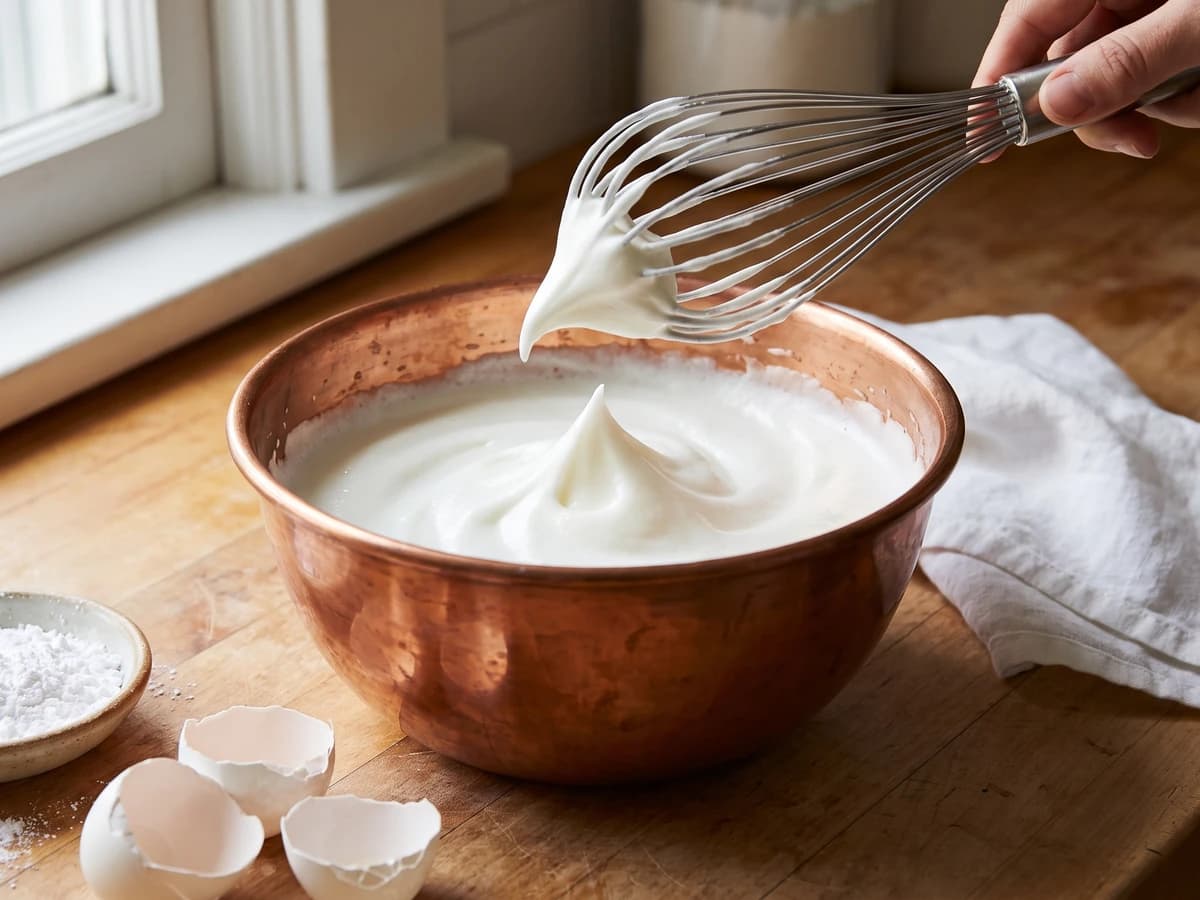
Four whites, one spotless bowl, and a patient change of speed: whisk gently until loosened, then briskly to glossy stiffness, with powdered sugar waiting if the foam begins to granulate.