
Chef Juliette
Various Almond Preparations
Five almond preparations, one discipline: remove the skins cleanly, dry every kernel through, then cut, toast, or cloak it in pale caramel without letting its fragrant oils escape.
A cooking platform built around craft, culture, and the stories behind what we eat.

Created by Chef Juliette
Based on No. 2438, Various Charlottes, from Le Guide Culinaire (1907) by Auguste Escoffier
One buttered bread case, three fruits, and one uncompromising rule: cook the compote until it stands. Pear, peach, or apricot, this Charlotte turns out bronzed, fragrant, and ready for generous slices.
Charlottes aux Poires, aux Pêches ou aux Abricots (bread-cased fruit charlottes) teach the discipline of removing water. The fruit must become a very stiff compote before it enters the mould. Leave it loose and the bread drinks the liquid, loses its structure, and collapses when turned out. The fruit may change. The principle does not.
The original formula assumed a proper Charlotte mould, a broad sauté pan, and enough hands to trim identical croûtons while the fruit reduced. At home, use a straight-sided 1-quart soufflé dish, a wide skillet, and a ruler. The tied bundle of lemon rind and cinnamon was useful brigade scaffolding; here you count the pieces and remove them. The butter-dipped bread, close overlaps, stiff filling, and generous dome must stay because they are the dish. One cook, one stove, one evening.
When it is right, the turned-out Charlotte stands proudly, its heart-patterned crown butter-gold and its sides deeply bronzed, with pear, peach, or apricot held inside like a fragrant amber preserve. Reduce the fruit until a spoon dragged through the pan leaves a path that does not close. That is the step that decides everything.
The bread-lined hot Charlotte entered the French classical table through exchanges with English pudding cookery, then Parisian kitchens formalized it as a carefully moulded entremets. It traveled easily from grand service to the cuisine bourgeoise because fine-crumb bread, butter, and orchard fruit already belonged to the home pantry. It should not be confused with Charlotte russe, the cold ladyfinger-and-cream mould; this Charlotte is baked, turned out warm, and held upright by its bronzed bread case.
Quantity
1 procedure, Apple Charlotte (No. 2436)
used for the buttered bread lining and baking method
Quantity
1 small loaf (about 450 g)
preferably one day old; crusts removed and sliced 1/8 inch (3 mm) thick
Quantity
10 tablespoons (150 ml / 142 g)
divided
Quantity
6 medium (about 1.35 kg whole / 1 kg prepared)
peeled, cored, and thinly sliced
Quantity
8 medium (about 1.35 kg whole / 1 kg prepared)
peeled, pitted, and sliced
Quantity
18 to 20 medium (about 1.25 kg whole / 1.1 kg prepared)
pitted and quartered
Quantity
2 tablespoons (30 ml / 25 g)
Quantity
2 wide strips, each about 3 by 1 inches (7.5 by 2.5 cm)
white pith removed
Quantity
1 small stick
Quantity
3 tablespoons (45 ml / 60 g)
mashed smooth
| Ingredient | Quantity |
|---|---|
| Referenced base methodused for the buttered bread lining and baking method | 1 procedure, Apple Charlotte (No. 2436) |
| Fine-crumb white Pullman breadpreferably one day old; crusts removed and sliced 1/8 inch (3 mm) thick | 1 small loaf (about 450 g) |
| Unsalted butterdivided | 10 tablespoons (150 ml / 142 g) |
| Firm-ripe pears, for the pear variation (optional)peeled, cored, and thinly sliced | 6 medium (about 1.35 kg whole / 1 kg prepared) |
| Firm-ripe peaches, for the peach variation (optional)peeled, pitted, and sliced | 8 medium (about 1.35 kg whole / 1 kg prepared) |
| Apricots, for the apricot variation (optional)pitted and quartered | 18 to 20 medium (about 1.25 kg whole / 1.1 kg prepared) |
| Powdered sugar | 2 tablespoons (30 ml / 25 g) |
| Lemon rindwhite pith removed | 2 wide strips, each about 3 by 1 inches (7.5 by 2.5 cm) |
| Cinnamon stick | 1 small stick |
| Thick stewed apricotsmashed smooth | 3 tablespoons (45 ml / 60 g) |
Heat the oven to 350°F (180°C) with a rack in the lower-middle position. Choose one fruit variation and prepare it as directed. Do not combine all three quantities in one mould. Firm-ripe fruit is essential: it should smell fragrant but still resist gentle pressure, since overripe fruit releases far more liquid than the bread case can bear.
Melt 2 tablespoons (30 ml / 28 g) of the butter in a wide sauté pan over medium heat. Add the chosen fruit, powdered sugar, lemon rind, and cinnamon. Cook uncovered, stirring and crushing the fruit as it softens, until it becomes a thick purée: allow about 35 to 45 minutes for pears, 25 to 35 minutes for peaches, or 20 to 30 minutes for apricots. Remove the lemon rind and cinnamon, stir in the stewed apricots, and cook for another 2 to 3 minutes. The compote is ready only when it mounds on the spoon, leaves no watery halo on a cold plate, and a path drawn across the pan stays open. If it remains loose, do not fill the mould. Move it to your widest pan and reduce it longer over moderate heat, stirring steadily. Ça se rattrape. If the bottom catches, transfer the unburned fruit to a clean pan without scraping the scorched layer.
Let the compote cool until warm while you prepare the bread. Following the buttered bread-case construction of Apple Charlotte (No. 2436), cut enough heart-shaped croûtons (thin bread pieces) to cover the bottom of the mould with slight overlaps. Cut the remaining bread into rectangles exactly as tall as the mould and about 1 1/2 to 2 inches (4 to 5 cm) wide. Straight edges and even thickness matter because gaps become escape routes for the fruit.
Melt the remaining 8 tablespoons (120 ml / 114 g) butter and brush the mould copiously, working it into the bottom edge. Dip each bread piece quickly into the butter, coating both faces without letting it become sodden. Arrange the hearts over the bottom with their points facing inward and their edges slightly overlapping. Stand the rectangles around the sides, overlapping each by about 1/4 inch (6 mm) and pressing the seams together. Patch any tear or visible gap with a small buttered scrap. Butter, not empty space, seals this case.
Spoon in the warm, stiff compote a little at a time, pressing gently into the edges so no air pockets remain. Fill the mould completely, then shape the remaining compote into a dome about 1 inch (2.5 cm) above the rim. This looks excessive. It is exactly right. The filling settles as it bakes, and a level fill gives a hollow, fragile Charlotte.
Set the mould on a rimmed baking sheet and bake for 30 to 35 minutes. The exposed fruit should look concentrated rather than wet, the bread visible at the rim should be deep golden, and the butter should give the shell a clear sheen. If the bread colours too quickly before the filling is thoroughly hot, cover the top loosely with foil and finish the baking.
Rest the Charlotte in its mould for 10 minutes. Run a thin knife only around the upper rim, place a warm serving platter over the mould, and invert both together in one confident motion. Wait 30 seconds before lifting the mould. If it clings, wrap the outside briefly with a hot damp towel and try again. If a weak seam opens, press it gently back while the bread is pliable; if the whole shell slumps, serve it generously with a spoon and remember that the compote needed another few minutes of reduction. Never apologize at your own table. Serve warm. À table!
1 serving (about 190g)
Culinary guides, cultural storytelling, and the editorial depth that makes cooking meaningful.
Discover Culinary ExplorerChef Juliette
Five almond preparations, one discipline: remove the skins cleanly, dry every kernel through, then cut, toast, or cloak it in pale caramel without letting its fragrant oils escape.

Chef Juliette
A pastry pantry lesson in one tray: filberts warmed only until their red skins release, rubbed clean, cooled, and chopped into a fragrant mise-en-place for cakes, creams, pralines, and petits fours.

Chef Juliette
The smallest pâtisserie discipline decides whether a cake leaves its mould intact: clarified butter in every corner, followed by the lightest veil of dry flour or fécule.
Chef Juliette
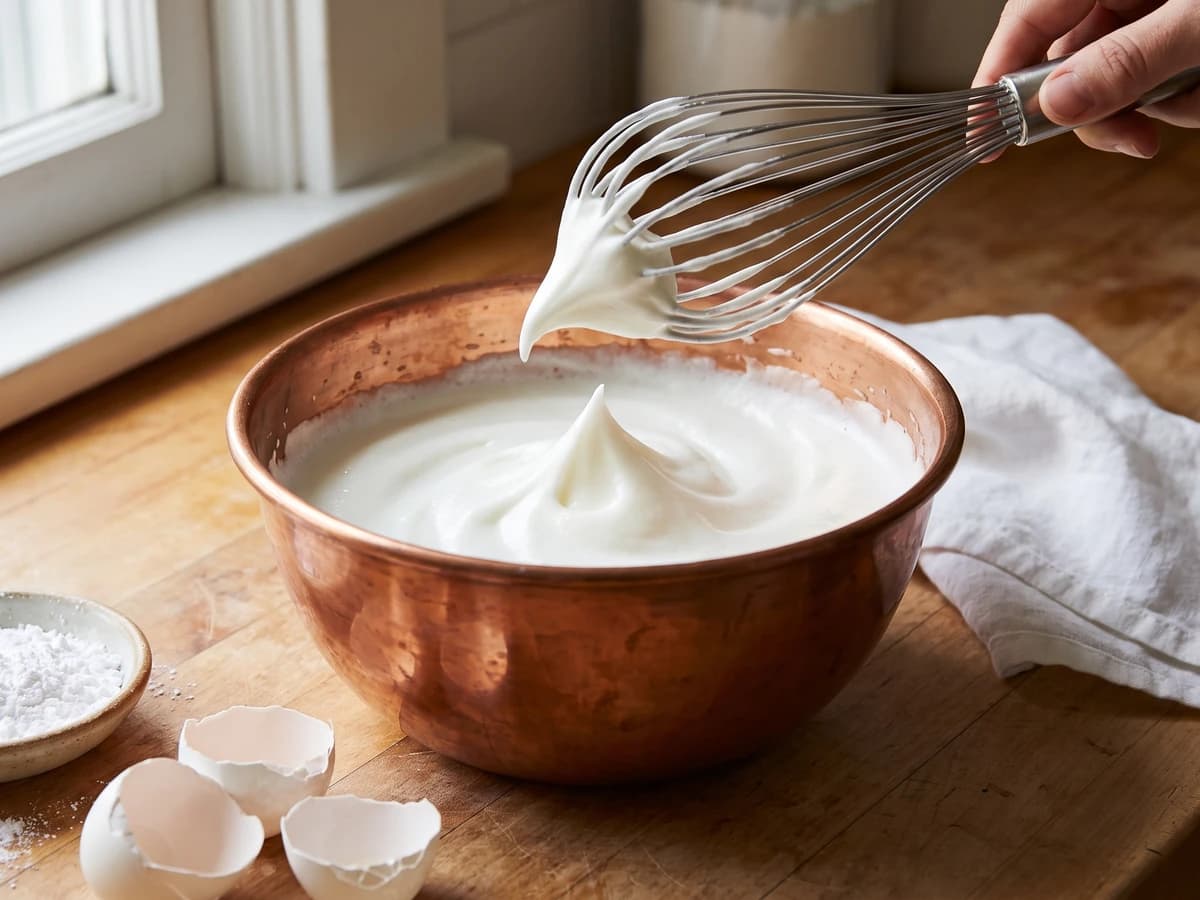
Four whites, one spotless bowl, and a patient change of speed: whisk gently until loosened, then briskly to glossy stiffness, with powdered sugar waiting if the foam begins to granulate.