
Chef Juliette
Flan aux Carottes
A pale short-paste shell holds silken, lightly sweet carrot purée beneath neat glazed half-discs, their butter syrup catching the light: a classical tart poised between vegetable course and sweet.
A cooking platform built around craft, culture, and the stories behind what we eat.
Created by Chef Juliette
Based on No. 2424, Viennese Fritters, from Le Guide Culinaire (1907) by Auguste Escoffier
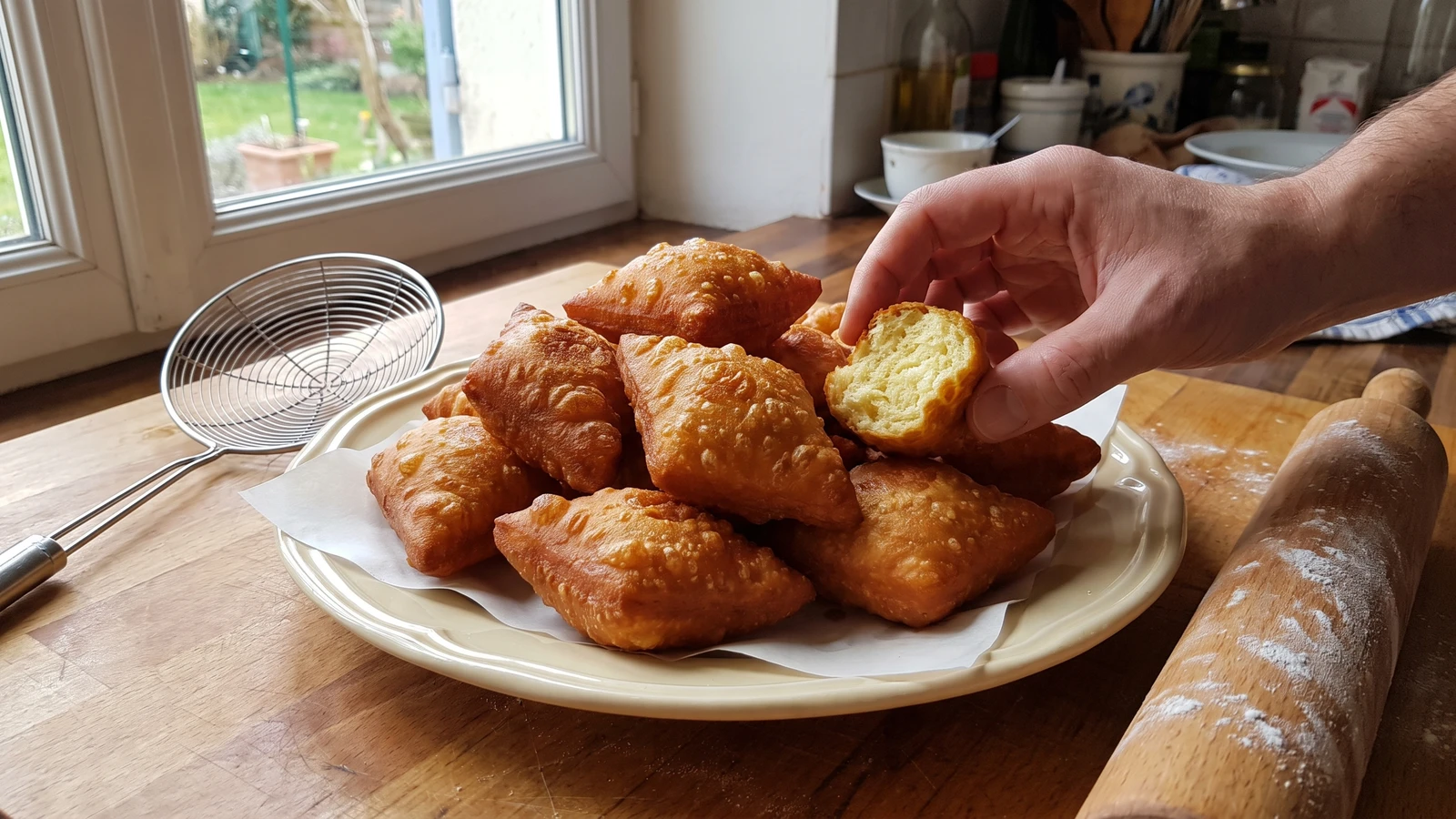
Beignets viennois prove that richness needs structure: a buttery, yeasted paste kept firm enough for the rolling pin, then fried until bronze outside and tender within.
Beignets viennois (Viennese fritters) teach one true thing before the flour meets the bowl: richness needs structure. Their paste follows the method for Ordinary Brioche Paste (No. 2368), but its firmer balance is deliberate. A slack brioche may rise beautifully in a mould; beneath a rolling pin it clings, smears, and drinks frying fat.
The entry assumes a pastry cook's board, fresh yeast, a full pound of flour, and a temperate workroom where someone can tend the paste through its long fermentation. Here the formula is halved exactly, producing twelve generous fritters, and a dough hook takes over the strenuous pulling. The full batch and constant tending are scaffolding. The firm proportions and two-stage fermentation are the dish, so they stay. Make the paste ahead, then one cook, one stove, one evening takes it from cold dough to the platter.
When the beignets are right, they swell in the oil, bronze evenly, and open to a fine buttery crumb with no greasy seam. The one step that decides them is the paste's firmness before rolling. If it slumps, chill it; don't smother it in flour. Ça se rattrape.
In the French classical repertory, beignets viennois belong to the pastry-kitchen current that absorbed Vienna's enriched yeast work into Parisian practice. The name does not describe one universal fritter sold throughout Vienna; it describes the French canon's handling of a buttery, egg-rich paste. Its decisive distinction from ordinary moulded brioche is practical: the paste stays firm enough for a rolling pin before it meets the frying pot.
Quantity
1 home-scale batch Ordinary Brioche Paste (No. 2368), mixed with 1¾ cups plus 1 tablespoon (227 g) all-purpose flour; 6 tablespoons (90 ml / 85 g) unsalted butter; ¼ ounce (7 g) fresh compressed yeast or ¾ teaspoon (3.75 ml / 2.3 g) instant yeast; ½ cup plus 1 teaspoon (125 ml / 125 g) beaten egg, about 2½ large eggs; 1¼ teaspoons (6 ml / 7 g) fine salt; 2¼ teaspoons (11 ml / 9.5 g) granulated sugar; 3 tablespoons plus ½ teaspoon (47 ml / 48 g) whole milk; and up to 1 tablespoon (15 ml / 15 g) tepid water for the leaven
Quantity
6 cups (1.4 litres / about 1.3 kg)
for frying
| Ingredient | Quantity |
|---|---|
| firmer Viennese fritter paste | 1 home-scale batch Ordinary Brioche Paste (No. 2368), mixed with 1¾ cups plus 1 tablespoon (227 g) all-purpose flour; 6 tablespoons (90 ml / 85 g) unsalted butter; ¼ ounce (7 g) fresh compressed yeast or ¾ teaspoon (3.75 ml / 2.3 g) instant yeast; ½ cup plus 1 teaspoon (125 ml / 125 g) beaten egg, about 2½ large eggs; 1¼ teaspoons (6 ml / 7 g) fine salt; 2¼ teaspoons (11 ml / 9.5 g) granulated sugar; 3 tablespoons plus ½ teaspoon (47 ml / 48 g) whole milk; and up to 1 tablespoon (15 ml / 15 g) tepid water for the leaven |
| refined peanut or sunflower oilfor frying | 6 cups (1.4 litres / about 1.3 kg) |
Prepare Ordinary Brioche Paste (No. 2368) with the exact firmer Viennese proportions given in the ingredient list. Follow the referenced entry's complete mixing and fermentation procedure, including the working halfway through the long rise and the final working before use. A stand mixer fitted with its dough hook may replace pulling the paste about by hand, but it does not replace the sequence or the two-stage fermentation. If the leaven fails to double, move it somewhere gently warmer and wait; if it remains lifeless, replace the yeast before sacrificing the butter and eggs.
After the final working, flatten the paste into a 1-inch (2.5 cm) rectangle, cover it, and chill it for 30 minutes. Press it with one finger: it should yield without flowing outward and lift cleanly from a lightly floured surface. If it slumps or sticks like batter, do not bury it under more flour. Ça se rattrape: fold it once, cover it, and chill for another 20 minutes. If it cracks at the edges, let it soften for 10 minutes before rolling.
Roll the paste evenly to ½ inch (1.25 cm) thick, lifting and turning it so it never fastens itself to the board. Cut twelve 2½-inch (6 cm) squares, then turn them on the diagonal to make simple diamonds. The source prescribes the paste but no filling or elaborate figure, so this plain, scrap-free shape is the honest home translation. Set the pieces on parchment, cover lightly, and leave them for 30 to 45 minutes, until rounded and visibly puffy but not doubled. A fingertip dent should return slowly; if it springs back at once, give the paste another 10 minutes.
Pour the oil into a heavy 4-quart (4-litre) pot, leaving the vessel no more than half full, and heat it to 340°F (170°C). Set a wire rack over a sheet pan nearby. Hold the oil between 335°F and 345°F (168°C and 174°C): cooler oil soaks the paste, while hotter oil bronzes the butter-rich exterior before the centre can cook.
Lower three or four pieces into the oil without crowding the pot. Fry for about 90 seconds on the first side, turn them, and continue until both faces are deep butter-gold and the fritters feel light when lifted, about 3 to 4 minutes in total. Let the oil regain 340°F (170°C) between batches. Break open the first fritter after a 2-minute rest: its crumb should be fine, tender, and fully set. If the crust darkens around a gummy centre, ça se rattrape: lower the oil to 330°F (165°C) and give the remaining batches another minute. If a batch emerges pale and greasy, pause until the oil recovers before continuing.
Lift the fritters with a wire skimmer, let the excess oil fall back into the pot, and place them on the rack rather than piling them on absorbent paper, which traps moisture underneath. Rest them for 5 minutes and serve while their bronzed shells remain crisp and the buttery crumb is still supple. The source adds no filling, glaze, or perfume, so neither do we. This is the paste speaking for itself. À table!
1 serving (about 85g)
Culinary guides, cultural storytelling, and the editorial depth that makes cooking meaningful.
Discover Culinary ExplorerChef Juliette
A pale short-paste shell holds silken, lightly sweet carrot purée beneath neat glazed half-discs, their butter syrup catching the light: a classical tart poised between vegetable course and sweet.
Chef Juliette
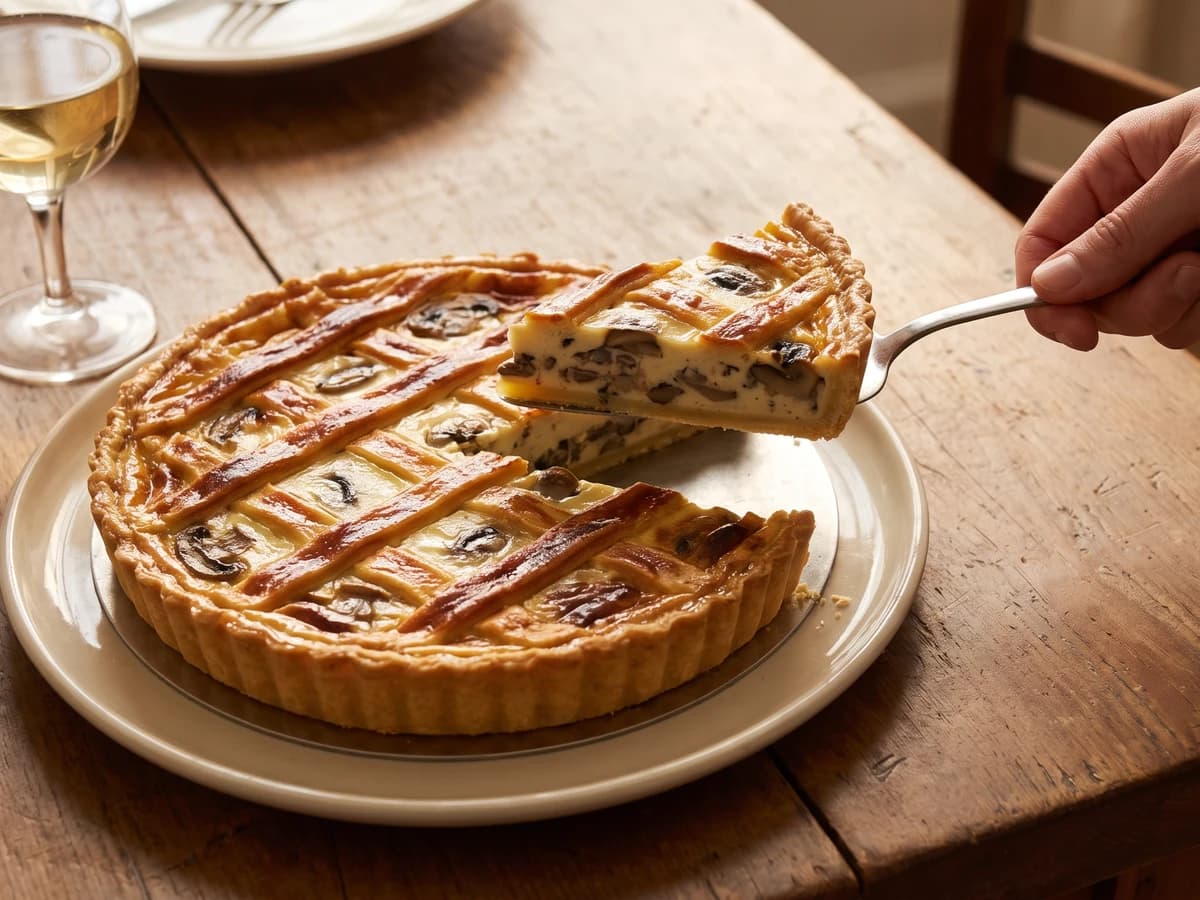
A hot mushroom flan under a butter-gold lattice, with cream reduced close around barely opened caps and a crisp short-paste base protected by one discipline: cool the filling completely.
Chef Juliette
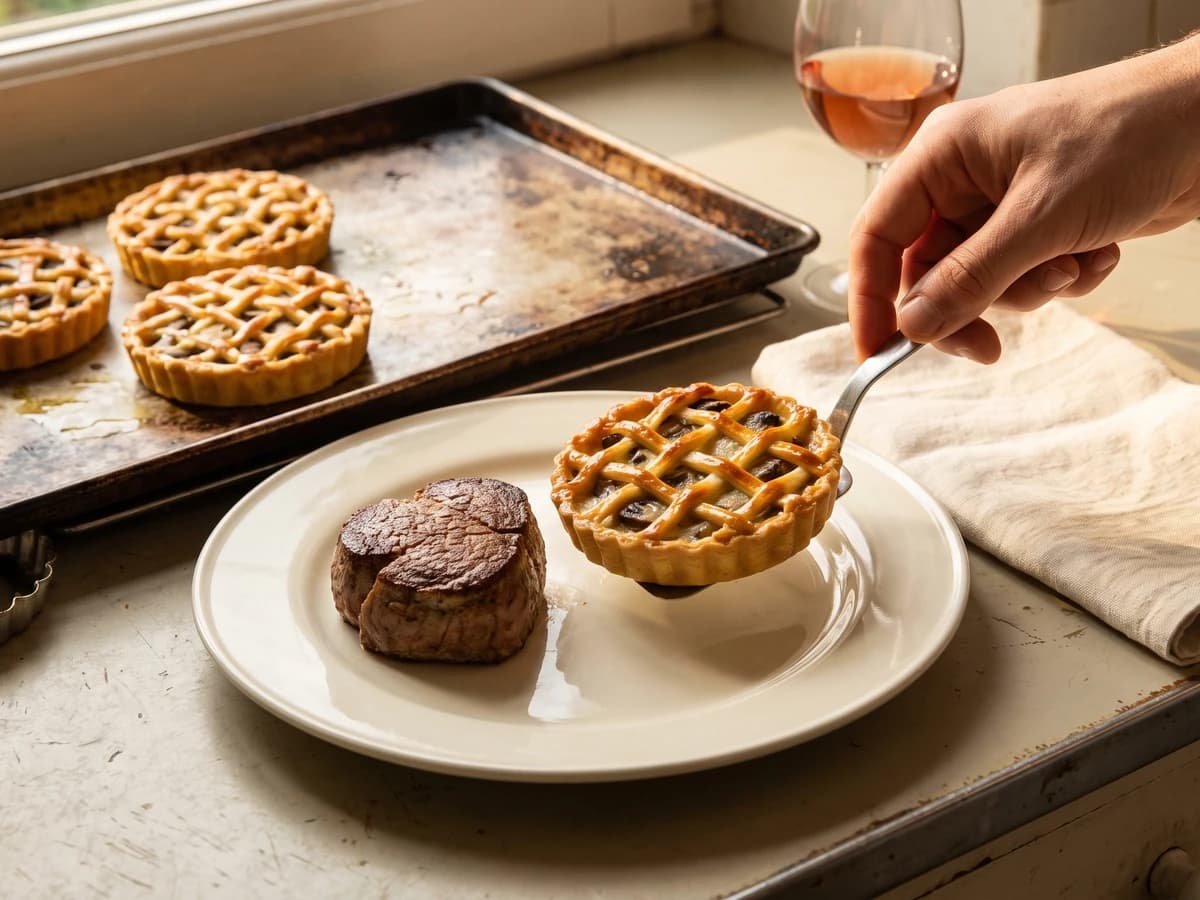
Four little mushroom flans, latticed and gilded, baked hard and fast until butter-gold: a classical garnish scaled to the meat it accompanies and served before its crispness has time to fade.

Chef Juliette
Morels surrender their liquor, then take it back as a glossy cream-and-butter sauce inside burnished puff pastry. The lesson is simple and absolute: reduce with patience, then heat gently and never boil.