
Chef Juliette
Various Almond Preparations
Five almond preparations, one discipline: remove the skins cleanly, dry every kernel through, then cut, toast, or cloak it in pale caramel without letting its fragrant oils escape.
A cooking platform built around craft, culture, and the stories behind what we eat.
Created by Chef Juliette
Based on No. 2405, Soufflé Preparations, from Le Guide Culinaire (1907) by Auguste Escoffier
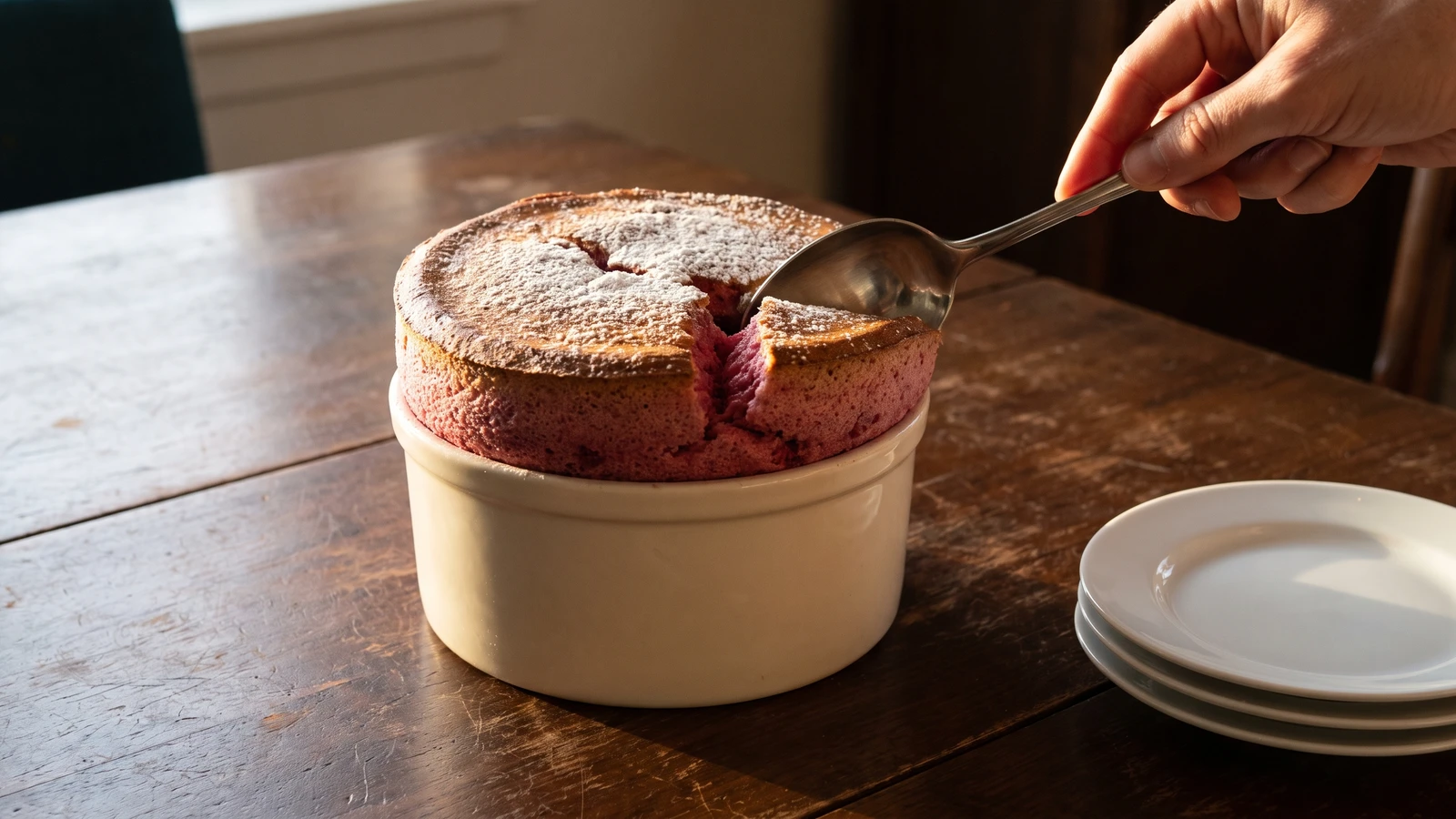
Two classical paths to the same proud rise: a tender cream base folded with glossy whites, or fruit purée joined to sugar at small crack, then baked gently and glazed.
Préparations pour Soufflés Sucrés (sweet soufflé preparations) teach the clearest law in the pastry kitchen: the base supplies flavor, but the egg whites supply height. Treat those whites roughly and no grand equipment can save you. Keep their air intact and a modest home oven will give you a crown worth carrying straight to the table.
The source sets down a four-person cream preparation beside a great brigade formula, then gives a fruit preparation built for ten whites. We keep the four-person cream formula and scale the fruit version to three-tenths, so its sugar and purée become 136 grams each for three whites. The big-party formula is brigade scaffolding and can go. A heavy saucepan replaces the copper sugar pan, a thermometer replaces testing boiling sugar with bare fingers, and a straight-sided one-quart ceramic dish replaces the false-bottomed timbale. The stiff whites, the small-crack sugar, the moderate oven, and the final glaze stay because they are the dish. One cook, one stove, one evening.
The cream path rises tender and pale beneath its caramelized crown. The fruit path is brighter, more concentrated, and held by hot sugar. Whichever you choose, prepare the sugared dish and heat the oven before whipping the whites. Once the whites carry the base, the soufflé must go directly into the oven.
The hot soufflé found its most exacting home in the Parisian grand-kitchen and pâtisserie repertoire, where flavored bases were lightened with egg whites and timed to reach the dining room at their full rise. The pairing of a cooked cream base with a fruit purée taken to small crack records two distinct pastry systems: starch gives the first its body, while concentrated sugar supports the second and preserves a stronger fruit flavor. Soufflé names a whole family rather than one dessert, including savory and cold preparations, but in a hot sweet soufflé the whites remain the essential lift.
Quantity
1 tablespoon (15 ml / 14 g)
softened
Quantity
2 tablespoons (30 ml / 25 g)
Quantity
1 tablespoon (15 ml / 8 g)
Quantity
1/3 cup plus 1 tablespoon (95 ml / 98 g)
Quantity
2 tablespoons (30 ml / 31 g)
reserved for diluting the flour
Quantity
2 tablespoons plus 1 teaspoon (35 ml / 28 g)
Quantity
1 tablespoon (15 ml / 8 g)
Quantity
1 tablespoon (15 ml / 14 g)
Quantity
2
Quantity
3
at room temperature
Quantity
1 batch The Cooking of Sugar (No. 2344), made from 2/3 cup (160 ml / 136 g) granulated sugar and 1/4 cup (60 ml / 60 g) water
cooked to small crack
Quantity
about 1/2 cup plus 1 tablespoon (135 ml / 136 g)
strained and at room temperature
Quantity
3
at room temperature
| Ingredient | Quantity |
|---|---|
| unsalted butter, for the dishsoftened | 1 tablespoon (15 ml / 14 g) |
| granulated sugar, for coating the dish | 2 tablespoons (30 ml / 25 g) |
| icing sugar, for the final glaze | 1 tablespoon (15 ml / 8 g) |
| whole milk, cream base | 1/3 cup plus 1 tablespoon (95 ml / 98 g) |
| cold whole milk, cream basereserved for diluting the flour | 2 tablespoons (30 ml / 31 g) |
| granulated sugar, cream base | 2 tablespoons plus 1 teaspoon (35 ml / 28 g) |
| all-purpose flour, cream base | 1 tablespoon (15 ml / 8 g) |
| unsalted butter, cream base | 1 tablespoon (15 ml / 14 g) |
| large egg yolks, cream base | 2 |
| large egg whites, cream baseat room temperature | 3 |
| The Cooking of Sugar, fruit basecooked to small crack | 1 batch The Cooking of Sugar (No. 2344), made from 2/3 cup (160 ml / 136 g) granulated sugar and 1/4 cup (60 ml / 60 g) water |
| smooth unsweetened fruit purée, fruit basestrained and at room temperature | about 1/2 cup plus 1 tablespoon (135 ml / 136 g) |
| large egg whites, fruit baseat room temperature | 3 |
Choose either the cream base or the fruit base; each list makes one soufflé for four, and the two formulas are not combined. Set a rack in the lower third of the oven and heat it to 350°F (180°C). Give the oven time to become thoroughly hot, since a half-heated oven melts the foam before it can set.
Butter the bottom and sides of a straight-sided 1-quart (950 ml) soufflé dish, carrying the butter cleanly to the rim. Add the granulated sugar, turn the dish until every buttered surface is coated, then tap out the excess. Set the dish on a baking sheet beside the oven. This ceramic dish is the honest home equivalent of the timbale or false-bottomed mold, and preparing it now means the finished foam will never be kept waiting.
For the cream version, bring the 95 ml portion of milk and the 28 grams of sugar to a boil in a small heavy saucepan. Whisk the flour into the cold milk until perfectly smooth, then pour this slurry into the boiling milk while whisking. Cook for exactly two minutes over medium-low heat, stirring constantly, until the base thickens to a soft cream and loses its raw flour smell. Remove it from the heat, whisk in the butter, then the yolks one at a time. If small flour lumps appear, pass the base through a fine sieve before adding the yolks. Ça se rattrape. Let it cool until barely warm, stirring occasionally so no skin forms.
For the fruit version, prepare The Cooking of Sugar (No. 2344) with the sugar and water, stopping at 285°F (141°C), the small-crack stage. A thermometer replaces the source's bare-finger test and gives a home cook the safer, more exact answer. Remove the high-sided saucepan from the heat and add the room-temperature purée in three cautious additions, keeping your face and hands back as each addition bubbles fiercely. Stir only after each surge settles. If the syrup crystallizes and turns sandy before the purée goes in, add 1 tablespoon (15 ml) water, dissolve it gently, and begin the climb again. Ça se rattrape. The purée will lower the temperature, which is expected; hold the mixture off the heat while you whisk the whites.
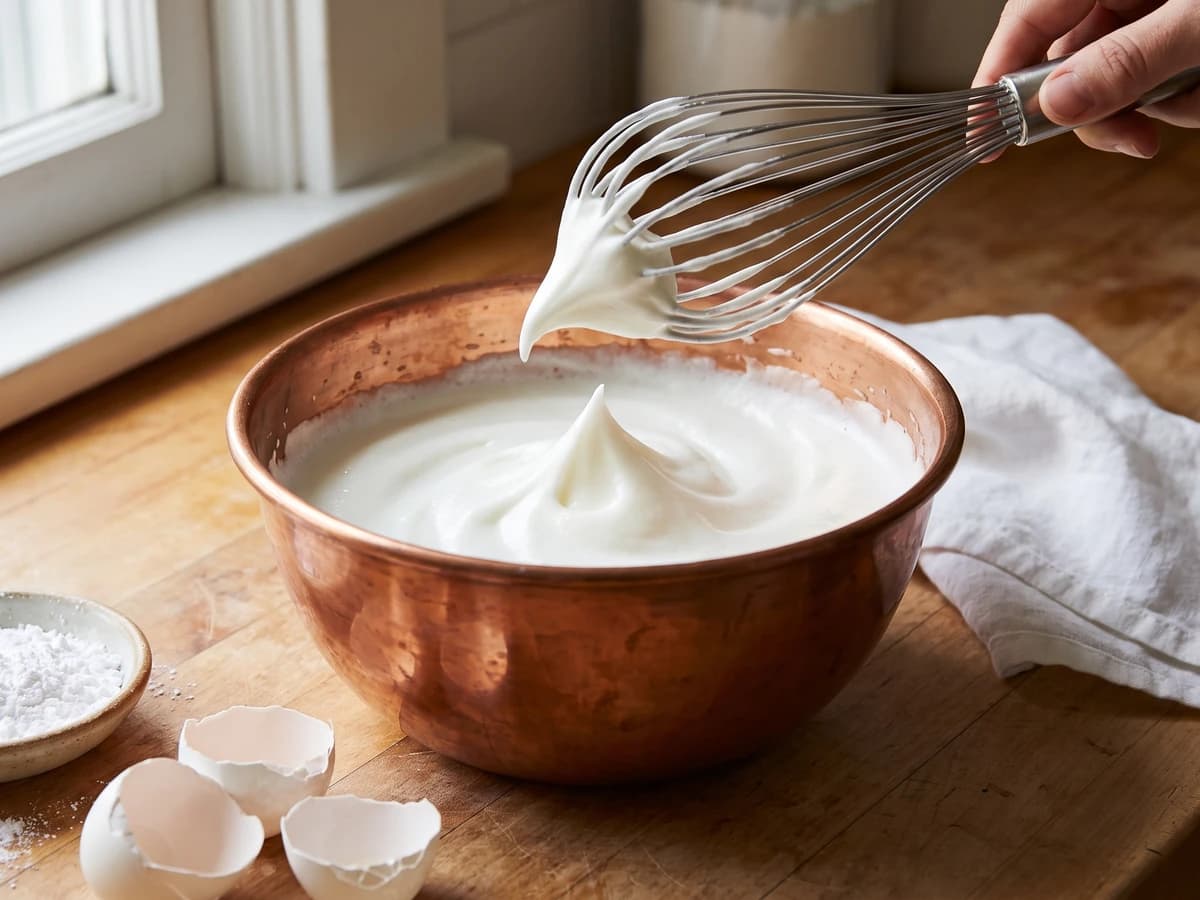
Put the three whites for your chosen base in a spotless bowl and whisk at medium speed until foamy, then at medium-high speed until they hold stiff, glossy peaks. Stiff means the peak stands upright when the whisk is lifted, not that the whites look dry or clotted. Stop the moment they reach that point. A speck of yolk or fat prevents a proper foam, so clean the bowl with a little vinegar and dry it before you begin.
For the cream version, make certain the base is barely warm rather than hot. If it still feels hot, set the saucepan in cold water and stir for a minute; heat would collapse the foam before the oven can set it. Whisk one-quarter of the whites into the base to lighten it, then fold in the remainder in two additions with a broad spatula, cutting down through the center and turning the mixture over itself until no large white patches remain. For the fruit version, return the purée mixture to moderate heat and, still following The Cooking of Sugar (No. 2344), bring it back to 285°F (141°C), stirring steadily so the fruit does not catch. With the mixer running at medium speed, pour the hot mixture over the stiff whites in a thin stream down the side of the bowl, never directly onto the whisk. Beat only until evenly combined and glossy, about 30 seconds. If a few hard sugar threads form on the bowl, lift them out and continue; the remaining foam can still rise.
Spoon the chosen mixture into the prepared dish, filling it no more than three-quarters full, and level the top without pressing out its air. Wipe the rim clean and place the dish, still on its baking sheet, in the oven at once. Bake without opening the door for 24 minutes. Moderate heat is deliberate: it lets the center warm gradually while the outer structure sets, giving the soufflé height without leaving a liquid heart. If the top colors too quickly, lower the oven to 325°F (165°C) without opening the door.
When the soufflé stands well above the rim and the top looks set, work quickly: pull the rack only partway out, sift the icing sugar over the crown, close the door, and bake for 2 to 3 minutes more. The sugar should melt into a fine caramelized glaze. The center may tremble, but it should not slosh. If it is plainly liquid, return it for another 2 minutes; the rise may be a little lower, but the center will be right. Carry the dish directly to the table and serve with a large spoon. If the crown settles on the journey, serve it confidently. The flavor has not fallen with it, and we never apologize at our own table. À table!
1 serving (about 85g)
Culinary guides, cultural storytelling, and the editorial depth that makes cooking meaningful.
Discover Culinary ExplorerChef Juliette
Five almond preparations, one discipline: remove the skins cleanly, dry every kernel through, then cut, toast, or cloak it in pale caramel without letting its fragrant oils escape.

Chef Juliette
A pastry pantry lesson in one tray: filberts warmed only until their red skins release, rubbed clean, cooled, and chopped into a fragrant mise-en-place for cakes, creams, pralines, and petits fours.

Chef Juliette
The smallest pâtisserie discipline decides whether a cake leaves its mould intact: clarified butter in every corner, followed by the lightest veil of dry flour or fécule.
Chef Juliette
Four whites, one spotless bowl, and a patient change of speed: whisk gently until loosened, then briskly to glossy stiffness, with powdered sugar waiting if the foam begins to granulate.