
Chef Juliette
Various Almond Preparations
Five almond preparations, one discipline: remove the skins cleanly, dry every kernel through, then cut, toast, or cloak it in pale caramel without letting its fragrant oils escape.
A cooking platform built around craft, culture, and the stories behind what we eat.
Created by Chef Juliette
Based on No. 2402, Whipped or Chantilly Cream, from Le Guide Culinaire (1907) by Auguste Escoffier
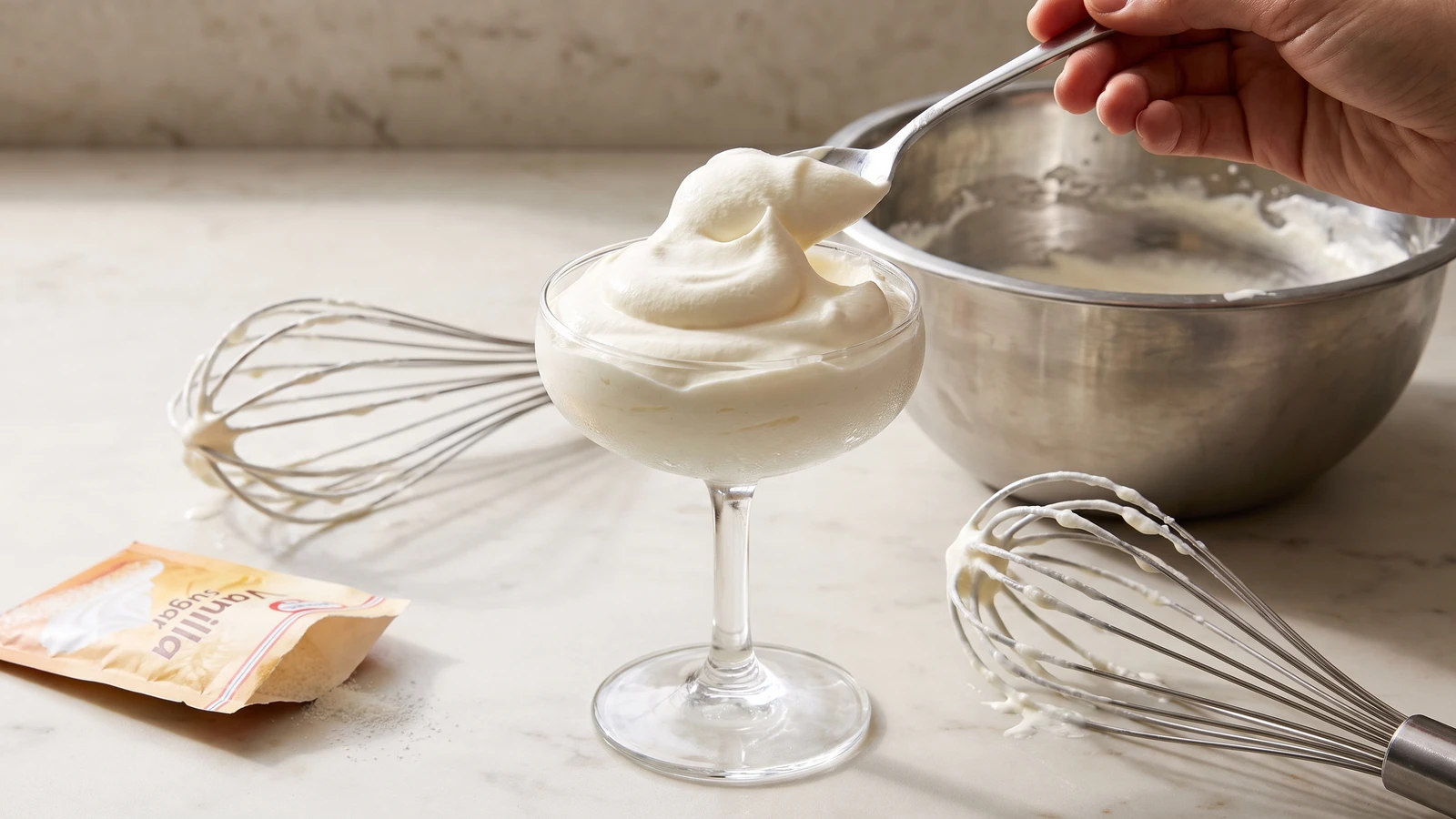
Cold cream, an iced bowl, and vanilla sugar become Crème Chantilly in minutes. Stop when the whisk leaves a soft peak, because one careless minute takes dessert straight into butter.
Crème Chantilly (vanilla-sweetened whipped cream) teaches restraint better than any elaborate dessert. Cold gives cream enough structure to catch air; judgment tells you when to stop. The one true thing to know before you lift the whisk is this: a soft peak is the finish, and another careless minute is butter.
The book's kitchen kept its best cream on ice for a full day, whipped a quart over more ice, and had cold storage waiting. Your refrigerator, a chilled metal bowl nested over ice water, and one cup of cream do the same honest work. I cut the brigade quantity to one quarter while keeping its ratio intact: one ounce of powdered sugar for one cup of cream, with part of that sugar vanilla-scented. The day on ice was storage scaffolding and can go; whipping cold cream over ice and stopping before butter are the dish, and they stay. One cook, one stove, one evening; the stove gets the evening off.
Keep the cream cold, watch its texture rather than the clock, and stop the instant the lifted whisk leaves a peak whose tip bends softly. That is the whole lesson.
Crème Chantilly carries the name of the Château de Chantilly in the Oise, north of Paris, whose grand tables helped make sweetened whipped cream famous. The familiar story that one château banquet invented it is charming but unproved; whipped cream circulated as crème fouettée and crème mousseuse before Chantilly became its prestigious shorthand. At the French table, crème fouettée can be unsweetened, while Crème Chantilly carries sugar and commonly vanilla.
Quantity
1 cup (240 ml / 238 g)
refrigerator-cold
Quantity
2 tablespoons plus 2 teaspoons (40 ml / 21 g)
sifted
Quantity
1 tablespoon (15 ml / 7 g)
sifted
Quantity
1 to 2 tablespoons (15 to 30 ml / 15 to 30 g)
cold, only for rescuing slight overwhipping
| Ingredient | Quantity |
|---|---|
| heavy whipping cream, at least 35% milk fatrefrigerator-cold | 1 cup (240 ml / 238 g) |
| confectioners' sugarsifted | 2 tablespoons plus 2 teaspoons (40 ml / 21 g) |
| powdered vanilla sugarsifted | 1 tablespoon (15 ml / 7 g) |
| additional heavy whipping cream (optional)cold, only for rescuing slight overwhipping | 1 to 2 tablespoons (15 to 30 ml / 15 to 30 g) |
Chill a 2-quart stainless-steel bowl and the whisk for 15 minutes. Half-fill a larger bowl with ice and cold water, then nest the chilled bowl inside so its base is surrounded by cold while its rim remains dry. Leave the cream in the refrigerator until this moment. The book's full day over ice preserved the cream before dependable refrigeration; this compact ice bath supplies the same working cold without the vigil.
Pour the cold cream into the nested bowl. Whisk briskly by hand, or use a hand mixer at low to medium speed, moving around the entire bowl rather than beating one spot. The cream will swell toward twice its volume, turn frothy, and begin holding the whisk's tracks. Slow down as those tracks linger. Stop just before a complete soft peak forms, because adding the sugar will finish the texture.
Immediately sift the confectioners' sugar and powdered vanilla sugar over the cream in two additions, whisking gently by hand after each. Lift the whisk after every few strokes. The Crème Chantilly is ready when the peak rises and its tip curls over, while the cream beneath remains smooth and satiny. Don't chase a rigid peak. If tiny grains appear, stop at once. Ça se rattrape: fold in the additional cold cream one teaspoon at a time until smooth. Once pale yellow clumps separate from liquid, it has crossed into butter and cannot become Chantilly again; drain it, keep the butter, and begin with fresh cream.
Spoon the Crème Chantilly into a chilled serving bowl without pressing out its air. Serve immediately, or cover and refrigerate for no more than 2 hours. If it settles slightly, restore it with two or three slow turns of the hand whisk. It should fall from the spoon in generous curls and relax softly at the edges. À table!
1 serving (about 67g)
Culinary guides, cultural storytelling, and the editorial depth that makes cooking meaningful.
Discover Culinary ExplorerChef Juliette
Five almond preparations, one discipline: remove the skins cleanly, dry every kernel through, then cut, toast, or cloak it in pale caramel without letting its fragrant oils escape.

Chef Juliette
A pastry pantry lesson in one tray: filberts warmed only until their red skins release, rubbed clean, cooled, and chopped into a fragrant mise-en-place for cakes, creams, pralines, and petits fours.

Chef Juliette
The smallest pâtisserie discipline decides whether a cake leaves its mould intact: clarified butter in every corner, followed by the lightest veil of dry flour or fécule.
Chef Juliette
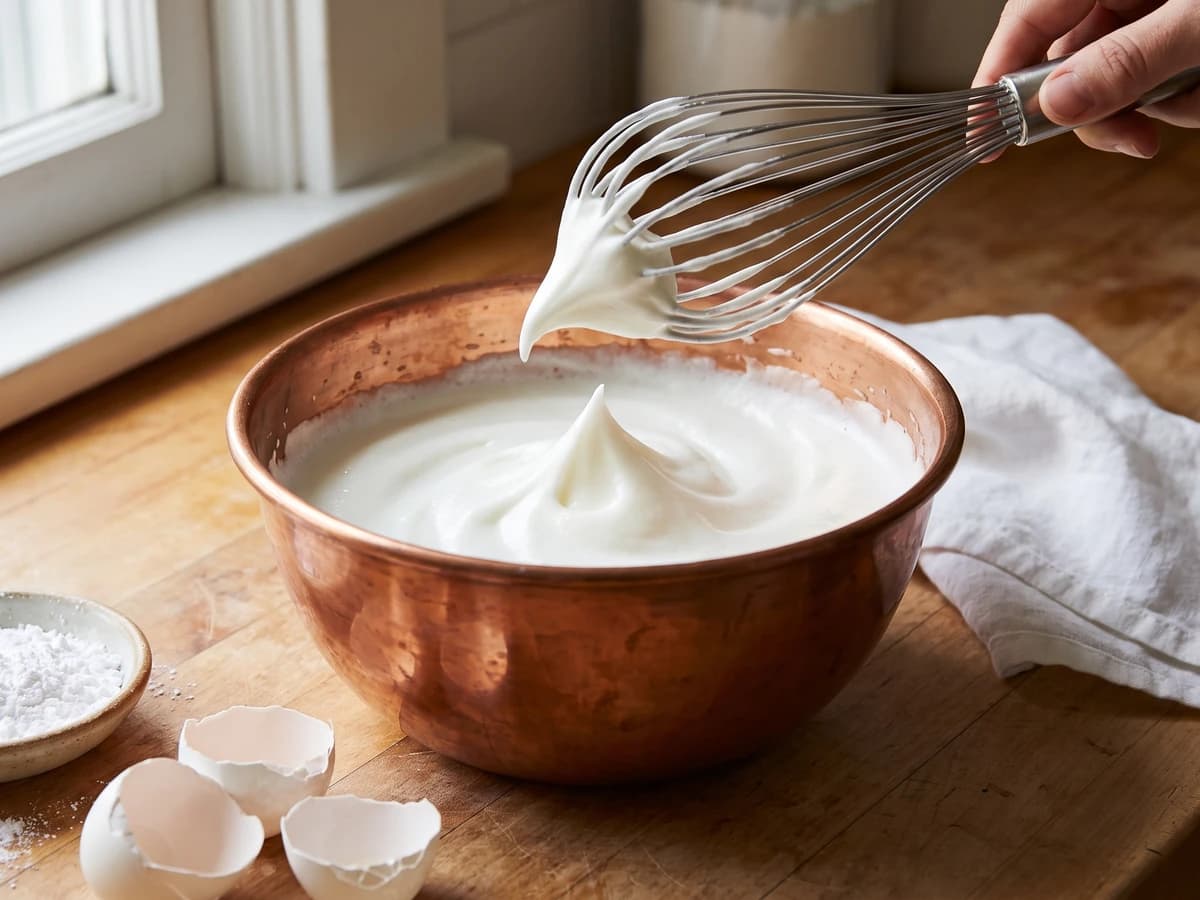
Four whites, one spotless bowl, and a patient change of speed: whisk gently until loosened, then briskly to glossy stiffness, with powdered sugar waiting if the foam begins to granulate.