
Chef Juliette
Flan aux Carottes
A pale short-paste shell holds silken, lightly sweet carrot purée beneath neat glazed half-discs, their butter syrup catching the light: a classical tart poised between vegetable course and sweet.
A cooking platform built around craft, culture, and the stories behind what we eat.
Created by Chef Juliette
Based on No. 2391, Bouchée or Small-patty Crusts, from Le Guide Culinaire (1907) by Auguste Escoffier
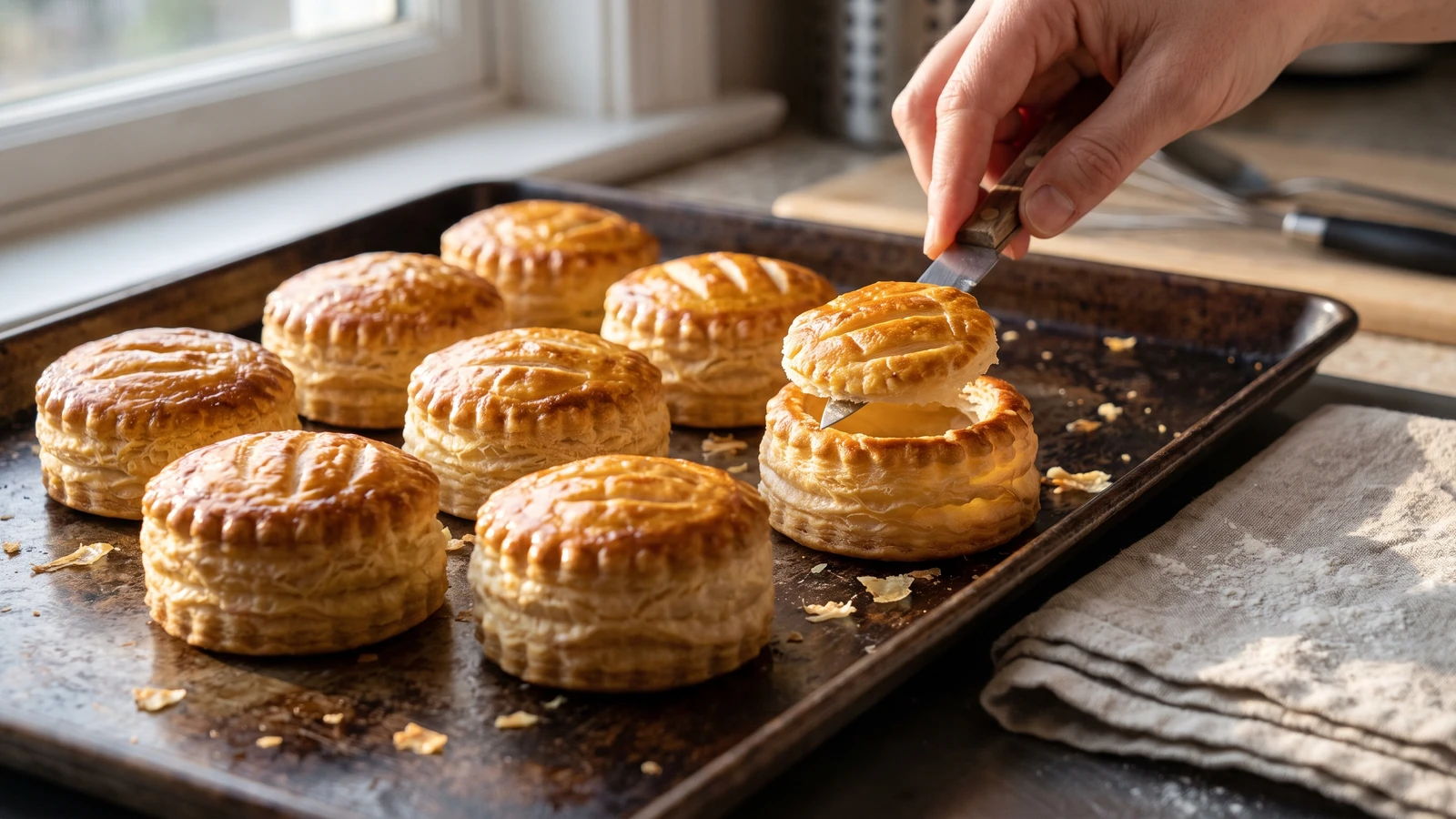
Bouchées rise from a single thick round of puff pastry, gilded and scored for a lid, then cleared while hot into crisp, butter-gold cases ready for the dinner table.
Bouchées (small puff-pastry cases) teach the central law of pâte feuilletée (puff pastry): the cut layers must remain cold, clean, and free to rise. Yet the one true thing to know before touching the tray comes at the other end. Clear the crumb the moment the cases leave the oven, while the interior is still pliable; wait until they cool and the crumb grips the walls.
The original entry assumes the pastry side of a brigade, with house-made pâte feuilletée, grooved cutters in every size, bare metal trays, and an oven kept fiercely hot. It calls for neither a saucier nor stock kept always on the fire, and a salamander cannot replace the oven. At home, prepared all-butter pâte feuilletée, two ordinary cutters, and a thoroughly preheated oven are the honest equivalents. We make eight cases instead of a service tray. One cook, one stove, one evening.
The brigade scaffolding can go, but the dish itself remains untouched: a true one-third-inch thickness, a three-inch fluted cut, egg gilding, the inset circular incision, and immediate clearing after baking. Done properly, each bouchée stands tall and butter-gold, with crisp laminated walls and a neat lid. The step that matters most is the clearing, so have the knife and spoon waiting before the oven door opens.
Bouchées belong to the Parisian classical pastry kitchen, where the vol-au-vent was reduced to a compact case for hors-d'oeuvre service and for garnishing larger dishes. From formal service they passed easily to bourgeois dinner tables, since the shells could be baked ahead and filled at the last moment. The name means “mouthful,” but the defined preparation is the hollow pâte feuilletée case, not any particular filling.
Quantity
14 ounces (400 g)
chilled but pliable
Quantity
2 tablespoons (30 ml / 16 g)
for dusting
Quantity
1 tablespoon (15 ml / 15 g)
for moistening the tray
Quantity
1
beaten for gilding
| Ingredient | Quantity |
|---|---|
| prepared all-butter pâte feuilletée (puff pastry)chilled but pliable | 14 ounces (400 g) |
| all-purpose flourfor dusting | 2 tablespoons (30 ml / 16 g) |
| cold waterfor moistening the tray | 1 tablespoon (15 ml / 15 g) |
| large eggbeaten for gilding | 1 |
Set a rack in the middle of the oven and heat it to 425°F (220°C), or 400°F (200°C) with a fan. Give the oven a full twenty minutes at temperature; pâte feuilletée needs immediate heat to drive its layers apart. Wipe the bare baking sheet evenly with the cold water until the metal gleams. Leave no puddles, which would paste the bottoms to the tray; if water collects, blot it before the pastry goes down.
Dust the board and rolling pin lightly with flour. Roll the pâte feuilletée to a true 1/3 inch (8 mm) thick, lifting and turning it without stretching. Brush away loose flour, then stamp out eight rounds with the 3-inch (7.5 cm) fluted cutter. Press straight down and lift straight up. Twisting the cutter seals the laminated edge and steals height. Set the rounds on the moistened tray about 1 1/2 inches (4 cm) apart. If the butter softens or the surface becomes tacky, stop and chill the pastry for ten minutes before cutting.
Brush the tops lightly and evenly with the beaten egg. This is the book's Gild: beaten egg gives the pastry its golden sheen under heat. Keep it off the fluted sides, because egg running down an edge glues the layers together; wipe away any drip with the corner of a damp cloth before it sets. Dip the 2-inch (5 cm) plain cutter in hot water, shake it nearly dry, and center it on each round. Press an incision about two-thirds through the pastry, never through the bottom. Without a smaller cutter, trace the same circle with the point of a sharp knife, keeping it 1/2 inch (1.25 cm) from the outer edge.
Chill the prepared tray for fifteen to twenty minutes, until the pastry feels firm and the egg coating is no longer wet. This pause is the honest home-kitchen equivalent of working from a cold pastry bench. Cold butter layers meeting a fully heated oven make separate flakes; warm butter simply runs between them.
Bake without opening the door for nine minutes. Once the bouchées have risen strongly, reduce the oven to 400°F (200°C), or 350°F (180°C) with a fan, and continue for nine to twelve minutes. They are ready when the tops are deep butter-gold, the fluted sides feel firm, and the lower layers show no grey or doughy line. If the tops bronze before the sides are baked, lay foil loosely over them and finish the cooking; pale, soft sides collapse as they cool.
Have a paring knife, a small spoon, and a folded towel ready. The instant the tray leaves the oven, steady one hot bouchée with the towel, trace the scored circle with the knife, and lift off its lid. Scoop out the soft interior crumb without piercing the thin floor or breaking the laminated walls. Work through all eight while they remain hot and flexible. If a lid will not release or the crumb has begun to set, ça se rattrape: deepen the incision with the knife, tease the crumb out one layer at a time, then return the opened shell and lid to a 350°F (180°C) oven for three to five minutes to dry.
Transfer the hollow shells and their lids to a rack and let them cool uncovered. Covering warm pastry traps moisture and softens every layer you worked to raise. Keep the bouchées empty until shortly before serving, then add the filling chosen for your menu and rest each lid lightly on top. À table!
1 serving (about 90g)
Culinary guides, cultural storytelling, and the editorial depth that makes cooking meaningful.
Discover Culinary ExplorerChef Juliette
A pale short-paste shell holds silken, lightly sweet carrot purée beneath neat glazed half-discs, their butter syrup catching the light: a classical tart poised between vegetable course and sweet.
Chef Juliette
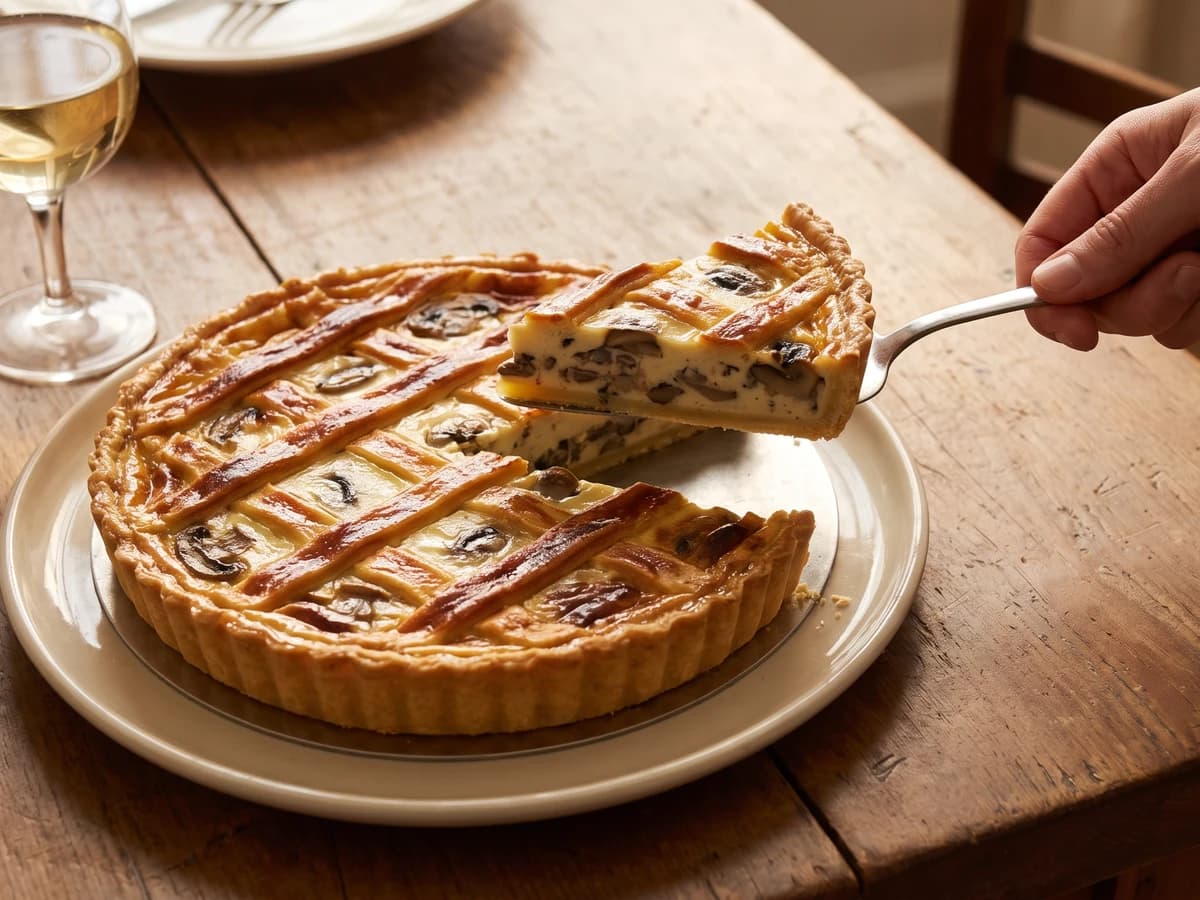
A hot mushroom flan under a butter-gold lattice, with cream reduced close around barely opened caps and a crisp short-paste base protected by one discipline: cool the filling completely.
Chef Juliette
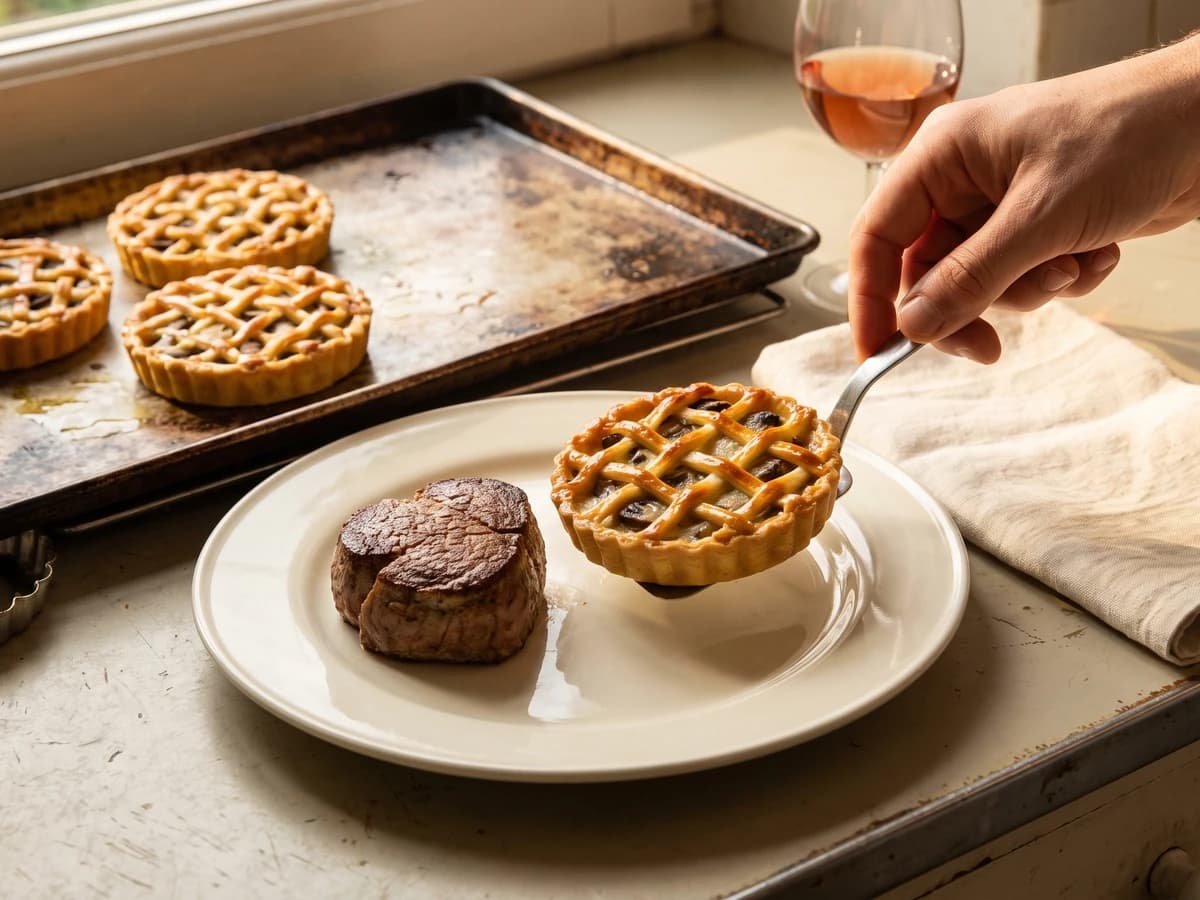
Four little mushroom flans, latticed and gilded, baked hard and fast until butter-gold: a classical garnish scaled to the meat it accompanies and served before its crispness has time to fade.

Chef Juliette
Morels surrender their liquor, then take it back as a glossy cream-and-butter sauce inside burnished puff pastry. The lesson is simple and absolute: reduce with patience, then heat gently and never boil.