
Chef Juliette
Various Almond Preparations
Five almond preparations, one discipline: remove the skins cleanly, dry every kernel through, then cut, toast, or cloak it in pale caramel without letting its fragrant oils escape.
A cooking platform built around craft, culture, and the stories behind what we eat.

Created by Chef Juliette
Based on No. 2377, Ordinary Génoise Paste for Cutting Up, from Le Guide Culinaire (1907) by Auguste Escoffier
Whole-egg foam gives Pâte Génoise Ordinaire à Découper its lift; baked one and a quarter inches deep, it rises into a firm, fine crumb made for clean layers and celebration cakes.
Pâte Génoise Ordinaire à Découper teaches the central law of sponge work: air held in a warm whole-egg foam is the only lift. Before you butter the case, know this one true thing. You can shorten the batch, but you cannot shorten the beating or spend that air carelessly when the flour and butter go in.
The original assumed a twelve-egg pastry-room quantity, a large warmed basin, sustained beating by hand, and several buttered, dredged cases waiting along the bench. Here the formula is halved exactly, six eggs with every proportion intact, and baked in one straight-sided 9-inch square metal pan. An electric mixer supplies the endurance, and a heatproof bowl over barely simmering water replaces the warmed basin. Multiple cases and an extra pair of arms were brigade scaffolding; the warmed foam, the measured depth, and the careful fold are the dish itself.
Baked correctly, the génoise rises from one and a quarter inches of batter to a butter-gold slab about one and three-quarters inches high, with a fine, resilient crumb that accepts a knife without tearing. It is sturdier than a fine génoise by design, not by accident. The folding of the flour and tempered butter is the step that decides everything.
Génoise carries Genoa in its name, but French pâtisserie made this butter-enriched whole-egg sponge a foundational pâte for layered gâteaux, entremets, and petits fours. Ordinary describes its working proportion, fewer eggs and more flour than a fine génoise, not lesser quality; the firmer crumb was chosen because it could be cut, moistened, filled, and handled cleanly. Its lift comes from beaten eggs rather than chemical leavening, which is why the word carries a technique, not merely a cake style.
Quantity
6 large (about 300 g without shells)
at room temperature
Quantity
1⅛ cups (265 ml / 227 g)
Quantity
2 teaspoons (10 ml / 9 g)
Quantity
1½ cups plus 1 teaspoon (365 ml / 184 g)
sifted twice
Quantity
½ cup (120 ml / 113 g)
melted and held warm
Quantity
2 teaspoons (10 ml / 9 g)
softened
Quantity
1 tablespoon (15 ml / 8 g)
| Ingredient | Quantity |
|---|---|
| large eggsat room temperature | 6 large (about 300 g without shells) |
| superfine sugar | 1⅛ cups (265 ml / 227 g) |
| pure vanilla extract | 2 teaspoons (10 ml / 9 g) |
| plain floursifted twice | 1½ cups plus 1 teaspoon (365 ml / 184 g) |
| unsalted buttermelted and held warm | ½ cup (120 ml / 113 g) |
| unsalted butter for the casesoftened | 2 teaspoons (10 ml / 9 g) |
| plain flour for dredging the case | 1 tablespoon (15 ml / 8 g) |
Set a rack in the middle of the oven and heat it to 350°F (175°C conventional, 160°C fan). Butter a straight-sided 9-inch (23 cm) square metal pan at least 2 inches (5 cm) deep. Fit parchment over the base, butter the parchment, then dredge the entire case with the measured flour and knock out every loose speck. Melt the formula butter gently and keep it fluid at about 105°F (40°C), warm but never sizzling.
Combine the eggs and sugar in a spotless heatproof mixer bowl. Set it over a bain-marie, a saucepan of barely simmering water, making certain the bowl does not touch the water. Whisk constantly until the mixture reaches 104 to 110°F (40 to 43°C), feels distinctly warm, and no sugar crystals remain between two fingers. Remove it from the heat and whisk in the vanilla. If a few cooked specks appear around the edge, strain the mixture into a clean bowl at once; ça se rattrape. Broad curds mean the heat was too fierce, and that batch must be restarted.
Whip at high speed until the mixture has nearly tripled in volume, turned pale and thick, and reached the ruban, the ribbon stage. Batter falling from the whisk should sit visibly on the surface for five seconds before sinking back, usually after 7 to 9 minutes. Finish with 1 minute at medium-low speed to make the bubbles fine and even. This foam is the only leavening. If it remains loose after several minutes, warm the bowl briefly over the bain-marie and continue whipping; a mixture that was merely too cool can still be rescued.
Sift one-third of the flour evenly over the foam. Cut down through the centre with a broad flexible spatula, sweep across the bottom, and lift the batter over itself while rotating the bowl. Repeat with the remaining flour in two additions, stopping as soon as no dry streaks remain. The fold is the dish: stirring spends the air you worked to build. If you find a small flour pocket, lift through that spot with two or three deliberate folds instead of beating the whole bowl.
Put about 1 cup of the folded batter into the warm melted butter and mix until smooth. Pour this lightened butter mixture around the inside edge of the main bowl, then fold it through with six or seven deep turns, reaching the bottom where butter likes to hide. If the butter has become opaque or waxy, warm it until fluid before tempering. If a few buttery streaks remain afterward, two or three additional bottom-reaching folds will bring them in; ça se rattrape. Stop the moment the batter is even and glossy.
Transfer the batter immediately to the prepared case and ease it into the corners without pressing out the foam. It should stand about 1¼ inches (3 cm) deep, the depth specified for this cutting paste. Smooth the top with two or three light strokes and do not strike the pan against the counter. Bake for 25 to 30 minutes, until the cake has risen to roughly 1¾ inches (4.5 cm), the top is butter-gold, the edges just draw from the case, and the centre springs back under a fingertip. If a skewer is wet or the centre still wobbles, return it to the oven immediately for 3-minute intervals; once a raw centre has cooled, it cannot be baked back into a proper crumb.
Rest the génoise in its case for 10 minutes, loosen the edges with a thin knife, and turn it onto a rack. Remove the parchment, turn it upright, and cool completely. For the cleanest cutting, wrap the cooled cake and let it settle for at least 4 hours before dividing it with a long serrated knife. Cut it horizontally for gâteau layers or into neat squares and strips for petits fours. One cook, one stove, one evening. À table!
1 serving (about 47g)
Culinary guides, cultural storytelling, and the editorial depth that makes cooking meaningful.
Discover Culinary ExplorerChef Juliette
Five almond preparations, one discipline: remove the skins cleanly, dry every kernel through, then cut, toast, or cloak it in pale caramel without letting its fragrant oils escape.

Chef Juliette
A pastry pantry lesson in one tray: filberts warmed only until their red skins release, rubbed clean, cooled, and chopped into a fragrant mise-en-place for cakes, creams, pralines, and petits fours.

Chef Juliette
The smallest pâtisserie discipline decides whether a cake leaves its mould intact: clarified butter in every corner, followed by the lightest veil of dry flour or fécule.
Chef Juliette
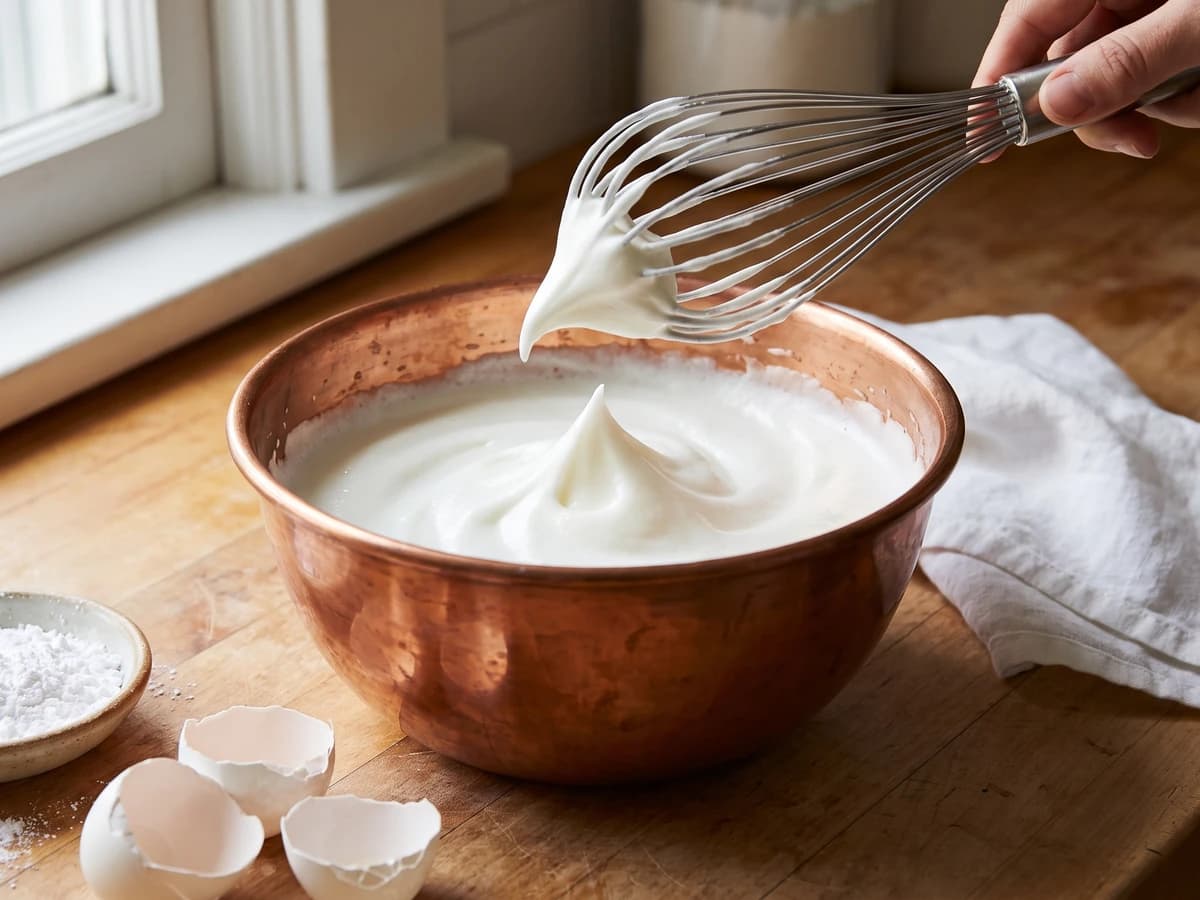
Four whites, one spotless bowl, and a patient change of speed: whisk gently until loosened, then briskly to glossy stiffness, with powdered sugar waiting if the foam begins to granulate.