
Chef Juliette
Flan aux Carottes
A pale short-paste shell holds silken, lightly sweet carrot purée beneath neat glazed half-discs, their butter syrup catching the light: a classical tart poised between vegetable course and sweet.
A cooking platform built around craft, culture, and the stories behind what we eat.
Created by Chef Juliette
Based on No. 2374, Common Pâte à Choux (for Souffléd Fritters, Gnochi, Potatoes à la Dauphine), from Le Guide Culinaire (1907) by Auguste Escoffier
The lean pâte à choux that teaches restraint: keep the panade moist, beat in fewer eggs, and it stays supple enough to puff as beignets, poach as gnocchi, or lighten pommes dauphine.
Pâte à choux commune (plain choux paste) teaches the difference between drying a panade and exhausting it. The one true thing to know before touching the pan is this: stop the drying early. This lean paste has less butter and fewer eggs than choux intended for baked pastry, so it must keep enough moisture to swell in beignets soufflés, remain tender as gnocchi, and lighten the potato mixture for pommes dauphine.
The book assumed a broad copper pan, twelve eggs, and enough brigade arms to beat a large mass without pause. Here the whole formula is reduced to one sixth: its three ounces of butter and twelve eggs become half an ounce of butter and two eggs, with every other proportion reduced to match. A 2-quart heavy saucepan, a digital scale, and a wooden spoon replace copper and spare hands; there is no stockpot or salamander to imitate. The quantity and extra labor were scaffolding. Dessécher, drying the panade briefly over heat, and preserving the reduced egg ratio are the dish. One cook, one stove, one evening.
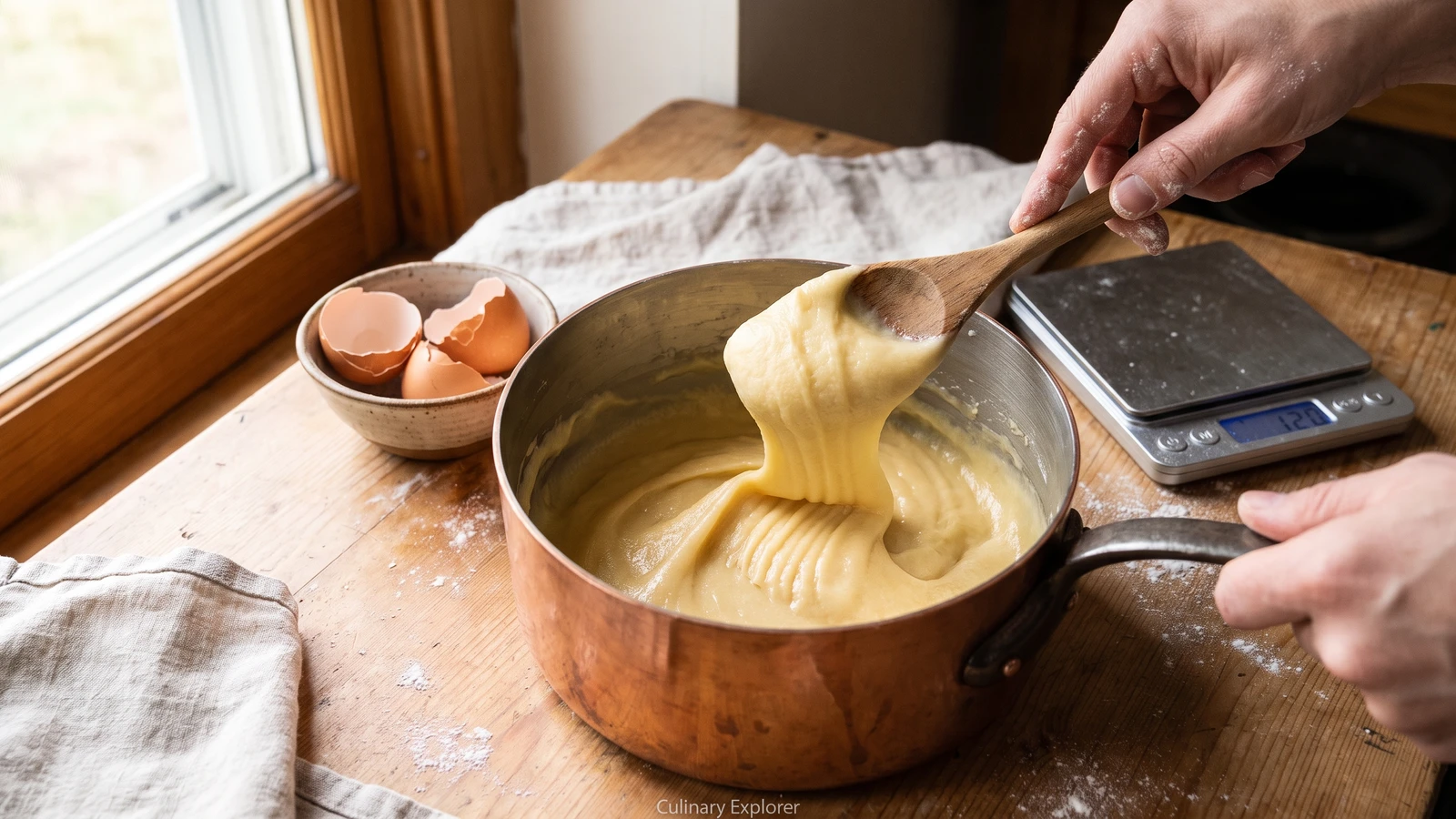
When it is right, the pâte à choux commune is pale, satiny, and slack enough to fall from the spoon in a heavy ribbon, not run like batter and not stand like modeling clay. Watch the pan floor closely: the first faint film is your signal to stop.
Pâte à choux belongs to the national French pastry and savory canon, moving between the pâtissier's pastry bench and the entremétier's stove rather than belonging to one regional larder. The pâte à choux commune in this entry is a lean working paste, kept deliberately moist so it can expand in frying, endure poaching, or mingle with potato for pommes dauphine. Its use in gnocchi and savory garnishes corrects the common notion that all choux belongs in the sweet shop.
Quantity
⅔ cup plus 1½ teaspoons (165 ml / 165 g)
Quantity
1 tablespoon (15 ml / 14 g; ½ oz)
cut into small pieces
Quantity
⅓ teaspoon (1.7 ml / 2 g)
Quantity
¼ teaspoon (1.25 ml / 1 g)
Quantity
¾ cup plus 1 tablespoon (195 ml / 100 g)
sifted
Quantity
2 (about 100 g without shells)
at room temperature and lightly beaten
Quantity
Up to 1 tablespoon (15 ml / 15 g)
only if needed to rescue an overdried paste
| Ingredient | Quantity |
|---|---|
| water | ⅔ cup plus 1½ teaspoons (165 ml / 165 g) |
| unsalted buttercut into small pieces | 1 tablespoon (15 ml / 14 g; ½ oz) |
| fine salt | ⅓ teaspoon (1.7 ml / 2 g) |
| superfine sugar | ¼ teaspoon (1.25 ml / 1 g) |
| all-purpose floursifted | ¾ cup plus 1 tablespoon (195 ml / 100 g) |
| large eggsat room temperature and lightly beaten | 2 (about 100 g without shells) |
| warm water (optional)only if needed to rescue an overdried paste | Up to 1 tablespoon (15 ml / 15 g) |
Sift the flour onto a sheet of parchment or into a small bowl so it can go into the saucepan all at once. Beat the eggs only until the whites and yolks unite. Keep the warm rescue water nearby but untouched; it replaces moisture only if too much is lost during dessécher.
Put the measured water, butter, salt, and sugar in a 2-quart saucepan. Bring them to a full boil over medium heat, swirling the pan until the butter dissolves. Pull the pan from the heat as soon as the surface boils evenly. A long boil sends away water this lean paste needs.
Tip in the flour all at once and beat firmly with a wooden spoon until no dry flour remains. Return the pan to medium-low heat and beat for 45 to 60 seconds, just until the panade, the cooked flour base, gathers into a soft mass and the first faint translucent film appears on the pan floor. Stop while the paste remains slightly glossy and leaves a soft smear behind the spoon. Do not chase the firm, dry ball wanted for baked choux. If it has become matte and stubborn, remove it from the heat and beat in warm water one teaspoon at a time until it softens. Ça se rattrape. If it needs more than the listed tablespoon, begin again; a clean small batch protects the formula better than further correction.
Transfer the panade to a mixing bowl, or spread it against the sides of the saucepan, and beat for 2 to 3 minutes so excess heat escapes. It should feel quite warm but not scorching, below 60°C (140°F) if you use a thermometer. Add eggs to a hotter panade and they can set into flecks rather than bind smoothly.
Add the beaten eggs in three additions, beating each one completely into the panade before adding the next. The paste will separate into slippery pieces at first. Keep beating; it will come together. After the final addition, the pâte à choux commune should be smooth, glossy, and deliberately slack, falling from the spoon in a slow, broad ribbon and leaving a soft V at its edge. If it remains rigid, beat in one teaspoon of the rescue water. Do not add another egg, because the reduced egg ratio is part of the preparation, not brigade scaffolding.
Use the pâte à choux commune promptly in the finished preparation. Portion it with damp spoons for beignets soufflés, pipe or cut it as directed for gnocchi, or fold it into the prepared potato mixture for pommes dauphine. It should mound softly rather than hold a sharp piped ridge. If it must wait, press reusable wrap or parchment directly against its surface and refrigerate it at once.
1 serving (about 90g)
Culinary guides, cultural storytelling, and the editorial depth that makes cooking meaningful.
Discover Culinary ExplorerChef Juliette
A pale short-paste shell holds silken, lightly sweet carrot purée beneath neat glazed half-discs, their butter syrup catching the light: a classical tart poised between vegetable course and sweet.
Chef Juliette
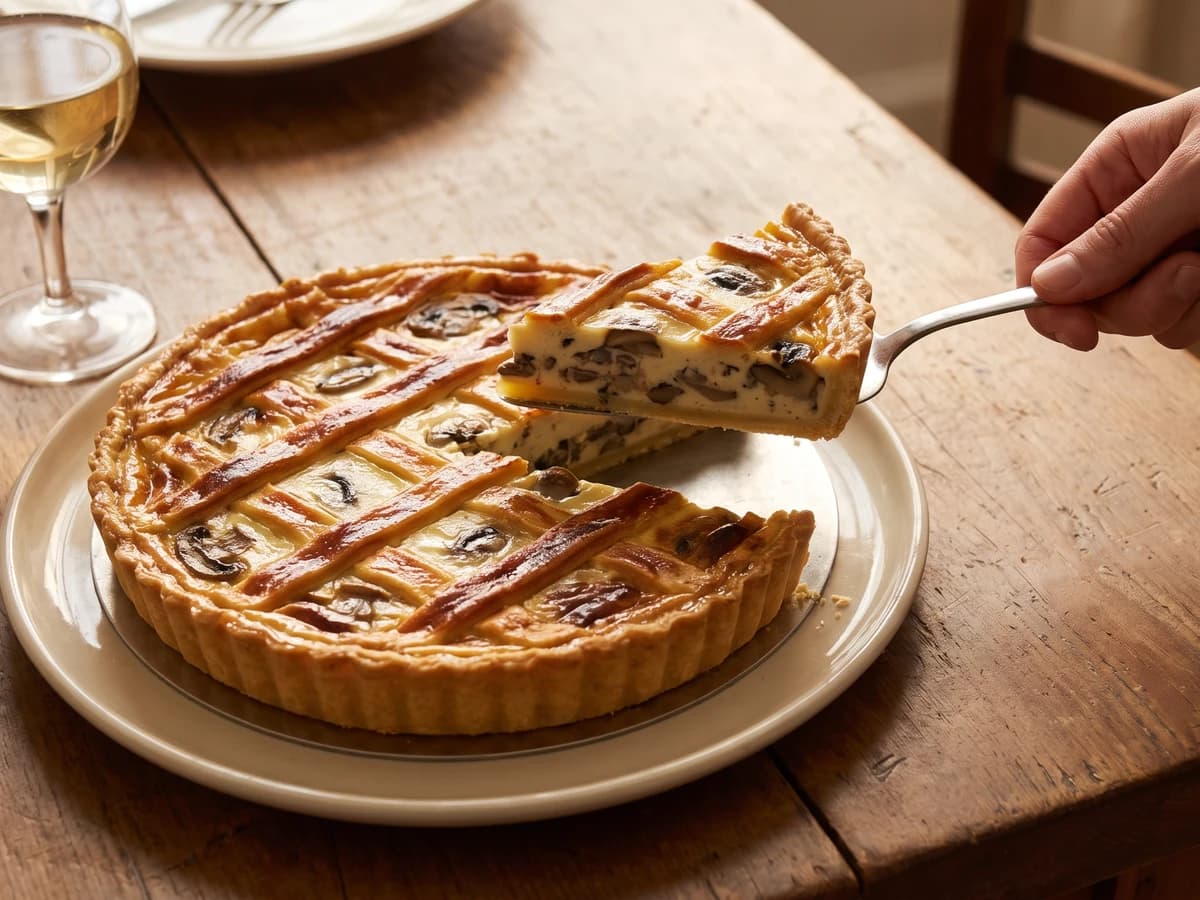
A hot mushroom flan under a butter-gold lattice, with cream reduced close around barely opened caps and a crisp short-paste base protected by one discipline: cool the filling completely.
Chef Juliette
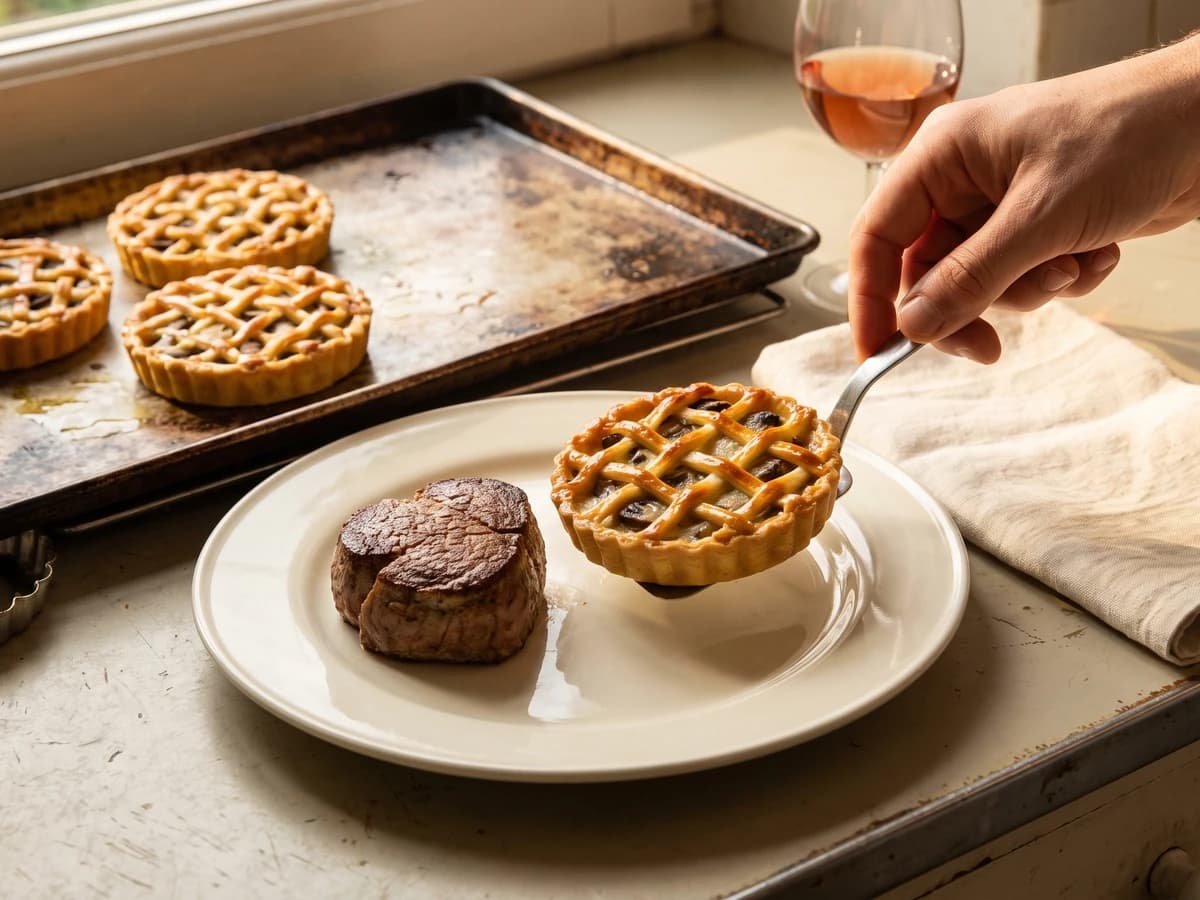
Four little mushroom flans, latticed and gilded, baked hard and fast until butter-gold: a classical garnish scaled to the meat it accompanies and served before its crispness has time to fade.

Chef Juliette
Morels surrender their liquor, then take it back as a glossy cream-and-butter sauce inside burnished puff pastry. The lesson is simple and absolute: reduce with patience, then heat gently and never boil.