
Chef Juliette
Flan aux Carottes
A pale short-paste shell holds silken, lightly sweet carrot purée beneath neat glazed half-discs, their butter syrup catching the light: a classical tart poised between vegetable course and sweet.
A cooking platform built around craft, culture, and the stories behind what we eat.

Created by Chef Juliette
Based on No. 2358, Fine, Short or Flawn Paste (For Fruit Tarts), from Le Guide Culinaire (1907) by Auguste Escoffier
Pâte à foncer fine begins with butter, egg, cold water, sugar, and salt, then takes its flour last. Two brief fraisages make a tender, clean-rolling fruit-tart crust without waking too much gluten.
Pâte à foncer fine (fine short paste for fruit tarts) teaches the order that keeps pastry short: butter, egg, cold water, sugar, and salt meet before the flour. Short means tender enough to part cleanly under a fork, not fragile as dust. Flour last, then stop; that is the one true thing to know before your hands touch the bowl.
The source formula assumed a broad mixing board, a one-pound mound of flour, and enough paste for several tarts in service. This version quarters every quantity for one 23 cm tart shell and uses a large bowl to contain the liquid center. The open flour well is brigade scaffolding and can go; the sequence and two brief fraisages, heel-of-hand presses that finish the mixing, are the dish and they stay.
When it is right, the dough feels cool, supple, and faintly satiny, with no dry veins and no greasy shine. It may look curdled before the flour joins and a little rough afterward, which alarms people for no reason. The moment that matters is incorporation: bring the flour in gradually, knead only until the mass holds, and let the rest do what more handling never can.
Pâte à foncer fine belongs to the national French pâtisserie workbench and the bourgeois fruit-tart table rather than to a single region; it is a lining paste, supple enough to shape yet short enough to cut cleanly beneath fruit. In English-language classical manuals, flawn belongs to the same word family as French flan and names the filled tart, not a separate regional pastry. Generations of professional cooks made the paste in broad board wells, but its modest sugar and flour-last mixing carried naturally into home kitchens.
Quantity
¾ cup plus 3 tablespoons (225 ml / 113 g)
sifted
Quantity
⅜ teaspoon (1.9 ml / 2.4 g)
Quantity
1½ tablespoons (22.5 ml / 11 g)
Quantity
2½ teaspoons (12.5 ml / 13 g), measured from 1 large egg
beaten until uniform
Quantity
2 tablespoons plus 1 teaspoon (35 ml / 35 g)
Quantity
5 tablespoons (75 ml / 71 g)
cool but pliable
| Ingredient | Quantity |
|---|---|
| all-purpose floursifted | ¾ cup plus 3 tablespoons (225 ml / 113 g) |
| fine sea salt | ⅜ teaspoon (1.9 ml / 2.4 g) |
| powdered sugar | 1½ tablespoons (22.5 ml / 11 g) |
| large eggbeaten until uniform | 2½ teaspoons (12.5 ml / 13 g), measured from 1 large egg |
| cold water | 2 tablespoons plus 1 teaspoon (35 ml / 35 g) |
| unsalted buttercool but pliable | 5 tablespoons (75 ml / 71 g) |
Sift the flour into a separate bowl. Beat one large egg until the white and yolk are completely uniform, then measure out 2½ teaspoons (12.5 ml / 13 g). Keep the water cold and let the butter soften only until it bends beneath a finger without looking shiny. Precision matters in this small batch, particularly with the egg and salt.
Work the butter with a flexible spatula until smooth but still cool. Mix in the salt and powdered sugar, followed by the measured egg and cold water, stirring firmly until everything is thoroughly dispersed. The mixture may resemble loose, slightly curdled cream rather than a smooth emulsion. That is exactly right. If the butter turns glossy or leaves an oily film, stop and chill the bowl for 10 minutes before continuing; ça se rattrape.
Add the sifted flour in three portions, folding and pressing with the spatula after each addition. Once the last dry patches disappear, use your hand to knead the dough for only three or four turns, just until it gathers into a soft, slightly rough mass. Flour last is the principle of the paste: prolonged mixing after this point builds elasticity, and elasticity becomes a tough, shrinking tart shell. If the dough feels sticky, chill it for 10 minutes rather than burying it under more flour.
Turn the dough onto a barely floured cool work surface. For the first fraisage, push a small portion away from you in one firm smear with the heel of your hand, then scrape it back into a pile. Continue until the whole mass has been pressed once. Gather it and repeat one complete pass, no more. The dough should become cohesive and satiny while remaining cool. If it smears like grease, scrape it together, chill it for 10 to 15 minutes, and finish the second pass only after the butter firms.
Gather the dough into a smooth ball without further kneading, then press it lightly into a thick round so the cold reaches its center evenly. Wrap it airtight and refrigerate for at least 1 hour. This rest allows the flour to hydrate and the gluten to relax, so the paste rolls cleanly and holds the tart tin instead of drawing inward in the oven. If it becomes refrigerator-hard, leave it at room temperature for 10 minutes and tap it several times with the rolling pin before rolling.
Roll the rested paste from the center outward, turning it a quarter turn often and using only a veil of flour, until it is about 3 mm (⅛ inch) thick. Ease it into a 23 cm (9-inch) tart tin without stretching, press it gently into the corner, and trim the rim. Patch any crack with a thin scrap of dough and rub the seam closed with a fingertip; once baked, it will be one crust. Chill the lined shell for 30 minutes, then fill and bake it according to the fruit-tart recipe.
1 serving (about 31g)
Culinary guides, cultural storytelling, and the editorial depth that makes cooking meaningful.
Discover Culinary ExplorerChef Juliette
A pale short-paste shell holds silken, lightly sweet carrot purée beneath neat glazed half-discs, their butter syrup catching the light: a classical tart poised between vegetable course and sweet.
Chef Juliette
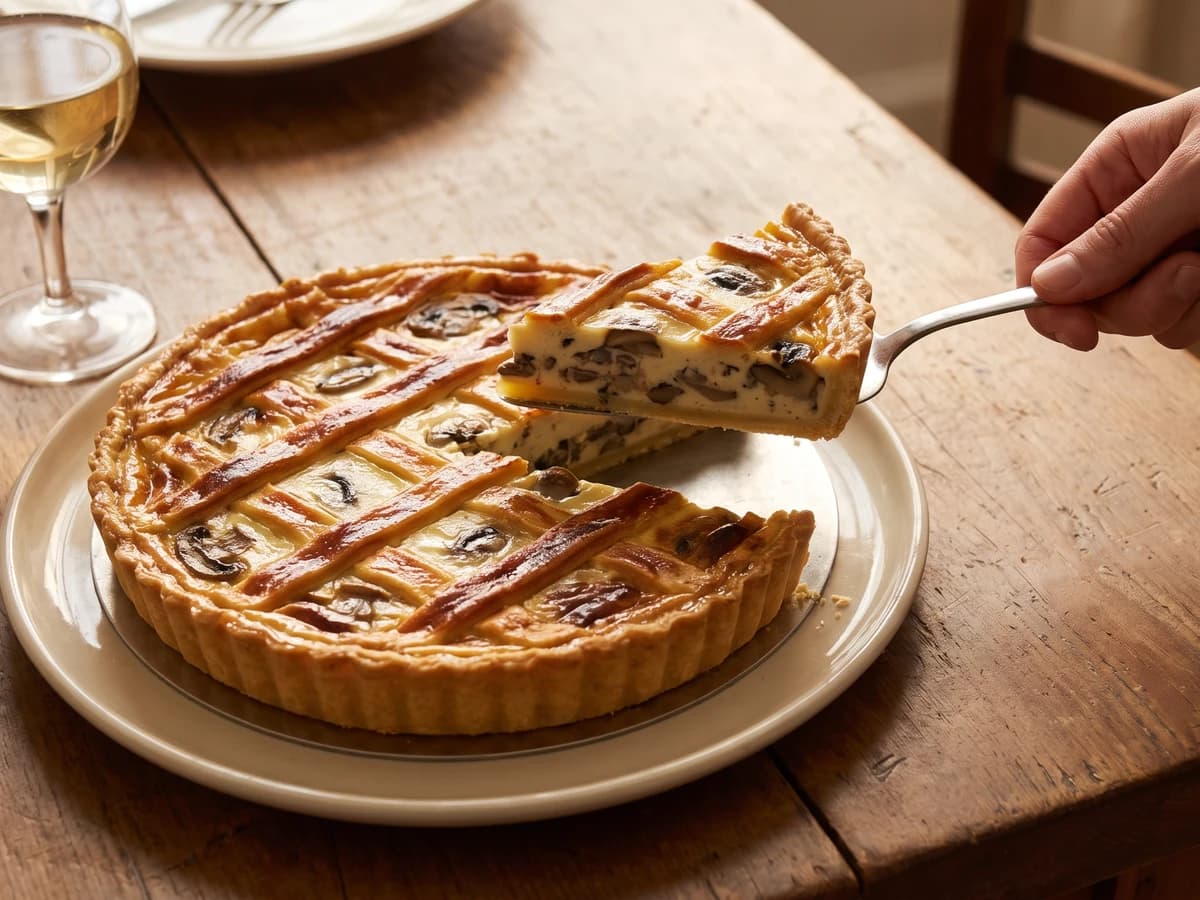
A hot mushroom flan under a butter-gold lattice, with cream reduced close around barely opened caps and a crisp short-paste base protected by one discipline: cool the filling completely.
Chef Juliette
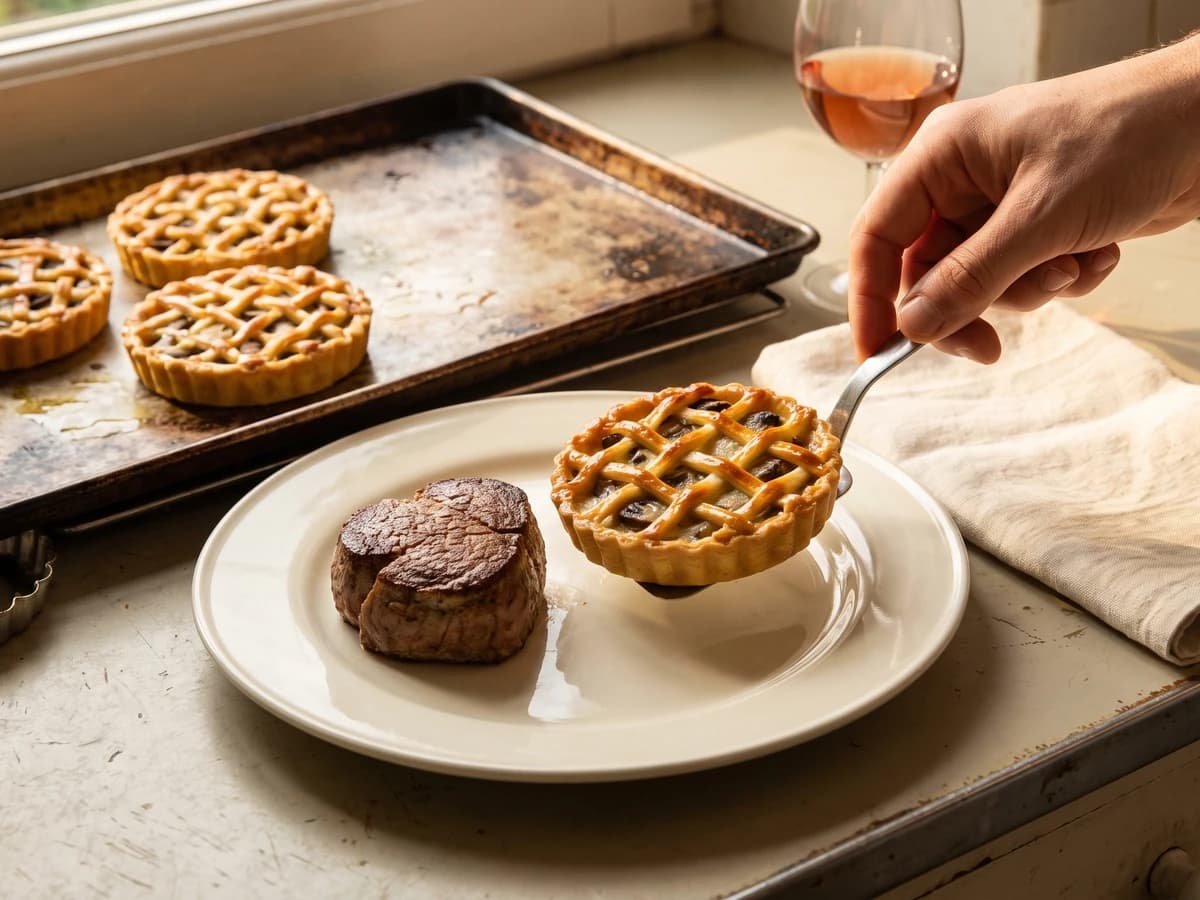
Four little mushroom flans, latticed and gilded, baked hard and fast until butter-gold: a classical garnish scaled to the meat it accompanies and served before its crispness has time to fade.

Chef Juliette
Morels surrender their liquor, then take it back as a glossy cream-and-butter sauce inside burnished puff pastry. The lesson is simple and absolute: reduce with patience, then heat gently and never boil.