
Chef Juliette
Flan aux Carottes
A pale short-paste shell holds silken, lightly sweet carrot purée beneath neat glazed half-discs, their butter syrup catching the light: a classical tart poised between vegetable course and sweet.
A cooking platform built around craft, culture, and the stories behind what we eat.

Created by Chef Juliette
Based on No. 2316, Fondants au Chester, from Le Guide Culinaire (1907) by Auguste Escoffier
Fondants au Chester pair crisp, butter-rich cheese galettes around a cool savory custard. Keep the cream below a boil, and yolks, butter, and Cheshire become one smooth, melting center.
Fondants au Chester teach temperature before they teach pastry. The little galettes are forgiving, but their savory fondant cream asks for judgment: yolks and cream must thicken enough to coat a spoon, then leave the heat before a single bubble breaks. Boiling turns silk to grain.
The original assumed a pastry hand to cut and gild, a saucier to watch the custard, an oven judged simply as moderate, and enough guests for the full quantity. This home batch halves every principal amount, preserving the equal weights of flour, butter, and cheese, and translating six yolks with two-thirds of an imperial pint of cream into three yolks with 190 ml cream. A measured oven and a thermometer replace brigade instinct. The division of labor is scaffolding and can go; the ratios, the cooling, and the off-boil custard are the dish and stay. One cook, one stove, one evening.
When they are right, the fork-streaked galettes are butter-gold at the center and bronze at the edge, with a cool, peppery cheese cream pressed generously between them. Both parts can wait, which makes the final pairing pleasantly calm. Remember the one step that matters most: take the custard off before it boils.
Fondants au Chester belong to the Parisian grand-kitchen repertoire of savory pastries, not to a named French province. Chester was the French kitchen's name for English Cheshire cheese, brought into a thoroughly French construction of galette, dorure (egg gilding), and yolk-thickened cream. Here fondant names the melting tenderness of the filling, not confectioners' sugar.
Quantity
1 scant cup (240 ml / 115 g)
Quantity
1/2 cup (120 ml / 115 g)
diced
Quantity
1 cup (240 ml / 115 g)
finely grated
Quantity
1/8 teaspoon (0.6 ml / 0.75 g)
Quantity
1 small pinch (1/16 teaspoon / 0.3 ml / 0.1 g)
Quantity
1 to 1 1/2 tablespoons (15 to 22 ml / 15 to 22 g)
Quantity
1 (about 50 g without shell)
beaten for gilding
Quantity
3 (about 50 g)
Quantity
3/4 cup plus 2 teaspoons (190 ml / 190 g)
Quantity
1/8 teaspoon (0.6 ml / 0.75 g)
Quantity
1 small pinch (1/16 teaspoon / 0.3 ml / 0.1 g)
Quantity
5 tablespoons (75 ml / 70 g)
softened but not greasy
Quantity
2/3 cup (160 ml / 70 g)
very finely grated
| Ingredient | Quantity |
|---|---|
| all-purpose flour | 1 scant cup (240 ml / 115 g) |
| cold unsalted butterdiced | 1/2 cup (120 ml / 115 g) |
| mature Cheshire cheesefinely grated | 1 cup (240 ml / 115 g) |
| fine sea salt for the galettes | 1/8 teaspoon (0.6 ml / 0.75 g) |
| cayenne pepper for the galettes | 1 small pinch (1/16 teaspoon / 0.3 ml / 0.1 g) |
| cold water | 1 to 1 1/2 tablespoons (15 to 22 ml / 15 to 22 g) |
| large eggbeaten for gilding | 1 (about 50 g without shell) |
| large egg yolks | 3 (about 50 g) |
| heavy cream | 3/4 cup plus 2 teaspoons (190 ml / 190 g) |
| fine sea salt for the fondant cream | 1/8 teaspoon (0.6 ml / 0.75 g) |
| cayenne pepper for the fondant cream | 1 small pinch (1/16 teaspoon / 0.3 ml / 0.1 g) |
| unsalted butter for the fondant creamsoftened but not greasy | 5 tablespoons (75 ml / 70 g) |
| mature Cheshire cheese for the fondant creamvery finely grated | 2/3 cup (160 ml / 70 g) |
Whisk the flour with the salt and cayenne. Cut in the cold butter with your fingertips or a pastry blender until the mixture holds small flakes and coarse crumbs, then toss through the grated cheese. Add 1 tablespoon of cold water and press the mixture together; if dry flour remains, add the rest a teaspoon at a time. Stop as soon as a soft paste forms. Flatten it into a disc, wrap, and chill for 30 minutes.
Heat the oven to 350°F (175°C), or 330°F (165°C) with a fan. Roll the chilled paste between two sheets of parchment to 1/6 inch (4 mm) thick. Cut about 40 galettes with a 2-inch (5 cm) round cutter, rerolling the scraps once. Arrange them on parchment-lined sheets. Gild each round with the thinnest film of beaten egg, then streak the tops with parallel fork marks without cutting through. Chill the trays for 10 minutes.
Bake for 12 to 16 minutes, turning the trays front to back and exchanging their positions halfway through, until the galettes are evenly golden with bronzed rims. Pale pastry will taste floury, but dark brown cheese turns bitter, so watch the final minutes. Leave them on the trays for 5 minutes, then transfer them carefully to a rack and cool completely.
Set a fine-mesh sieve over a cool bowl. Whisk the yolks, cream, salt, and cayenne together in a small heavy saucepan. Cook over low to medium-low heat, stirring constantly with a flexible spatula and sweeping the corners, until the cream lightly coats the spatula and reaches 175 to 180°F (79 to 82°C). Remove it before the first bubble. If fine grains begin to appear, scrape the custard immediately into the cool bowl, whisk vigorously or blend briefly, then pass it through the sieve. Ça se rattrape. A custard allowed to boil into firm curds cannot return to silk, so don't wait for bubbling as your signal.
Let the strained custard cool, stirring occasionally, until barely lukewarm at 95 to 100°F (35 to 38°C). Beat in the softened butter a spoonful at a time, waiting for each addition to disappear before adding the next, then work in the very finely grated cheese until the fondant cream is smooth and thick. If it looks greasy, chill it for 10 minutes and whisk again; if it becomes too stiff to combine, set the bowl over barely warm water for a few seconds. Chill for 20 to 30 minutes, just until a spoonful holds a soft mound.
Match the cold galettes into pairs of similar size. Turn one from each pair over, place a level tablespoonful of fondant cream in its center, and press its partner gently on top until the filling reaches close to the edge. Keep the fork-streaked faces outward. Chill the assembled Fondants au Chester for 20 minutes to settle them, then let them stand for 10 to 15 minutes before serving so the butter-rich center is cool and yielding rather than hard. À table!
1 serving (about 120g)
Culinary guides, cultural storytelling, and the editorial depth that makes cooking meaningful.
Discover Culinary ExplorerChef Juliette
A pale short-paste shell holds silken, lightly sweet carrot purée beneath neat glazed half-discs, their butter syrup catching the light: a classical tart poised between vegetable course and sweet.
Chef Juliette
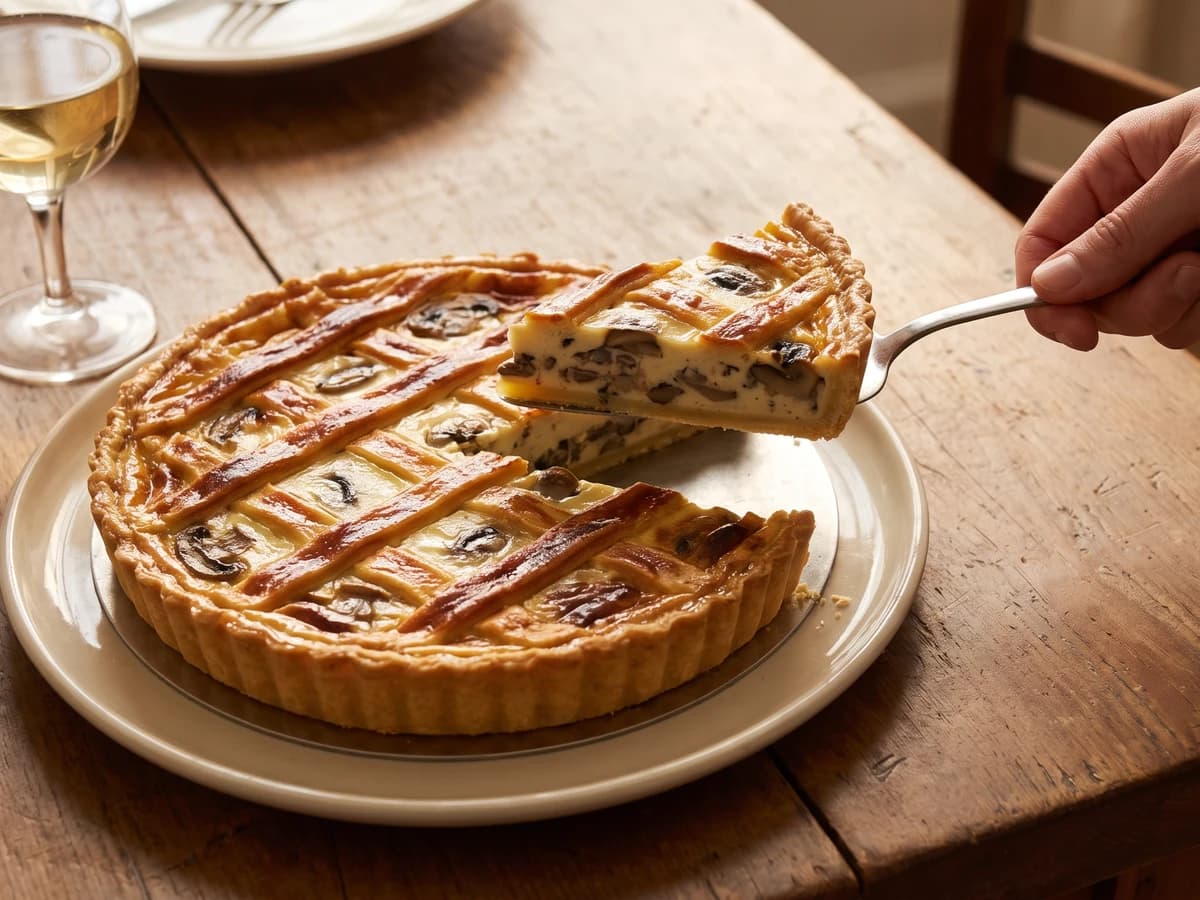
A hot mushroom flan under a butter-gold lattice, with cream reduced close around barely opened caps and a crisp short-paste base protected by one discipline: cool the filling completely.
Chef Juliette
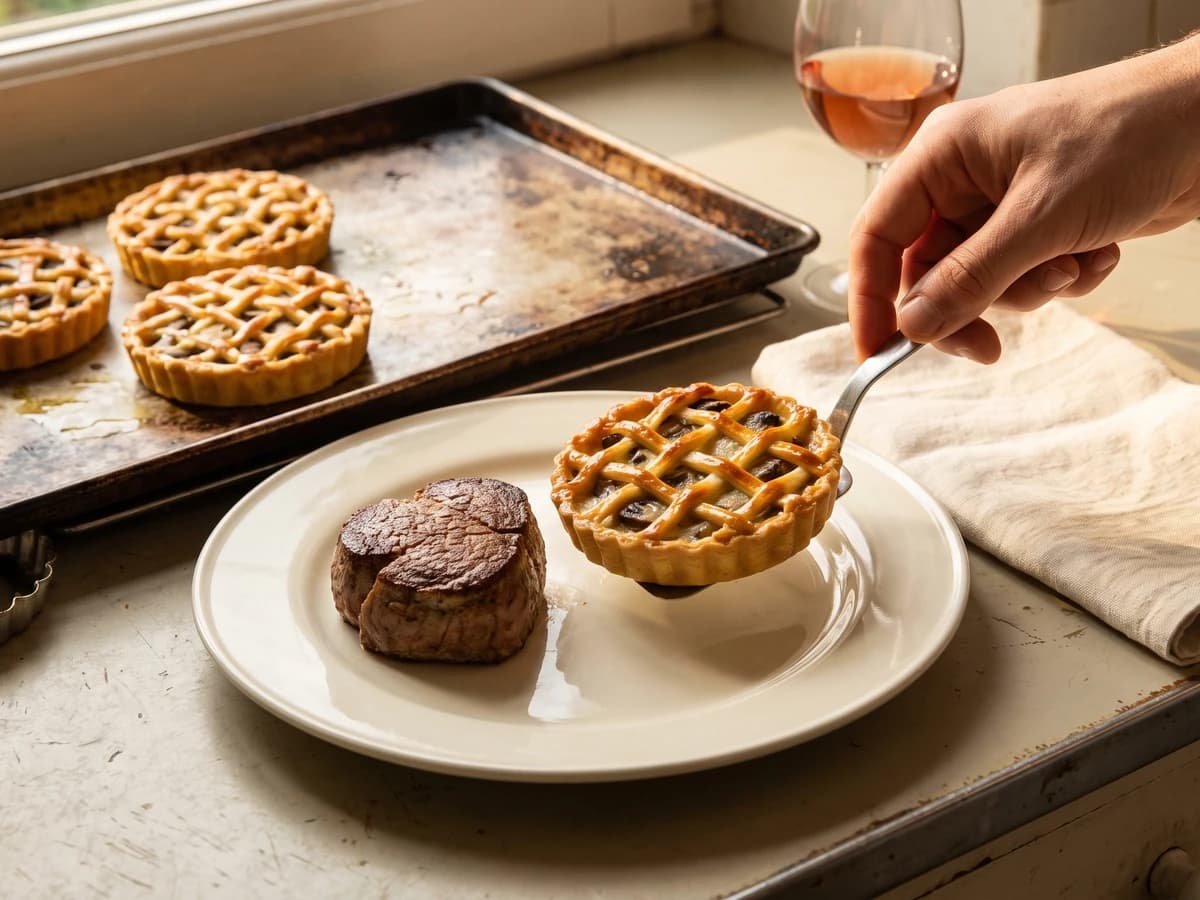
Four little mushroom flans, latticed and gilded, baked hard and fast until butter-gold: a classical garnish scaled to the meat it accompanies and served before its crispness has time to fade.

Chef Juliette
Morels surrender their liquor, then take it back as a glossy cream-and-butter sauce inside burnished puff pastry. The lesson is simple and absolute: reduce with patience, then heat gently and never boil.