Chef Juliette
Suet Dumpling
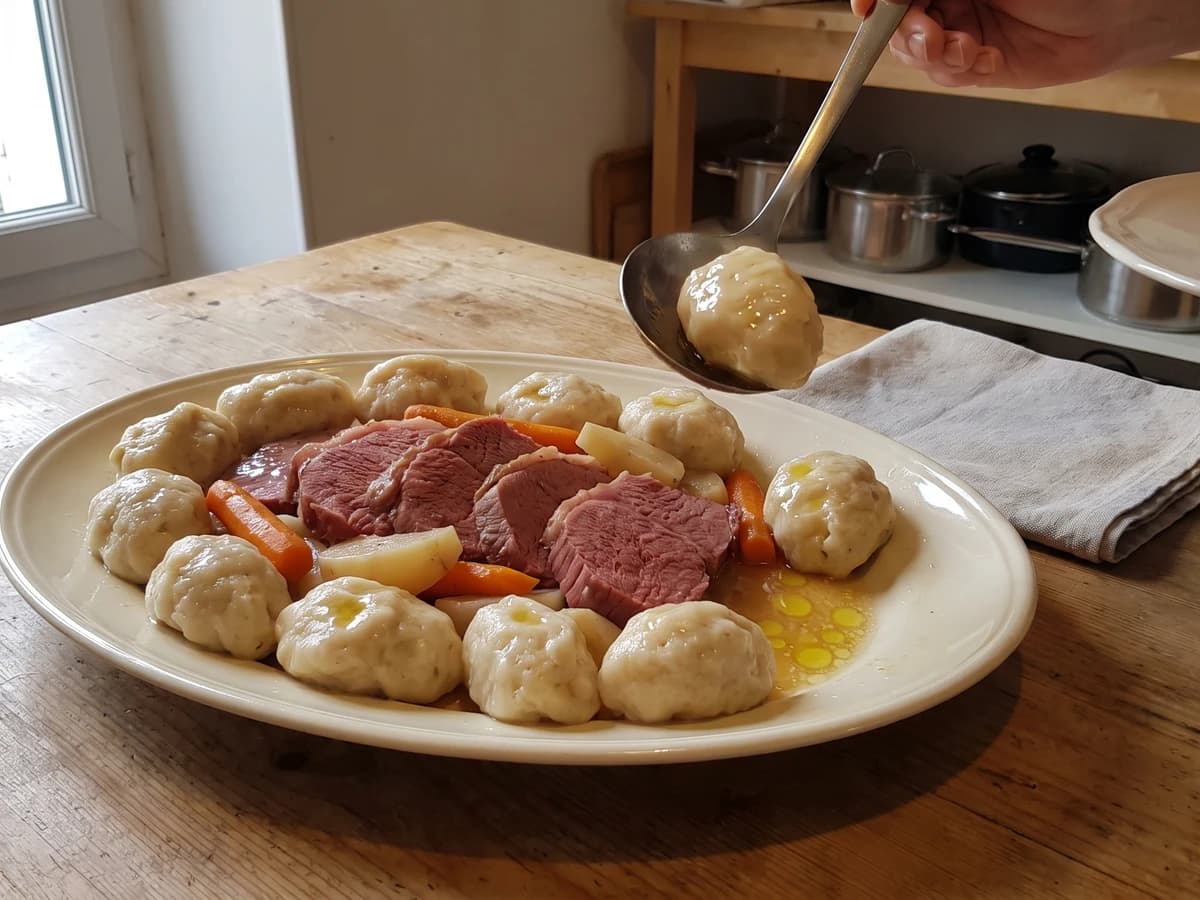
Boulettes au suif, poached beside salt beef, turn equal weights of flour and finely chopped suet into tender, rich dumplings. Keep the beef liquor at a bare tremble and the old garnish works beautifully at home.
A cooking platform built around craft, culture, and the stories behind what we eat.
Created by Chef Juliette
Based on No. 2283, Noques au Parmesan, from Le Guide Culinaire (1907) by Auguste Escoffier
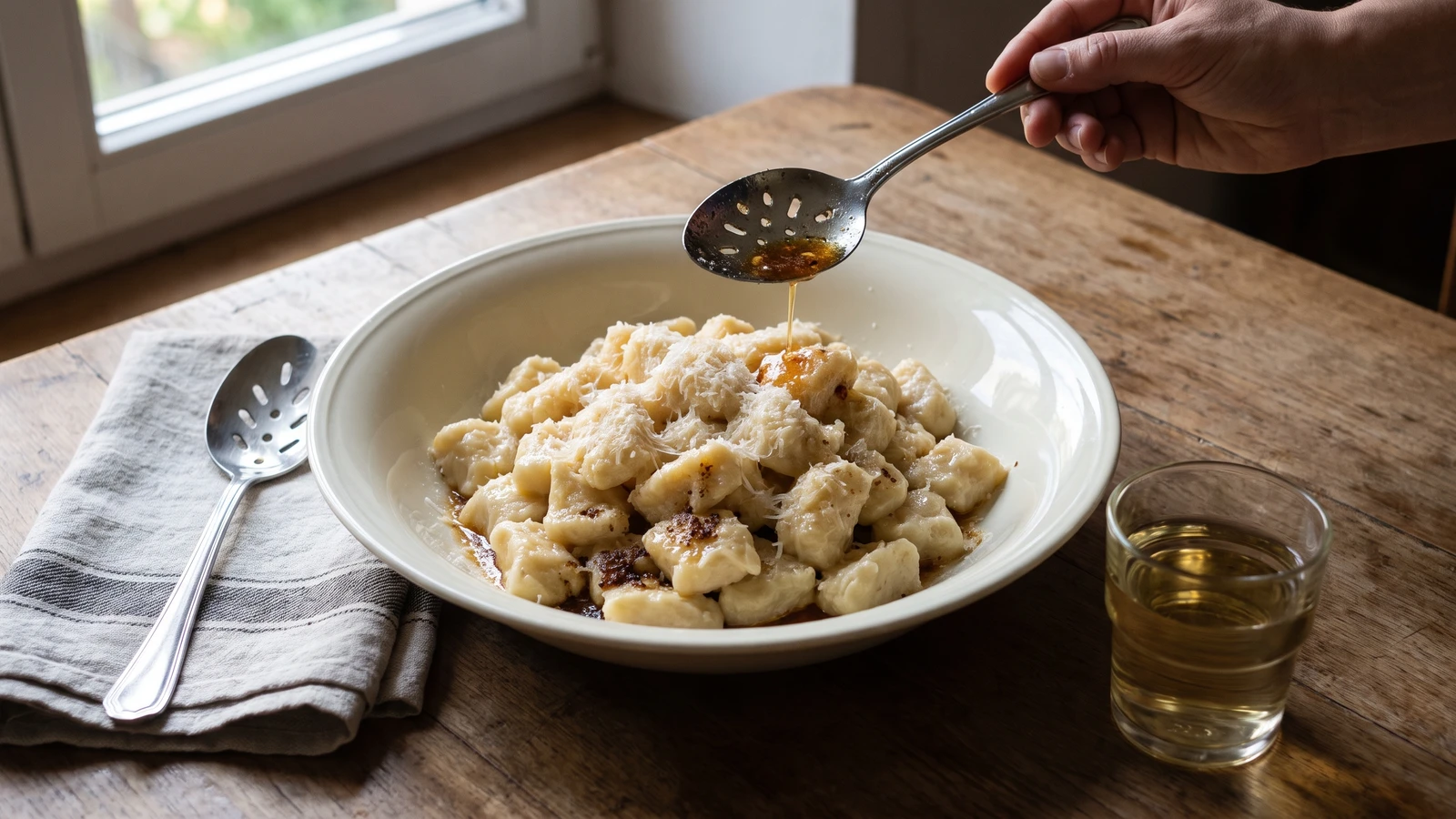
Noques au Parmesan turn a warm butter-and-flour base, eggs, and one stiff white into tender Alsatian dumplings, poached small and brought to the table under Parmesan and glossy beurre noisette.
Noques au Parmesan (Alsatian Parmesan dumplings) teach one quiet truth about butter emulsions: the basin must be comfortably warm before the butter enters. Cold butter refuses the eggs, hot butter melts under them, and the proper warmth lets everything join into a supple paste that the stiff egg white can lighten.
The source was written for a brigade that could keep a basin warm, beat the white separately, and shape a service batch without pausing. There is no stockpot or salamander hiding behind this dish. Here every proportion is halved for four generous side portions, the heated basin becomes a stainless-steel bowl warmed with hot water, and the draining linen becomes a clean lint-free towel. Those are service scaffolding. The Manied Butter (No. 151), the order of mixing, the stiff white, the hazelnut-sized portions, the gentle poach, Parmesan, and beurre noisette, butter browned to a hazelnut aroma, are the dish itself.
When the noques are right, they swell slightly in the water and arrive tender rather than bready, with finely grated Parmesan clinging to their pale surfaces and amber butter pooling underneath. Warm and dry the basin first. That single preparation decides how calmly everything afterward will go, one cook, one stove, one evening.
Noques belong to the Alsatian table, where French cookery meets the flour-and-egg dumpling traditions shared across the Rhine. The classical kitchen drew this household form into its repertoire of garnitures, enriching the paste with butter and eggs before finishing the poached dumplings with Parmesan and beurre noisette. Despite the familiar sound of their name, these noques are not potato gnocchi: their tenderness comes from a warm butter emulsion and folded egg white, with neither potato nor semolina.
Quantity
1 tablespoon plus ½ teaspoon (17.5 ml / 21 g)
divided
Quantity
¼ teaspoon (1.25 ml / 0.6 g)
Quantity
⅛ teaspoon (0.6 ml / 0.3 g)
Quantity
1
at room temperature and lightly beaten
Quantity
1
at room temperature and lightly beaten
Quantity
½ white, about 1 tablespoon (15 ml / 15 g)
at room temperature
Quantity
½ cup plus 1½ tablespoons (145 ml / 71 g)
Quantity
3 quarts (2.8 L / 2.8 kg)
Quantity
¾ cup (180 ml / 60 g)
finely grated
Quantity
4 tablespoons (60 ml / 57 g)
| Ingredient | Quantity |
|---|---|
| Manied Butterfreshly made, soft but not melted | 4 ounces (113 g) Manied Butter (No. 151) |
| fine saltdivided | 1 tablespoon plus ½ teaspoon (17.5 ml / 21 g) |
| freshly ground black pepper | ¼ teaspoon (1.25 ml / 0.6 g) |
| freshly grated nutmeg | ⅛ teaspoon (0.6 ml / 0.3 g) |
| large eggat room temperature and lightly beaten | 1 |
| large egg yolkat room temperature and lightly beaten | 1 |
| large egg whiteat room temperature | ½ white, about 1 tablespoon (15 ml / 15 g) |
| all-purpose flour | ½ cup plus 1½ tablespoons (145 ml / 71 g) |
| water | 3 quarts (2.8 L / 2.8 kg) |
| Parmesanfinely grated | ¾ cup (180 ml / 60 g) |
| unsalted butter | 4 tablespoons (60 ml / 57 g) |
Fill a medium stainless-steel bowl with very hot tap water and leave it for 3 minutes. Pour out the water and dry the bowl thoroughly; it should feel comfortably warm against your palm, not hot enough to melt butter. Bring the 3 quarts of water and 1 tablespoon of the salt to a full boil in a wide pan, then lower it to a bare simmer while you mix the paste.
Put the soft Manied Butter (No. 151) into the warm bowl. Work it vigorously with the remaining ½ teaspoon salt, the pepper, and nutmeg until perfectly smooth. Beat in the whole egg in four small additions, allowing each to disappear before adding the next, then add the yolk the same way. If the mixture turns grainy and begins leaking fat, stop adding egg and hold the bowl over the warm poaching water for 5 seconds while beating; continue slowly once it smooths. Ça se rattrape. If the mixture becomes shiny and runny, the bowl is too hot, so set it on a cool damp towel until the butter regains its creamy body.
Work the flour into the butter mixture in three additions, stopping as soon as the paste is smooth and no dry flour remains. In a narrow, spotless bowl, whisk the measured egg white until it holds a stiff, glossy peak. Fold one-third of the white briskly into the paste to loosen it, then fold in the remainder with broad strokes. Use the mixture promptly; long stirring or waiting knocks out the air that keeps the noques tender.
Return the salted water to a boil, then lower the heat until only lazy bubbles break the surface. Dip two teaspoons in the water and use them to shape one rounded teaspoon of paste, about 8 g and the size of a hazelnut. Drop this test noque into the pan. It should hold together, rise within 1 to 2 minutes, and cook through after 2 further minutes; cut it open and look for a tender, evenly set centre. If it frays, the water is boiling too hard. Lower the heat and test again. If it still spreads, chill the paste for 8 to 10 minutes so the butter can regain body, then retest.
Shape and poach the remaining noques in batches of 8 to 10, keeping them small and leaving enough room for the water to move around them. Hold the water at a quiet poach and cook each batch for 2 minutes after the noques float. Lift them with a slotted spoon and set them in a single layer on a clean lint-free towel to drain. Transfer each drained batch to a warmed deep serving bowl and cover loosely. The towel does precisely the work of the original linen, with no special equipment required.
While the last batch poaches, melt the unsalted butter in a small skillet over medium heat. Let it foam, then watch closely as the foam quiets and the milk solids turn hazelnut brown. Pull the pan from the heat as soon as the butter smells nutty; it continues darkening in the pan. If the solids turn black or smell bitter, start again, because burnt butter cannot be coaxed backward. Heap the noques in the warmed bowl, sprinkle them copiously with Parmesan, and spoon the beurre noisette over the top, including its toasted milk solids. Serve at once. À table!
1 serving (about 105g)
Culinary guides, cultural storytelling, and the editorial depth that makes cooking meaningful.
Discover Culinary ExplorerChef Juliette
Boulettes au suif, poached beside salt beef, turn equal weights of flour and finely chopped suet into tender, rich dumplings. Keep the beef liquor at a bare tremble and the old garnish works beautifully at home.

Chef Juliette
Bread, flour, frangipane, and rice become four cool, supple panades for binding forcemeats, each changing body and flavor while preserving tenderness. The finest Mousselines need none, and knowing that distinction is the lesson.

Chef Juliette
Panade au pain is bread, milk, salt, heat, and attention: stir until the paste releases cleanly, butter it against a skin, and you have the quiet binder behind tender French farces.

Chef Juliette
Panade de farine teaches the drying stroke behind pâte à choux: flour meets boiling buttered water, then stays over the fire until the paste gathers, smooths, and quits the pan cleanly.