Chef Juliette
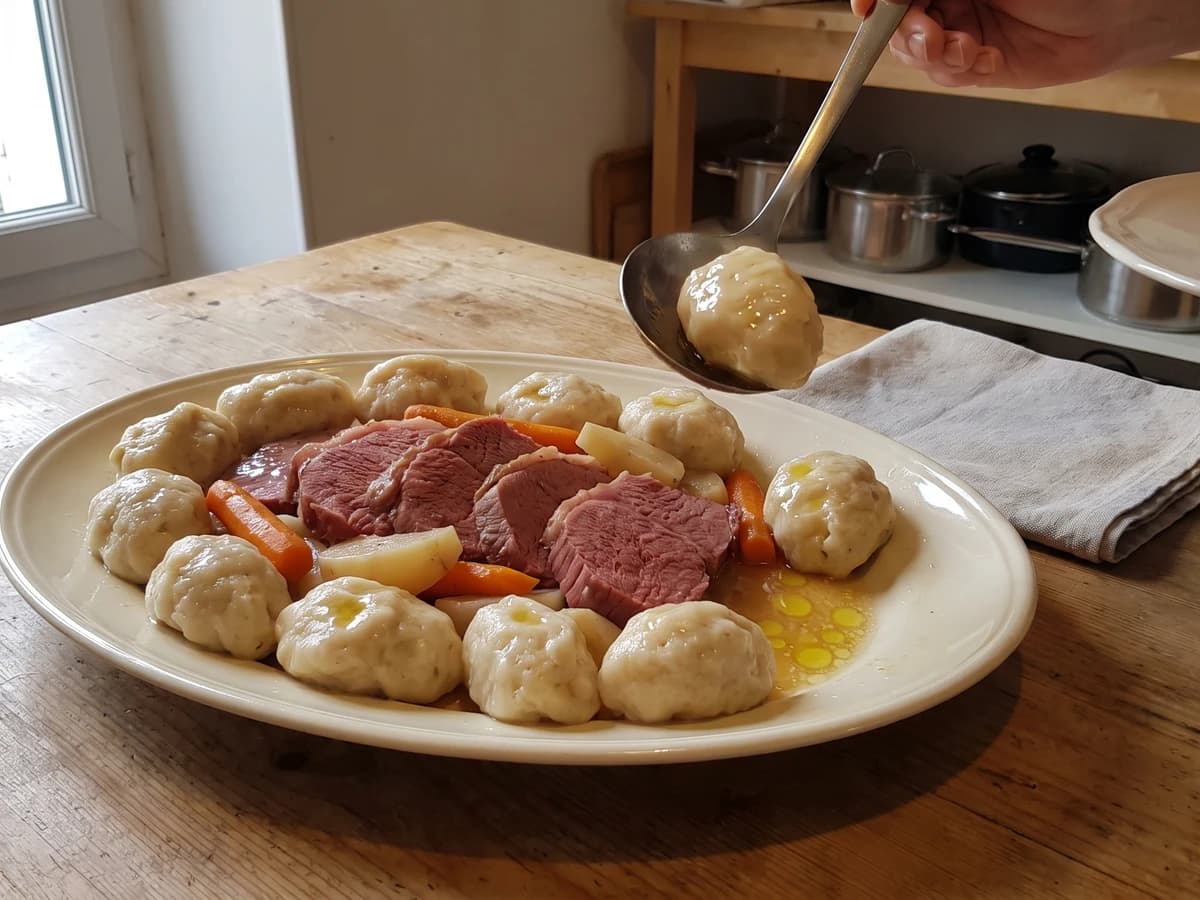
Suet Dumpling
Boulettes au suif, poached beside salt beef, turn equal weights of flour and finely chopped suet into tender, rich dumplings. Keep the beef liquor at a bare tremble and the old garnish works beautifully at home.
A cooking platform built around craft, culture, and the stories behind what we eat.
Created by Chef Juliette
Based on No. 2281, Gnochi à la Romaine, from Le Guide Culinaire (1907) by Auguste Escoffier
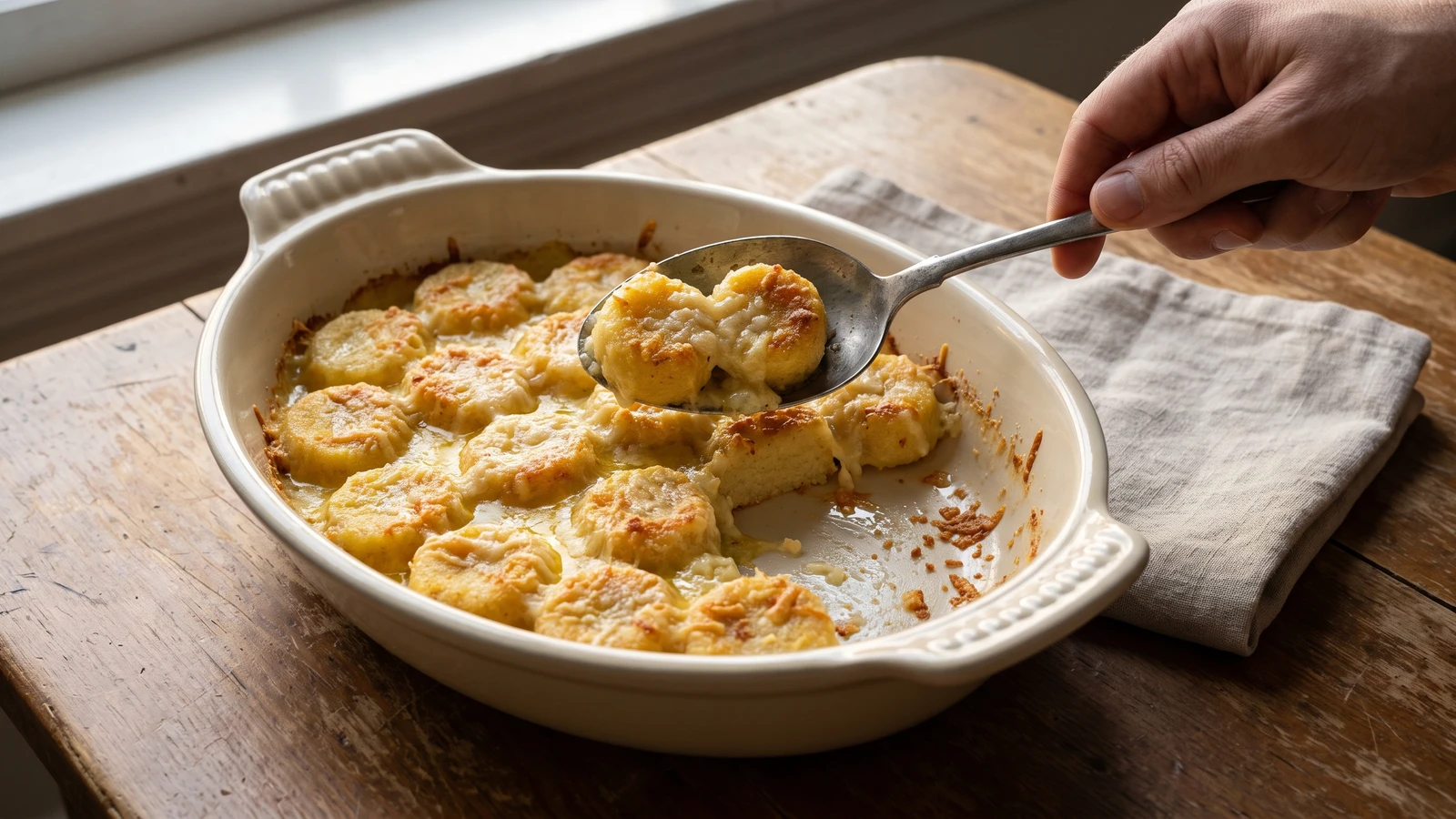
Gnochi à la Romaine turns milk and semolina into tender rounds beneath a bronzed cheese crust. Cook the paste stiff, chill it completely, and the tray cuts cleanly for supper.
Gnochi à la Romaine (Roman-style semolina dumplings) teaches the discipline of setting a starch before cutting it. Cook the semolina fully, spread it evenly, and let it go quite cold. Warm paste slumps under the cutter; cold paste stamps into tender coins with clean edges. That is the one true thing to know before touching the pan.
The book's kitchen needed no saucier and no stockpot for this one, but it did assume broad trays, shallow individual timbales, and a salamander throwing fierce heat down onto the cheese. For four at home, its quart of milk and two-thirds pound of semolina are halved and rounded only to measures a home scale can read. The timbales become one shallow gratin dish, while a hot oven and broiler provide the Rapid Gratin from Gratins (No. 268). Individual portioning is brigade scaffolding and can go; twenty minutes of gentle cooking and the complete chilling are the dish and must stay. One cook, one stove, one evening.
The finished gnochi should be tender and close-grained beneath a mottled crust of Gruyère, Parmesan, and melted butter. Clear a flat shelf in the refrigerator before you begin, then let the tray grow cold all the way through before the cutter meets it.
Gnocchi alla romana belong to Rome and Lazio, where semolina cooked in milk is cooled, cut into rounds, and baked with cheese rather than shaped from potato dough. French grand kitchens carried the preparation into the canon as Gnochi à la Romaine, adding Gruyère beside Parmesan and treating the final browning through Gratins (No. 268). The name often misleads cooks expecting little boiled dumplings, but the cold slab and stamped rounds are the defining Roman practice.
Quantity
2⅜ cups (570 ml / 585 g)
Quantity
⅞ cup (210 ml / 150 g)
Quantity
¾ teaspoon (3.75 ml / 4.5 g)
Quantity
⅛ teaspoon (0.6 ml / 0.3 g)
Quantity
⅛ teaspoon (0.6 ml / 0.25 g)
Quantity
1
Quantity
2 tablespoons (30 ml / 28 g)
melted and divided
Quantity
⅓ cup (80 ml / 30 g)
finely grated
Quantity
¼ cup (60 ml / 20 g)
finely grated
| Ingredient | Quantity |
|---|---|
| whole milk | 2⅜ cups (570 ml / 585 g) |
| fine durum wheat semolina | ⅞ cup (210 ml / 150 g) |
| fine sea salt | ¾ teaspoon (3.75 ml / 4.5 g) |
| freshly ground white pepper | ⅛ teaspoon (0.6 ml / 0.3 g) |
| freshly grated nutmeg | ⅛ teaspoon (0.6 ml / 0.25 g) |
| large egg yolk | 1 |
| unsalted buttermelted and divided | 2 tablespoons (30 ml / 28 g) |
| Gruyèrefinely grated | ⅓ cup (80 ml / 30 g) |
| Parmesanfinely grated | ¼ cup (60 ml / 20 g) |
| GratinsRapid Gratin finish | 1 application (No. 268) |
Reserve 1 tablespoon of the measured milk in a small cup and keep it cold. Bring the remaining milk, salt, pepper, and nutmeg to a full boil in a heavy 2-quart saucepan. Lower the heat and scatter in the semolina in a steady rain while whisking without pause. Once it thickens, change to a sturdy wooden spoon and cook very gently for the full 20 minutes, stirring across the bottom and into the corners. It will become remarkably stiff. That is correct; the grains should taste tender, not sandy or raw.
Take the saucepan completely off the heat and let the bubbling subside for 1 minute. Beat the yolk in a small bowl, work in a generous spoonful of the hot semolina, then scrape this mixture back into the saucepan and beat vigorously for 30 seconds. The tempering protects the yolk from scrambling without changing the book's sequence. Do not return the pan to the heat; its stored warmth is enough to thicken the yolk and leave the paste smooth and faintly glossy.
Rinse a rimmed metal tray with cold water and shake off the excess, leaving only a thin film. Scrape the hot semolina onto it and use a moistened offset spatula to form an even 8 by 10-inch (20 by 25 cm) rectangle exactly ½ inch (1.25 cm) thick. Cool uncovered for 30 minutes, then refrigerate for at least 1½ hours, until the centre is thoroughly cold and firm. Test a corner with the cutter: if the edge bows or the paste slumps, stop and chill it for another 30 minutes. Ça se rattrape. Flour won't repair a warm slab; cold will.
Heat the oven to 425°F (220°C) with a rack in the upper third. Brush a shallow 9-inch (23 cm) broiler-safe gratin dish with about one-quarter of the melted butter. Dip a 2-inch (5 cm) round cutter in cold water, press it straight through the chilled semolina without twisting, and lift out clean rounds. Arrange them in the dish in one slightly overlapping layer. If the cutter begins to stick, rinse it again rather than forcing the paste.
Mix the Gruyère and Parmesan, scatter them evenly over the rounds, and trickle over the remaining melted butter. Apply the Rapid Gratin from Gratins (No. 268): bake for 10 to 12 minutes, until the cheese has melted and the rim bubbles, then turn on the broiler and brown for 1 to 3 minutes. Watch continuously. The top should be butter-gold with deep bronze freckles, not scorched. If it darkens before the rim bubbles, move the dish to the middle rack and finish at 425°F (220°C); the gratin is not lost.
Let the gratin rest for 5 minutes so the rounds settle without losing their tenderness. Bring the dish directly to the table and serve with a broad spoon, making certain everyone gets some of the bronzed top and buttery edge. These belong beside roast poultry or veal, though a sharp green salad makes them supper by themselves. À table!
1 serving (about 185g)
Culinary guides, cultural storytelling, and the editorial depth that makes cooking meaningful.
Discover Culinary ExplorerChef Juliette
Boulettes au suif, poached beside salt beef, turn equal weights of flour and finely chopped suet into tender, rich dumplings. Keep the beef liquor at a bare tremble and the old garnish works beautifully at home.

Chef Juliette
Bread, flour, frangipane, and rice become four cool, supple panades for binding forcemeats, each changing body and flavor while preserving tenderness. The finest Mousselines need none, and knowing that distinction is the lesson.

Chef Juliette
Panade au pain is bread, milk, salt, heat, and attention: stir until the paste releases cleanly, butter it against a skin, and you have the quiet binder behind tender French farces.

Chef Juliette
Panade de farine teaches the drying stroke behind pâte à choux: flour meets boiling buttered water, then stays over the fire until the paste gathers, smooths, and quits the pan cleanly.