Chef Juliette
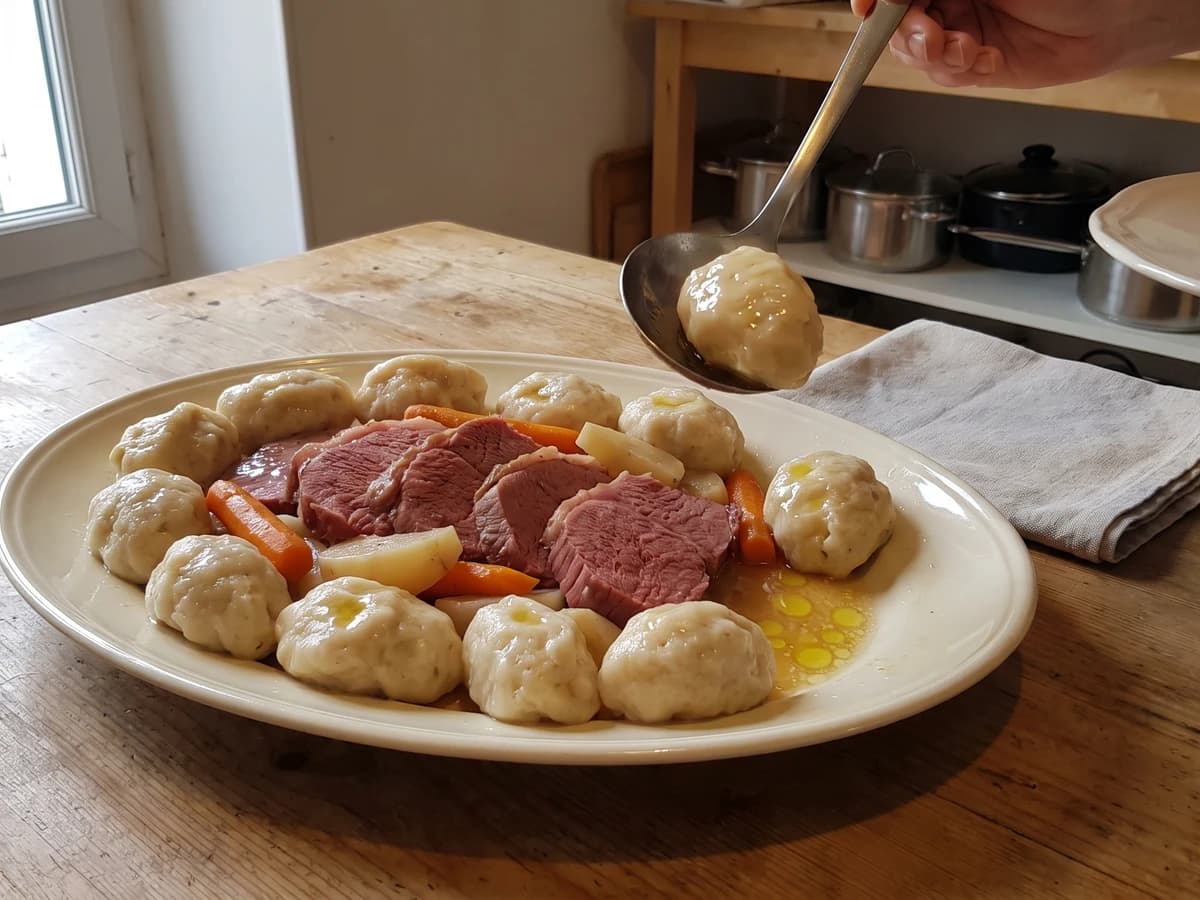
Suet Dumpling
Boulettes au suif, poached beside salt beef, turn equal weights of flour and finely chopped suet into tender, rich dumplings. Keep the beef liquor at a bare tremble and the old garnish works beautifully at home.
A cooking platform built around craft, culture, and the stories behind what we eat.

Created by Chef Juliette
Based on No. 2266, Tomates Farcies à la Provençale, from Le Guide Culinaire (1907) by Auguste Escoffier
Tomates Farcies à la Provençale teach the southern grammar of concentration: sear ripe tomato halves in olive oil, fill them with anchovy-deepened tomato and crumbs, then brown the gratin until crisp.
Tomates Farcies à la Provençale (Provençal stuffed tomatoes) teach one true thing: a tomato must lose water before it can carry flavor. Sear the halves cut side down in very hot olive oil, and their juices concentrate while the edges turn supple enough to hold the filling. That first sear is the dish. Don't replace it with a token bake.
The original entry assumed clear consommé on hand, a saucier's pot of slightly fatty braised-beef gravy, a fine sieve, and a salamander ready to color the gratin. For one cook, one stove, one evening, canned consommé is honest, low-sodium beef stock reduced with a teaspoon of beef fat stands in for the gravy, and the broiler does the salamander's work. Those standing pots were brigade scaffolding, so they go. The hot-oil sear, the covered tomato concassé, the sieved anchovy and crumbs, and the Gratins (No. 268) operation stay, because they make this precise dish.
The source proportion of six tomatoes is already right for a home table: twelve generous halves serving six beside grilled meat or fish, hot from the gratin dish or cold at an outdoor lunch. Watch the moisture in the filling. It must mound on a spoon before you stuff the tomatoes; if it runs, cook it uncovered. Ça se rattrape.
Tomates farcies belong to Provence's summer table, where ripe tomatoes, olive oil, garlic, parsley, and anchovy share one practical larder; around Nice, they sit within the broader family of petits farcis. The classical repertory carried that household practice into the grand kitchen, refining the filling with sieved crumbs, consommé, anchovy, and braised-beef gravy beneath a formal gratin. That last detail corrects a common assumption: this Provençal vegetable dish was not necessarily meatless, and the beef gravy seasoned the filling rather than becoming a sauce poured over it.
Quantity
6 (about 2 pounds / 900 g)
for stuffing
Quantity
4 (about 1⅓ pounds / 600 g)
peeled, seeded, and made into concassé
Quantity
6 tablespoons (90 ml / 82 g)
divided
Quantity
2 tablespoons (30 ml / 20 g)
finely chopped
Quantity
1 teaspoon (5 ml / 2 g)
finely chopped
Quantity
1 clove (about 5 g)
peeled and crushed
Quantity
4 tablespoons (60 ml / 25 g)
for the filling
Quantity
¼ cup (60 ml / 60 g)
Quantity
2 fillets (about 12 g)
drained
Quantity
3 tablespoons (45 ml / 45 g) gravy, or ½ cup (120 ml / 120 g) low-sodium beef stock reduced to 3 tablespoons with 1 teaspoon (5 ml / 4 g) rendered beef fat
Quantity
⅓ cup (80 ml / 35 g)
for the topping
Quantity
¼ cup (60 ml / 25 g)
finely grated
Quantity
1 teaspoon (5 ml / 6 g), plus more if needed
divided
Quantity
½ teaspoon (2.5 ml / 1 g)
divided
Quantity
1 finishing application Gratins (No. 268)
formed with the listed breadcrumbs, Gruyère, and olive oil
| Ingredient | Quantity |
|---|---|
| medium firm ripe tomatoesfor stuffing | 6 (about 2 pounds / 900 g) |
| medium ripe tomatoespeeled, seeded, and made into concassé | 4 (about 1⅓ pounds / 600 g) |
| olive oildivided | 6 tablespoons (90 ml / 82 g) |
| yellow onionfinely chopped | 2 tablespoons (30 ml / 20 g) |
| flat-leaf parsleyfinely chopped | 1 teaspoon (5 ml / 2 g) |
| garlicpeeled and crushed | 1 clove (about 5 g) |
| fine dry breadcrumbsfor the filling | 4 tablespoons (60 ml / 25 g) |
| beef consommé | ¼ cup (60 ml / 60 g) |
| oil-packed anchovy filletsdrained | 2 fillets (about 12 g) |
| slightly fatty braised-beef gravy, or reduced beef-stock equivalent | 3 tablespoons (45 ml / 45 g) gravy, or ½ cup (120 ml / 120 g) low-sodium beef stock reduced to 3 tablespoons with 1 teaspoon (5 ml / 4 g) rendered beef fat |
| fine dry breadcrumbsfor the topping | ⅓ cup (80 ml / 35 g) |
| Gruyèrefinely grated | ¼ cup (60 ml / 25 g) |
| fine sea saltdivided | 1 teaspoon (5 ml / 6 g), plus more if needed |
| freshly ground black pepperdivided | ½ teaspoon (2.5 ml / 1 g) |
| Gratinsformed with the listed breadcrumbs, Gruyère, and olive oil | 1 finishing application Gratins (No. 268) |
Cut the six stuffing tomatoes in half across their equators and scoop out the seeds without piercing the walls. Season the cavities with half the salt and pepper. Make the concassé (the peeled, seeded rough chop named concass in the source) from the remaining four tomatoes: score their bases, lower them into boiling water for 20 to 30 seconds, cool them in cold water, then peel, halve, seed, and chop them roughly.
Heat 3 tablespoons of the olive oil in a 12-inch heavy omelet pan or skillet until it shimmers. Working in batches, set the tomato halves cut side down and cook for 3 to 4 minutes, until the cut faces concentrate and their rims begin to soften. Turn them and cook the rounded sides for 1 to 2 minutes more, then arrange them cavity side up in the gratin dish. If they release a flood of juice, raise the heat and give them more room; if one tears, nestle it tightly against its neighbors and fill it carefully. Ça se rattrape.
If using actual braised-beef gravy, measure 3 tablespoons and set it aside. For the home equivalent, boil the low-sodium beef stock in a small saucepan until only 3 tablespoons remain, then stir in the rendered beef fat. It should taste concentrated and feel lightly rich, not salty or gluey. If it reduces too far, loosen it with a spoonful of water.
Heat 1 tablespoon of olive oil over medium heat in the cleaned skillet. Add the onion and cook gently until translucent, about 3 minutes, without letting it brown. Add the tomato concassé, parsley, garlic, and the remaining salt and pepper. Cover and cook for 12 minutes, as the source directs. Uncover and inspect it: the tomatoes should be pulpy but not soupy. If liquid pools when you draw a spoon through the pan, simmer uncovered until the trail remains visible.
Soak the 4 tablespoons of filling breadcrumbs in the consommé for 5 minutes. Press the soaked crumbs through a fine-mesh sieve into the tomato mixture, then rub the anchovy fillets through the same sieve. Stir in the prepared braised-beef gravy or home jus and cook uncovered for 2 to 4 minutes, stirring, until the filling mounds softly on a spoon. The sieving stays because it dissolves the anchovy into the foundation instead of leaving fishy pieces. If the filling is loose, reduce it; if it becomes stiff, loosen it with a teaspoon of consommé. Taste before adding salt.
Position an oven rack about 6 inches from the broiler and heat the broiler. Divide the filling among the twelve tomato halves without packing it down. Apply the Gratins (No. 268) operation: mix the topping breadcrumbs with the Gruyère, scatter the mixture evenly over the tomatoes, and drizzle with the remaining 2 tablespoons of olive oil. Broil for 4 to 6 minutes, watching continuously, until the crumb crown is deep gold and bubbling in small spots. If the top colors before the tomatoes are heated through, lower the dish one rack and finish at 400°F (200°C).
Rest the gratin for 10 minutes so the tomatoes settle and the filling holds when served. Bring it to the table hot or warm, or cool it uncovered, refrigerate it, and serve it cold as the source allows. For the best cold texture, take it from the refrigerator 20 to 30 minutes before serving. À table!
1 serving (about 225g)
Culinary guides, cultural storytelling, and the editorial depth that makes cooking meaningful.
Discover Culinary ExplorerChef Juliette
Boulettes au suif, poached beside salt beef, turn equal weights of flour and finely chopped suet into tender, rich dumplings. Keep the beef liquor at a bare tremble and the old garnish works beautifully at home.

Chef Juliette
Bread, flour, frangipane, and rice become four cool, supple panades for binding forcemeats, each changing body and flavor while preserving tenderness. The finest Mousselines need none, and knowing that distinction is the lesson.

Chef Juliette
Panade au pain is bread, milk, salt, heat, and attention: stir until the paste releases cleanly, butter it against a skin, and you have the quiet binder behind tender French farces.

Chef Juliette
Panade de farine teaches the drying stroke behind pâte à choux: flour meets boiling buttered water, then stays over the fire until the paste gathers, smooths, and quits the pan cleanly.