Chef Juliette
Suet Dumpling
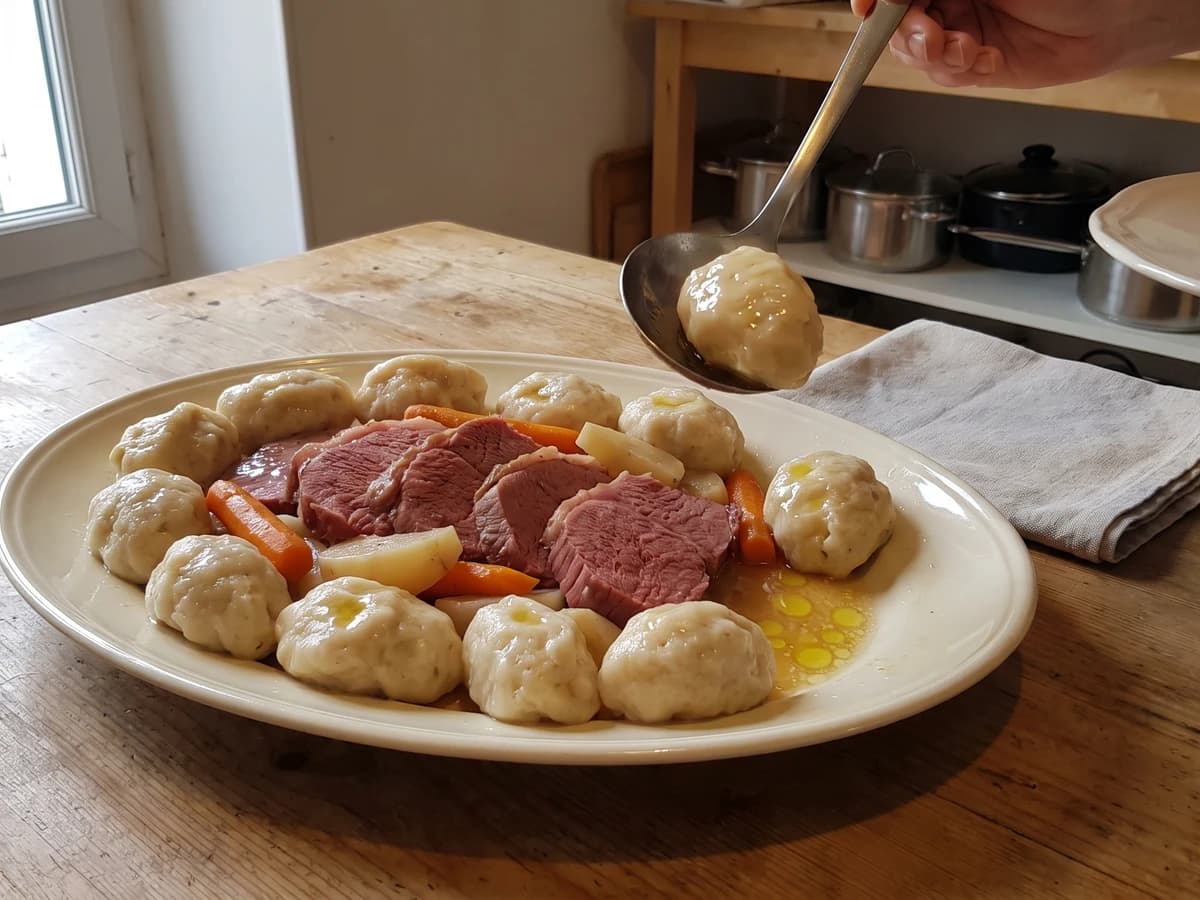
Boulettes au suif, poached beside salt beef, turn equal weights of flour and finely chopped suet into tender, rich dumplings. Keep the beef liquor at a bare tremble and the old garnish works beautifully at home.
A cooking platform built around craft, culture, and the stories behind what we eat.
Created by Chef Juliette
Based on No. 2252, Riz au Gras, from Le Guide Culinaire (1907) by Auguste Escoffier
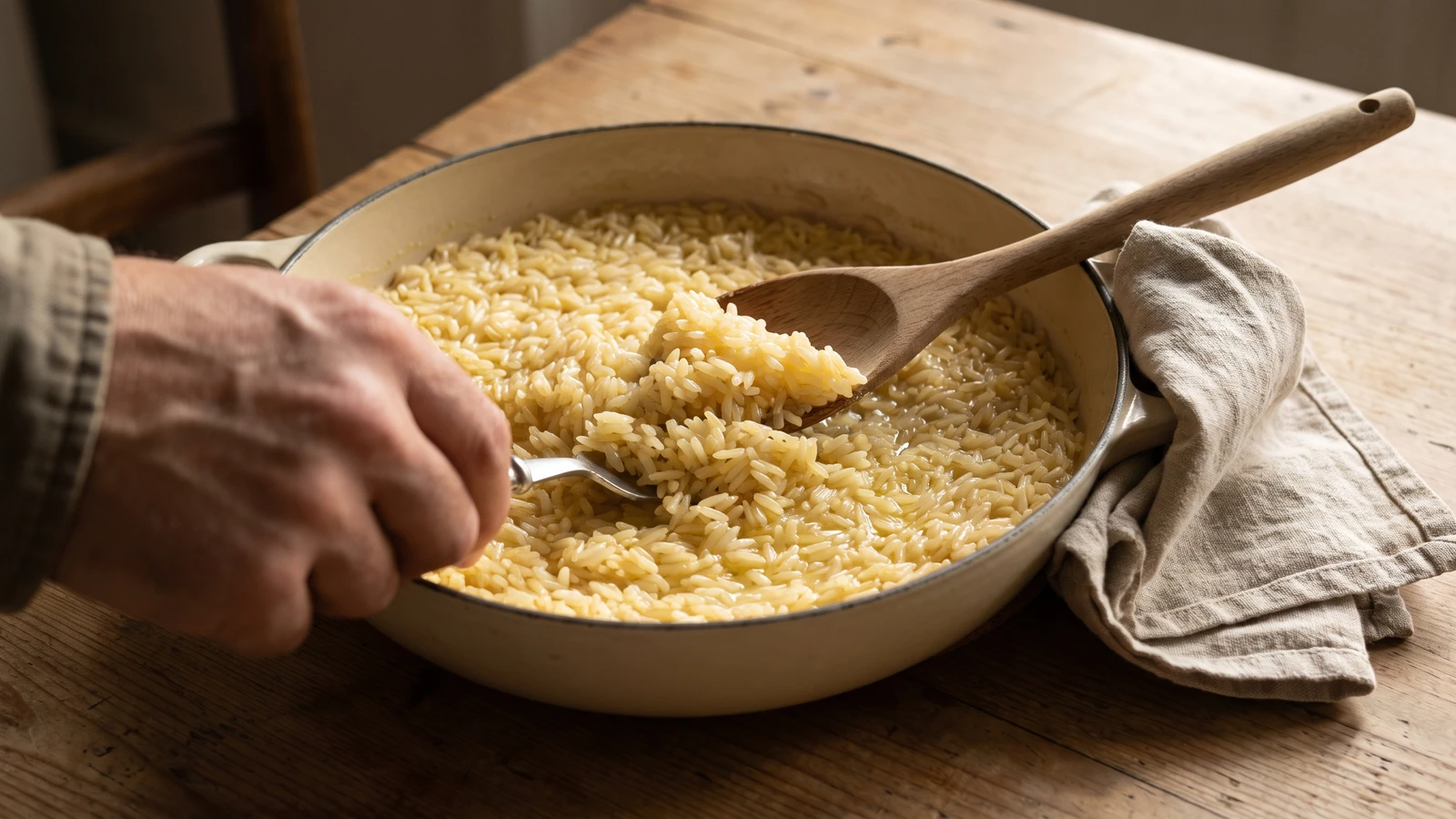
Parboiled Carolina rice meets butter and rich white consommé, then finishes covered in the oven, each grain savory, separate, and gleaming. The consommé does the seasoning, so taste it first.
Riz au gras (rice cooked in rich broth and fat) teaches one true thing before you touch a pan: the liquid is not background. It is the seasoning. The rice should emerge savory to its centre, separate rather than dry, with a butter-gold sheen and no puddle beneath it.
The source assumed a stockpot of white, rather fat consommé never off the fire and a saucier ready to judge it. At home, use measured prepared chicken or veal consommé and a tight-lidded ovenproof pan. The half-pound of rice already gives four proper side portions, so that scale stays. The constant stockpot is brigade scaffolding and can go; parboiling, frying in butter, twice the rice's volume of consommé, and the fifteen-minute oven finish are the dish itself and must stay. One cook, one stove, one evening.
Before the rice meets the butter, warm and taste the consommé. It must already taste as complete as the rice should taste at the table, because fifteen minutes in the oven cannot give character to a timid broth.
Riz au gras belongs to the garniture repertoire of Parisian classical kitchens and the cuisine bourgeoise table, where rice accompanied poultry, veal, and generously sauced meats. The method moved easily between grand service and the home pot because its richness was concentrated in a finished consommé, while parboiling and oven cooking kept the grains separate without constant attention. Gras does not call for oily rice; it distinguishes meat-broth cooking from maigre, or meatless, preparations.
Quantity
1¼ cups (300 ml / 225 g)
Quantity
8 cups (1.9 L / 1.9 kg)
for parboiling
Quantity
3 tablespoons (45 ml / 42 g)
Quantity
2½ cups (600 ml / 600 g)
with its fat retained
Quantity
1 tablespoon (15 ml / 13 g)
only if the consommé is lean
Quantity
Up to ½ teaspoon (2.5 ml / 3 g)
only if the consommé needs it
| Ingredient | Quantity |
|---|---|
| Carolina or other long-grain white rice | 1¼ cups (300 ml / 225 g) |
| waterfor parboiling | 8 cups (1.9 L / 1.9 kg) |
| unsalted butter | 3 tablespoons (45 ml / 42 g) |
| rich, well-seasoned white chicken or veal consomméwith its fat retained | 2½ cups (600 ml / 600 g) |
| rendered poultry fat or unsalted butter (optional)only if the consommé is lean | 1 tablespoon (15 ml / 13 g) |
| fine salt (optional)only if the consommé needs it | Up to ½ teaspoon (2.5 ml / 3 g) |
Heat the oven to 350°F (180°C). Warm the consommé in a small saucepan and taste it hot. It should be full-bodied and properly salted, because the rice receives no other seasoning. If it tastes dull, add only enough salt to wake it; if it is too salty, replace up to ¼ cup (60 ml) with the same amount of unsalted water. If it has no visible richness, stir in the poultry fat or extra butter. The surface should gleam lightly, not carry an oil slick.
Bring the water to a strong boil in a large saucepan. Add the rice and boil for 4 minutes, stirring once at the beginning to separate the grains. The outside should just begin to soften while the centre remains hard and chalk-white. Drain in a fine sieve, shake away the water, and leave the rice for 2 minutes so its surface dries. Wet rice dilutes the butter and clumps instead of frying.
Melt the butter over medium heat in a 2-quart ovenproof saucepan with a tight lid. When the foam subsides, add the drained rice and turn it gently through the butter for 2 to 3 minutes. Every grain should glisten, and the rice should sound faintly dry against the pan. Keep it moving enough that the butter stays golden rather than scorching; if it begins to color quickly, lower the heat at once.
Pour in all the hot consommé, preserving the source's measure of twice the rice's dry volume. Bring it to one full boil, stir once to distribute the grains, then cover tightly and place the pan in the oven for 15 minutes. Do not stir again while it cooks, since agitation releases starch and turns separate grains sticky. At 15 minutes, taste a grain. If it is tender but a little liquid remains, return the pan uncovered for 3 minutes. If the rice is firm and the pan is dry, sprinkle over 2 to 4 tablespoons (30 to 60 ml) hot water or consommé, cover, and bake 5 minutes longer. Ça se rattrape.
Remove the pan from the oven and let the rice stand, covered, for 5 minutes. Loosen it with a fork, lifting rather than pressing so the grains remain distinct. The finished riz au gras should be savory, tender, and lightly glossy, with no broth pooled at the bottom. Transfer it to a warm serving dish or carry the pan directly to the table. À table!
1 serving (about 190g)
Culinary guides, cultural storytelling, and the editorial depth that makes cooking meaningful.
Discover Culinary ExplorerChef Juliette
Boulettes au suif, poached beside salt beef, turn equal weights of flour and finely chopped suet into tender, rich dumplings. Keep the beef liquor at a bare tremble and the old garnish works beautifully at home.

Chef Juliette
Bread, flour, frangipane, and rice become four cool, supple panades for binding forcemeats, each changing body and flavor while preserving tenderness. The finest Mousselines need none, and knowing that distinction is the lesson.

Chef Juliette
Panade au pain is bread, milk, salt, heat, and attention: stir until the paste releases cleanly, butter it against a skin, and you have the quiet binder behind tender French farces.

Chef Juliette
Panade de farine teaches the drying stroke behind pâte à choux: flour meets boiling buttered water, then stays over the fire until the paste gathers, smooths, and quits the pan cleanly.