Chef Juliette
Suet Dumpling
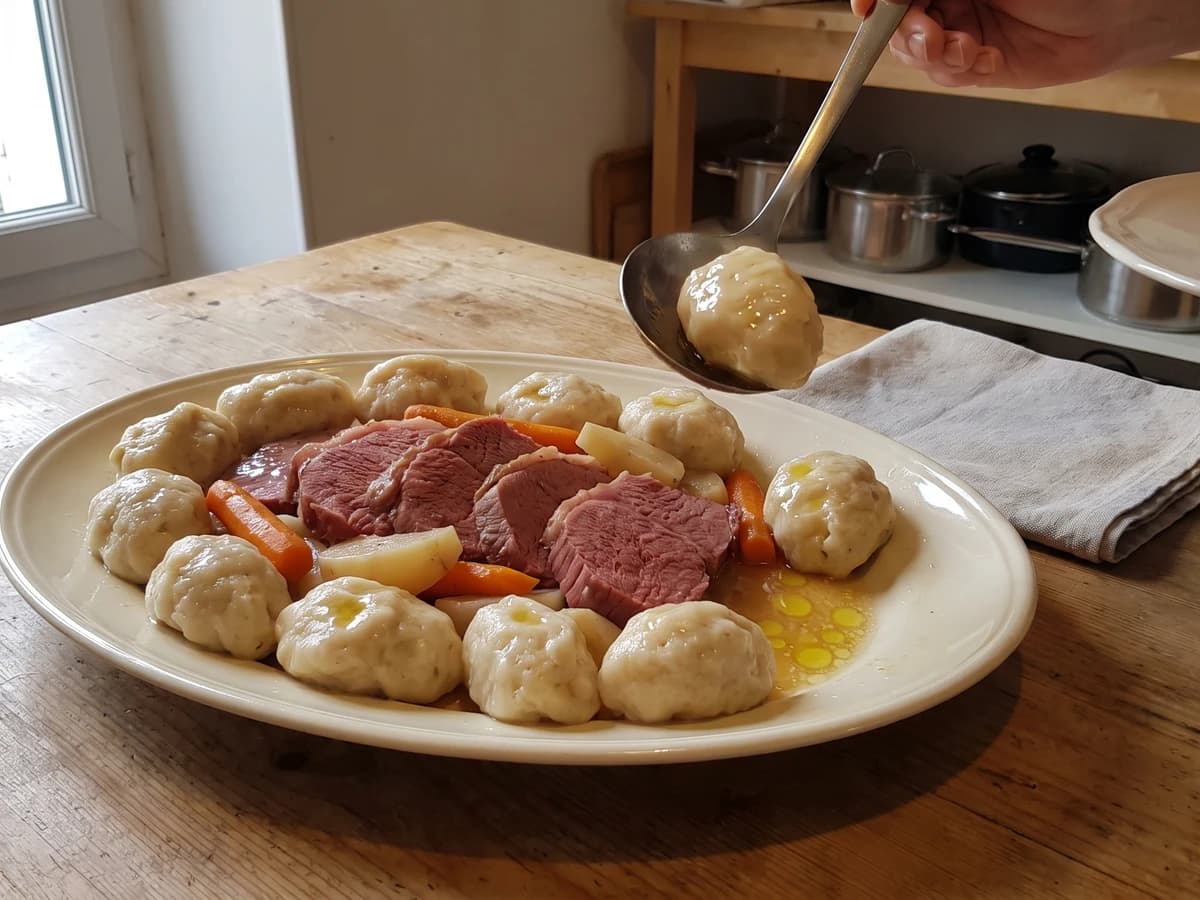
Boulettes au suif, poached beside salt beef, turn equal weights of flour and finely chopped suet into tender, rich dumplings. Keep the beef liquor at a bare tremble and the old garnish works beautifully at home.
A cooking platform built around craft, culture, and the stories behind what we eat.
Created by Chef Juliette
Based on No. 2250, Soufflé de Pommes de Terre, from Le Guide Culinaire (1907) by Auguste Escoffier
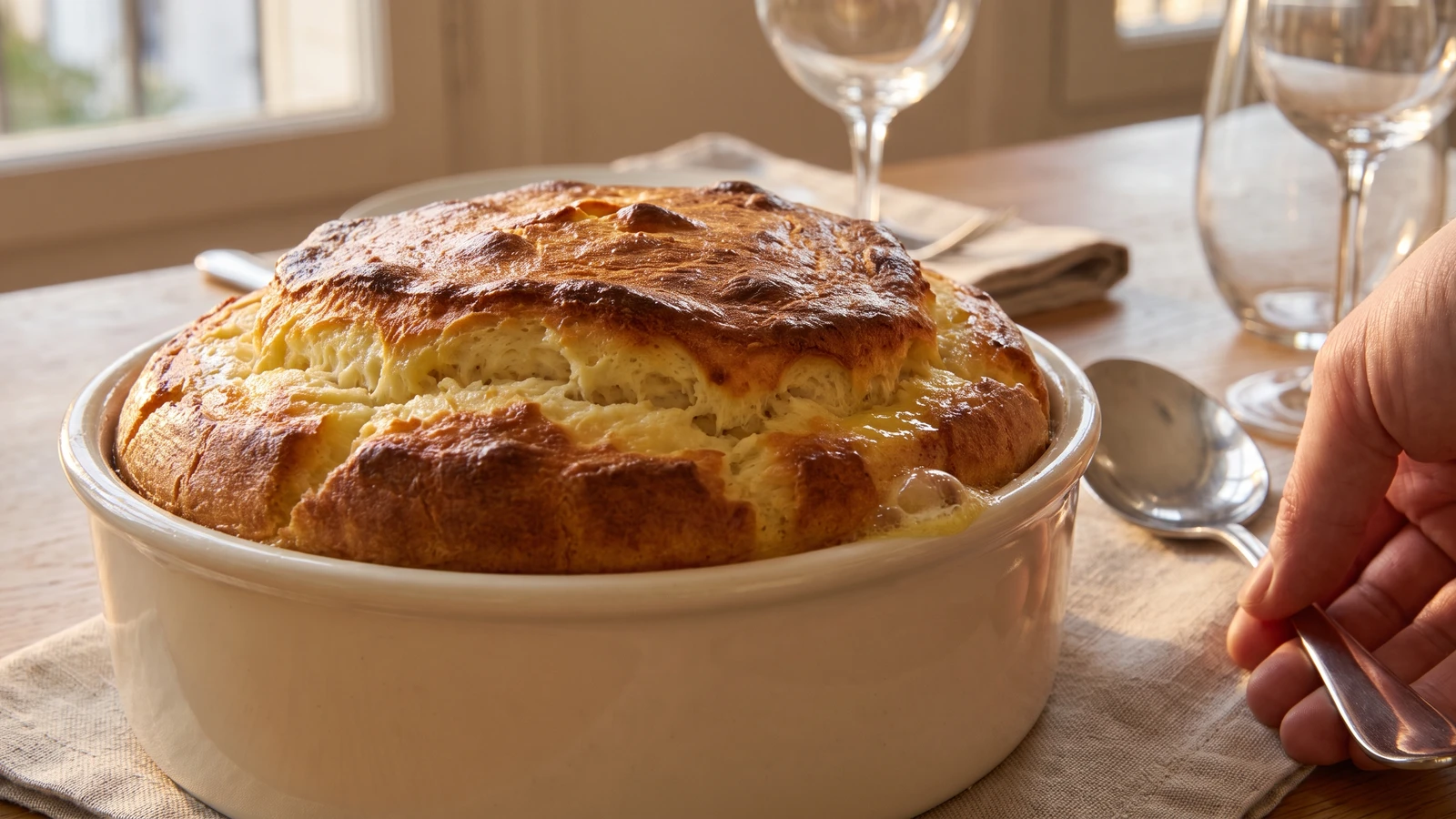
Potato purée becomes a proud, bronzed soufflé through one essential movement: fold stiff whites into the yolk-rich base without crushing them, then bake at once and carry it straight to the table.
Soufflé de Pommes de Terre (potato soufflé) teaches the rule behind every hot soufflé: its lift comes from air already beaten into the whites, and every turn of the spatula must preserve it. Fold, never stir. That is the one true thing to know before touching a pan.
The original entry assumes a pint of mashed potatoes enriched with cream, three raw yolks, their whites beaten to a stiff froth, and either a dedicated soufflé saucepan or small porcelain cases waiting beside a hot oven. It needs no saucier, no stockpot forever on the fire, and no salamander. Its brigade scaffolding is simply specialized vessels and someone ready to carry the dish out at once. At home, a 1½-quart straight-sided ceramic dish, a hand mixer, and an ordinary oven do the same work. The source quantity is already right for four side portions, so the pint-to-three-egg ratio remains exactly as written.
When it is right, the Soufflé de Pommes de Terre rises above its dish with a bronzed, delicately cracked crown and a pale centre that holds its shape while remaining soft enough for the serving spoon. Potato gives the base more weight than many soufflés, which makes the folding especially important. The fold decides the dish.
Soufflé de pommes de terre belongs to the Parisian classical kitchen and the bourgeois French dining room, where the soufflé method turned familiar potato purée into a side dish worthy of a generous dinner. In the classical vocabulary, soufflé names a family rather than a single flavor: hot preparations are lightened chiefly with beaten egg whites, while cold ones rely on whisked cream. It should not be confused with pommes soufflées, the crisp, inflated slices of fried potato; the shared word describes expansion, but the techniques are entirely different.
Quantity
1 pound (455 g)
peeled and cut into 1-inch pieces
Quantity
¼ cup (60 ml / 62 g)
warmed
Quantity
1 tablespoon (15 ml / 14 g)
very soft, for the dish
Quantity
3
separated and brought to room temperature
Quantity
1 tablespoon plus ½ teaspoon (17.5 ml / 21 g)
divided
| Ingredient | Quantity |
|---|---|
| floury potatoes, such as russetspeeled and cut into 1-inch pieces | 1 pound (455 g) |
| heavy creamwarmed | ¼ cup (60 ml / 62 g) |
| unsalted buttervery soft, for the dish | 1 tablespoon (15 ml / 14 g) |
| large eggsseparated and brought to room temperature | 3 |
| fine sea saltdivided | 1 tablespoon plus ½ teaspoon (17.5 ml / 21 g) |
Set a rack in the lower third of the oven and heat it to 400°F (200°C). Brush the softened butter generously over the bottom and straight up the sides of a 1½-quart (1.4-liter) soufflé dish, leaving no dry patches, then chill the dish while you prepare the base. The source also allows small porcelain cases; six buttered 6-ounce (175 ml) ramekins make the honest home equivalent.
Put the potatoes in a saucepan, cover them with cold water, and add 1 tablespoon (15 ml / 18 g) of the salt. Bring slowly to a simmer and cook for 15 to 20 minutes, until a knife passes through the centre of a piece without resistance. Drain thoroughly, return the potatoes to the dry pan, and shake them over low heat for 1 to 2 minutes, until their surfaces look floury and no moisture remains on the pan floor. Water makes a heavy soufflé, so this drying is part of the dish, not brigade scaffolding.
Pass the hot potatoes through a ricer or food mill into the warm pan. Fold in the warm cream and the remaining ½ teaspoon (2.5 ml / 3 g) salt until the purée is smooth, then measure 2 level cups (475 ml / about 500 g); reserve any small excess for another meal. Let the purée cool for 3 to 5 minutes, until warm rather than scorching, then beat in the raw yolks one at a time. If the purée is cold and stiff, warm it gently before adding the yolks. If it is piping hot, wait, because heat strong enough to catch the yolks will leave yellow specks throughout the base.
Put the egg whites in a perfectly clean, dry bowl. Beat at medium speed until foamy, then at medium-high speed until they form stiff, glossy peaks that stand upright when the beaters lift. Stop there. Whites beaten until dry and cottony break into lumps instead of folding smoothly, so watch the texture rather than the clock. If the edges only begin to look grainy, stop the machine and whisk slowly by hand for a few turns until the foam looks cohesive again.
Add one-third of the whites to the potato base. Cut down through the centre with a flexible spatula, sweep across the bottom, and lift the heavier purée over the whites while turning the bowl. Fold in the remaining whites in two additions, stopping as soon as no broad white pockets remain. A few fine streaks are safer than another ten turns. Never stir the whites, because stirring crushes the air the soufflé needs. If the mixture has visibly lost volume, divide it among the buttered porcelain cases instead of the large dish; the smaller cases ask the weakened foam to climb a shorter distance. Ça se rattrape.
Spoon the mixture into the chilled dish, filling it no more than three-quarters full, and level the surface lightly without pressing. Run a clean fingertip around the inside rim to leave a narrow channel between the mixture and the dish. Set it in the oven immediately and bake without opening the door for 20 minutes. Continue for 5 to 10 minutes, until the crown stands well above the rim, the top is deeply golden, and the centre has only a gentle tremble. If the middle rolls like liquid when the dish moves, return it to the oven for 3 minutes and check again. Individual cases will usually need 16 to 20 minutes.
Bring the Soufflé de Pommes de Terre to the table the moment it leaves the oven. A slight settling is natural, but waiting turns its proud crown into ordinary mashed potato with eggs. Break through the bronzed top with a serving spoon and give each guest some crust and some tender centre. One cook, one stove, one evening. À table!
1 serving (about 155g)
Culinary guides, cultural storytelling, and the editorial depth that makes cooking meaningful.
Discover Culinary ExplorerChef Juliette
Boulettes au suif, poached beside salt beef, turn equal weights of flour and finely chopped suet into tender, rich dumplings. Keep the beef liquor at a bare tremble and the old garnish works beautifully at home.

Chef Juliette
Bread, flour, frangipane, and rice become four cool, supple panades for binding forcemeats, each changing body and flavor while preserving tenderness. The finest Mousselines need none, and knowing that distinction is the lesson.

Chef Juliette
Panade au pain is bread, milk, salt, heat, and attention: stir until the paste releases cleanly, butter it against a skin, and you have the quiet binder behind tender French farces.

Chef Juliette
Panade de farine teaches the drying stroke behind pâte à choux: flour meets boiling buttered water, then stays over the fire until the paste gathers, smooths, and quits the pan cleanly.