Chef Juliette
Suet Dumpling
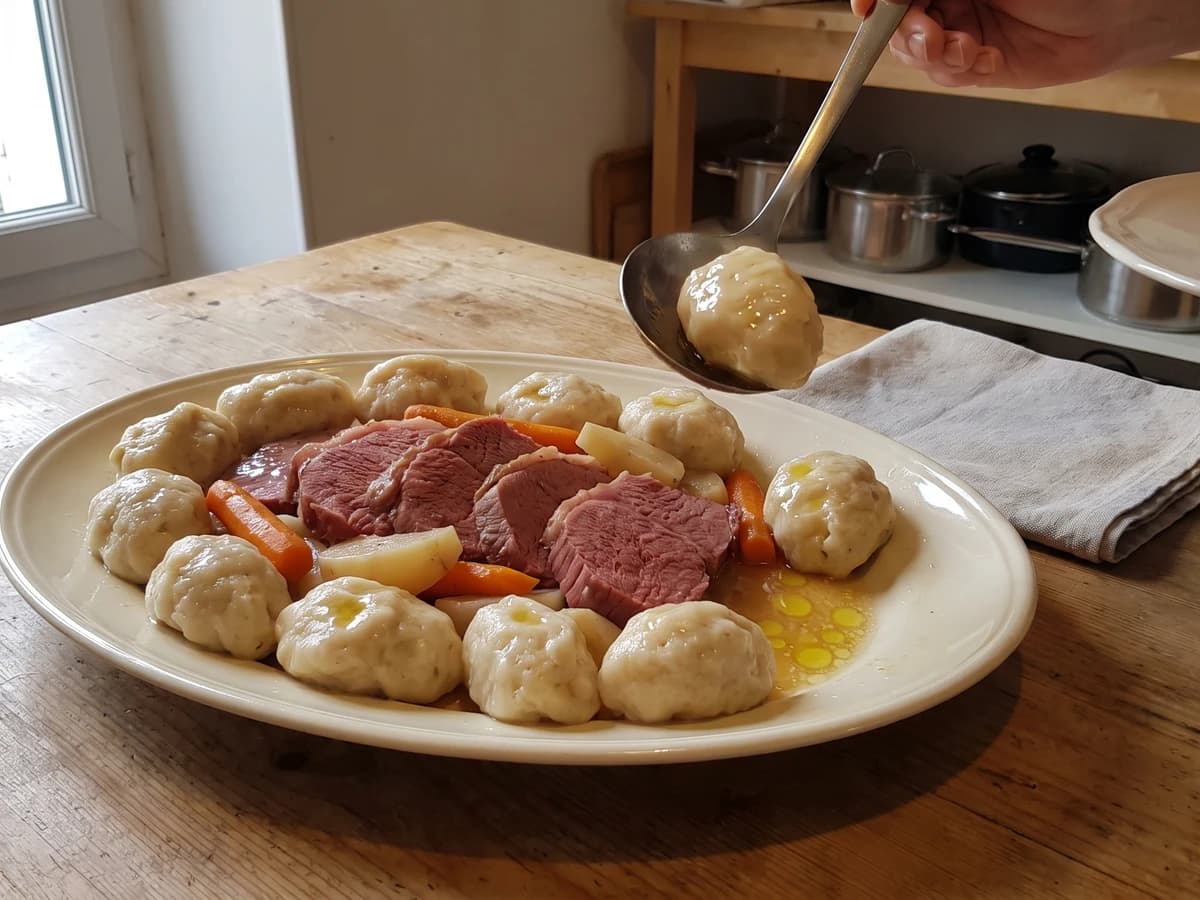
Boulettes au suif, poached beside salt beef, turn equal weights of flour and finely chopped suet into tender, rich dumplings. Keep the beef liquor at a bare tremble and the old garnish works beautifully at home.
A cooking platform built around craft, culture, and the stories behind what we eat.
Created by Chef Juliette
Based on No. 2241, Pommes de Terre à la Roxelane, from Le Guide Culinaire (1907) by Auguste Escoffier
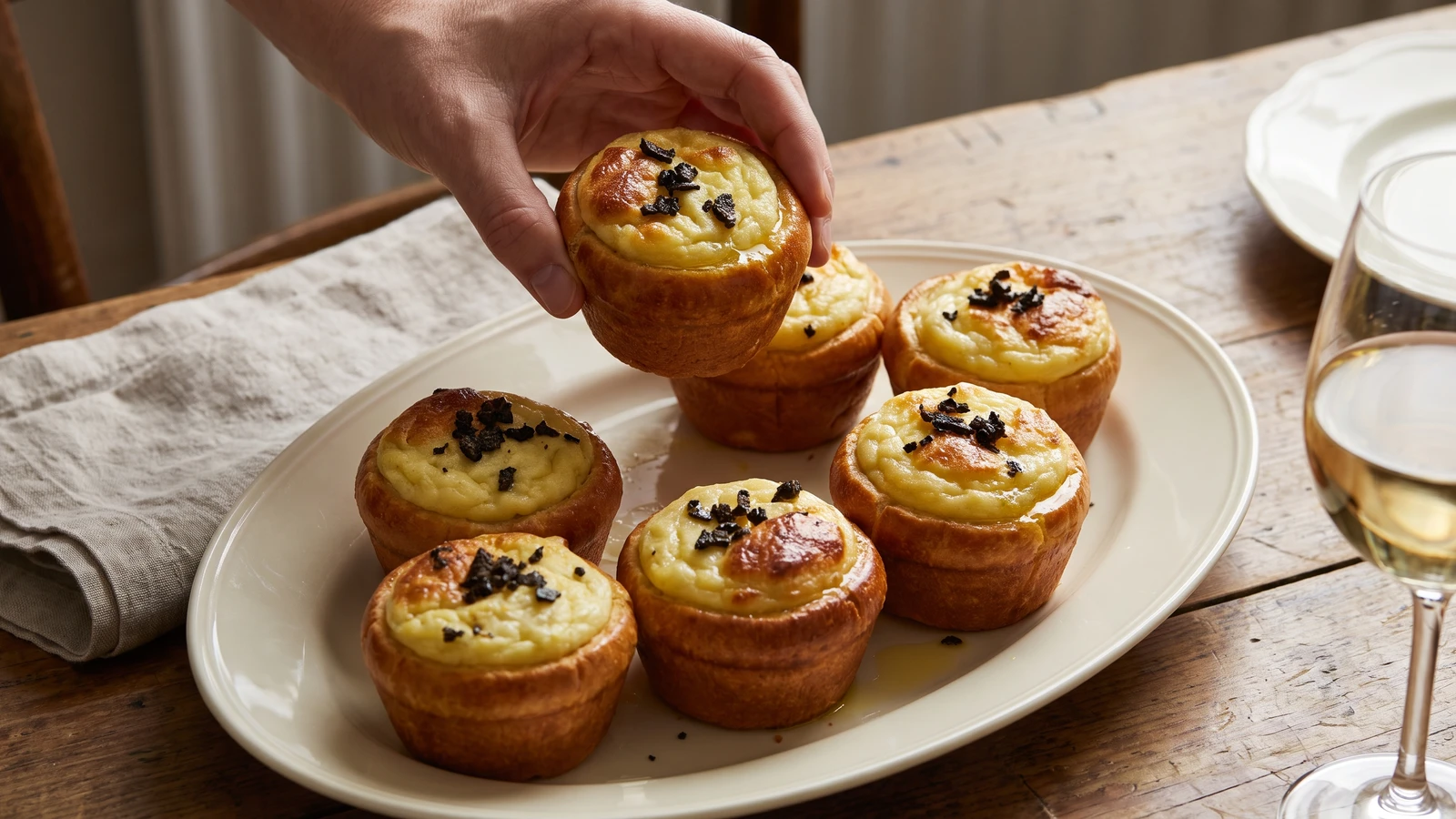
Baked potato becomes a Soufflé inside hollowed brioche, rich with butter, yolks, and cream, then lifted by beaten whites and crowned with chopped truffle for a generous special-occasion side.
Pommes de Terre à la Roxelane (baked potato Soufflé in hollowed brioche) teaches the law behind every hot Soufflé, a seasoned base lightened with beaten egg white: the base supplies flavor and strength, while the white supplies lift. The one true thing to know before touching a pan is that the potato must remain thick enough to hold that air. Work it dry and hot, add only enough cream to make it supple, then stop.
The source formula did not call for a saucier on staff or a stock never off the fire, and a salamander would be wrong here. Its real brigade assumptions were six potatoes, identical brioches à tête from the pastry station, black truffle within reach, and hands ready to serve the instant the Soufflé left its mild oven. For the home table, the butter-and-egg proportions are halved exactly to three potatoes, 75 grams of butter, two yolks, and one white. Six small bakery brioches replace pastry-station production, and a conventional oven at 165°C does the old mild oven's work. Uniform shells and extra hands were scaffolding; the butter-rich potato, stiff-frothed white, truffle, and gentle baking are the dish and remain untouched. One cook, one stove, one evening.
The finished timbales arrive burnished and generous, with crisp brioche around a pale potato filling that rises softly beneath the chopped truffle. We don't apologize for butter. Fold the white only until the last broad streak disappears, because that quiet moment decides the whole dish.
Pommes de Terre à la Roxelane belongs to the Parisian grand-kitchen repertoire, where familiar baked potato pulp became an entremets through brioche, truffle, and the lift of a Soufflé. Roxelane was the French literary name given to an influential figure of the Ottoman court; on classical menus, the title suggested splendor rather than a regional French origin. The emptied brioche timbale shows bakery and hot kitchen working together, a grand-service conceit that remains perfectly at home on a dinner table.
Quantity
3 medium, about 1⅛ pounds (510 g) total
scrubbed and dried
Quantity
⅓ cup (80 ml / 75 g)
cut into small pieces
Quantity
2
separated; use both yolks and 1 white, reserving the second white
Quantity
up to ¼ cup (60 ml / 60 g)
warmed
Quantity
¾ teaspoon (4 ml / 4.5 g)
Quantity
6, about 2 ounces (55 g) each
preferably day-old
Quantity
1½ tablespoons (22 ml / 15 g)
finely chopped
| Ingredient | Quantity |
|---|---|
| floury baking potatoesscrubbed and dried | 3 medium, about 1⅛ pounds (510 g) total |
| unsalted buttercut into small pieces | ⅓ cup (80 ml / 75 g) |
| large eggsseparated; use both yolks and 1 white, reserving the second white | 2 |
| fresh heavy creamwarmed | up to ¼ cup (60 ml / 60 g) |
| fine sea salt | ¾ teaspoon (4 ml / 4.5 g) |
| small brioches à têtepreferably day-old | 6, about 2 ounces (55 g) each |
| black truffle, fresh or preserved wholefinely chopped | 1½ tablespoons (22 ml / 15 g) |
Heat a conventional oven to 205°C (400°F), or 190°C (375°F) with a fan. Prick the potatoes several times and bake them directly on the rack for 55 to 70 minutes, until a skewer passes through without resistance and the skins feel dry. Do not wrap them in foil. Trapped moisture gives you wet pulp, and wet pulp cannot support a Soufflé.
While the potatoes bake, cut the knobs cleanly from the brioches. With a small spoon, remove the crumb from each lower half, leaving the browned crust and a thin wall of crumb intact so the shell does not tear. The result should resemble a small timbale, open at the top and sturdy at the base. Set the shells upright on a parchment-lined baking sheet; the knobs are not replaced.
Split the potatoes as soon as they leave the oven, scoop out the pulp, and pass it through a potato ricer or fine sieve while hot. Work in all the butter, one small piece at a time, followed by both yolks and the salt. Add the warm cream by spoonfuls, using only enough to make a smooth base that falls from the spoon in a slow, heavy ribbon but still holds a mound. If butter gathers in a slick, stop adding cream and beat steadily as the mixture cools for a minute; if it remains separated, beat in 1 teaspoon (5 ml) of warm cream. Ça se rattrape. If the base spreads flat, it is too loose, so let it stand for five minutes before adding anything else.
Lower the conventional oven to 165°C (325°F), or 150°C (300°F) with a fan, opening the door briefly to release excess heat. In a spotless, dry bowl, whisk one egg white until it holds a stiff, glossy peak. If yolk or fat prevents it from mounting, wash and dry the bowl and whisk, then begin again with the reserved second white. Stir one-third of the whipped white firmly into the potato to lighten it, then fold in the remainder with broad strokes from the bottom of the bowl. Stop when only the faintest white streak remains; chasing perfect uniformity knocks out the air you need.
Divide the potato mixture among the six hollowed brioches, filling each just to the cut edge and mounding the center slightly. Sprinkle the chopped truffle evenly over the tops and press it only lightly into the surface. Work without dawdling once the white has been folded, because every minute on the tray is lift surrendered before the oven can set it.
Bake for 18 to 22 minutes without opening the oven during the first 12 minutes. The filling is ready when it has risen above the brioche, the top is lightly golden, and the center springs back softly when touched. If the brioche edges brown before the filling sets, shield the crusts loosely with narrow collars of foil and continue for another 3 to 5 minutes. Bring the timbales straight to the table; a Soufflé waits for no carving ceremony. À table!
1 serving (about 240g)
Culinary guides, cultural storytelling, and the editorial depth that makes cooking meaningful.
Discover Culinary ExplorerChef Juliette
Boulettes au suif, poached beside salt beef, turn equal weights of flour and finely chopped suet into tender, rich dumplings. Keep the beef liquor at a bare tremble and the old garnish works beautifully at home.

Chef Juliette
Bread, flour, frangipane, and rice become four cool, supple panades for binding forcemeats, each changing body and flavor while preserving tenderness. The finest Mousselines need none, and knowing that distinction is the lesson.

Chef Juliette
Panade au pain is bread, milk, salt, heat, and attention: stir until the paste releases cleanly, butter it against a skin, and you have the quiet binder behind tender French farces.

Chef Juliette
Panade de farine teaches the drying stroke behind pâte à choux: flour meets boiling buttered water, then stays over the fire until the paste gathers, smooths, and quits the pan cleanly.