Chef Juliette
Suet Dumpling
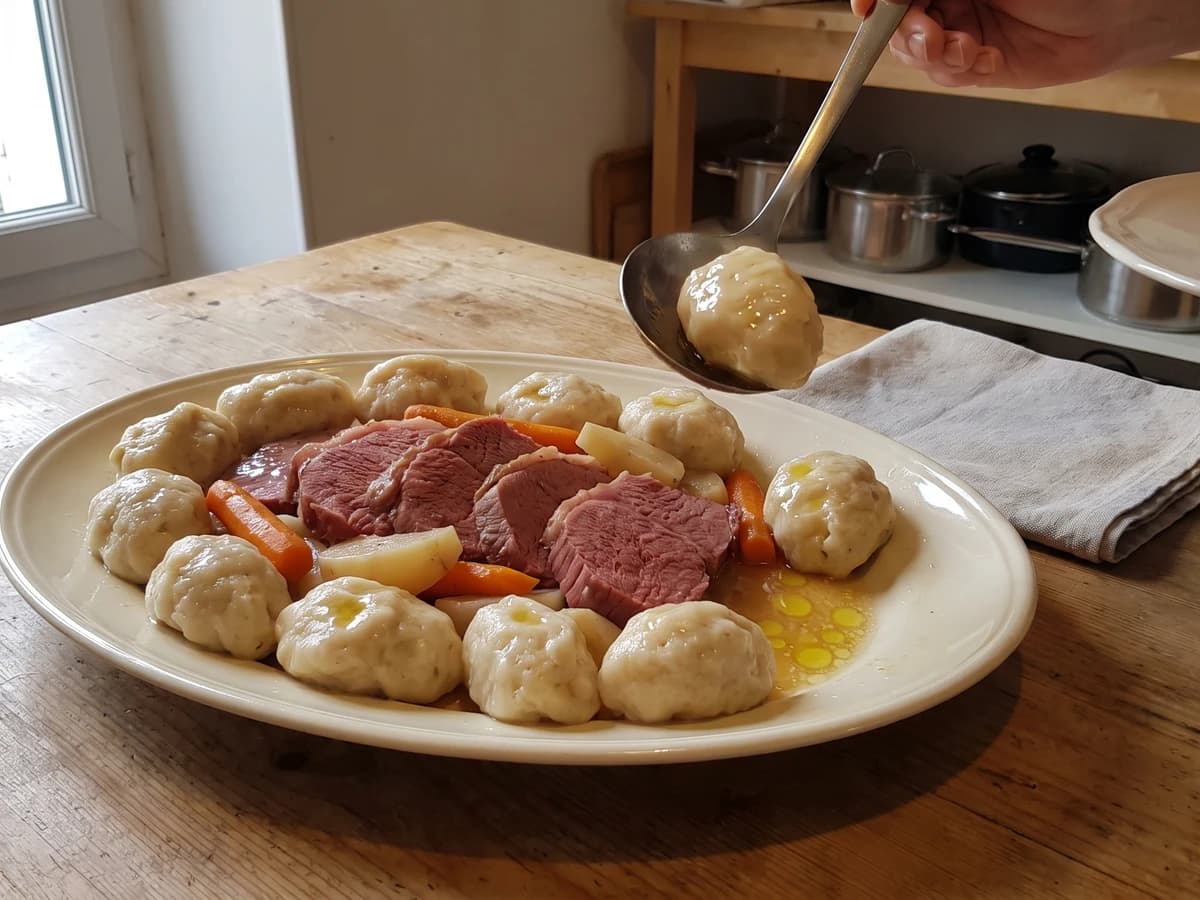
Boulettes au suif, poached beside salt beef, turn equal weights of flour and finely chopped suet into tender, rich dumplings. Keep the beef liquor at a bare tremble and the old garnish works beautifully at home.
A cooking platform built around craft, culture, and the stories behind what we eat.
Created by Chef Juliette
Based on No. 2232, Pommes de Terre à la Menthe, from Le Guide Culinaire (1907) by Auguste Escoffier
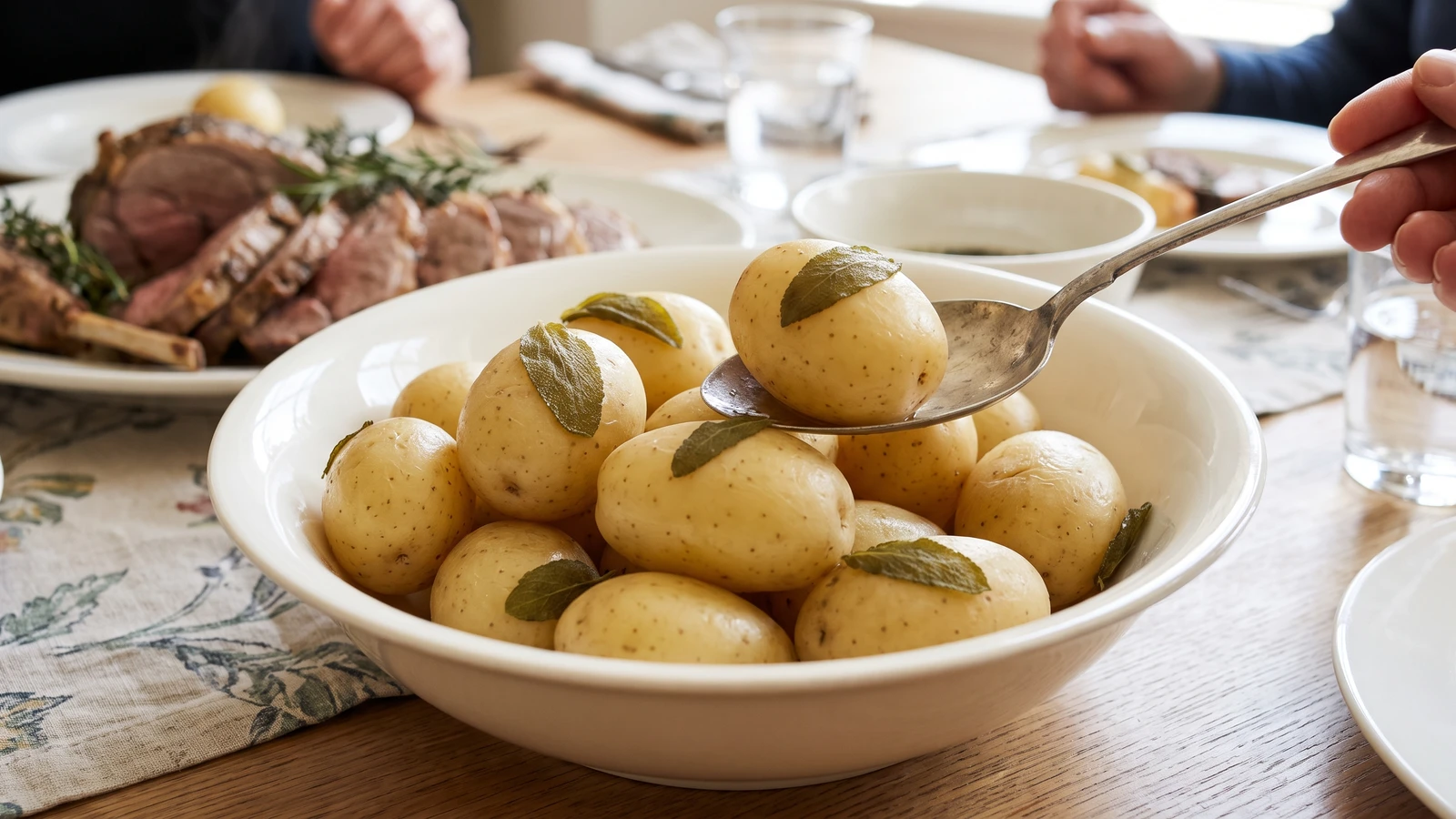
Fair-sized new potatoes scented by a whole bunch of mint, drained dry, and arranged in a warm timbale with one tender leaf apiece: a spring side dish whose precision lies in its restraint.
Pommes de Terre à la Menthe (new potatoes with mint) teaches restraint before it teaches boiling. The one true thing to know before you touch the pan is that mint acts here as an infusion, not a shower of chopped herb: a tied bunch perfumes the water, then one softened leaf rests on each potato. À l’anglaise (the English way) asks for potatoes cooked whole in salted water and brought out intact, tender, and dry.
The old service assumed a vegetable station to grade and scrape a brigade quantity, several pans moving through service, and a warmed metal timbale waiting at the pass. For four people, that scaffolding goes: twelve equal potatoes, one saucepan, and a warmed deep, straight-sided serving bowl do the same work. Only the quantity and vessel changed, because there is no sauce, stock, or salamander in this spare entry; equal sizing, the whole mint bunch, careful draining, and one leaf per potato are the dish and must stay. One cook, one stove, one evening.
When it is right, each potato remains whole and pale gold, with a dry, tender surface and the quiet scent of mint carried all the way to its centre. The step that decides it is the heat after the water reaches the boil: hold it at a gentle simmer, because a rolling boil splits the skins and batters the flesh.
Pommes de terre à la menthe belongs to French classical vegetable service rather than to a particular French region, and its à l’anglaise method openly acknowledges the English table’s habit of boiling spring potatoes plainly with mint. French service imposed its own order on that household practice: fair, even potatoes, a deep timbale, and one leaf from the cooking bunch placed on each. It is sometimes mistaken for minted potatoes dressed with butter and chopped herbs, but this preparation has neither; its flavor comes from the mint-infused cooking water and its finish from the single poached leaf.
Quantity
12 (2 lb / 900 g)
about 1½ to 2 inches / 4 to 5 cm across, scrubbed
Quantity
8 cups (1.9 L / 1.9 kg), or enough to cover by 1 inch / 2.5 cm
Quantity
1 tablespoon (15 ml / 18 g)
Quantity
1 large bunch (about 1 loosely packed cup / 240 ml / 30 g)
rinsed and tied at the stems, with at least 12 sound leaves
| Ingredient | Quantity |
|---|---|
| fair-sized new potatoesabout 1½ to 2 inches / 4 to 5 cm across, scrubbed | 12 (2 lb / 900 g) |
| cold water | 8 cups (1.9 L / 1.9 kg), or enough to cover by 1 inch / 2.5 cm |
| fine sea salt | 1 tablespoon (15 ml / 18 g) |
| fresh garden mint, preferably spearmintrinsed and tied at the stems, with at least 12 sound leaves | 1 large bunch (about 1 loosely packed cup / 240 ml / 30 g) |
Choose twelve potatoes as close in size as possible so their centres become tender together. Scrub them well, then use the back of a paring knife to scrape away only loose, papery skin; do not peel deeply or cut them in half. Rinse them clean. Equal sizing is not brigade fuss here, it is what lets every whole potato reach the bowl at the same moment.
Put the potatoes in a 4-quart / 3.8 L saucepan and add enough cold water to cover them by 1 inch / 2.5 cm. Stir in the salt, then settle the tied mint bunch among the potatoes. Bring the water just to the boil over medium-high heat, uncovered, and immediately lower the heat.
Keep the water at a quiet simmer for 15 to 20 minutes, with small bubbles rising steadily but never tossing the potatoes around. Test the largest with the point of a small knife; it is ready when the blade enters the centre without chalky resistance and the potato still holds its shape. If one begins to split, lower the heat at once and lift that potato out as soon as it is tender. Ça se rattrape: place it beneath the others in the serving bowl, and the gentler heat will protect the rest.
Lift the mint bunch onto a clean plate, keeping its leaves intact, then drain the potatoes immediately. Return them to the hot saucepan off the heat and roll the pan gently for 20 to 30 seconds. Leave them uncovered for 1 minute so the clinging water evaporates and the surfaces turn satin-dry. Do not shake hard; tender new potatoes bruise easily. While they dry, choose twelve of the least-torn leaves from the poached mint bunch.
Warm a deep, straight-sided serving bowl with very hot water, then empty and dry it thoroughly. Mound the potatoes inside while they are still hot, setting any split potato underneath, and place one poached mint leaf flat upon the crown of each. Add no butter and scatter no extra chopped herb; the source’s quiet finish is exact. Carry the timbale straight to the table. À table!
1 serving (about 225g)
Culinary guides, cultural storytelling, and the editorial depth that makes cooking meaningful.
Discover Culinary ExplorerChef Juliette
Boulettes au suif, poached beside salt beef, turn equal weights of flour and finely chopped suet into tender, rich dumplings. Keep the beef liquor at a bare tremble and the old garnish works beautifully at home.

Chef Juliette
Bread, flour, frangipane, and rice become four cool, supple panades for binding forcemeats, each changing body and flavor while preserving tenderness. The finest Mousselines need none, and knowing that distinction is the lesson.

Chef Juliette
Panade au pain is bread, milk, salt, heat, and attention: stir until the paste releases cleanly, butter it against a skin, and you have the quiet binder behind tender French farces.

Chef Juliette
Panade de farine teaches the drying stroke behind pâte à choux: flour meets boiling buttered water, then stays over the fire until the paste gathers, smooths, and quits the pan cleanly.