Chef Juliette
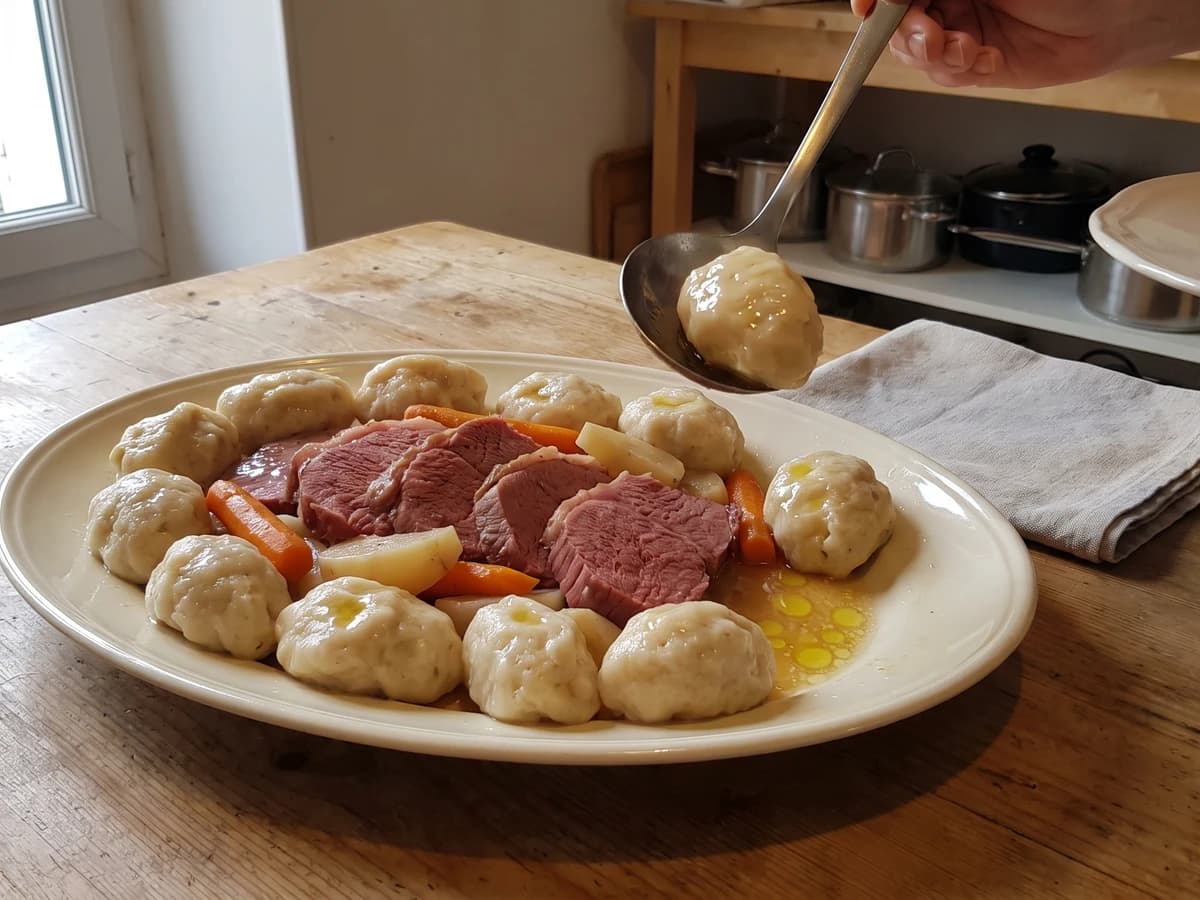
Suet Dumpling
Boulettes au suif, poached beside salt beef, turn equal weights of flour and finely chopped suet into tender, rich dumplings. Keep the beef liquor at a bare tremble and the old garnish works beautifully at home.
A cooking platform built around craft, culture, and the stories behind what we eat.

Created by Chef Juliette
Based on No. 2223, Pommes de Terre à la Hongroise, from Le Guide Culinaire (1907) by Auguste Escoffier
Thick potato roundels drink in consommé while onion, tomato, paprika, and butter reduce around them, leaving no broth behind, only a brick-red sauce that clings to every tender slice.
Pommes de terre à la hongroise (potatoes in the Hungarian manner) teaches the discipline of reduction: the potatoes must turn tender at the same moment the consommé nearly disappears. This is the one true thing to know before touching the pan. The liquid isn't broth for serving; it is the future sauce, carrying butter, onion, paprika, tomato, and potato starch into a glossy coat.
The original recipe assumes a stockpot of finished consommé never off the fire and a broad sauté pan watched by a professional cook. The home-scale version reduces its two pounds of potatoes and four ounces of onion by one quarter, giving four generous portions while keeping the same proportions. A wide covered sauté pan replaces the brigade pan, and good prepared consommé replaces the perpetual stockpot. Those are scaffolding and may go. The thick roundels, pressed tomato, real butter, and near-total reduction are the dish and must stay. One cook, one stove, one evening.
Where the book leaves the butter, parsley, and exact quantity of consommé to professional judgment, the recipe below gives working amounts. The words "just enough to cover" still govern, because the width of your pan decides the final measure. Watch the last ten minutes closely: bringing tenderness and reduction together is the step that decides the dish.
Pommes de terre à la hongroise belongs to the Parisian classical kitchen's vocabulary of garnitures, where à la hongroise signals a French treatment with onion and paprika rather than a literal Hungarian household recipe. Paprika supplies the Central European accent, while tomato and consommé place that accent inside the French practice of moistening and reduction. The consommé is not meant to remain as broth; it nearly vanishes, leaving its savor on the potatoes as a clinging sauce.
Quantity
2 tablespoons (30 ml / 28 g)
Quantity
¾ cup (180 ml / 85 g)
finely chopped
Quantity
¾ teaspoon (3.75 ml / 1.7 g)
Quantity
1 cup (240 ml / 225 g), about 1½ medium
peeled, pressed to remove seeds and watery juice, and sliced
Quantity
4 cups (950 ml / 680 g), about 4 medium
peeled and cut into ⅜-inch (1 cm) roundels
Quantity
2 cups (480 ml / 480 g), plus up to ½ cup (120 ml / 120 g) if needed
Quantity
2 tablespoons (30 ml / 8 g)
finely chopped
| Ingredient | Quantity |
|---|---|
| unsalted butter | 2 tablespoons (30 ml / 28 g) |
| yellow onionfinely chopped | ¾ cup (180 ml / 85 g) |
| sweet Hungarian paprika | ¾ teaspoon (3.75 ml / 1.7 g) |
| ripe tomatoespeeled, pressed to remove seeds and watery juice, and sliced | 1 cup (240 ml / 225 g), about 1½ medium |
| waxy yellow potatoespeeled and cut into ⅜-inch (1 cm) roundels | 4 cups (950 ml / 680 g), about 4 medium |
| warm, lightly seasoned beef or veal consommé | 2 cups (480 ml / 480 g), plus up to ½ cup (120 ml / 120 g) if needed |
| flat-leaf parsleyfinely chopped | 2 tablespoons (30 ml / 8 g) |
Peel the tomatoes with a serrated peeler, or score their skins and cover them with boiling water for 30 seconds before peeling. Halve them across the middle and press each half gently over a bowl to expel the seeds and thin juice, keeping the flesh intact, then slice it. Cut the peeled potatoes into even ⅜-inch (1 cm) roundels. Don't soak or rinse the slices; their surface starch helps the reduced consommé cling.
Melt the butter in a wide, heavy 12-inch (30 cm) sauté pan over medium-low heat. Add the onion and paprika together and cook for 7 to 9 minutes, stirring often, until the onion is supple and translucent but not browned. This is faire suer, softening without color. Keep the heat gentle because paprika turns bitter when scorched. If the spice begins sticking or smelling sharp, pull the pan from the heat and stir in 1 tablespoon of the measured consommé to cool and loosen it. Ça se rattrape.
Add the pressed tomato and potato roundels. Turn them carefully through the paprika butter for 2 minutes, coating both faces without breaking their edges. The tomatoes will begin to collapse and tint the butter a warm brick red, but they should not fry dry.
Arrange the potatoes in no more than two loose layers. Pour in 1½ cups (360 ml / 360 g) of the warm consommé, then add only enough of the remainder to barely cover the roundels. Bring it to a quiet simmer, cover with the lid slightly ajar, and cook for 12 minutes. Remove the lid and continue at a calm simmer for 12 to 18 minutes, turning the potatoes once with a thin spatula and occasionally shaking the pan instead of stirring. The liquid should reduce steadily as the potatoes become tender.
Test a thick roundel with the point of a knife. It should offer no hard center, while only a few spoonfuls of glossy liquid remain around the potatoes. If the liquid disappears before they are tender, lower the heat and add warm consommé ¼ cup (60 ml / 60 g) at a time, then cover for another few minutes. If the potatoes soften while too much liquid remains, lift them carefully to a warm plate and reduce the moistening briskly before returning them to the pan. Ça se rattrape. Fold in the parsley at the last moment, shake the pan until the sauce clings to every roundel, and serve directly from the pan. À table!
1 serving (about 300g)
Culinary guides, cultural storytelling, and the editorial depth that makes cooking meaningful.
Discover Culinary ExplorerChef Juliette
Boulettes au suif, poached beside salt beef, turn equal weights of flour and finely chopped suet into tender, rich dumplings. Keep the beef liquor at a bare tremble and the old garnish works beautifully at home.

Chef Juliette
Bread, flour, frangipane, and rice become four cool, supple panades for binding forcemeats, each changing body and flavor while preserving tenderness. The finest Mousselines need none, and knowing that distinction is the lesson.

Chef Juliette
Panade au pain is bread, milk, salt, heat, and attention: stir until the paste releases cleanly, butter it against a skin, and you have the quiet binder behind tender French farces.

Chef Juliette
Panade de farine teaches the drying stroke behind pâte à choux: flour meets boiling buttered water, then stays over the fire until the paste gathers, smooths, and quits the pan cleanly.