Chef Juliette
Suet Dumpling
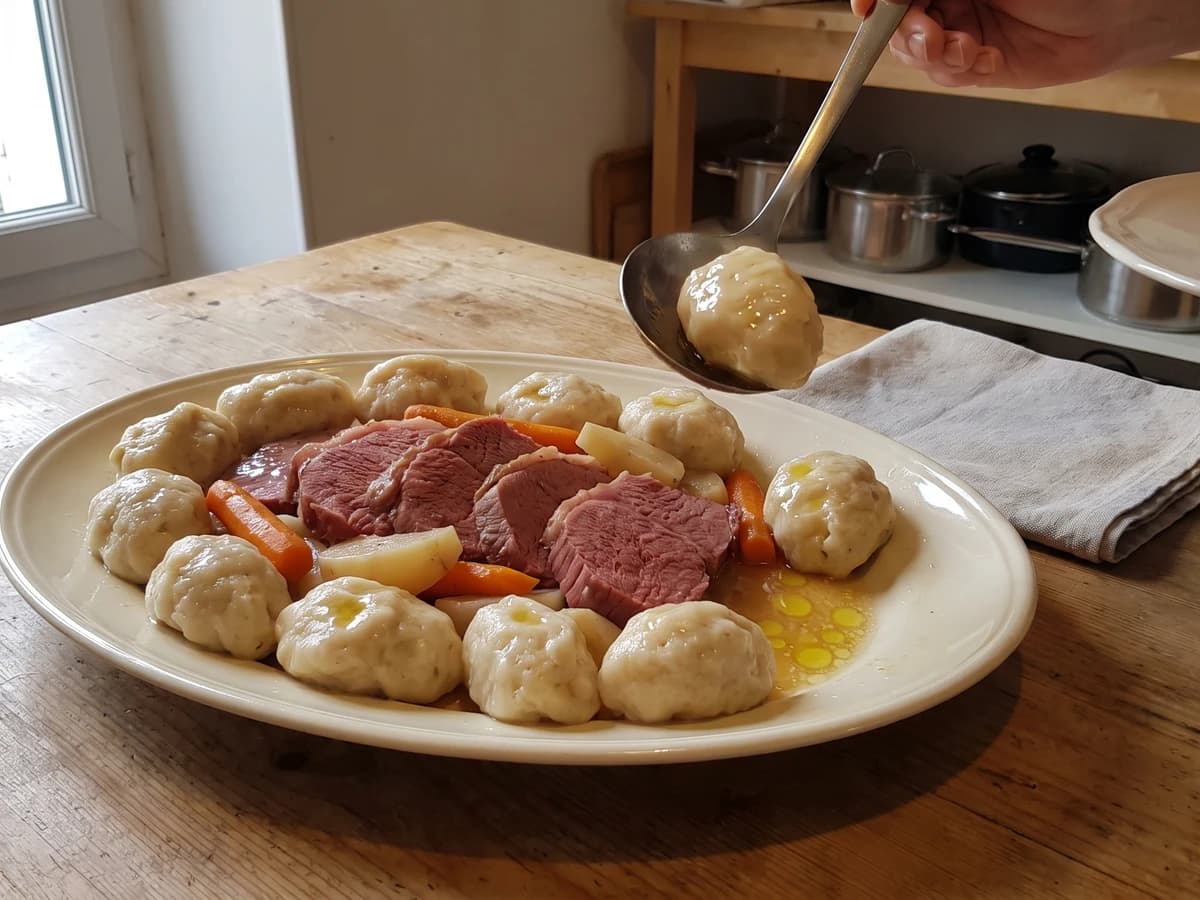
Boulettes au suif, poached beside salt beef, turn equal weights of flour and finely chopped suet into tender, rich dumplings. Keep the beef liquor at a bare tremble and the old garnish works beautifully at home.
A cooking platform built around craft, culture, and the stories behind what we eat.
Created by Chef Juliette
Based on No. 2219, Pommes de Terre Pailles, from Le Guide Culinaire (1907) by Auguste Escoffier
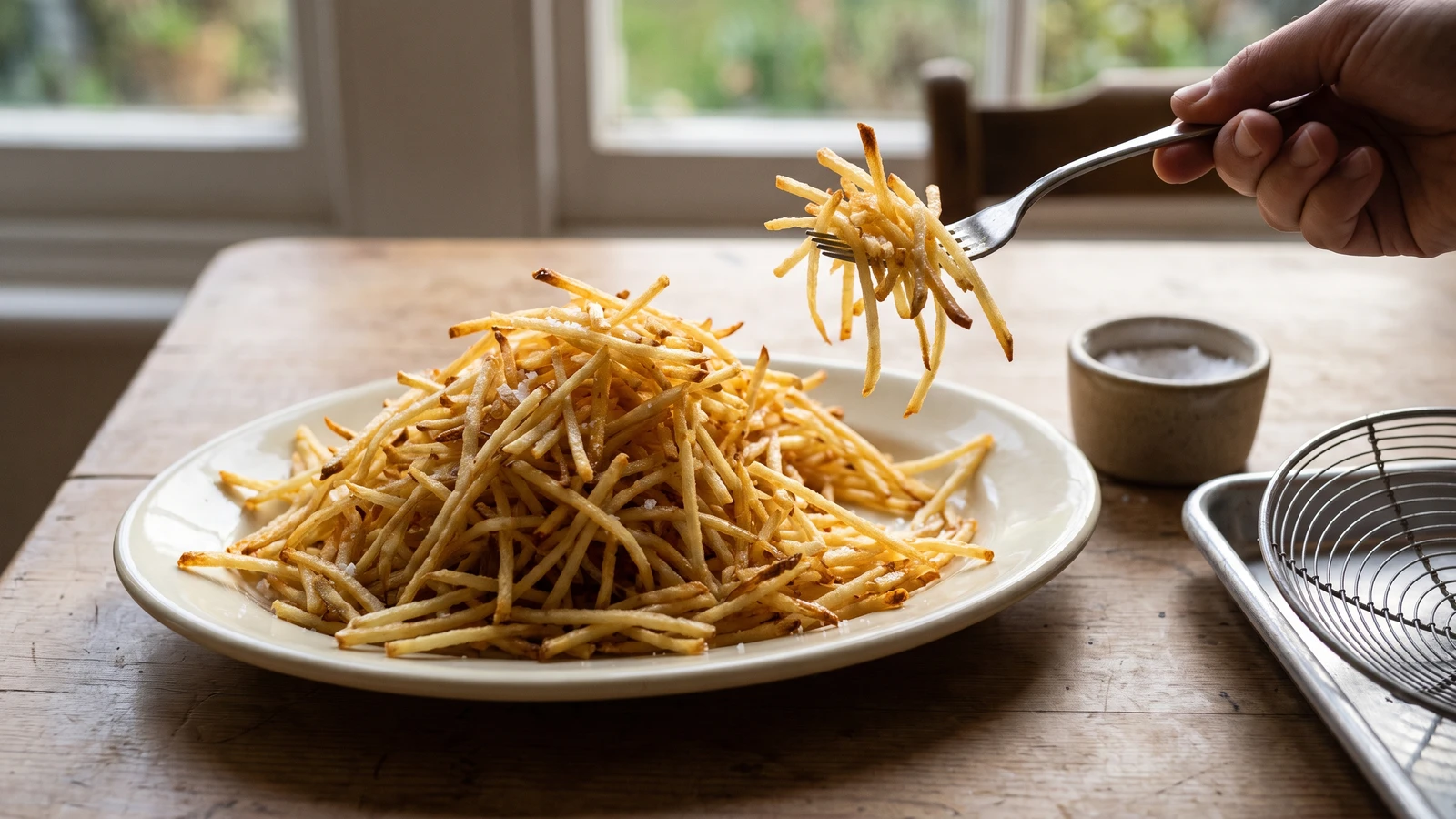
A fine julienne, two disciplined fries, and no waiting at the pass: pommes de terre pailles teach that crispness comes from removing moisture first, then finishing at fierce heat just before serving.
Pommes de terre pailles (straw potatoes) teach one clean lesson: the first fry cooks the potato, and the second makes the straw. Collapse those two plunges into one and you get either pale, yielding threads or dark ones with raw centers. Keep them separate and the result is a loose golden tangle that snaps lightly under the teeth and stays crisp long enough to reach everyone.
The brigade entry assumed a pan of frying fat held hot through service, a basket that could lift a whole batch, clean linen waiting at the pass, and enough hands to cut potatoes while the oil waited. A heavy home saucepan, thermometer, wire spider, and two rack-lined trays perform the same work for four servings. Only the scale and the temperature language change: 375°F (190°C) refined oil replaces visibly smoking fat because smoke is damaged fat, not technique. One cook, one stove, one evening.
The basket and linen are brigade scaffolding. Washing, thorough drying, and two distinct fries are the dish, and they stay. Before the potatoes meet the fat, dry every strand until the towel comes away without a damp mark; that is the step that keeps the frying safe, the strands separate, and the finished pommes pailles properly crisp.
Pommes de terre pailles belong to the precisely named family of fried potato garnishes shaped in the classical kitchens of Paris, where the dimensions of the cut determined both cooking and name. Their fine julienne traveled from grand garnish trays to brasseries and home tables because a modest potato could become a generous crisp mound beside grilled meat, roast poultry, or eggs. They are often confused with pommes allumettes, but pailles are finer and depend on the separate cooking and finishing fries preserved in the classical method.
Quantity
4 medium (about 2 lb / 900 g)
peeled
Quantity
6⅓ cups (1.5 L / about 1.38 kg)
for deep-frying
Quantity
1 teaspoon (5 ml / 6 g), or to taste
| Ingredient | Quantity |
|---|---|
| floury potatoes, such as russet, Agria, or Bintjepeeled | 4 medium (about 2 lb / 900 g) |
| refined peanut oil or high-oleic sunflower oilfor deep-frying | 6⅓ cups (1.5 L / about 1.38 kg) |
| fine sea salt | 1 teaspoon (5 ml / 6 g), or to taste |
Cut the peeled potatoes julienne-fashion into long match-shaped rods about 1/16 inch (1.5 to 2 mm) square. A mandoline fitted with its fine julienne blade makes quick, even work; with a knife, first cut thin lengthwise planks, stack only two or three at a time, then slice them into rods of the same width. Uniform thickness matters more than identical length because every strand must cook at the same pace.
Put the julienne into a large bowl of cold water and agitate it well with your fingers. Drain and repeat two or three times, until the water is only faintly cloudy; washing removes loose surface starch that would glue the strands together. Spread the potatoes over clean lint-free linen, blot them, turn them, and transfer them to a second dry towel if the first becomes damp. Each strand should feel dry and slightly chalky, with no bead of water visible.
Pour the oil into a 5 to 6 quart (5 to 6 L) heavy pot, leaving the pot no more than half full, and clip on the thermometer. Heat the oil to 320°F (160°C). Add the potatoes in five or six loose handfuls, stirring gently with a wire spider so the strands separate. Fry each batch for 2 to 3 minutes, until cooked through, pale, and flexible rather than crisp. Let the oil return to 320°F (160°C) between batches. If a batch begins taking real color now, lift it immediately and lower the heat; it can still be saved with a much shorter second fry.
Lift each batch with the spider, shake it well over the pot, and spread the strands in a single layer on a wire rack set over a rimmed tray. The rack is the home equivalent of the brigade's frying basket and linen, letting oil and moisture escape without trapping either underneath. Leave the potatoes unsalted and uncovered for at least 10 minutes. The first fry cooks them; this rest dries their surface for the second.
Just before serving, raise the oil to 375°F (190°C). The entry's smoking fat becomes carefully measured upper frying heat in the home kitchen: the oil should shimmer, never visibly smoke. Fry the potatoes again in three or four batches for 45 to 75 seconds, stirring once, until straw-gold, crisp, and stiff enough not to droop from the spider. If a batch stays pale and limp, the oil temperature fell too far. Let it return to 375°F (190°C), give that batch another 15 to 20 seconds, and drain again. Ça se rattrape.
Shake each finished batch thoroughly over the pot, then drain it briefly on clean linen or absorbent paper. Salt moderately while the potatoes are still hot, beginning with half the measured salt, tossing gently, and adding only what they need. Heap the pommes pailles loosely on a warm platter and serve at once. If the table delays you, hold them in a single layer on a rack in a 200°F (95°C) oven for no more than 10 minutes. À table!
1 serving (about 130g)
Culinary guides, cultural storytelling, and the editorial depth that makes cooking meaningful.
Discover Culinary ExplorerChef Juliette
Boulettes au suif, poached beside salt beef, turn equal weights of flour and finely chopped suet into tender, rich dumplings. Keep the beef liquor at a bare tremble and the old garnish works beautifully at home.

Chef Juliette
Bread, flour, frangipane, and rice become four cool, supple panades for binding forcemeats, each changing body and flavor while preserving tenderness. The finest Mousselines need none, and knowing that distinction is the lesson.

Chef Juliette
Panade au pain is bread, milk, salt, heat, and attention: stir until the paste releases cleanly, butter it against a skin, and you have the quiet binder behind tender French farces.

Chef Juliette
Panade de farine teaches the drying stroke behind pâte à choux: flour meets boiling buttered water, then stays over the fire until the paste gathers, smooths, and quits the pan cleanly.