Chef Juliette
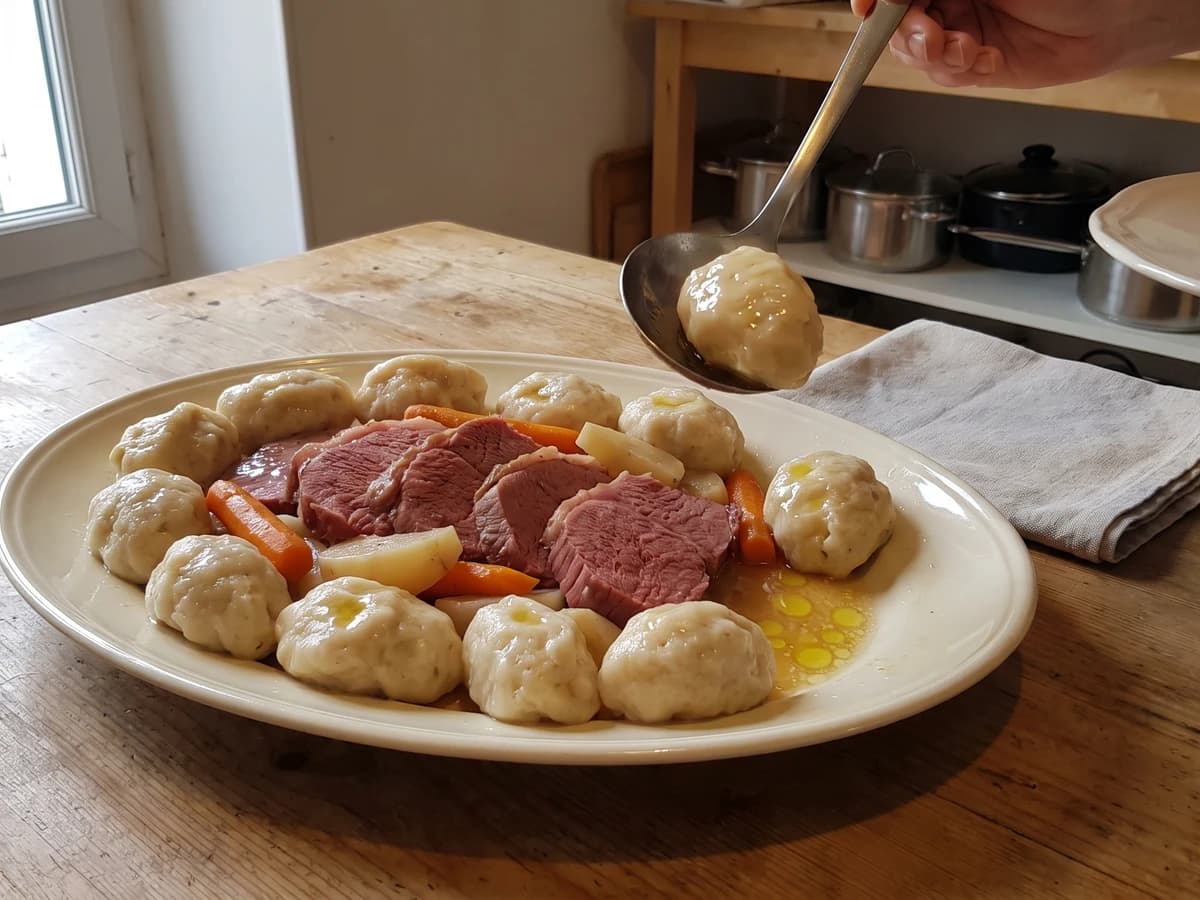
Suet Dumpling
Boulettes au suif, poached beside salt beef, turn equal weights of flour and finely chopped suet into tender, rich dumplings. Keep the beef liquor at a bare tremble and the old garnish works beautifully at home.
A cooking platform built around craft, culture, and the stories behind what we eat.

Created by Chef Juliette
Based on No. 2215, Pommes de Terre en Allumettes, from Le Guide Culinaire (1907) by Auguste Escoffier
Pommes de terre en allumettes turn one potato and one precise cut into a generous golden heap, crisp because the cook waits for the last moisture to leave before draining.
Pommes de terre en allumettes (matchstick potatoes) teach one indispensable frying principle: potatoes become crisp in the fat, not on the draining rack. Their one-fifth-inch sides expose plenty of surface, but that surface stays crisp only when you leave the allumettes in the hot fat until their fierce bubbling becomes fine and sparse. Drain them too soon and they soften almost as quickly as you can salt them.
The original recipe assumed a deep vat held steadily hot, a wire basket, and enough hands to cut and fry brigade quantities just before service. For one cook, one stove, one evening, the honest equivalents are a heavy pot, a thermometer, a spider, and three small batches made from two pounds of potatoes. The great vat and service crew were scaffolding. Squaring the potatoes, cutting true five-millimetre rods, and drying them completely in the fat are the dish, and those remain.
The finished allumettes should be straight, deeply golden, and audibly crisp under the teeth, with tender potato still inside. Watch the bubbles more closely than the clock. That final minute in the fat decides everything.
Pommes de terre en allumettes belong to the precise vocabulary of the Parisian classical kitchen, where potato preparations were distinguished by the geometry of the cut as carefully as sauces were distinguished by their foundations. Allumette means matchstick, and the preparation moved easily from grand dining rooms to bistro plates because its ingredients were ordinary even when its knife work was exact. It should not be confused with pommes paille, which are cut finer like straw, or with thicker pommes frites; the one-fifth-inch rod gives the allumette its own balance of crisp surface and tender centre.
Quantity
4 large, about 2 lb (900 g)
peeled
Quantity
6 cups (1.4 liters / 1.3 kg)
for deep-frying
Quantity
1 teaspoon (5 ml / 6 g), plus more to taste
| Ingredient | Quantity |
|---|---|
| large floury potatoes, such as russetspeeled | 4 large, about 2 lb (900 g) |
| refined peanut or sunflower oil, or rendered beef fatfor deep-frying | 6 cups (1.4 liters / 1.3 kg) |
| fine sea salt | 1 teaspoon (5 ml / 6 g), plus more to taste |
Trim each peeled potato into a straight-sided block, saving the curved trimmings for soup, a purée, or a breakfast pan. Cut the blocks lengthwise into slabs exactly one-fifth inch (5 mm) thick, then stack two or three slabs and cut them into rods of the same width. Keep the knife vertical and work deliberately. Even dimensions are not decoration here; they let every allumette become tender and crisp at the same moment.
Spread the cut potatoes between clean kitchen towels and press them thoroughly dry, turning them once so no damp surfaces hide underneath. Pour the frying fat into a heavy pot with at least twice as much empty space above it, clip on the thermometer, and heat it to 350°F (175°C). Set a wire rack over a sheet pan nearby. If the first batches must wait, heat the oven to 250°F (120°C), but never let the heating fat sit unattended.
Lower one-third of the potatoes into the hot fat with a spider, easing them in so the fat cannot surge over the pot. Stir gently during the first minute to separate any rods that cling together. Hold the fat between 340°F and 355°F (170°C and 180°C), waiting for it to recover before adding another batch. Crowding drops the heat and gives you limp, greasy potatoes; three small batches are quicker in the end.
Continue frying each batch for about 5 to 7 minutes. The bubbling will begin vigorously as moisture escapes, then grow finer and noticeably sparse; only then should the allumettes be deep golden, rigid, and dry at the surface. If they brown while the bubbling is still fierce, the fat is too hot, so lower the heat and finish them nearer 330°F (165°C). If a drained batch bends and softens, don't surrender it. Ça se rattrape: bring the fat to 375°F (190°C) and fry it again for 30 to 60 seconds, until crisp.
Lift each finished batch with the spider and shake it over the pot for five seconds, then spread it in one layer on the wire rack. Hold earlier batches in the low oven for no longer than 10 minutes while the rest fry. Gather the allumettes onto a warm platter, salt them while their fine sheen still catches the light, and serve at once. À table!
1 serving (about 135g)
Culinary guides, cultural storytelling, and the editorial depth that makes cooking meaningful.
Discover Culinary ExplorerChef Juliette
Boulettes au suif, poached beside salt beef, turn equal weights of flour and finely chopped suet into tender, rich dumplings. Keep the beef liquor at a bare tremble and the old garnish works beautifully at home.

Chef Juliette
Bread, flour, frangipane, and rice become four cool, supple panades for binding forcemeats, each changing body and flavor while preserving tenderness. The finest Mousselines need none, and knowing that distinction is the lesson.

Chef Juliette
Panade au pain is bread, milk, salt, heat, and attention: stir until the paste releases cleanly, butter it against a skin, and you have the quiet binder behind tender French farces.

Chef Juliette
Panade de farine teaches the drying stroke behind pâte à choux: flour meets boiling buttered water, then stays over the fire until the paste gathers, smooths, and quits the pan cleanly.