Chef Juliette
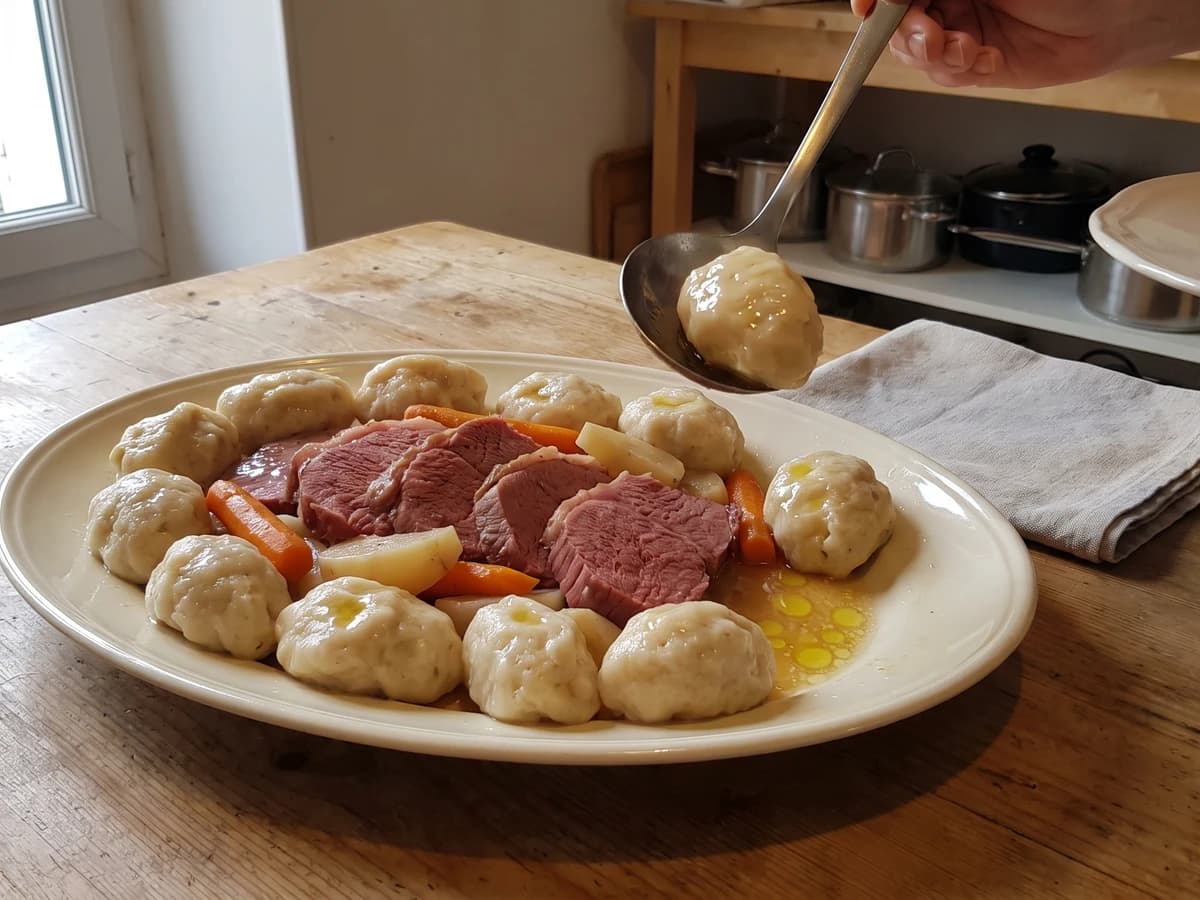
Suet Dumpling
Boulettes au suif, poached beside salt beef, turn equal weights of flour and finely chopped suet into tender, rich dumplings. Keep the beef liquor at a bare tremble and the old garnish works beautifully at home.
A cooking platform built around craft, culture, and the stories behind what we eat.

Created by Chef Juliette
Based on No. 2214, Pommes de Terre Fondantes, from Le Guide Culinaire (1907) by Auguste Escoffier
Large turned potatoes, gently cooked in butter, lightly flattened, then covered with a fresh measured charge until every fork mark gleams: a classical lesson in tenderness, restraint, and attention to the pan.
Pommes de terre fondantes (fondant potatoes) teach one clean lesson: a potato only drinks butter after its flesh is tender enough to yield. Cook it completely before you flatten it. If the centre still resists, the fork will split the potato instead of opening its surface to the fresh butter.
The original entry assumed a commis with a turning knife, a sauté pan watched continuously, and portions managed by weight. It needed neither a saucier, a stockpot, nor a salamander. At home, a paring knife, a scale, and one heavy pan do the work. I keep its exact finishing ratio, three ounces of fresh butter for two pounds of trimmed potatoes, and scale the pan to four generous servings. A brigade's identical knife facets are presentation scaffolding; the three-ounce elongated shape is not, because even size gives you even cooking.
The first butter cooks the potatoes and is drained away. Fresh butter then finishes them under a lid, settling into the shallow fork marks until every oval is tender, golden, and satin-glossy. That change of butter is not ceremony; it prevents tired milk solids from muddying the finish. One cook, one stove, one evening. The step that matters most is complete tenderness before the fork touches them.
Pommes de terre fondantes belong to the French classical garnish repertoire codified in the grand kitchens of Paris, where evenly turned potatoes accompanied roasted and sauced meats. This formula is often confused with stock-braised potato cylinders, but its identity is quite different: large elongated olives cooked in butter, lightly flattened, then covered with a measured charge of fresh butter until they take it in. From grand kitchen service it passed naturally to the cuisine bourgeoise table, where one closely watched sauté pan preserves the method without a brigade.
Quantity
2½ lb (1.13 kg), yielding 2 lb (907 g) after trimming
peeled and turned into large elongated olives
Quantity
¾ cup (180 ml / 170 g)
Quantity
6 tablespoons (90 ml / 85 g)
Quantity
1¼ teaspoons (6 ml / 7 g)
divided
| Ingredient | Quantity |
|---|---|
| medium yellow potatoespeeled and turned into large elongated olives | 2½ lb (1.13 kg), yielding 2 lb (907 g) after trimming |
| unsalted butter for the initial cooking | ¾ cup (180 ml / 170 g) |
| fresh unsalted butter for finishing | 6 tablespoons (90 ml / 85 g) |
| fine sea saltdivided | 1¼ teaspoons (6 ml / 7 g) |
Peel the potatoes, then tourner, or turn, each one with a small paring knife into a smooth elongated oval weighing about 3 ounces (85 g). Aim for 10 or 11 pieces and a final trimmed weight of 2 pounds (907 g). Exact symmetry is unnecessary, but the pieces must be close in weight and thickness or the smaller ones will soften before the larger centres cook. Save the clean trimmings for soup or mash. Rinse the turned potatoes briefly, dry them thoroughly, and season with 1 teaspoon of the salt.
Melt the initial ¾ cup butter in a heavy 11-inch (28 cm) sauté pan over low heat. When it foams, arrange the potatoes in one uncrowded layer and roll them through the butter. Cook uncovered for 35 to 45 minutes, turning every 4 or 5 minutes and spooning butter over any exposed surfaces. The butter should bubble lazily, never fry furiously. Continue until the potatoes are evenly butter-gold and a thin skewer passes through each centre with barely any resistance. If the butter browns quickly while the centres remain firm, take the pan off the heat for a minute, lower the burner, and continue with a second dry skillet beneath the pan as a heat diffuser if needed. Ça se rattrape.
Lift the cooked potatoes onto a tray with a slotted spatula. Press each one lightly with the back of a dinner fork, just enough to leave shallow ridges and broaden the oval without breaking it apart. If a potato resists the fork, stop. It is undercooked, so return it to the first butter for another 5 to 10 minutes before trying again. If one develops a small crack, press the remaining potatoes more gently; the cracked one can still finish with its split side facing upward.
Pour the first cooking butter out of the pan and wipe away loose browned milk solids. Return the flattened potatoes to the pan and distribute the fresh 6 tablespoons of butter around them. Cover tightly and cook over the lowest heat for 8 to 12 minutes, rolling the pan gently every few minutes so the butter reaches every surface. They are ready when the fork marks gleam, the potatoes look slightly swollen, and very little butter runs freely when the pan is tilted. Entirely absorbed does not mean scorching the pan dry. If butter still pools after 12 minutes, uncover, spoon it repeatedly over the potatoes, and cook gently for another 2 minutes rather than raising the heat.
Transfer the pommes de terre fondantes to a warmed shallow serving dish and spoon over every buttery drop remaining in the pan. Taste and add the reserved ¼ teaspoon salt if needed. Serve at once, while the exteriors are golden and yielding and the centres remain creamy. No herbs, pepper, or decorative fuss are required. Cooking well is not cooking fancy. À table!
1 serving (about 260g)
Culinary guides, cultural storytelling, and the editorial depth that makes cooking meaningful.
Discover Culinary ExplorerChef Juliette
Boulettes au suif, poached beside salt beef, turn equal weights of flour and finely chopped suet into tender, rich dumplings. Keep the beef liquor at a bare tremble and the old garnish works beautifully at home.

Chef Juliette
Bread, flour, frangipane, and rice become four cool, supple panades for binding forcemeats, each changing body and flavor while preserving tenderness. The finest Mousselines need none, and knowing that distinction is the lesson.

Chef Juliette
Panade au pain is bread, milk, salt, heat, and attention: stir until the paste releases cleanly, butter it against a skin, and you have the quiet binder behind tender French farces.

Chef Juliette
Panade de farine teaches the drying stroke behind pâte à choux: flour meets boiling buttered water, then stays over the fire until the paste gathers, smooths, and quits the pan cleanly.