Chef Juliette
Suet Dumpling
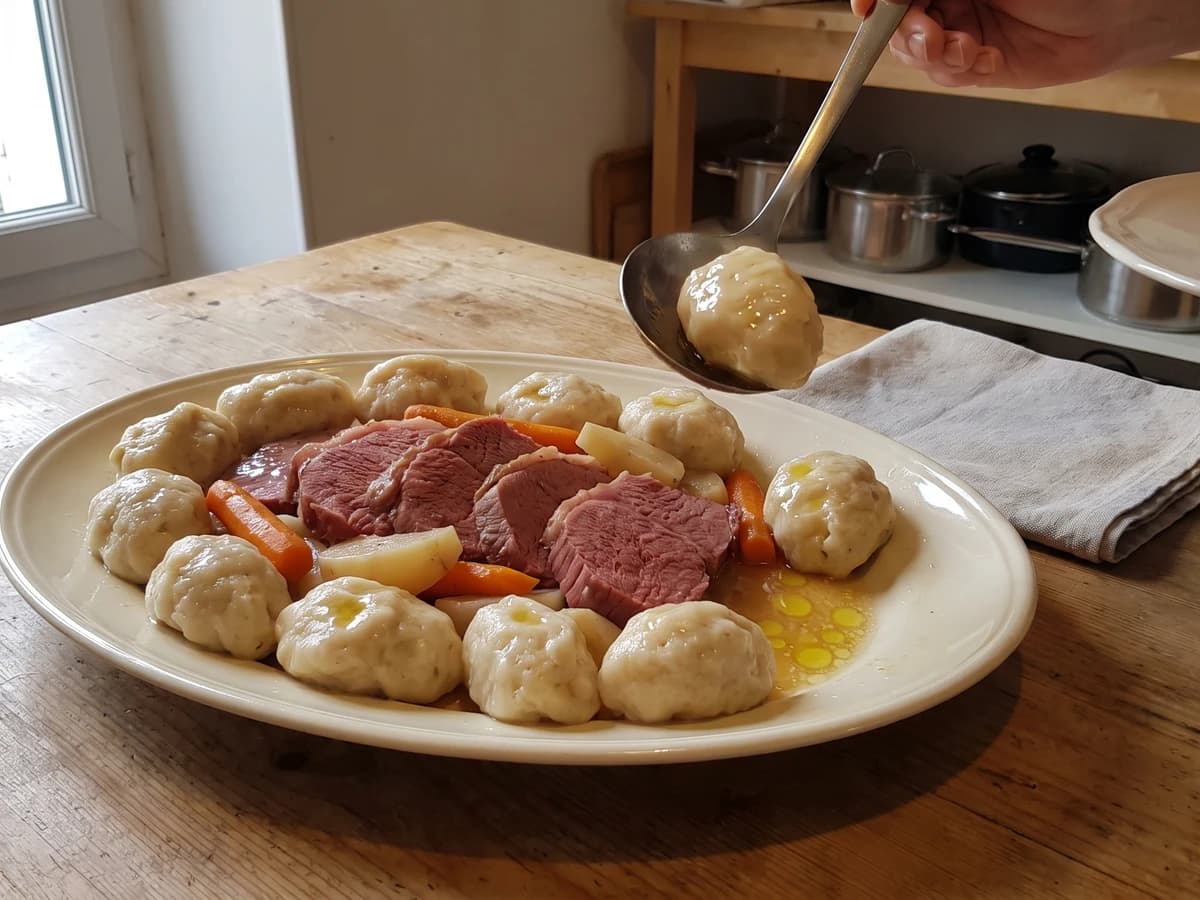
Boulettes au suif, poached beside salt beef, turn equal weights of flour and finely chopped suet into tender, rich dumplings. Keep the beef liquor at a bare tremble and the old garnish works beautifully at home.
A cooking platform built around craft, culture, and the stories behind what we eat.
Created by Chef Juliette
Based on No. 2196, Moulded Pease Purée for Garnish, from Le Guide Culinaire (1907) by Auguste Escoffier
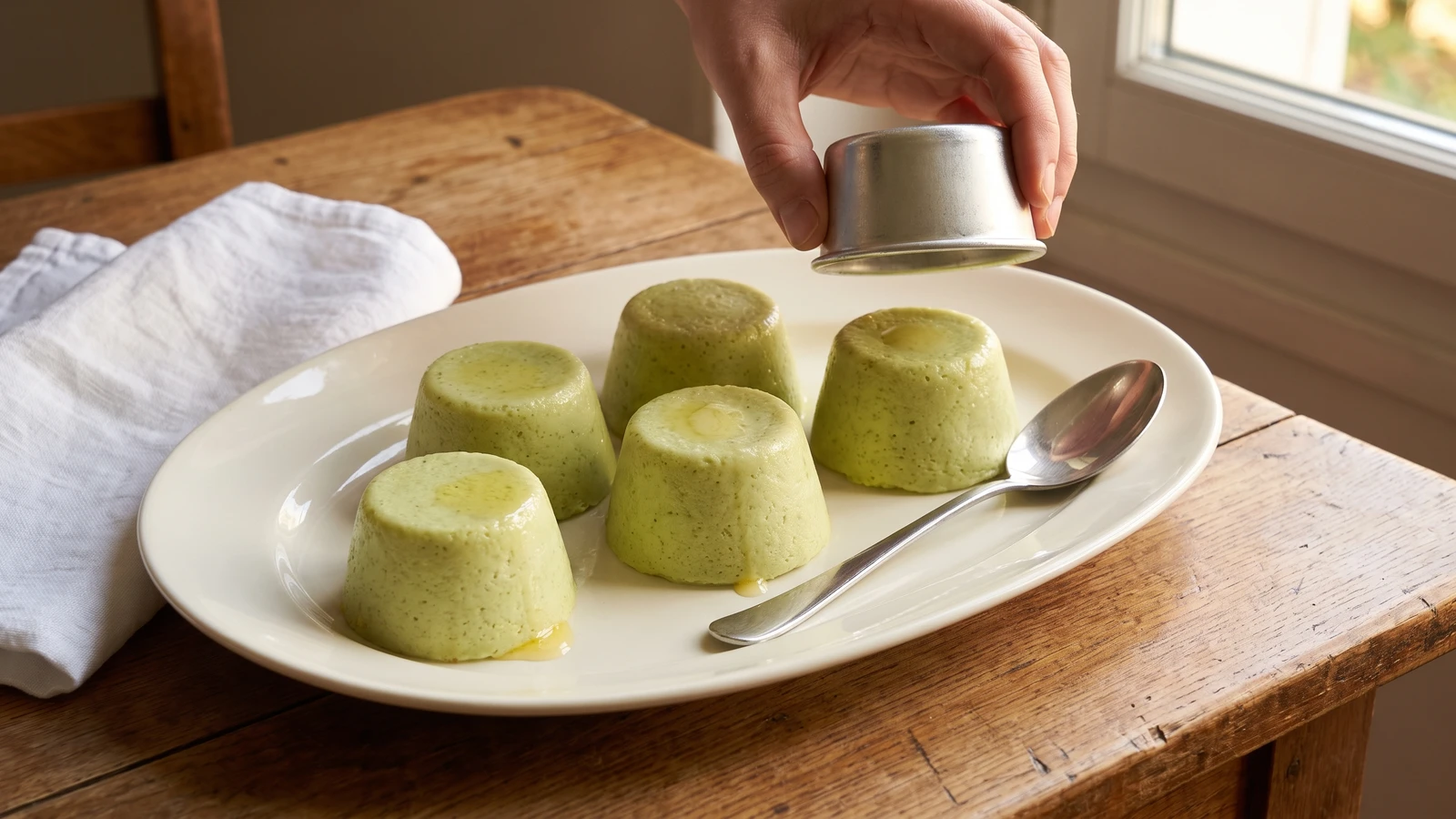
Timbales de Purée Saint-Germain turn creamy pease purée into a poised garnish: whole egg and yolk bind it, a gentle bain-marie sets it, and five quiet minutes make the unmoulding clean.
Timbales de Purée Saint-Germain (moulded pease purée for garnish) teach the exact art of setting a vegetable purée without burdening it. The one true thing is this: the purée must be creamier than you would serve from a spoon, because the eggs firm it as they poach. Begin stiff and the timbale lands stodgy; begin with a slow, thick ribbon and it sets tender enough to yield under a fork.
The original direction assumed a quart of Saint-Germain purée already made under a saucier's eye, eggs passed through muslin, and a shelf of dariole moulds or baba moulds ready for service. For one cook, the formula is halved exactly to two cups, the muslin becomes a fine-mesh sieve, and six small metal moulds or straight-sided ramekins sit in a roasting tin. Those are brigade scaffolds stripped away; the egg ratio, gentle bain-marie, and five-minute stand are the dish, and they stay.
Poach them at a tremble, never a boil. If the water grows lively, cool it along the side of the tin and lower the heat. Ça se rattrape. The step that decides the finish is the five-minute stand before unmoulding; it lets the custard settle, so patience, not force, gives you clean sides.
Moulded vegetable purées belong to the Parisian tradition of grande cuisine, where small timbales were arranged as garnishes around roasts, braised meats, and substantial relevés. The form traveled readily to the bourgeois table because a bain-marie and a few dariole moulds could reproduce the brigade's gentle poaching at home. Despite their tidy shape, these are not soufflés: the eggs bind a creamy purée rather than raising it.
Quantity
2 cups (475 ml / about 500 g)
kept slightly creamier than for serving by the spoonful
Quantity
1
Quantity
1½ yolks (1½ tablespoons / 27 g)
measured from 2 beaten yolks
Quantity
2 teaspoons (10 ml / 9 g)
softened, for the moulds
| Ingredient | Quantity |
|---|---|
| prepared Saint-Germain puréekept slightly creamier than for serving by the spoonful | 2 cups (475 ml / about 500 g) |
| large whole egg | 1 |
| large egg yolksmeasured from 2 beaten yolks | 1½ yolks (1½ tablespoons / 27 g) |
| unsalted buttersoftened, for the moulds | 2 teaspoons (10 ml / 9 g) |
Heat the oven to 325°F (165°C). Brush six 3-fluid-ounce (90 ml) dariole moulds or baba moulds lightly but completely with the softened butter. A dariole mould is a small, deep cylinder that widens slightly toward its rim; a straight-sided metal or ceramic ramekin of similar capacity is the honest home equivalent. Stand the moulds in a deep roasting tin.
Stir the prepared Saint-Germain purée until perfectly smooth. It should fall from the spoon in a slow, thick ribbon, creamier than a freestanding purée but never watery. If chilling has made it stiff, warm it over very gentle heat only until supple, then let it cool until merely lukewarm, no hotter than 110°F (43°C). Hot purée begins cooking the eggs before the moulds reach the water.
Beat the whole egg with the measured yolks just until completely blended, without whipping in a cap of bubbles. Pass them through a fine-mesh sieve, the home equivalent of the source's muslin. Stir a quarter of the purée into the eggs, then work this mixture gently into the remaining purée. If the egg catches into a few fine threads because the purée was too warm, pass the entire mixture through the sieve at once. Ça se rattrape.
Divide the mixture among the prepared moulds, stopping about ¼ inch (6 mm) below the rims. Tap each mould once against a folded towel to release large air pockets, but don't beat the mixture flat. Pour hot water into the roasting tin until it reaches halfway up the moulds. This is the bain-marie, a hot-water bath that shields the egg-bound purée from fierce direct heat.
Transfer the bain-marie carefully to the oven and poach for 20 to 25 minutes. The water should scarcely tremble, never boil hard; boiling drives holes through the timbales and makes their edges rubbery. If it becomes lively, pour a little cool water down the side of the tin and lower the oven slightly. The timbales are ready when the edges are set, the centres retain a slight tremble, and a thin skewer emerges moist but without liquid purée.
Lift the moulds from the bain-marie and let them stand undisturbed for exactly 5 minutes. Loosen only the upper edge with a thin knife, place a warm serving platter over each mould, and invert decisively. If one clings, hold a warm damp cloth against the base for 15 seconds and try again; don't dig it out. Arrange the timbales around the meat they are meant to garnish, or bring them together on their own platter. À table!
1 serving (about 95g)
Culinary guides, cultural storytelling, and the editorial depth that makes cooking meaningful.
Discover Culinary ExplorerChef Juliette
Boulettes au suif, poached beside salt beef, turn equal weights of flour and finely chopped suet into tender, rich dumplings. Keep the beef liquor at a bare tremble and the old garnish works beautifully at home.

Chef Juliette
Bread, flour, frangipane, and rice become four cool, supple panades for binding forcemeats, each changing body and flavor while preserving tenderness. The finest Mousselines need none, and knowing that distinction is the lesson.

Chef Juliette
Panade au pain is bread, milk, salt, heat, and attention: stir until the paste releases cleanly, butter it against a skin, and you have the quiet binder behind tender French farces.

Chef Juliette
Panade de farine teaches the drying stroke behind pâte à choux: flour meets boiling buttered water, then stays over the fire until the paste gathers, smooths, and quits the pan cleanly.