Chef Juliette
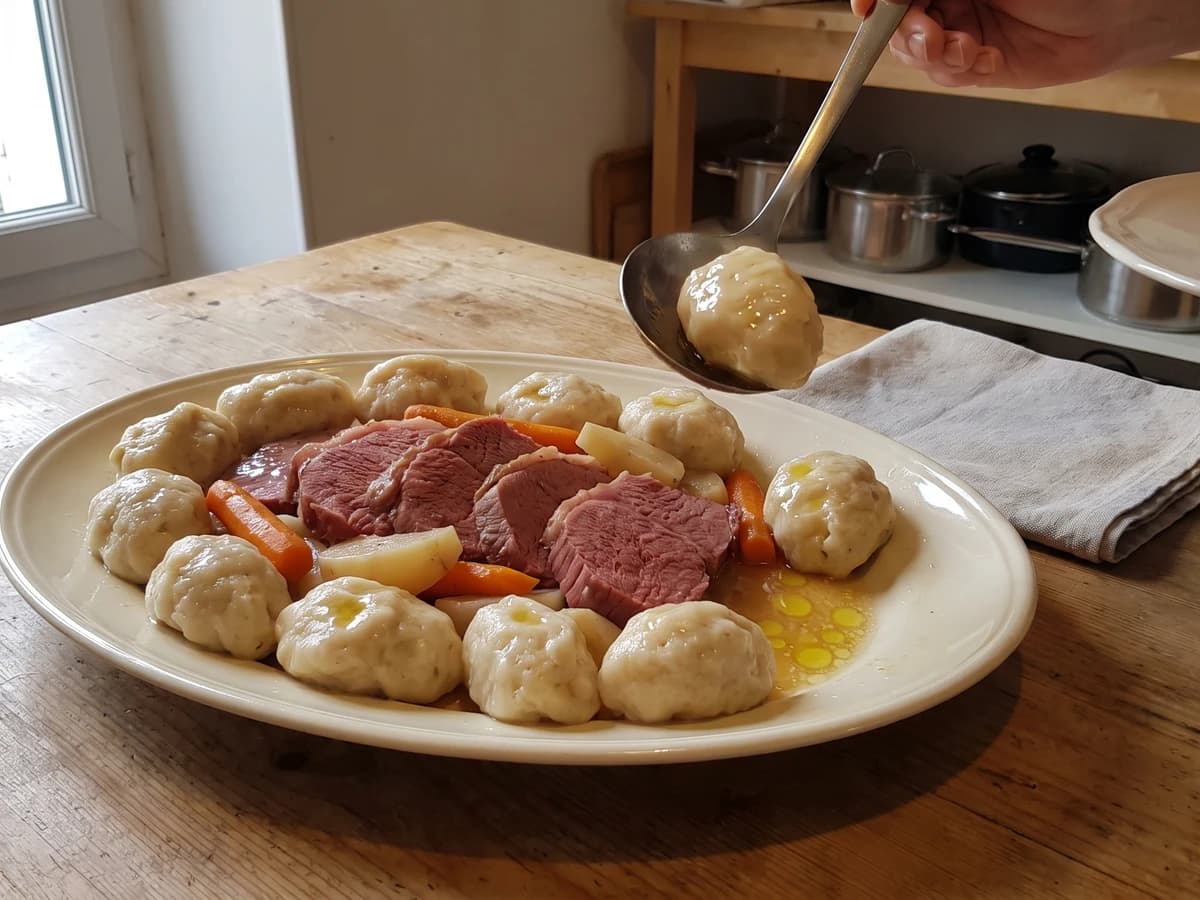
Suet Dumpling
Boulettes au suif, poached beside salt beef, turn equal weights of flour and finely chopped suet into tender, rich dumplings. Keep the beef liquor at a bare tremble and the old garnish works beautifully at home.
A cooking platform built around craft, culture, and the stories behind what we eat.

Created by Chef Juliette
Based on No. 2172, Chestnuts (Marrons), from Le Guide Culinaire (1907) by Auguste Escoffier
The peeling is the whole lesson: score each marron, heat it sharply over a little water, then strip away shell and skin while a folded towel protects your fingers.
Marrons teach one unforgiving lesson: the shell opens only while the nut is fiercely hot. Score the round side before heat touches it, roast just long enough for the cut to gape, then peel away both the hard shell and the tan pellicle in small batches. Let a marron cool and it grips its skin like a miser grips a coin.
The original entry offered two service routes, a damp oven tray or a frying basket plunged into very hot fat, and assumed enough hands to peel batch after batch immediately. This home version keeps the damp-tray method, scales the quantity to four people, and replaces the frying basket with an ordinary rimmed sheet pan and a folded towel. The deep-fat route is brigade scaffolding; scoring the shells and peeling them hot are the technique that must stay. One cook, one stove, one evening.
After seven or eight minutes, the shells will have darkened and opened at their cuts, while the flesh remains pale and firm. That is correct: this entry prepares marrons for further holiday cooking rather than roasting them through. If several cool before you reach them, warm them again and continue. Ça se rattrape. Keep the unpeeled marrons hot, because peeling before they cool is the one step that decides everything.
Marrons belong especially to Ardèche and the Cévennes, where cultivated chestnut groves supplied households with nuts for drying, flour, soups, and festive dishes. From those chestnut regions, the large, easy-peeling fruit traveled into bourgeois and grand kitchens as a garnish for poultry and game, then onto Christmas tables throughout France. In culinary French, marron means a prized edible chestnut with an unpartitioned kernel; it is not marron d’Inde, the inedible horse chestnut.
Quantity
about 6 cups (2 lb / 900 g), 40 to 50 nuts
unpeeled
Quantity
¼ cup (60 ml / 60 g)
for the tray
| Ingredient | Quantity |
|---|---|
| fresh sweet chestnutsunpeeled | about 6 cups (2 lb / 900 g), 40 to 50 nuts |
| waterfor the tray | ¼ cup (60 ml / 60 g) |
Set a rack in the middle of the oven and heat it to 450°F (230°C). Sort the marrons while the oven heats. Keep those that feel heavy and firm, with tight glossy shells; discard any that rattle, show mold or pinholes, or feel feather-light, because a spoiled nut won't improve in the oven.
Set each marron flat-side down on the board. With a short, sturdy knife, cut a shallow 1-inch (2.5 cm) slash across its convex side, passing through the hard shell and barely nicking the pellicle without cutting deeply into the flesh. Every shell must be opened before heating, since pressure trapped inside an intact marron can burst it.
Arrange the scored marrons in one layer on a heavy rimmed sheet pan, cut-side up, and pour the water around them. Roast for seven to eight minutes, until the shells darken slightly and the slashes open like little mouths. The water supplies just enough moisture to help release the pellicle. If the tray dries before the cuts open, add a spoonful of hot water at one corner and give the marrons another minute.
Tip the hot marrons into a heatproof bowl and cover them with a folded towel. Remove four or five at a time, leaving the rest covered, and hold each nut in another fold of towel while stripping away the hard shell and every patch of tan pellicle. Work briskly but protect your fingers. If the pellicle begins clinging, stop rather than gouging the flesh. Ça se rattrape: return the unpeeled nuts to the damp tray for two or three minutes, cover them again, and resume while they are fiercely hot.
Place each peeled marron in a covered bowl so its surface does not dry while you finish the batch. The centers will still be firm, which is exactly right: this classical entry is a peeling preparation, not a complete roasting. Use the peeled marrons immediately in the holiday preparation that called for them, or cool and store them promptly for later cooking.
1 serving (about 143g)
Culinary guides, cultural storytelling, and the editorial depth that makes cooking meaningful.
Discover Culinary ExplorerChef Juliette
Boulettes au suif, poached beside salt beef, turn equal weights of flour and finely chopped suet into tender, rich dumplings. Keep the beef liquor at a bare tremble and the old garnish works beautifully at home.

Chef Juliette
Bread, flour, frangipane, and rice become four cool, supple panades for binding forcemeats, each changing body and flavor while preserving tenderness. The finest Mousselines need none, and knowing that distinction is the lesson.

Chef Juliette
Panade au pain is bread, milk, salt, heat, and attention: stir until the paste releases cleanly, butter it against a skin, and you have the quiet binder behind tender French farces.

Chef Juliette
Panade de farine teaches the drying stroke behind pâte à choux: flour meets boiling buttered water, then stays over the fire until the paste gathers, smooths, and quits the pan cleanly.