Chef Juliette
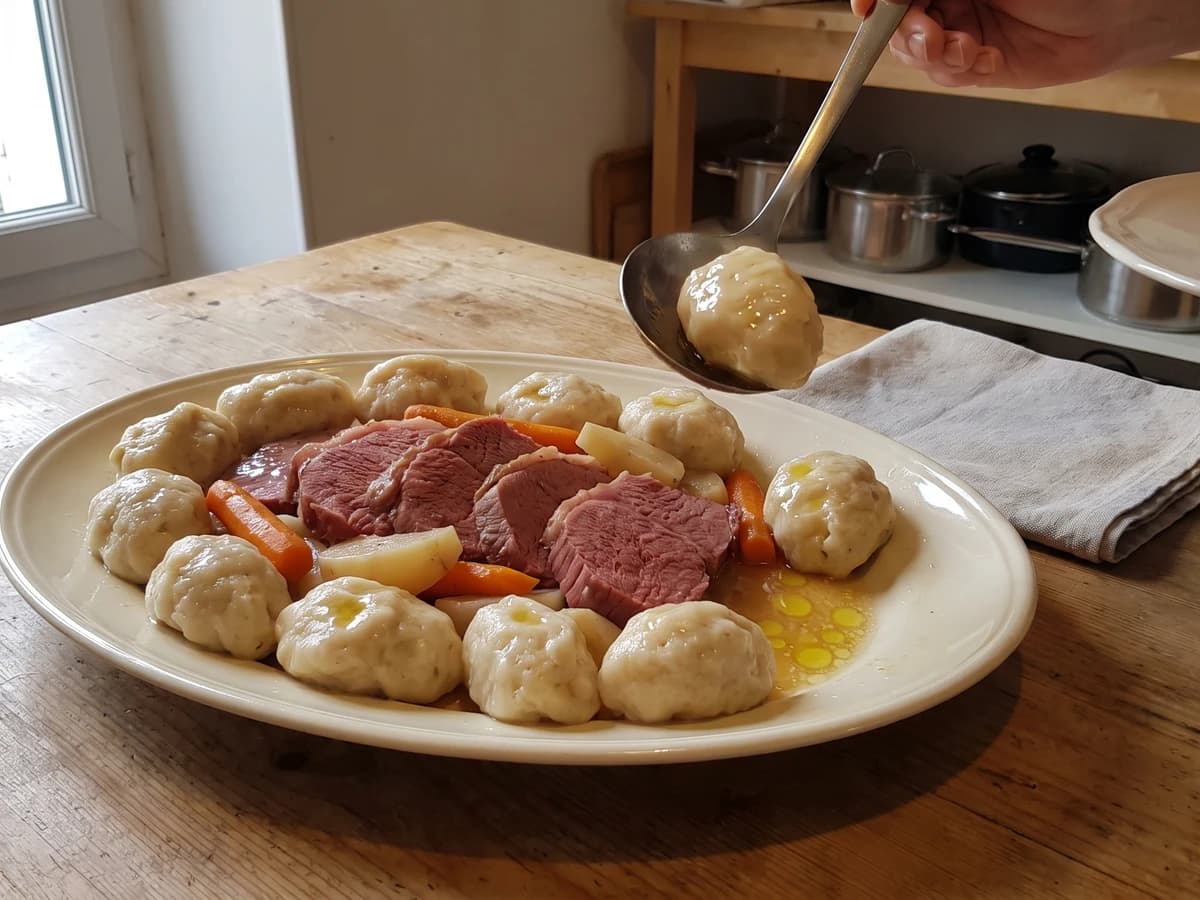
Suet Dumpling
Boulettes au suif, poached beside salt beef, turn equal weights of flour and finely chopped suet into tender, rich dumplings. Keep the beef liquor at a bare tremble and the old garnish works beautifully at home.
A cooking platform built around craft, culture, and the stories behind what we eat.

Created by Chef Juliette
Based on No. 2167, Purée de Lentilles, from Le Guide Culinaire (1907) by Auguste Escoffier
Whole lentils pass hot through a sieve, take their butter, dry over brisk heat, and soften again with milk: a humble purée whose silk depends on discipline, not complication.
Purée de Lentilles (silken lentil purée) teaches one true thing before you touch the pan: dried pulses must pass through the sieve while they are hot. Let them cool and their starch tightens, their skins resist, and a supple purée becomes unnecessary labor. Work them hot and the flesh slips through, leaving the coarse jackets behind.
The source sends the cook to the purée of haricot-beans and preserves its exact sequence: sieve, work with butter, dry hard over fierce heat, then restore the consistency with milk. The original assumed a saucier, a broad hotplate, a tamis, and enough hands to beat a large pan without pause. Here the brigade quantity becomes 250 grams of lentils, enough for four, while a sturdy fine-mesh sieve and a heavy saucepan stand in for the professional equipment. One cook, one stove, one evening.
The extra hands and service pan were brigade scaffolding, so they can go. Sieving hot, adding the butter before drying, and withholding the milk until the purée has lost its excess moisture are the dish itself, and every one stays. The step that decides it is the drying: keep the purée moving over brisk heat until it leaves a clean trail, then, and only then, give it the warm milk.
Purée de lentilles belongs to the cuisine bourgeoise and the classical French garnish repertoire, with its strongest regional footing in the Velay of Auvergne, where small green lentils accompany pork, game, and sausages. It traveled from the farmhouse lentil pot to formal kitchens through the same method used for other dried pulses: hot sieving removed the skins, while butter and milk turned the interior to silk. It is not simply mashed lentils; sieving and forceful drying are what distinguish the canonical purée from a rustic crush.
Quantity
1⅓ cups (320 ml / 250 g)
picked over and rinsed
Quantity
6 cups (1.4 L / 1.4 kg), plus more if needed
Quantity
2 teaspoons (10 ml / 12 g)
divided
Quantity
5¼ tablespoons (80 ml / 75 g)
cubed
Quantity
½ to ¾ cup (120 to 180 ml / 125 to 185 g)
warmed
Quantity
⅛ teaspoon (0.6 ml / 0.3 g)
| Ingredient | Quantity |
|---|---|
| dried whole green or brown lentilspicked over and rinsed | 1⅓ cups (320 ml / 250 g) |
| cold water | 6 cups (1.4 L / 1.4 kg), plus more if needed |
| fine sea saltdivided | 2 teaspoons (10 ml / 12 g) |
| unsalted buttercubed | 5¼ tablespoons (80 ml / 75 g) |
| whole milkwarmed | ½ to ¾ cup (120 to 180 ml / 125 to 185 g) |
| ground white pepper | ⅛ teaspoon (0.6 ml / 0.3 g) |
Pick through the lentils for any small stones or damaged seeds, then rinse them under cold water until the water runs clear. Lentils need no soaking. What they need is enough cooking to surrender completely beneath a spoon, because a firm centre will remain gritty after sieving.
Put the lentils in a heavy saucepan with the cold water and 1½ teaspoons (7.5 ml / 9 g) of the salt. Bring slowly to a boil, skim away any grey foam, then lower the heat and simmer gently for 30 to 35 minutes. Add a little boiling water if the lentils rise above the liquid. They are ready when one pressed between a spoon and the pan becomes paste without resistance. Reserve 1 cup (240 ml / 240 g) of the cooking liquid, then drain the lentils thoroughly.
Set a sturdy fine-mesh sieve or tamis over a clean bowl and press the lentils through in small batches while they are still piping hot, using a flexible scraper or the back of a ladle. The heat keeps their starch supple and lets the flesh pass while the skins remain behind. If the lentils cool and become stubborn, return the unsieved portion to the saucepan with 2 tablespoons (30 ml / 30 g) of reserved cooking liquid and warm it through. Ça se rattrape. Do not use a food processor, which chops the skins into the purée instead of removing them.
Return the hot purée to a clean, heavy saucepan. Add the butter in three additions, beating firmly after each until it disappears and the purée becomes glossy. This first enrichment coats the lentil starch before the fierce drying that follows. Butter, not margarine. The butter is part of the structure as surely as it is part of the flavor.
Set the saucepan over medium-high heat and beat continuously with a sturdy wooden spoon or flexible spatula for 4 to 7 minutes, spreading the purée across the pan floor and gathering it back again. A professional range supplied a broad fierce fire; a heavy home saucepan over a strong burner gives the same evaporation without sacrificing control. Stop when the purée pulls together, leaves a clean trail across the pan, and no longer releases watery moisture. If it catches, do not scrape the scorched layer into the food. Transfer the untouched purée immediately to a clean saucepan and continue over slightly lower heat.
Lower the heat and beat in ½ cup (120 ml / 125 g) of the warm milk a little at a time. Add only enough of the remaining milk to make a smooth purée that falls from the spoon in a broad fold yet still holds a soft mound. Season with the white pepper and the remaining salt. If it becomes slack, dry it over medium heat for another minute; if it stands too stiffly, beat in another spoonful of warm milk. Ça se rattrape. Spoon it into a warm serving dish and bring it straight to the table. À table!
1 serving (about 190g)
Culinary guides, cultural storytelling, and the editorial depth that makes cooking meaningful.
Discover Culinary ExplorerChef Juliette
Boulettes au suif, poached beside salt beef, turn equal weights of flour and finely chopped suet into tender, rich dumplings. Keep the beef liquor at a bare tremble and the old garnish works beautifully at home.

Chef Juliette
Bread, flour, frangipane, and rice become four cool, supple panades for binding forcemeats, each changing body and flavor while preserving tenderness. The finest Mousselines need none, and knowing that distinction is the lesson.

Chef Juliette
Panade au pain is bread, milk, salt, heat, and attention: stir until the paste releases cleanly, butter it against a skin, and you have the quiet binder behind tender French farces.

Chef Juliette
Panade de farine teaches the drying stroke behind pâte à choux: flour meets boiling buttered water, then stays over the fire until the paste gathers, smooths, and quits the pan cleanly.