Chef Juliette
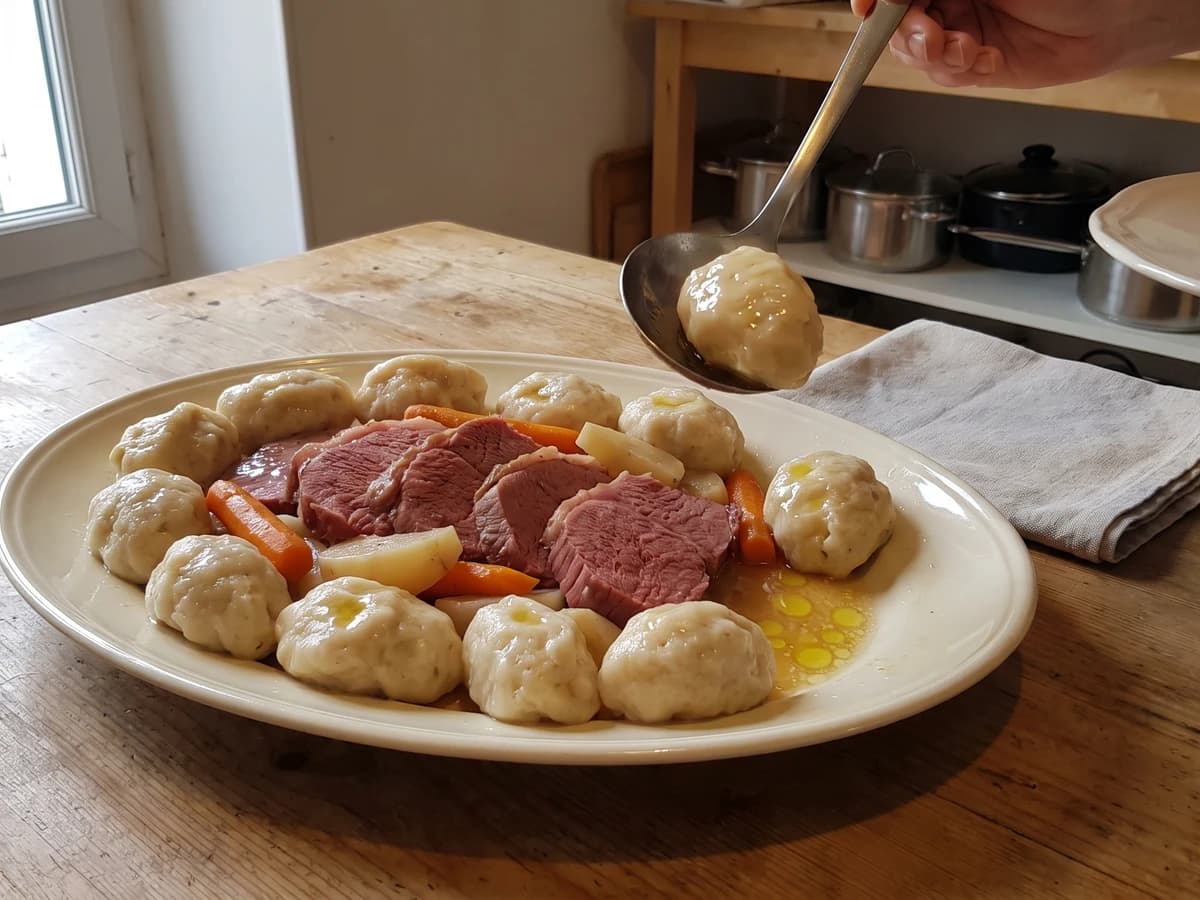
Suet Dumpling
Boulettes au suif, poached beside salt beef, turn equal weights of flour and finely chopped suet into tender, rich dumplings. Keep the beef liquor at a bare tremble and the old garnish works beautifully at home.
A cooking platform built around craft, culture, and the stories behind what we eat.
Created by Chef Juliette
Based on No. 2145, Fèves à la Crème, from Le Guide Culinaire (1907) by Auguste Escoffier
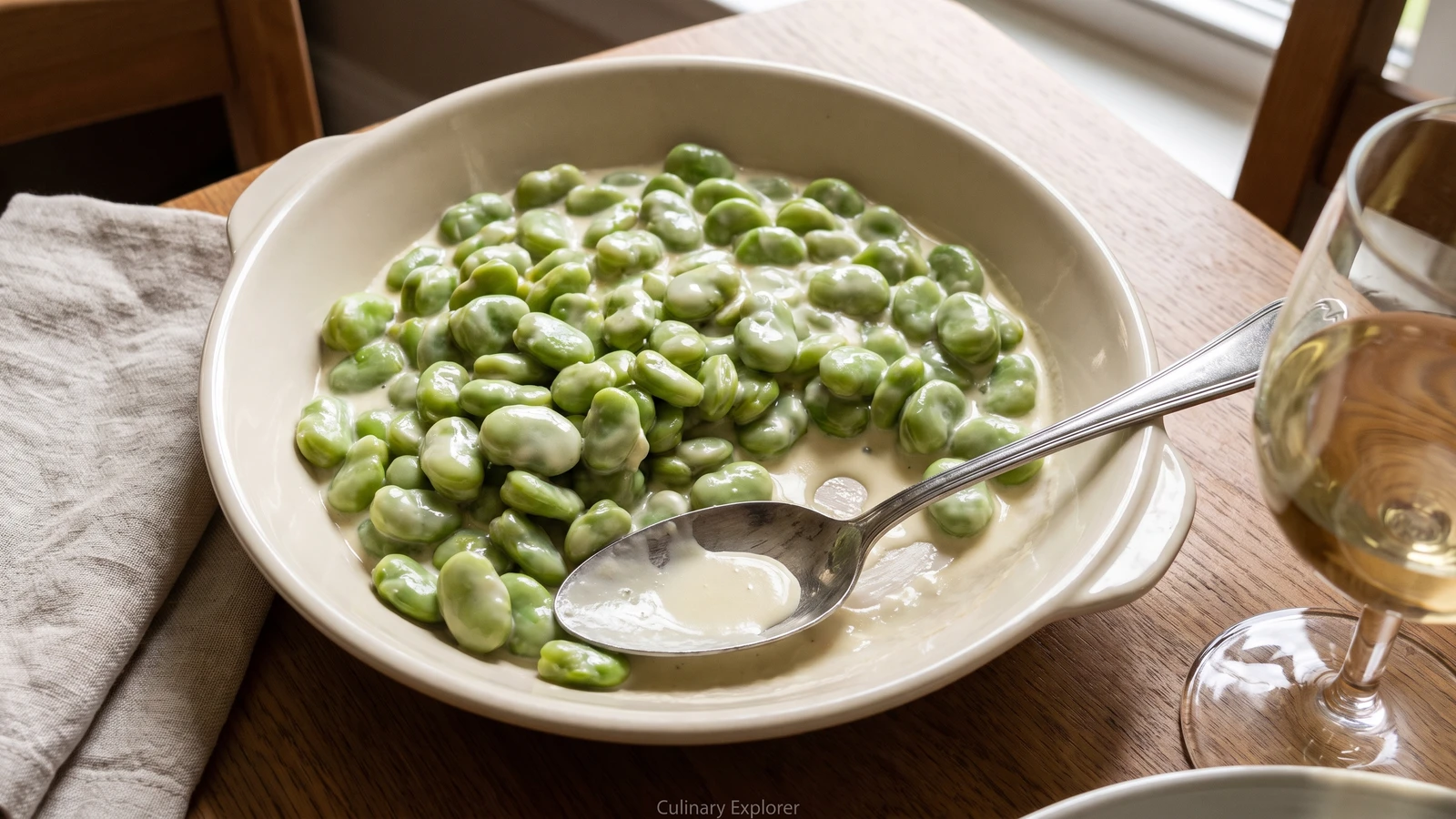
Fèves à la Crème proves how little a spring vegetable needs: broad beans peeled to their sweet green hearts, dried carefully, and folded through just enough thick fresh cream to cling.
Fèves à la Crème (broad beans bound with thick fresh cream) teaches the quiet art of liaison, binding a vegetable with just enough sauce to cling. One true thing before you touch a pan: the peeled beans must be dry. Water left from blanching turns three spoonfuls of cream into a puddle, while a dry bean takes on a thin ivory coat that lets its sweetness speak.
The source entry assumes the beans arrive dried and peeled, the sort of preparation a vegetable station quietly handed across to the saucier. There is no standing stockpot or salamander to replace here. For one cook, I keep its exact proportion, one pound of prepared beans to three tablespoons of thick fresh cream, and use a wide home sauté pan so the cream coats quickly without overcooking them. Repeated batches and holding pans are brigade scaffolding; peeling, drying, and that restrained ratio are the dish.
The finished fèves are tender, sweet, and glossy, each one green beneath a close veil of cream, never swimming in it. If moisture wins, ça se rattrape, and the method will show you how without punishing the beans. Guard the drying. That is the step that decides the dish.
Fèves à la crème belongs to cuisine bourgeoise, the household and small-dining-room register of the French canon, rather than to one provincial larder. Broad beans were cooked in France before common haricots arrived from the Americas, and classical kitchens refined them by slipping away the leathery skin and binding the tender centres at the last moment. The cream does not make the dish Norman; here it is a liaison, not a regional flag.
Quantity
Enough to yield 2¾ cups (650 ml / 1 lb / 454 g)
shelled, blanched, peeled, dried, and weighed as directed
Quantity
2 teaspoons (10 ml / 12 g)
divided
Quantity
3 tablespoons (45 ml / 45 g)
| Ingredient | Quantity |
|---|---|
| fresh broad beansshelled, blanched, peeled, dried, and weighed as directed | Enough to yield 2¾ cups (650 ml / 1 lb / 454 g) |
| fine sea saltdivided | 2 teaspoons (10 ml / 12 g) |
| crème fraîche épaisse (thick fresh cream) | 3 tablespoons (45 ml / 45 g) |
Bring a large saucepan of water to a lively boil. Reserve a small pinch of the salt for finishing and add the rest to the water. Drop in the shelled broad beans and blanch until their pale skins wrinkle and the beans within are barely tender, about 2 minutes for young beans or up to 4 minutes for larger ones. Scoop them immediately into a bowl of cold water. Cooling stops the cooking before the tender centres soften too far.
Drain the beans, nick each pale outer skin at its seam, and press gently so the bright green centre slips free. Weigh out 1 pound, then spread the peeled beans across a clean kitchen towel in one layer. Pat them carefully and leave them uncovered for 10 minutes, turning once, until no beads of water remain. Peeling is the work, and the sweetness underneath pays for it. Drying is just as essential because cream binds to the bean, not to blanching water.
Set a wide sauté pan over low heat. Add the dry beans and turn them gently for about 30 seconds, just until evenly warm with no moisture gathering on the pan floor. Add all 3 tablespoons of crème fraîche and fold with a silicone spatula for 1 to 2 minutes, until the cream relaxes and then clings as a thin, glossy ivory film. Keep the heat gentle so the peeled beans stay whole. If the cream remains watery, lift out the beans with a slotted spoon, reduce the cream alone for 30 to 60 seconds, then return them. Ça se rattrape. If it tightens too far, remove the pan from the heat and fold in 1 teaspoon of hot water.
Taste and add the reserved pinch of salt only if the beans need it. Spoon the fèves into a warmed shallow serving dish, taking every trace of the cream with them. Serve immediately, while the beans are tender and distinct and the sauce still holds its quiet gloss. À table!
1 serving (about 125g)
Culinary guides, cultural storytelling, and the editorial depth that makes cooking meaningful.
Discover Culinary ExplorerChef Juliette
Boulettes au suif, poached beside salt beef, turn equal weights of flour and finely chopped suet into tender, rich dumplings. Keep the beef liquor at a bare tremble and the old garnish works beautifully at home.

Chef Juliette
Bread, flour, frangipane, and rice become four cool, supple panades for binding forcemeats, each changing body and flavor while preserving tenderness. The finest Mousselines need none, and knowing that distinction is the lesson.

Chef Juliette
Panade au pain is bread, milk, salt, heat, and attention: stir until the paste releases cleanly, butter it against a skin, and you have the quiet binder behind tender French farces.

Chef Juliette
Panade de farine teaches the drying stroke behind pâte à choux: flour meets boiling buttered water, then stays over the fire until the paste gathers, smooths, and quits the pan cleanly.