Chef Juliette
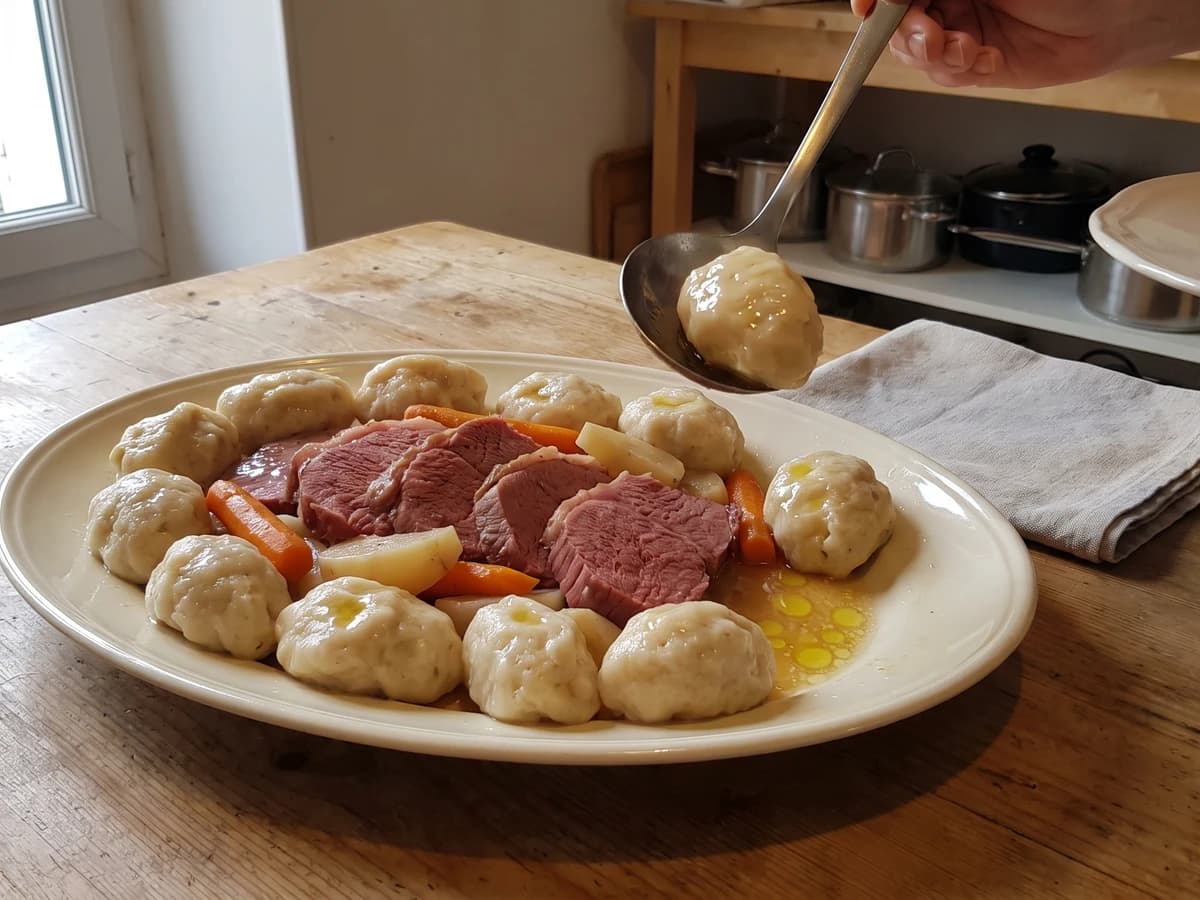
Suet Dumpling
Boulettes au suif, poached beside salt beef, turn equal weights of flour and finely chopped suet into tender, rich dumplings. Keep the beef liquor at a bare tremble and the old garnish works beautifully at home.
A cooking platform built around craft, culture, and the stories behind what we eat.

Created by Chef Juliette
Based on No. 2144, Fèves au Beurre, from Le Guide Culinaire (1907) by Auguste Escoffier
Fèves au Beurre turns one severe rule into silk: dry the peeled beans over fierce heat, then leave the fire before the butter enters, so it clings in a green-gold gloss instead of splitting.
Fèves au Beurre (broad beans finished with butter) teaches a rule that travels through the classical vegetable repertoire: loose water must leave before finishing fat arrives. Dry the beans over fierce heat, then monter au beurre, finish with butter, only after the pan leaves the fire. The beans should remain bright and tender beneath a butter-gold sheen. The one true thing is simple: heat dries the beans, but it must never fry the finishing butter.
The original entry assumed a vegetable station with blanched, peeled beans waiting impeccably drained and a fierce burner ready for service. It needed no saucier, stockpot, or salamander. At home, the honest equivalent is a saucepan for blanching, your fingers for slipping the skins, and one wide skillet that lets moisture escape. The hidden preparation is made explicit here, and the quantity is scaled to one pound of peeled beans, enough for four, while the original ratio of three ounces of butter per pound remains untouched. Large-batch shelling and holding beans for service are brigade scaffolding; fierce drying and the off-fire butter finish are the dish.
Keep the pan moving while the beans dry. The moment they stop sputtering and begin to hiss, take them off the burner before the first piece of butter goes in. That change in sound decides everything.
Fèves au beurre has no honest claim to a single province; its home is cuisine bourgeoise across northern and central France and the vegetable stations of Parisian classical kitchens. From household gardens it entered the codified repertoire as an entremets, a vegetable course in which exact handling carried more weight than added flavorings. The name can mislead: the beans are not fried in butter, but dried first and given their butter as a final liaison after the pan leaves the fire.
Quantity
About 2¾ cups (650 ml / 454 g) after peeling, from roughly 3 lb (1.36 kg) fresh beans in pods or 1¼ lb (570 g) frozen shelled beans
shelled if fresh, blanched, inner skins removed, drained thoroughly, and weighed after draining
Quantity
6 tablespoons (90 ml / 85 g)
divided into 6 pieces
Quantity
1 tablespoon (15 ml / 18 g) for blanching, plus up to ¼ teaspoon (1 ml / 1.5 g) for finishing
Quantity
1 teaspoon (5 ml / 5 g)
reserved only for rescuing split butter
| Ingredient | Quantity |
|---|---|
| broad beans (fava beans)shelled if fresh, blanched, inner skins removed, drained thoroughly, and weighed after draining | About 2¾ cups (650 ml / 454 g) after peeling, from roughly 3 lb (1.36 kg) fresh beans in pods or 1¼ lb (570 g) frozen shelled beans |
| cold unsalted butterdivided into 6 pieces | 6 tablespoons (90 ml / 85 g) |
| fine sea salt | 1 tablespoon (15 ml / 18 g) for blanching, plus up to ¼ teaspoon (1 ml / 1.5 g) for finishing |
| cold water (optional)reserved only for rescuing split butter | 1 teaspoon (5 ml / 5 g) |
Bring a large saucepan of water to a rolling boil and add the tablespoon of salt. Drop in the shelled broad beans and cook until the grey-green skins loosen and the beans inside are just tender without chalkiness, 2 to 4 minutes for fresh beans or 1 to 2 minutes for frozen. Bite one to judge it. The fierce pan work later dries and warms the beans; it does not replace proper cooking. Lift them immediately into very cold water to stop the cooking.
Pinch a small opening in each loosened skin and press gently so the bright green bean slips free. Drain the peeled beans in a colander, then spread them in one layer over clean towels for at least 10 minutes. Pat the tops gently and weigh out 1 pound. They must be genuinely dry on the surface, because clinging water dilutes the butter and turns the finish milky.
Heat a wide, dry sauté pan over high heat until properly hot. Add the beans with no fat and toss them continuously for 1 to 3 minutes, shaking the pan so every bean meets the hot surface. Fierce fire means rapid evaporation, not browning. The beans are ready when no moisture beads beneath them and their sound changes from a wet sputter to a dry, quiet hiss. If they begin to colour, lift the pan at once and keep tossing.
Move the pan completely off the burner and wait 15 seconds. Add 5 pieces of cold butter one at a time, tossing gently after each addition until the butter turns opaque, coats the beans, and gathers them in a butter-gold gloss. Add the final piece and toss again. The stored heat in the pan is enough; direct flame drives off the butter's water and leaves clear fat pooling around the beans. If that happens, ça se rattrape: tip everything immediately into a cool bowl, add the teaspoon of cold water and the final reserved piece of butter, then toss until the coating comes back together. Do not return it to the heat.
Taste a bean and add only as much finishing salt as it needs. Turn the Fèves au Beurre into a warm shallow serving dish, scraping every spoonful of mounted butter over them. Once finished, the beans should go directly to the table; holding or reheating risks splitting the coating. À table!
1 serving (about 130g)
Culinary guides, cultural storytelling, and the editorial depth that makes cooking meaningful.
Discover Culinary ExplorerChef Juliette
Boulettes au suif, poached beside salt beef, turn equal weights of flour and finely chopped suet into tender, rich dumplings. Keep the beef liquor at a bare tremble and the old garnish works beautifully at home.

Chef Juliette
Bread, flour, frangipane, and rice become four cool, supple panades for binding forcemeats, each changing body and flavor while preserving tenderness. The finest Mousselines need none, and knowing that distinction is the lesson.

Chef Juliette
Panade au pain is bread, milk, salt, heat, and attention: stir until the paste releases cleanly, butter it against a skin, and you have the quiet binder behind tender French farces.

Chef Juliette
Panade de farine teaches the drying stroke behind pâte à choux: flour meets boiling buttered water, then stays over the fire until the paste gathers, smooths, and quits the pan cleanly.