Chef Juliette
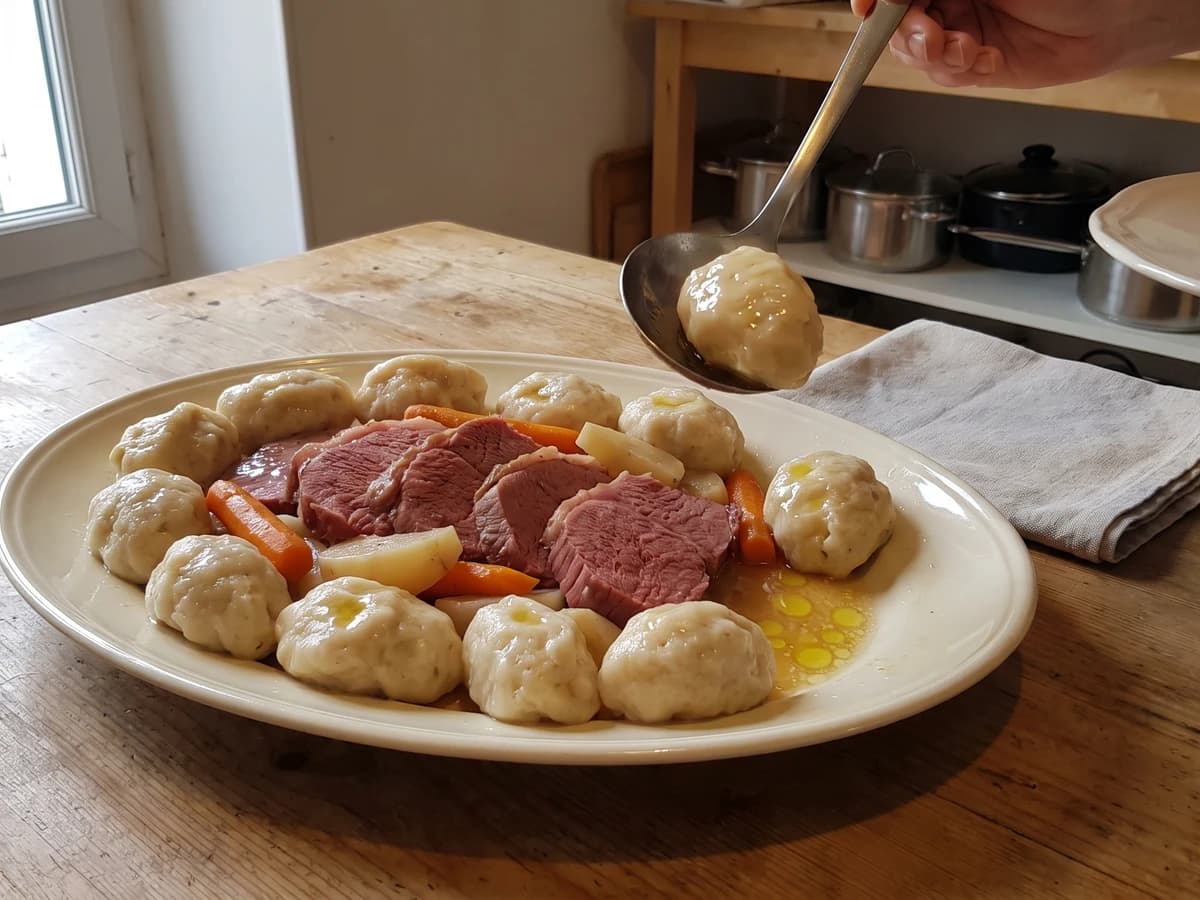
Suet Dumpling
Boulettes au suif, poached beside salt beef, turn equal weights of flour and finely chopped suet into tender, rich dumplings. Keep the beef liquor at a bare tremble and the old garnish works beautifully at home.
A cooking platform built around craft, culture, and the stories behind what we eat.
Created by Chef Juliette
Based on No. 2137, Subrics d’Épinards, from Le Guide Culinaire (1907) by Auguste Escoffier
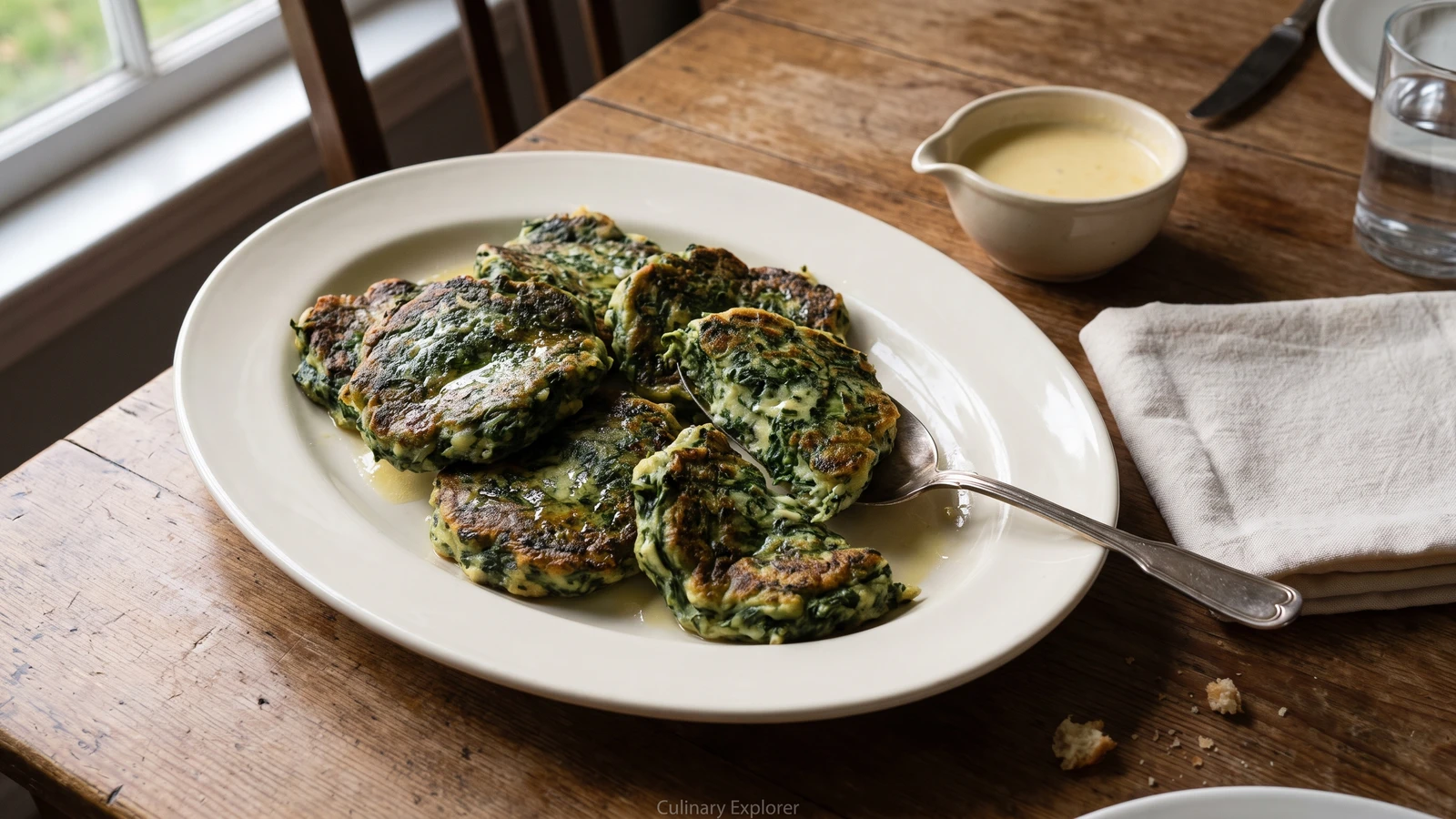
Spoonfuls of butter-dried spinach, reduced Béchamel, cream and egg, fried apart in clarified butter until bronzed at the edges and tender within. The pan is quick; drying the spinach is the whole lesson.
Subrics d’Épinards (spooned spinach fritters) teach binding by reduction, not by piling in flour. Before you touch the pan, know the one true thing: the spinach must be thoroughly dry. Water turns the reduced Béchamel and eggs loose, while dry leaves hold a tender centre beneath a thin, butter-bronzed face.
The original entry assumes a saucier had very reduced Béchamel ready, another sauce held warm for service, and an omelet pan fed with clarified butter. At home, the honest equivalents are finished Béchamel and cream sauce made ahead, a 10-inch skillet, and a four-person batch based on one pound of cooked, squeezed spinach. A second spoon replaces the cook's finger for pushing each portion into the hot fat, which keeps your hand safely back without changing the shape. The saucier and separate service pots were brigade scaffolding; the reduced binder, egg-rich ratio and clarified-butter frying are the dish, so those stay.
Once the mixture is cool and compact, the frying is almost cheeky: spoon it into very hot clarified butter, keep each subric apart, wait one minute and turn once. If a test spoonful spreads, chill the bowl before frying the rest. Ça se rattrape. Dry the spinach until the pan shows no wet streak before you add a single egg; that is the step that decides everything.
Subrics belong to the classical Parisian table and the wider French repertoire, not to a single provincial larder; cooks used the form for spinach, potatoes, rice and other cooked preparations that could be bound and spoon-fried. They moved easily between grand kitchens and cuisine bourgeoise because their shape required no mould, only a spoon and a pan of butter. A subric is not a breaded croquette: its exterior is the mixture itself, coloured directly in the fat, which is why dryness and binding matter more than a coating.
Quantity
about 16 packed cups (3.8 L / 900 g)
tough stems removed; enough to yield 1 lb (450 g) cooked and squeezed dry
Quantity
2 tablespoons (30 ml / 28 g)
Quantity
6 tablespoons plus 1 teaspoon (95 ml / 100 g)
cooled
Quantity
2 tablespoons (30 ml / 30 g)
Quantity
1
Quantity
3
Quantity
1 tablespoon plus 1 teaspoon (20 ml / 24 g)
divided between the blanching water and spinach mixture
Quantity
1/4 teaspoon (1.25 ml / 0.6 g)
Quantity
1/8 teaspoon (0.6 ml / 0.25 g)
Quantity
3/4 cup (180 ml / 160 g), plus more if needed
Quantity
3/4 cup (180 ml / 185 g)
warmed for serving
| Ingredient | Quantity |
|---|---|
| fresh spinachtough stems removed; enough to yield 1 lb (450 g) cooked and squeezed dry | about 16 packed cups (3.8 L / 900 g) |
| unsalted butter | 2 tablespoons (30 ml / 28 g) |
| very reduced Béchamel saucecooled | 6 tablespoons plus 1 teaspoon (95 ml / 100 g) |
| thick cream | 2 tablespoons (30 ml / 30 g) |
| large egg | 1 |
| large egg yolks | 3 |
| fine saltdivided between the blanching water and spinach mixture | 1 tablespoon plus 1 teaspoon (20 ml / 24 g) |
| finely ground white pepper | 1/4 teaspoon (1.25 ml / 0.6 g) |
| freshly grated nutmeg | 1/8 teaspoon (0.6 ml / 0.25 g) |
| clarified butter | 3/4 cup (180 ml / 160 g), plus more if needed |
| cream saucewarmed for serving | 3/4 cup (180 ml / 185 g) |
Bring a 6-quart pot of water to a strong boil and add 1 tablespoon of the measured salt. Blanch the spinach in two or three batches until collapsed and deep green, about 45 to 60 seconds per batch. Transfer it immediately to cold water, drain well, then gather it in a clean towel and squeeze firmly until no more water runs. Weigh out 1 lb (450 g) of cooked spinach and chop it finely.
Melt the unsalted butter in a wide skillet over medium heat. Add the chopped spinach and turn it steadily for 6 to 8 minutes, breaking up compacted clumps, until the leaves separate and the pan shows no wet streak when you draw the spatula across it. If moisture still gathers, keep cooking. Ça se rattrape now, before the eggs enter. Take the pan from the heat, spread the spinach out and let it cool until it is no longer hot enough to make the mixture hiss.
Whisk the cooled, very reduced Béchamel with the thick cream, whole egg, three yolks, remaining teaspoon of salt, white pepper and nutmeg. Fold this binder thoroughly into the spinach away from the heat. The mixture should drop from a spoon as a compact mound and relax slowly, not pour. If it slumps at once, chill it for 15 minutes. If it remains loose, stir it in a clean saucepan over the lowest heat only until the egg begins to give it body, then spread it out and cool again. Ça se rattrape, and no breadcrumbs are needed.
Wipe the 10-inch skillet clean and add enough clarified butter to stand about 1/8 inch (3 mm) deep. Heat it to 350°F to 355°F (175°C to 180°C). Without a thermometer, test with the tip of a teaspoon of mixture: it should fizz vigorously the instant it lands, yet the edges should not darken before the centre sets. Clarified butter matters because ordinary butter's milk solids would burn before the batches were finished.
Take up a rounded tablespoon of spinach mixture, about 1 ounce (25 to 30 g), and push it gently into the butter with the back of a second spoon. Make five or six at a time, leaving at least 1 inch (2.5 cm) between them so their edges fry rather than join. Cook for about 1 minute, until the undersides are golden and firm enough to lift, then turn each subric once with a thin spatula or fork. Colour the second side for another 45 to 60 seconds; the centre should be set and tender, with no liquid egg remaining. If the test subric spreads, remove it, return the butter to temperature and chill the remaining mixture before continuing.
Lift the finished subrics onto a rack or absorbent paper and hold them in a warm oven only while the remaining batches cook, no longer than 10 minutes. Arrange them loosely in a warmed shallow serving dish so their bronzed surfaces remain distinct. Bring the warm cream sauce to the table separately, letting each person spoon it beside the subrics rather than burying their colour. À table!
1 serving (about 230g)
Culinary guides, cultural storytelling, and the editorial depth that makes cooking meaningful.
Discover Culinary ExplorerChef Juliette
Boulettes au suif, poached beside salt beef, turn equal weights of flour and finely chopped suet into tender, rich dumplings. Keep the beef liquor at a bare tremble and the old garnish works beautifully at home.

Chef Juliette
Bread, flour, frangipane, and rice become four cool, supple panades for binding forcemeats, each changing body and flavor while preserving tenderness. The finest Mousselines need none, and knowing that distinction is the lesson.

Chef Juliette
Panade au pain is bread, milk, salt, heat, and attention: stir until the paste releases cleanly, butter it against a skin, and you have the quiet binder behind tender French farces.

Chef Juliette
Panade de farine teaches the drying stroke behind pâte à choux: flour meets boiling buttered water, then stays over the fire until the paste gathers, smooths, and quits the pan cleanly.