Chef Juliette
Suet Dumpling
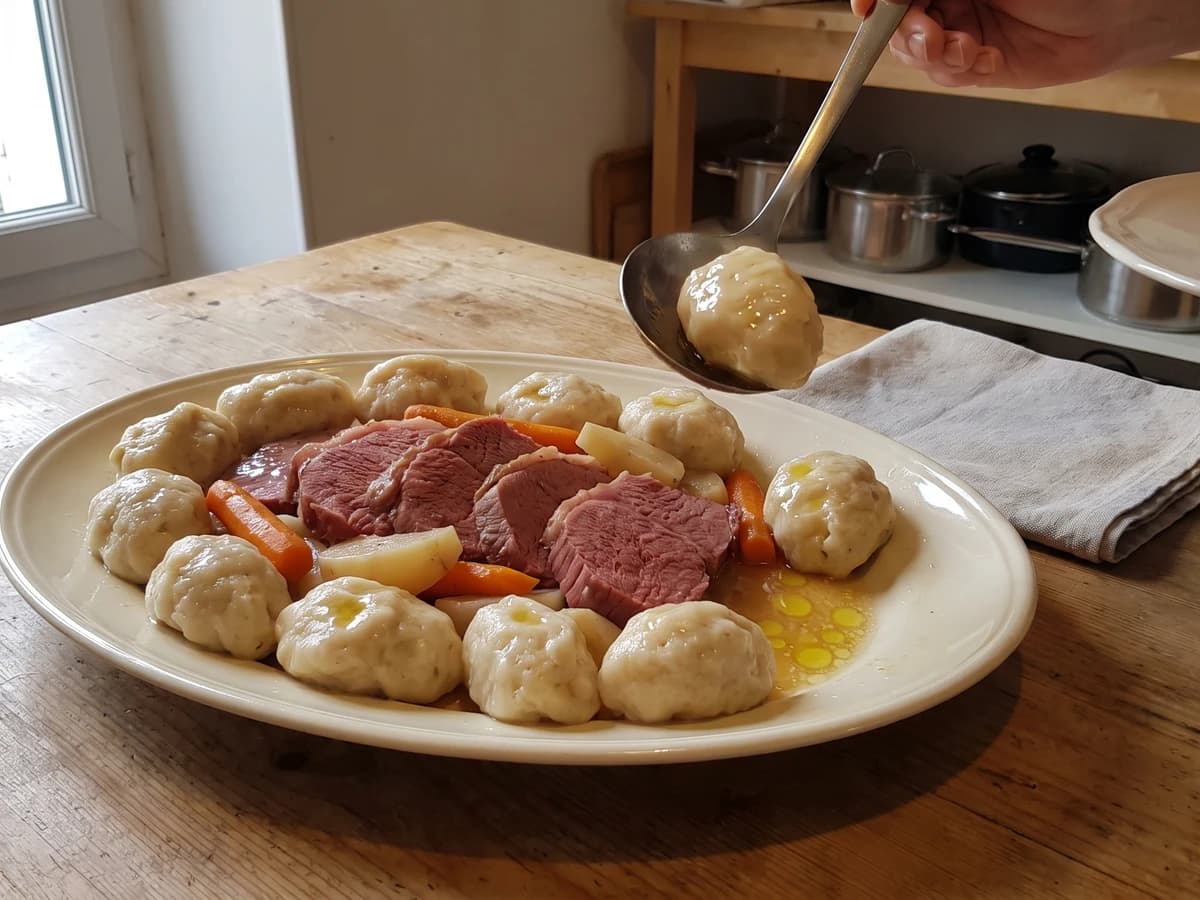
Boulettes au suif, poached beside salt beef, turn equal weights of flour and finely chopped suet into tender, rich dumplings. Keep the beef liquor at a bare tremble and the old garnish works beautifully at home.
A cooking platform built around craft, culture, and the stories behind what we eat.

Created by Chef Juliette
Based on No. 2096, White Cabbages (Choux Blancs), from Le Guide Culinaire (1907) by Auguste Escoffier
Firm white cabbage asks for respect, not force: slice it fine, blanch it first, then let butter, a little fond, and a covered pan turn it tender with bronzed edges.
Choux blancs étuvés au beurre (white cabbage pan-braised in butter) teaches a useful limit: a firm leaf will not become a tender one because you wish it so. White cabbage is built for choucroute, and the old entry says so plainly. When you cook it fresh, the one true thing is this: slice it finely and blanch it before butter ever reaches the pan, or the outside browns while the core remains obstinate.
This entry assumes a preserving larder with white cabbage already headed toward choucroute, not a saucier on staff, a stock never off the fire, or a salamander. It permits one extreme exception, braising the cabbage like a Savoy, so that is the route translated here. A brigade's broad rondeau and quantities for service are scaffolding; a 12-inch lidded skillet and one small head do the same work for four. We blanch, sauté for color, then étuver, a covered pan-braise, with very little water. We do not counterfeit fermentation with vinegar, because choucroute is not a shortcut.
The finished cabbage should be tender through its ribs, bronze at a few edges, and glossy with butter rather than swimming in it. If the pan dries before the leaf yields, add a spoonful of water and cover it again. Ça se rattrape. Cut every ribbon about 5 mm wide; that thin, even cut is the step that decides the plate.
White cabbage belongs especially to the preserving larder of Alsace, where firm heads are finely shredded, salted, and fermented into choucroute. The word first names the fermented cabbage itself, before it names choucroute garnie, the generous preparation cooked with pork and sausages. Classical kitchens rarely treated white cabbage like tender Savoy because its dense leaves resist gentle braising, making this pan-braise the admitted exception rather than a rival regional tradition.
Quantity
1 small head, about 10 loosely packed cups (2.4 L / 680 g) once sliced
quartered, cored, and cut into 5 mm ribbons
Quantity
8 cups (1.9 L / 1.9 kg)
Quantity
1 tablespoon plus ½ teaspoon (22.5 ml / 21 g)
divided
Quantity
3 tablespoons (45 ml / 42 g)
divided
Quantity
¼ cup (60 ml / 60 g), plus more if needed
Quantity
¼ teaspoon (1.25 ml / 0.6 g)
| Ingredient | Quantity |
|---|---|
| white cabbagequartered, cored, and cut into 5 mm ribbons | 1 small head, about 10 loosely packed cups (2.4 L / 680 g) once sliced |
| water for blanching | 8 cups (1.9 L / 1.9 kg) |
| fine sea saltdivided | 1 tablespoon plus ½ teaspoon (22.5 ml / 21 g) |
| unsalted butterdivided | 3 tablespoons (45 ml / 42 g) |
| water for pan-braising | ¼ cup (60 ml / 60 g), plus more if needed |
| freshly ground black pepper | ¼ teaspoon (1.25 ml / 0.6 g) |
Pull away any damaged outer leaves, quarter the cabbage through its base, and cut out the hard core. Slice the leaves crosswise into even ribbons about 5 mm wide. Keep them fine and consistent: thick pieces remain stubborn long after the thinner leaves have softened.
Bring the 8 cups of water to a full boil in a large saucepan and add 1 tablespoon of the salt. Drop in the cabbage, press it beneath the water, and blanch for 4 to 5 minutes, until the thickest ribbons bend readily but still retain some bite. If they snap rather than bend, give them another minute. If they have gone too soft, drain them immediately and rinse briefly under cold water to stop the cooking. Ça se rattrape: shorten the covered braise later.
Drain the cabbage in a colander, shake it well, then spread it over a clean towel and blot away the surface water. Take this seriously. Wet cabbage dilutes the butter and simmers in its own water, while a dry surface can take on the butter-gold edges the dish needs.
Melt 2 tablespoons of the butter in a wide lidded skillet over medium-high heat. When its foam subsides, add the cabbage, the remaining ½ teaspoon salt, and the pepper. Toss once, spread the ribbons across the pan, and leave them undisturbed for 2 minutes. Turn and repeat until scattered edges are bronze and a light fond, the browned film carrying the cabbage's flavor, has formed on the pan floor, about 5 to 6 minutes altogether.
Pour in the ¼ cup water and scrape the fond into it, then cover the skillet and lower the heat. Étuver means to cook gently in a covered pan with very little liquid; hold the cabbage at a quiet simmer for 8 to 10 minutes, turning once, until tender but not collapsed. If the pan dries before the thick ribs yield, add water 1 tablespoon at a time and cover again. If the cabbage is tender but watery, remove the lid and boil the excess away. Either failure can be rescued.
Uncover the pan and let any final moisture evaporate. Take it off the heat, add the remaining tablespoon of butter, and toss until the cooking juices and butter cling in a light gloss rather than pooling beneath the cabbage. If the butter separates, add a teaspoon of water and toss again to bring it together. Taste for salt, spoon the choux blancs generously into a warm serving dish, and bring them straight to the table. À table!
1 serving (about 170g)
Culinary guides, cultural storytelling, and the editorial depth that makes cooking meaningful.
Discover Culinary ExplorerChef Juliette
Boulettes au suif, poached beside salt beef, turn equal weights of flour and finely chopped suet into tender, rich dumplings. Keep the beef liquor at a bare tremble and the old garnish works beautifully at home.

Chef Juliette
Bread, flour, frangipane, and rice become four cool, supple panades for binding forcemeats, each changing body and flavor while preserving tenderness. The finest Mousselines need none, and knowing that distinction is the lesson.

Chef Juliette
Panade au pain is bread, milk, salt, heat, and attention: stir until the paste releases cleanly, butter it against a skin, and you have the quiet binder behind tender French farces.

Chef Juliette
Panade de farine teaches the drying stroke behind pâte à choux: flour meets boiling buttered water, then stays over the fire until the paste gathers, smooths, and quits the pan cleanly.