Chef Juliette
Suet Dumpling
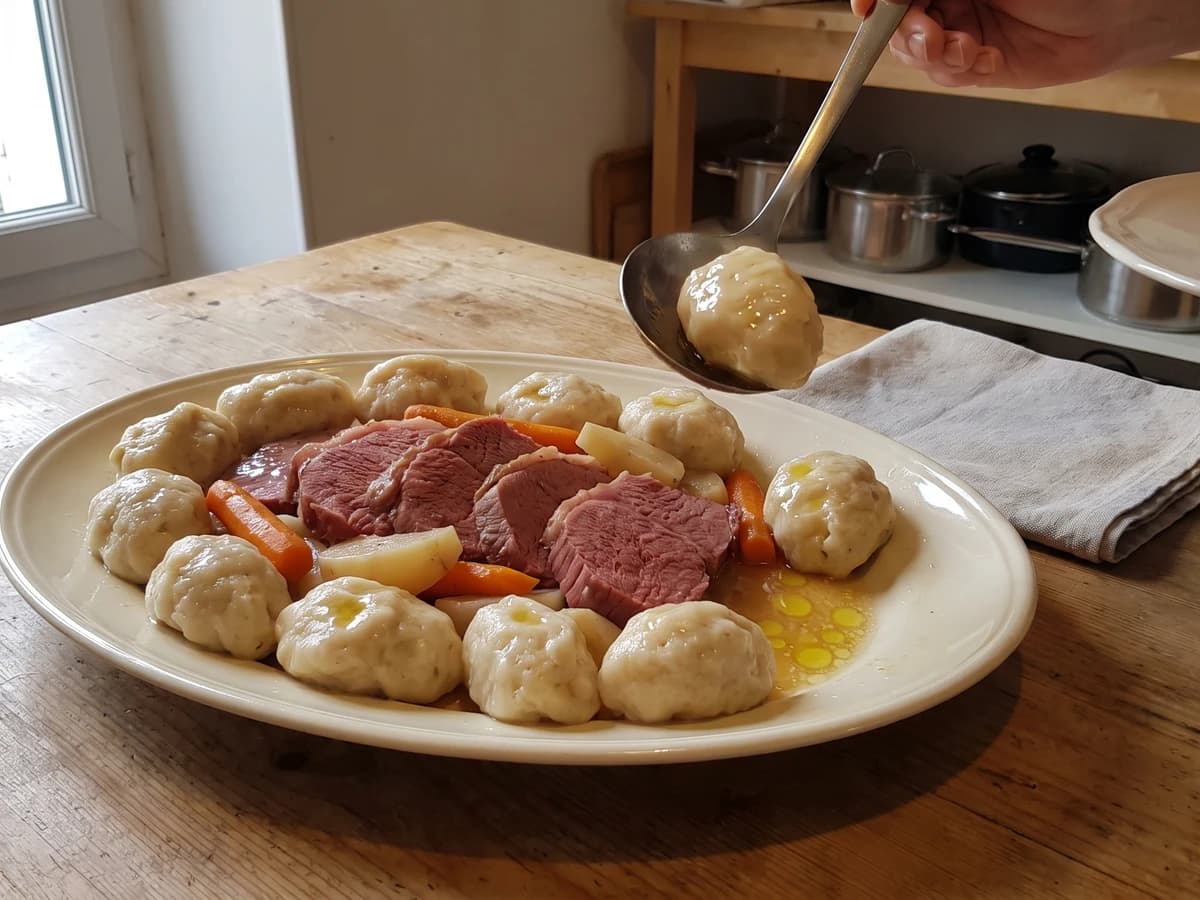
Boulettes au suif, poached beside salt beef, turn equal weights of flour and finely chopped suet into tender, rich dumplings. Keep the beef liquor at a bare tremble and the old garnish works beautifully at home.
A cooking platform built around craft, culture, and the stories behind what we eat.
Created by Chef Juliette
Based on No. 2088, Chicory, Endive and Belgian Chicory (Chicorée Frisée, Escarole, Endive), from Le Guide Culinaire (1907) by Auguste Escoffier
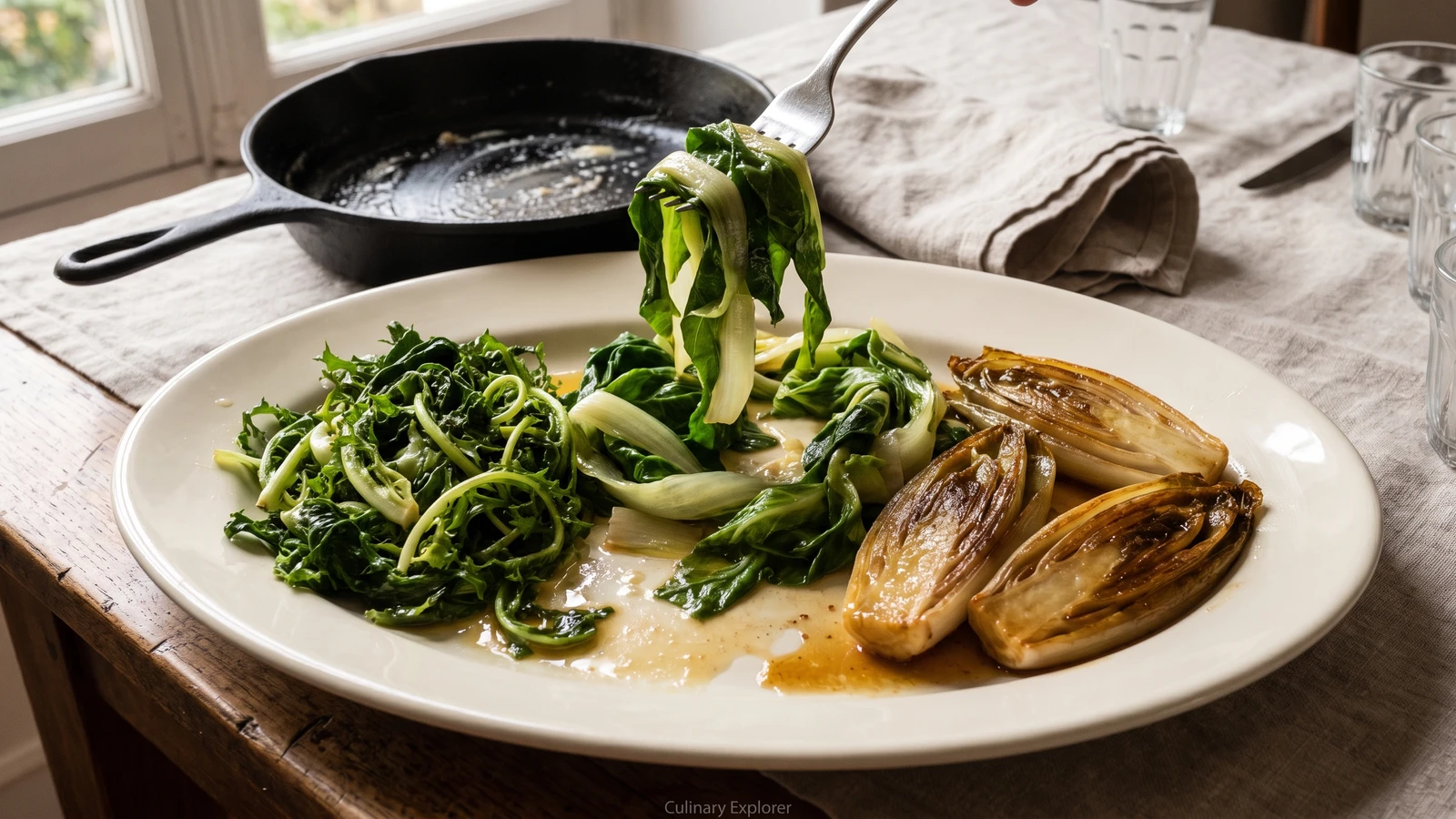
Frisée, escarole, and Belgian endive share a family, not a method: two leafy greens blanched and butter-sautéed, one tight pale head gently braised until bittersweet and glazed.
Chicorée frisée, escarole et endive belge (curled chicory, Batavia chicory, and Belgian endive) teaches one true thing before any heat: these are related bitter vegetables, not interchangeable names. Frisée and escarole are open leafy heads. Belgian endive is the tight, pale head formed by forcing a chicory root in darkness, and only that last one receives the distinct endive treatment here.
The classical entry is a market classification, not a saucier's formula. It assumes the cook recognizes the names on sight, and it calls for neither a stockpot kept on the fire nor a salamander. The honest home translation is deliberately spare: blanch and butter-sauté the two leafy chicories, then gently braise the compact heads. A snug skillet lid replaces a service cartouche, and one pan used in sequence replaces several pans on the line. That is brigade scaffolding, and it can go. The gentle braise and the dry final sauté are the dish, and they stay. One cook, one stove, one evening.
Drying matters most. If frisée or escarole carries blanching water into the butter, it simmers and turns dull instead of becoming supple and glossy. Press it well. If the Belgian endive colours before its core yields, add a spoonful of water and cover it again. Ça se rattrape.
In the market gardens of Flanders, broad open-air chicory resembling escarole supplied the roots that Brussels growers forced in darkness into compact pale heads. The classical glossary calls escarole Batavia chicory, while frisée is the curled chicory that English markets often mislabeled endive. That confusion matters in the kitchen: frisée and escarole behave as leafy greens, but the Brussels head earns its own endive treatment.
Quantity
1 medium head, about 12 ounces (340 g)
leaves separated and tough outer ribs removed
Quantity
1 medium head, about 1 pound (450 g)
cut crosswise into 2-inch (5 cm) ribbons
Quantity
4 small heads, about 1¼ pounds (570 g)
trimmed and halved lengthwise
Quantity
6 tablespoons (90 ml / 85 g)
divided
Quantity
3 quarts (2.8 L / 2.8 kg)
Quantity
1 tablespoon (15 ml / 18 g)
Quantity
½ cup (120 ml / 120 g)
Quantity
1 tablespoon (15 ml / 15 g)
Quantity
½ teaspoon (2.5 ml / 2 g)
Quantity
¾ teaspoon (3.75 ml / 4.5 g)
divided
Quantity
¼ teaspoon (1.25 ml / 0.6 g)
divided
| Ingredient | Quantity |
|---|---|
| chicorée frisée (curled chicory)leaves separated and tough outer ribs removed | 1 medium head, about 12 ounces (340 g) |
| escarole (Batavia chicory)cut crosswise into 2-inch (5 cm) ribbons | 1 medium head, about 1 pound (450 g) |
| Belgian endivestrimmed and halved lengthwise | 4 small heads, about 1¼ pounds (570 g) |
| unsalted butterdivided | 6 tablespoons (90 ml / 85 g) |
| water for blanching | 3 quarts (2.8 L / 2.8 kg) |
| fine sea salt for blanching | 1 tablespoon (15 ml / 18 g) |
| water for braising | ½ cup (120 ml / 120 g) |
| fresh lemon juice | 1 tablespoon (15 ml / 15 g) |
| granulated sugar | ½ teaspoon (2.5 ml / 2 g) |
| fine sea saltdivided | ¾ teaspoon (3.75 ml / 4.5 g) |
| freshly ground white pepperdivided | ¼ teaspoon (1.25 ml / 0.6 g) |
Set the three vegetables apart before washing them. Frisée has fine curled leaves, escarole has broad green leaves and firm pale ribs, and Belgian endive forms a compact ivory head with yellow tips. Wash the two leafy heads in several changes of cold water because grit hides near their bases. Wipe the Belgian endives instead, trim only the browned root surface, and halve them through the core so their layers remain together.
Bring the blanching water and its tablespoon of salt to a full boil. Add the frisée first and blanch it for 60 to 90 seconds, just until the curls collapse but retain their green colour. Lift it into a colander and cool it under cold running water. Return the water to the boil, add the escarole, and blanch for 2 to 3 minutes, until its ribs bend without becoming limp; drain and cool it in the same way. Keep the greens separate.
Gather each blanched green in a clean towel and press firmly until no water runs from it, then loosen the leaves with your fingers. This is the step that decides the sauté: wet chicory dilutes the butter and simmers in its own water, while properly dried leaves take on a clear gloss. If the greens still feel sodden, press them again. Patience, not extra heat.
Melt 3 tablespoons of the butter in a 12-inch lidded skillet over medium heat. Lay in the Belgian endives cut-side down and season them with ¼ teaspoon of the finishing salt. Add the braising water, lemon juice, and sugar, then cover and lower the heat so the liquid barely trembles. Cook for 12 to 15 minutes, turning once, until a paring knife enters the thickest core without resistance.
Uncover the skillet and return the endives cut-side down. Raise the heat to medium and let the liquid reduce until the butter remains as a glossy glaze and the cut surfaces turn deep gold, about 5 to 7 minutes. If they begin browning before the cores are tender, add 2 tablespoons of water, cover again, and lower the heat. Ça se rattrape. Transfer the glazed endives to a warmed platter and cover loosely.
Wipe the skillet, melt 1½ tablespoons of butter over medium-high heat, and add the dried frisée. Season with ¼ teaspoon salt and half the white pepper, then turn the leaves through the butter for 2 to 3 minutes, until glossy and lightly curled at the edges. If water gathers in the pan, keep it uncovered and let that water cook away before judging the seasoning. Transfer the frisée to the platter without mixing it into the endive.
Melt the remaining 1½ tablespoons of butter in the same skillet. Add the escarole, the remaining ¼ teaspoon salt, and the remaining white pepper. Sauté for 3 to 4 minutes, turning until the broad leaves gleam and the pale ribs are tender but still hold their shape. Taste a rib, not only a leaf, because the rib tells you whether the escarole is ready.
Arrange the frisée, escarole, and Belgian endive in three distinct sections so the differences remain visible and useful. Spoon any buttery glaze from the skillet over the Belgian endive alone, then taste each chicory separately and correct the salt if needed. Serve at once beside roast chicken, pork, or a plain omelette. À table!
1 serving (about 285g)
Culinary guides, cultural storytelling, and the editorial depth that makes cooking meaningful.
Discover Culinary ExplorerChef Juliette
Boulettes au suif, poached beside salt beef, turn equal weights of flour and finely chopped suet into tender, rich dumplings. Keep the beef liquor at a bare tremble and the old garnish works beautifully at home.

Chef Juliette
Bread, flour, frangipane, and rice become four cool, supple panades for binding forcemeats, each changing body and flavor while preserving tenderness. The finest Mousselines need none, and knowing that distinction is the lesson.

Chef Juliette
Panade au pain is bread, milk, salt, heat, and attention: stir until the paste releases cleanly, butter it against a skin, and you have the quiet binder behind tender French farces.

Chef Juliette
Panade de farine teaches the drying stroke behind pâte à choux: flour meets boiling buttered water, then stays over the fire until the paste gathers, smooths, and quits the pan cleanly.