Chef Juliette
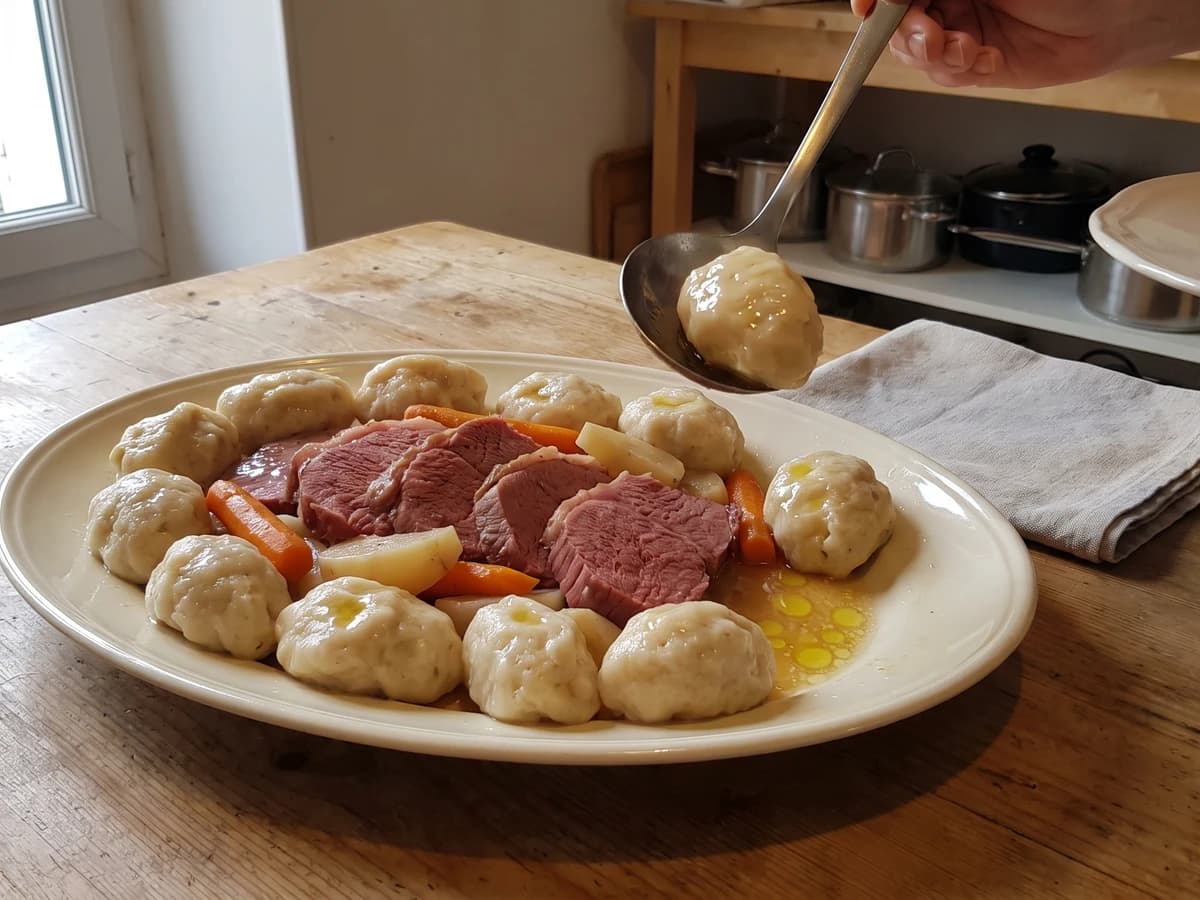
Suet Dumpling
Boulettes au suif, poached beside salt beef, turn equal weights of flour and finely chopped suet into tender, rich dumplings. Keep the beef liquor at a bare tremble and the old garnish works beautifully at home.
A cooking platform built around craft, culture, and the stories behind what we eat.
Created by Chef Juliette
Based on No. 2083, Morilles à la Poulette, from Le Guide Culinaire (1907) by Auguste Escoffier
Morels surrender their woodland liquor, then take it back through glossy sauce poulette: a lesson in reduction, restraint, and why the final butter emulsion must never meet a boil.
Morilles à la Poulette (morels in sauce poulette) teaches one true thing before you touch a pan: the cooking liquor given off by a morel belongs to the mushroom. Reduce it, return it, and the sauce tastes deeply of morels rather than merely of butter. Pour it away and no amount of richness restores what went down the sink.
The original entry assumed a saucier on staff, a stockpot never off the fire, and Morels (No. 2080) plus Poulette Sauce (No. 101) waiting as linked preparations. Your home equivalent is one pound of morels, one pint of finished sauce, and a warm serving timbale for four people. The station handoff and prolonged service holding are brigade scaffolding, so they go; the butter, lemon, reduced liquor, and off-fire finish are the dish, so they stay. Only the portion and organization have changed. One cook, one stove, one evening.
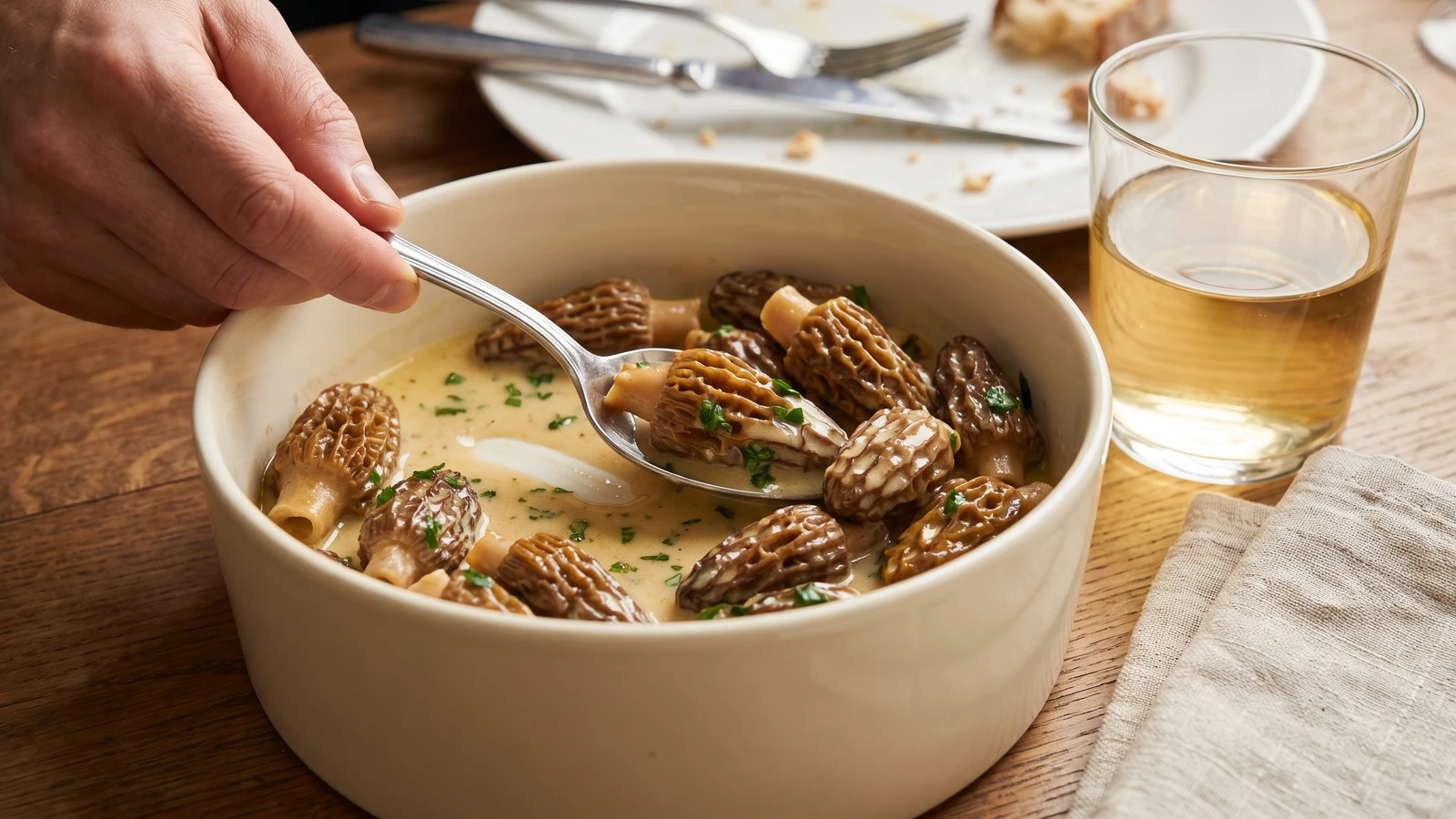
When it's right, the morels remain plump and deeply ridged beneath an ivory sauce that clings without smothering them, with chopped parsley giving the final green flicker. The decisive moment comes after the sauce is warm: add the reduced liquor and mushrooms gently, then keep the pan away from a boil. That restraint protects the butter finish.
Morilles à la Poulette belongs to the French classical service table, while its prized mushroom points east toward the Jura and Franche-Comté woodlands, where morels announce the spring season. Grand kitchens carried that woodland ingredient into bourgeois dining rooms through sauce poulette, whose name invites a false assumption: no chicken appears in this preparation, and the sauce was also served with vegetables and sheep’s trotters. The insistence on washing the honeycombed caps, then reducing and returning their cooking liquor, settles another old argument, because cleanliness costs no flavor when every aromatic drop comes back to the pan.
Quantity
1 batch Morels (No. 2080), prepared from about 8 loosely packed cups (1.9 L / 454 g) fresh morels
finished according to its own entry, with all cooking liquor reserved
Quantity
2 cups (480 ml / 500 g) Poulette Sauce (No. 101)
freshly made and warm
Quantity
1 teaspoon (5 ml / 1 g)
finely chopped
Quantity
1 tablespoon (15 ml / 15 g)
only if needed to rescue the sauce
| Ingredient | Quantity |
|---|---|
| Morels (No. 2080)finished according to its own entry, with all cooking liquor reserved | 1 batch Morels (No. 2080), prepared from about 8 loosely packed cups (1.9 L / 454 g) fresh morels |
| Poulette Sauce (No. 101)freshly made and warm | 2 cups (480 ml / 500 g) Poulette Sauce (No. 101) |
| flat-leaf parsleyfinely chopped | 1 teaspoon (5 ml / 1 g) |
| cool water (optional)only if needed to rescue the sauce | 1 tablespoon (15 ml / 15 g) |
Set a fine-mesh sieve over a small saucepan and pour in the finished Morels (No. 2080). Let their cooking liquor drain naturally for a minute, then transfer the mushrooms to a warm bowl. Do not press them against the sieve; the caps should remain plump, and pressure only bruises them while forcing stray grit into the liquor.
Bring the strained cooking liquor to a steady boil in the small saucepan and reduce it by about half. Watch the bubbles rather than the clock: they begin watery and quick, then grow broader as the morel juices concentrate and the butter shows a golden sheen. Stop before the butter browns or the pan begins to sizzle dry. The aroma should be distinctly woodland and lemon-bright, with enough liquid remaining to pour.
Place the Poulette Sauce (No. 101) in a wide sauté pan over the lowest heat and stir slowly until it loosens and gleams. Remove the pan as soon as the sauce is evenly warm; no bubble should break the surface because the finished butter emulsion cannot face a boil. If the sauce turns greasy or grainy, stop. Ça se rattrape: put 1 teaspoon of the cool water in a clean pan, then whisk in the broken sauce off the heat, one spoonful at a time, until it becomes smooth again.
Whisk the reduced morel liquor into the warm sauce a spoonful at a time, still off the heat. Add the drained morels and fold them through gently with a flexible spatula so the sauce enters their folds without crushing the caps. Return the pan to the lowest heat only if the mushrooms need warming, turning them for one or two minutes without allowing the sauce to bubble. It should be nappante (thick enough to coat), holding a glossy veil around every morel.
Warm a one-quart timbale or deep serving dish with hot water, dry it thoroughly, and spoon in the morels with all their sauce. Sprinkle the chopped parsley over the surface in a light, even pinch and serve at once. The timbale keeps this generous sauce gathered around the mushrooms, where it belongs. À table!
1 serving (about 210g)
Culinary guides, cultural storytelling, and the editorial depth that makes cooking meaningful.
Discover Culinary ExplorerChef Juliette
Boulettes au suif, poached beside salt beef, turn equal weights of flour and finely chopped suet into tender, rich dumplings. Keep the beef liquor at a bare tremble and the old garnish works beautifully at home.

Chef Juliette
Bread, flour, frangipane, and rice become four cool, supple panades for binding forcemeats, each changing body and flavor while preserving tenderness. The finest Mousselines need none, and knowing that distinction is the lesson.

Chef Juliette
Panade au pain is bread, milk, salt, heat, and attention: stir until the paste releases cleanly, butter it against a skin, and you have the quiet binder behind tender French farces.

Chef Juliette
Panade de farine teaches the drying stroke behind pâte à choux: flour meets boiling buttered water, then stays over the fire until the paste gathers, smooths, and quits the pan cleanly.