Chef Juliette
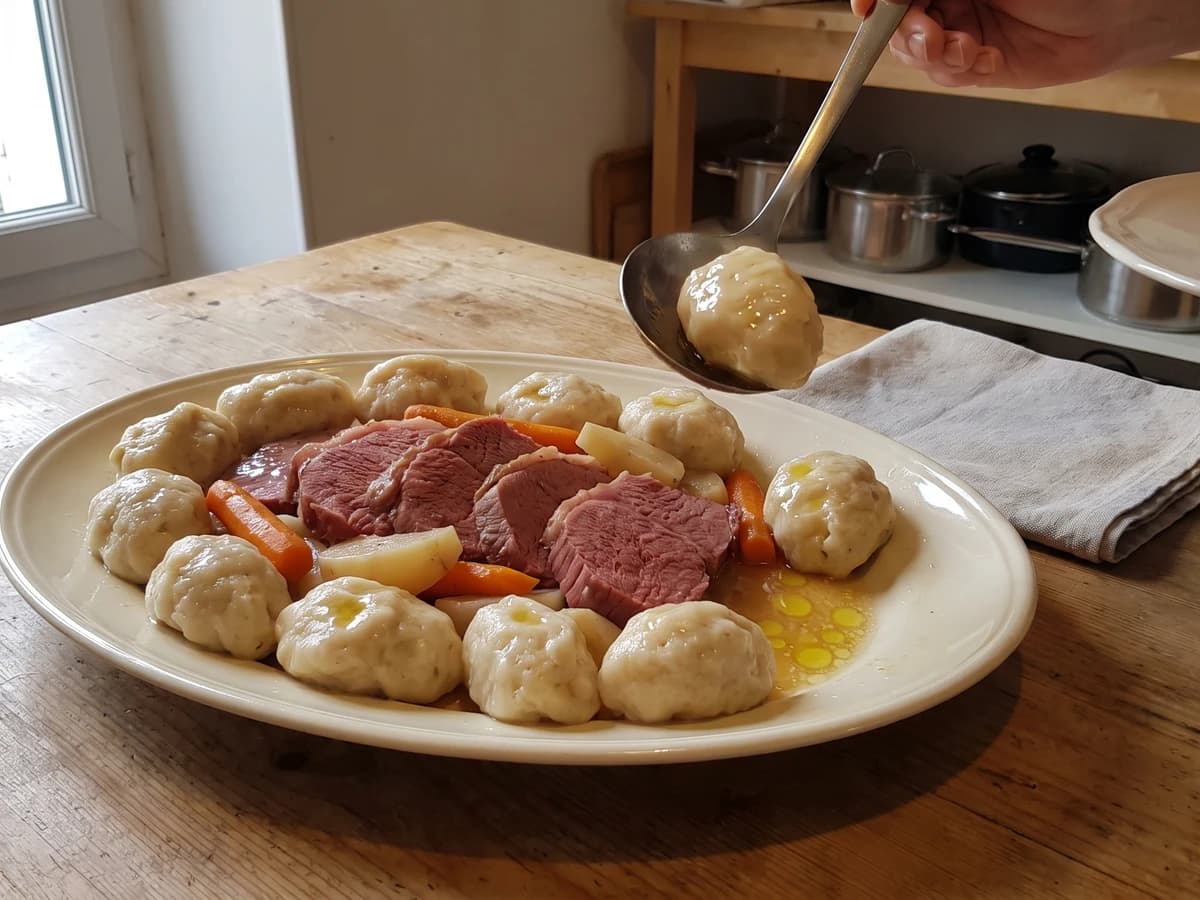
Suet Dumpling
Boulettes au suif, poached beside salt beef, turn equal weights of flour and finely chopped suet into tender, rich dumplings. Keep the beef liquor at a bare tremble and the old garnish works beautifully at home.
A cooking platform built around craft, culture, and the stories behind what we eat.
Created by Chef Juliette
Based on No. 2078, Turned and Grooved Mushrooms for Garnishing, from Le Guide Culinaire (1907) by Auguste Escoffier
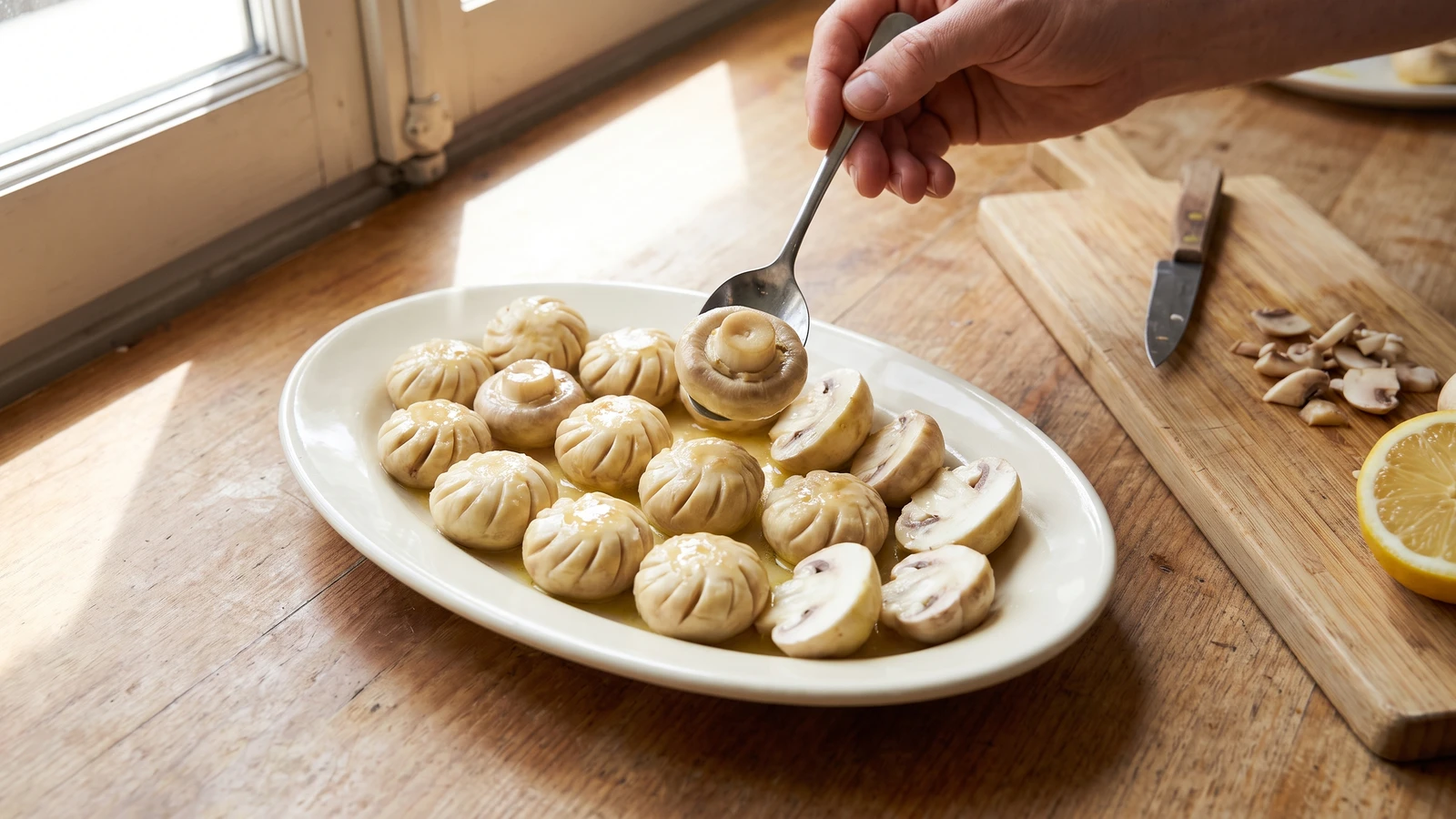
Fresh white mushroom caps, fluted by hand and cooked five minutes in lemon, butter, and salted water, make the classical garnish that teaches a light knife, exact timing, and no wasted motion.
Champignons tournés (turned and grooved mushrooms) teach that a garnish succeeds through control, not ornament. The one true thing to know before touching the pan is this: the lemon must be in the boiling liquor before the mushrooms arrive. It holds their cut surfaces ivory; added afterward, it can season them, but it cannot give their color back.
The original formula assumed two pounds moving through a brigade, with a practiced commis able to groove the caps and send them swiftly into the saucepan. Here the quantity is halved exactly for four people, and one cook turns every cap before heating the liquor so the whole batch receives the same five-minute cooking. That change is brigade scaffolding. The shallow knife work, the proportions of butter, salt, water, and lemon, the immediate transfer, and the buttered-paper cover are the dish and must stay.
Finished properly, the caps are pale, tender but still composed, and glossy with a thin lemon-butter cuisson. Cooking well is not cooking fancy. The step that matters most is having that cuisson boiling and ready before a single cap begins its five minutes.
Champignons tournés belong to the codified garnish work of Parisian classical kitchens, where evenly fluted caps displayed the discipline of the entremetier rather than the larder of any particular region. From grand dining rooms they passed to bourgeois tables as a pale accompaniment for poultry, fish, and composed dishes. Tournés names the knife work, not a mushroom variety, and the lemon-butter cuisson is what keeps an ordinary white cap pale.
Quantity
1 pound (454 g; about 18 to 24)
caps 1¼ to 1½ inches (3 to 4 cm) wide
Quantity
3 tablespoons plus ½ teaspoon (47 ml / 47 g)
Quantity
¾ teaspoon (3.75 ml / 4.7 g)
Quantity
2 tablespoons (30 ml / 28 g)
Quantity
Juice of ¾ medium lemon, about 1½ tablespoons (22 ml / 22 g)
Quantity
½ teaspoon (2.5 ml / 2 g)
for the parchment
| Ingredient | Quantity |
|---|---|
| very fresh white button mushroomscaps 1¼ to 1½ inches (3 to 4 cm) wide | 1 pound (454 g; about 18 to 24) |
| water | 3 tablespoons plus ½ teaspoon (47 ml / 47 g) |
| fine sea salt | ¾ teaspoon (3.75 ml / 4.7 g) |
| unsalted butter | 2 tablespoons (30 ml / 28 g) |
| fresh lemon juice | Juice of ¾ medium lemon, about 1½ tablespoons (22 ml / 22 g) |
| softened unsalted butterfor the parchment | ½ teaspoon (2.5 ml / 2 g) |
Cut a parchment round just wider than the surface of your holding bowl. Butter one side lightly with the softened butter and set it beside the stove, buttered side up. This cartouche, a parchment cover laid directly against the food, is the home equivalent of the original piece of buttered paper. Have the bowl ready as well, because the mushrooms must leave the hot pan immediately after five minutes.
Wash the mushrooms quickly in a bowl of cold water, lifting them out as soon as loose grit falls away. Drain and dry them at once. Mushrooms tolerate a quick wash perfectly well, but soaking fills them with water and softens the surface you need for clean grooves. Cut each stalk flush with its cap without hollowing the underside, then keep the caps beneath a barely damp towel while you work.
Hold a cap securely with its crown facing upward. Set the point of a sharp paring knife just off the center and draw a shallow, gently curving channel toward the rim, lifting away no more than a skin-thin sliver. Rotate the mushroom by an equal interval and repeat until six to eight channels fan evenly around the cap. Each groove is a shaving, not a trench. If one wanders, don't dig after it; widen the neighboring channel by a hair and continue. Ça se rattrape. A cap that chips still cooks beautifully, so keep it as the cook's piece rather than carving it into collapse.
Combine the water, salt, 2 tablespoons of butter, and lemon juice in a small stainless steel saucepan. Bring the cuisson à blanc, the pale cooking liquor, to a full boil, swirling until the butter melts into the liquid. The lemon belongs here from the beginning. It slows discoloration while the freshly cut caps cook, which is why these mushrooms stay ivory rather than turning muddy beige.
Add the turned mushrooms one by one but in quick succession, then start a five-minute timer as soon as the last cap enters. Keep the liquor at a lively simmer and roll the pan gently every minute so every surface receives butter and lemon without bruising the grooves. The small amount of liquid is intentional; the mushrooms release their own moisture as they cook. If the butter begins to color or the pan looks dry, pull it off the heat, add 1 teaspoon of hot water, and lower the flame. Ça se rattrape. At five minutes the caps should be ivory, glossy, and just tender when pierced near the rim, with no browning.
Immediately tip the mushrooms and every drop of their cuisson into the waiting bowl. Lay the parchment buttered side down directly against the caps and liquid, leaving no exposed surface. Serve them warm as a garnish, drained briefly and arranged groove-side up, or cool for 20 minutes before covering and refrigerating. Rewarm gently in their own liquor and never sauté them brown, since pale color is the intent of the preparation. À table!
1 serving (about 135g)
Culinary guides, cultural storytelling, and the editorial depth that makes cooking meaningful.
Discover Culinary ExplorerChef Juliette
Boulettes au suif, poached beside salt beef, turn equal weights of flour and finely chopped suet into tender, rich dumplings. Keep the beef liquor at a bare tremble and the old garnish works beautifully at home.

Chef Juliette
Bread, flour, frangipane, and rice become four cool, supple panades for binding forcemeats, each changing body and flavor while preserving tenderness. The finest Mousselines need none, and knowing that distinction is the lesson.

Chef Juliette
Panade au pain is bread, milk, salt, heat, and attention: stir until the paste releases cleanly, butter it against a skin, and you have the quiet binder behind tender French farces.

Chef Juliette
Panade de farine teaches the drying stroke behind pâte à choux: flour meets boiling buttered water, then stays over the fire until the paste gathers, smooths, and quits the pan cleanly.