Chef Juliette
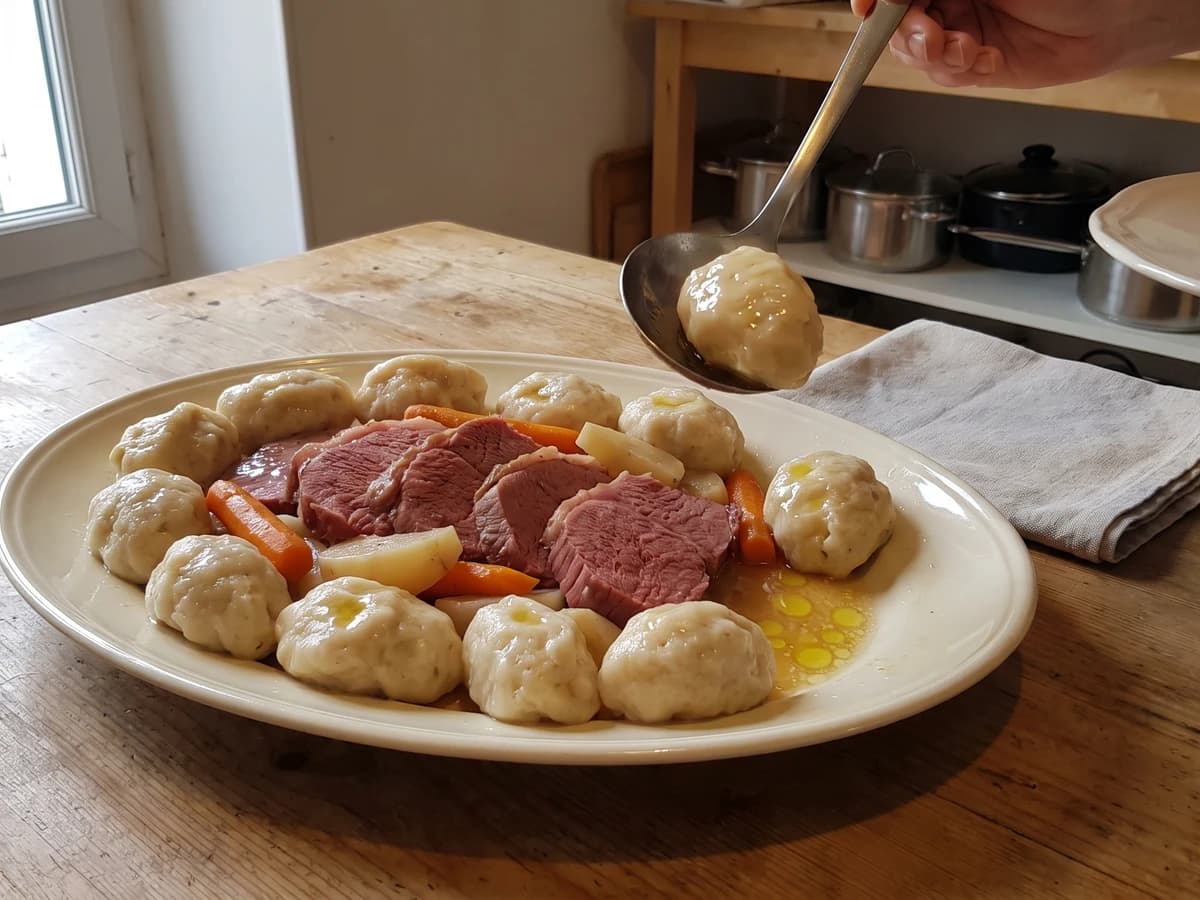
Suet Dumpling
Boulettes au suif, poached beside salt beef, turn equal weights of flour and finely chopped suet into tender, rich dumplings. Keep the beef liquor at a bare tremble and the old garnish works beautifully at home.
A cooking platform built around craft, culture, and the stories behind what we eat.

Created by Chef Juliette
Based on No. 2070, Cèpes à la Provençale, from Le Guide Culinaire (1907) by Auguste Escoffier
Cèpes à la Provençale turn fierce heat into flavor: bronzed mushrooms, sweet onion, a mite of garlic, and breadcrumbs that catch the oil, finished with lemon and parsley while every edge still has bite.
Cèpes à la Provençale (porcini sautéed in the Provençal manner) teaches the discipline of a hot pan. Mushrooms must bronze in oil before they release enough water to stew themselves. Dry them, leave room around them, and wait for the hiss to sharpen. That is the one true thing to know before touching the pan.
The original formula assumed a cook tossing a half-pound service portion and a timbale waiting warm. This entry needs no saucier, stockpot, or salamander; its brigade scaffolding is simply that small pan and formal serving vessel. At home, a 12-inch skillet used in two uncrowded batches and a warm shallow bowl do the same work. The book's half-pound proportion is doubled for four side servings: one pound of caps takes two ounces of stalks, two teaspoons of onion, two tablespoons of breadcrumbs, and half a small garlic clove for the requested mite. The timbale can go. The very hot oil, late aromatics and crumbs, lemon, and parsley must stay.
Cooked properly, the cèpes arrive bronzed and succulent, with crisp edges, parsley caught in their folds, and only enough lemon to wake the earthiness. The breadcrumbs don't form a crust; they collect excess oil so the mushrooms remain glossy rather than greasy. One cook, one stove, one evening. The decisive step is the first sauté: give the cèpes space and let them frizzle before the onion and garlic ever enter.
Cèpes à la Provençale belongs to Provence's olive-oil table and enters the classical canon as a precise variation on Cèpes à la Bordelaise (No. 2068), the Bordeaux treatment of hot oil, shallot, chopped stalks, and breadcrumbs. In the Provençal turn, onion replaces shallot, a little garlic joins it, and lemon and parsley close the dish. The name does not license tomatoes, lavender, or a fistful of dried herbs; here Provençale means a restrained southern adjustment to the same mushroom technique.
Quantity
About 1¼ lb (570 g), trimmed to yield 1 lb (454 g) caps and 2 oz (57 g) tender stalks; Cèpes à la Bordelaise (No. 2068)
caps cut into ¼-inch (6 mm) collops, tender stalks finely chopped
Quantity
¼ cup (60 ml / 54 g)
divided
Quantity
1 teaspoon (5 ml / 6 g)
divided
Quantity
¼ teaspoon (1.25 ml / 0.6 g)
Quantity
2 teaspoons (10 ml / 10 g)
finely chopped
Quantity
½ small clove
crushed to a paste
Quantity
2 tablespoons (30 ml / 14 g)
Quantity
½ teaspoon (2.5 ml / 2.5 g)
Quantity
2 tablespoons (30 ml / 8 g)
finely chopped
| Ingredient | Quantity |
|---|---|
| whole fresh cèpescaps cut into ¼-inch (6 mm) collops, tender stalks finely chopped | About 1¼ lb (570 g), trimmed to yield 1 lb (454 g) caps and 2 oz (57 g) tender stalks; Cèpes à la Bordelaise (No. 2068) |
| olive oil suitable for sautéingdivided | ¼ cup (60 ml / 54 g) |
| fine sea saltdivided | 1 teaspoon (5 ml / 6 g) |
| freshly ground black pepper | ¼ teaspoon (1.25 ml / 0.6 g) |
| yellow onionfinely chopped | 2 teaspoons (10 ml / 10 g) |
| garliccrushed to a paste | ½ small clove |
| fine dry breadcrumbs | 2 tablespoons (30 ml / 14 g) |
| fresh lemon juice | ½ teaspoon (2.5 ml / 2.5 g) |
| flat-leaf parsleyfinely chopped | 2 tablespoons (30 ml / 8 g) |
Brush away soil with a soft brush or wipe it off with a barely damp cloth. If the mushrooms are truly dirty, rinse them quickly, then dry them thoroughly; water left on the surface will fight the browning. Separate the caps from the stalks. Cut 1 lb (454 g) of caps into broad ¼-inch (6 mm) collops and finely chop 2 oz (57 g) of the firm, unblemished stalks. Discard any spongy or worm-eaten trim. Warm the serving bowl with hot water, then dry it just before serving.
Use the hot-oil sequence of Cèpes à la Bordelaise (No. 2068). Heat half the olive oil in a 12-inch (30 cm) heavy skillet over high heat until it shimmers but does not smoke. Season half the cap slices with half the salt and pepper immediately before they enter the pan. Arrange them in one uncrowded layer and leave them untouched until the undersides bronze, about 2 minutes. Toss and continue cooking until the edges are crisp and the centres remain fleshy, another 2 to 3 minutes. Transfer them to a rimmed tray, add the remaining oil, and repeat with the second batch.
Return all the browned caps to the skillet and lower the heat to medium-high. Add the chopped stalks, onion, and garlic, then scatter over the breadcrumbs. Toss continuously for 2 to 3 minutes, just until the stalks soften, the onion loses its raw bite, and the garlic smells fragrant without coloring. The breadcrumbs should catch the excess oil while remaining loose and golden, not clump around the mushrooms. If the garlic threatens to brown, lift the skillet from the heat and keep tossing until the pan calms.
Take the skillet off the heat. Add the lemon juice a few drops at a time, tasting as you go; it should brighten the cèpes without making them taste lemony. Toss in the parsley, taste for salt and pepper, and spoon everything immediately into the warmed bowl or timbale. Bring the glossy cèpes to the table while their edges still have bite. À table!
1 serving (about 110g)
Culinary guides, cultural storytelling, and the editorial depth that makes cooking meaningful.
Discover Culinary ExplorerChef Juliette
Boulettes au suif, poached beside salt beef, turn equal weights of flour and finely chopped suet into tender, rich dumplings. Keep the beef liquor at a bare tremble and the old garnish works beautifully at home.

Chef Juliette
Bread, flour, frangipane, and rice become four cool, supple panades for binding forcemeats, each changing body and flavor while preserving tenderness. The finest Mousselines need none, and knowing that distinction is the lesson.

Chef Juliette
Panade au pain is bread, milk, salt, heat, and attention: stir until the paste releases cleanly, butter it against a skin, and you have the quiet binder behind tender French farces.

Chef Juliette
Panade de farine teaches the drying stroke behind pâte à choux: flour meets boiling buttered water, then stays over the fire until the paste gathers, smooths, and quits the pan cleanly.