Chef Juliette
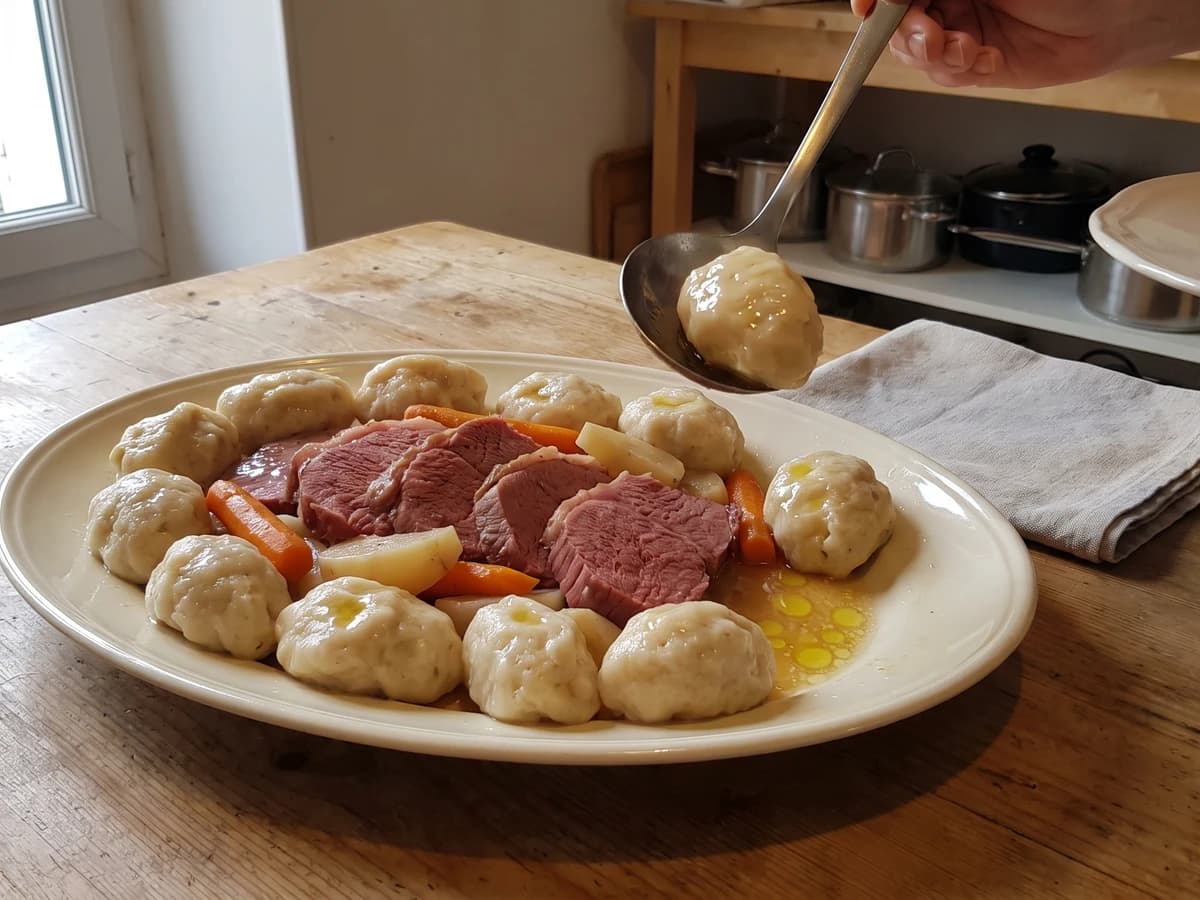
Suet Dumpling
Boulettes au suif, poached beside salt beef, turn equal weights of flour and finely chopped suet into tender, rich dumplings. Keep the beef liquor at a bare tremble and the old garnish works beautifully at home.
A cooking platform built around craft, culture, and the stories behind what we eat.
Created by Chef Juliette
Based on No. 2064, Celery (Céleri), from Le Guide Culinaire (1907) by Auguste Escoffier
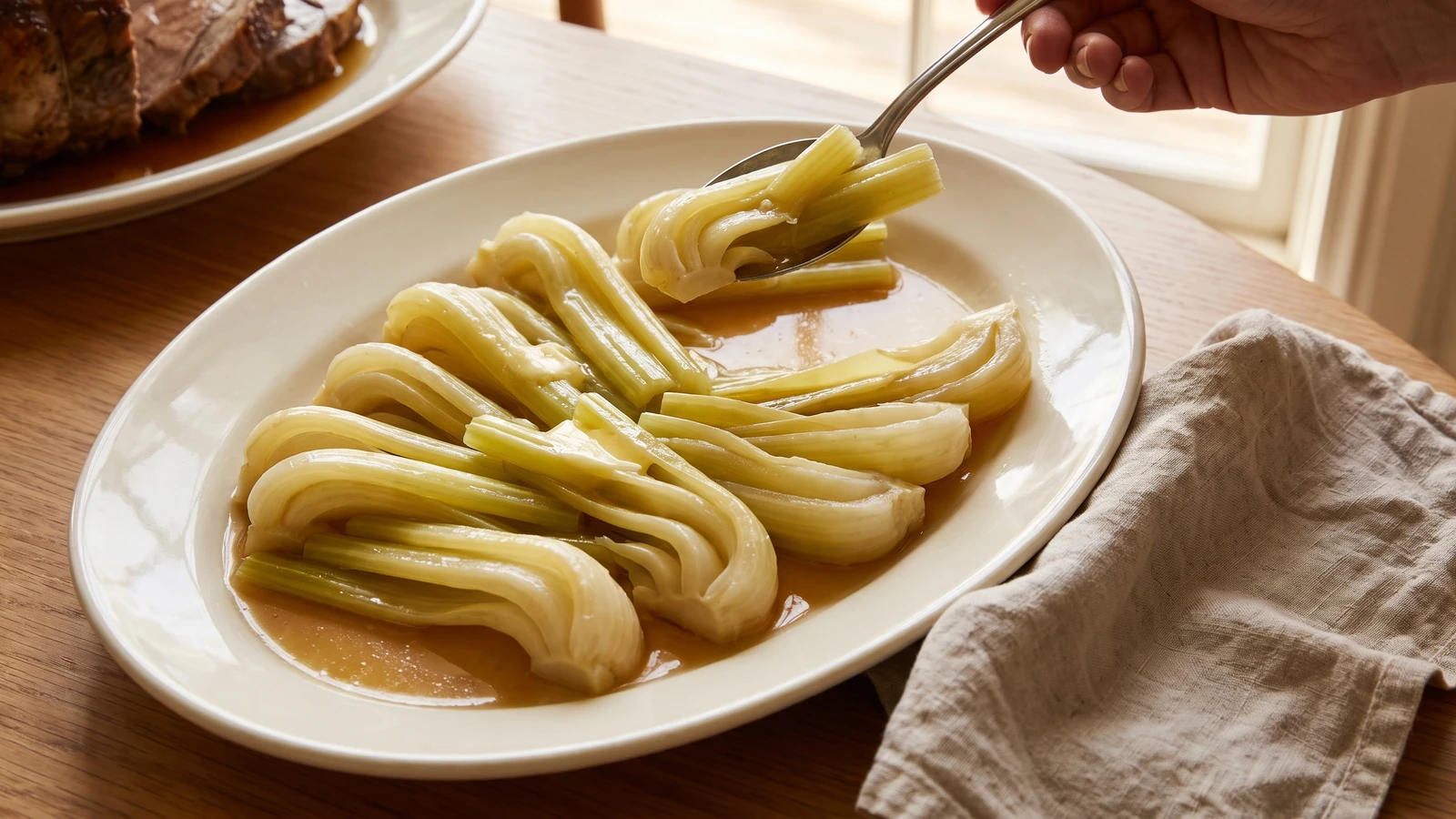
Céleri braisé proves that celery can carry a side dish: tender hearts, first parboiled, then gently braised over pork and aromatics before their cooking liquor is reduced to a clear, savory gloss.
Céleri braisé (braised celery) teaches that a vegetable often treated as an aromatic can command the plate when it is cooked whole and given a proper foundation. The one truth to know before touching a pan is merciless but useful: choose pale, tender, non-fibrous celery. A careful braise can deepen sweetness and soften a crisp rib, but no braise will rescue a bundle of strings.
The original entry assumed a stockpot never off the fire, a saucier available to reduce the cooking liquor, and brigade-sized pans lined with pork rind and bacon. At home, one wide three-quart pan and one home-scale preparation of Braised Vegetables (No. 275) do the same work. The large holding basins are brigade scaffolding and can go. The fifteen-minute parboil, immediate cooling, covered sweat, pork-lined braise, and final reduction are the dish, so they stay. One cook, one stove, one evening.
When it is right, the celery bends without collapsing, its raw sharpness has turned quietly sweet, and the reduced liquor clings in a clear amber glaze. Choose the celery with care before anything else; every good result begins there.
Céleri braisé belongs to Parisian classical and bourgeois service, where a whole head of celery could appear as a composed vegetable beside roast veal or poultry instead of disappearing into an aromatic base. Market gardeners whitened celery by excluding light as it grew, and cooks carried those tender heads from the market into pork-lined stock braises, a method that passed readily from grand kitchens to well-run home tables. The old insistence on white celery describes cultivation and tenderness, not stalks made pale by boiling; coarse, fibrous celery was never the intended ingredient.
Quantity
2 large heads (about 2½ lb / 1.1 kg)
tough green outer ribs and leaves removed
Quantity
8 cups (1.9 L / 1.9 kg)
for parboiling
Quantity
8 cups (1.9 L / 1.9 kg)
for cooling
Quantity
1 home-scale batch of Braised Vegetables (No. 275)
prepared for 2 celery hearts
| Ingredient | Quantity |
|---|---|
| pale, tender celery heartstough green outer ribs and leaves removed | 2 large heads (about 2½ lb / 1.1 kg) |
| cold waterfor parboiling | 8 cups (1.9 L / 1.9 kg) |
| ice waterfor cooling | 8 cups (1.9 L / 1.9 kg) |
| pork-rind, bacon, aromatic, and white-stock braising preparationprepared for 2 celery hearts | 1 home-scale batch of Braised Vegetables (No. 275) |
Choose compact celery hearts with pale ribs that snap cleanly and show no coarse threads along the break. Remove every dark green outer rib and all leaves, but leave enough of each root end intact to hold the heart together. Scrape the roots clean, cut each heart to 8 inches (20 cm) from the root, and wash carefully between the ribs; trapped grit has an astonishing talent for surviving every other precaution.
Bring the cold water to a full boil in a pot broad enough to hold the celery without crushing it. Lower in the hearts, return the water to a steady boil, and parboil for exactly 15 minutes. Transfer them immediately to the ice water and cool completely, then drain root-side down. The parboil begins the tenderizing and removes the raw edge; the cold water stops the cooking before the ribs lose their shape. If a few strings stand proud after cooling, pull them away now.
Tie each cooled heart loosely in three places with kitchen twine so the ribs remain aligned without being pinched. Apply Braised Vegetables (No. 275) exactly as directed, arranging both hearts in one layer in a wide three-quart lidded pan. Keep its covered sweat and gentle stock cooking intact; they expel excess water, then replace it with the flavor of pork, aromatics, and white stock. Allow about 35 to 45 minutes once the liquor reaches a bare tremble. The celery is ready when a thin skewer passes through the thickest rib near the root with almost no resistance. If the liquor begins boiling hard, pull the pan from the heat until it calms, then continue more gently.
Lift the celery onto a tray without squeezing it. For immediate service, complete the finishing direction in Braised Vegetables (No. 275): strain the cooking liquor, remove its surface grease, and reduce it in a wide sauté pan until it is nappant, lightly coating the back of a spoon. If the liquor reduces too far and turns sticky, stop. Ça se rattrape: whisk in a spoonful of the reserved cooking liquor, or hot water if none remains, and return it briefly to gentle heat. Skim again if beads of fat collect on the surface.
Remove the twine and release the ribs from the root while they are still warm and supple. Cut every stalk crosswise into three equal sections, then double each section back on itself to make a compact curved parcel. This folding is the original service shape, not decoration for its own sake; it gathers each tender stalk into a portion that holds the glaze. If a section tears, tuck the broken ends underneath and carry on. Never apologize at your own table.
Set the folded celery into the reduced liquor and turn it carefully over gentle heat for 2 to 3 minutes, just until every surface gleams. Arrange the pieces in overlapping rows on a warmed oval platter and spoon over the remaining glaze. Serve beside roast veal, pork, or poultry while the celery is tender and glossy. À table!
1 serving (about 285g)
Culinary guides, cultural storytelling, and the editorial depth that makes cooking meaningful.
Discover Culinary ExplorerChef Juliette
Boulettes au suif, poached beside salt beef, turn equal weights of flour and finely chopped suet into tender, rich dumplings. Keep the beef liquor at a bare tremble and the old garnish works beautifully at home.

Chef Juliette
Bread, flour, frangipane, and rice become four cool, supple panades for binding forcemeats, each changing body and flavor while preserving tenderness. The finest Mousselines need none, and knowing that distinction is the lesson.

Chef Juliette
Panade au pain is bread, milk, salt, heat, and attention: stir until the paste releases cleanly, butter it against a skin, and you have the quiet binder behind tender French farces.

Chef Juliette
Panade de farine teaches the drying stroke behind pâte à choux: flour meets boiling buttered water, then stays over the fire until the paste gathers, smooths, and quits the pan cleanly.