Chef Juliette
Suet Dumpling
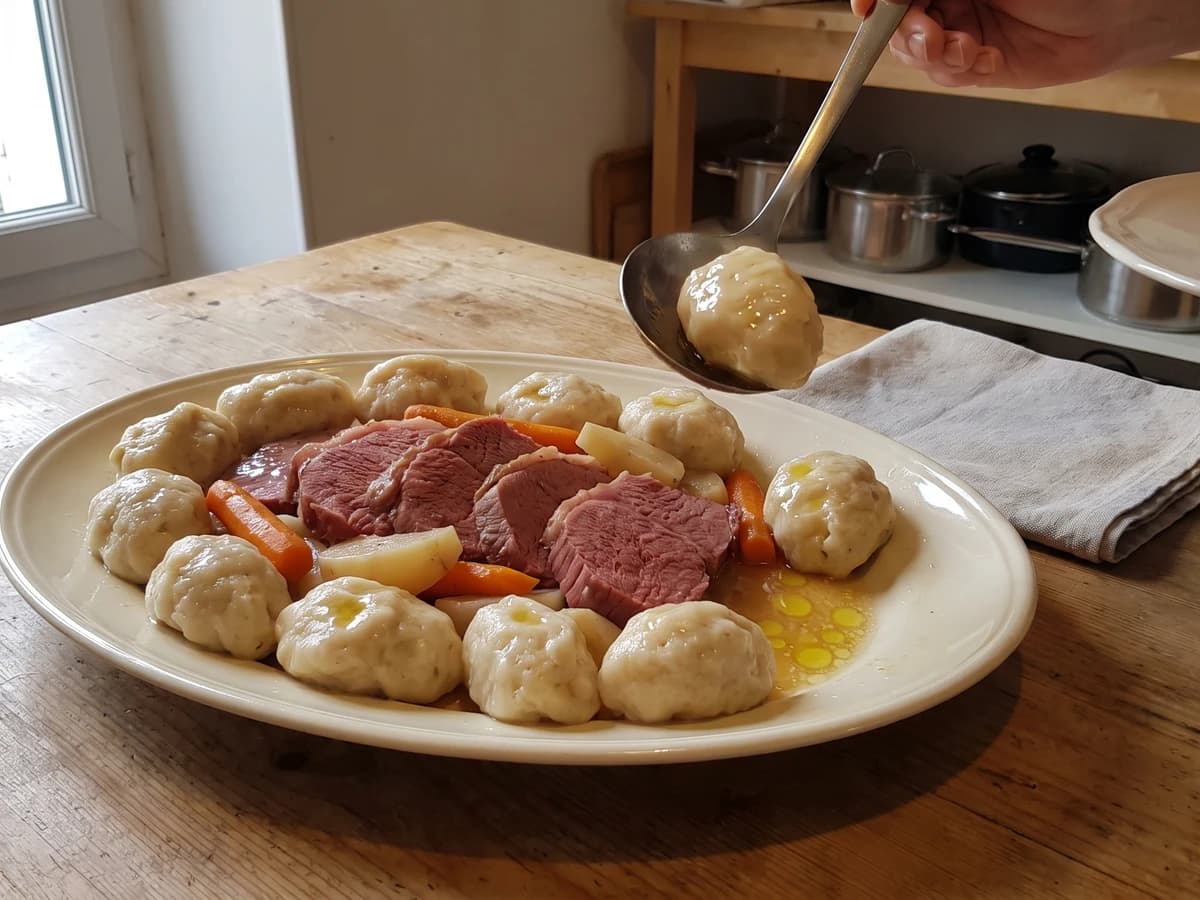
Boulettes au suif, poached beside salt beef, turn equal weights of flour and finely chopped suet into tender, rich dumplings. Keep the beef liquor at a bare tremble and the old garnish works beautifully at home.
A cooking platform built around craft, culture, and the stories behind what we eat.
Created by Chef Juliette
Based on No. 2060, Carottes à la Crème, from Le Guide Culinaire (1907) by Auguste Escoffier
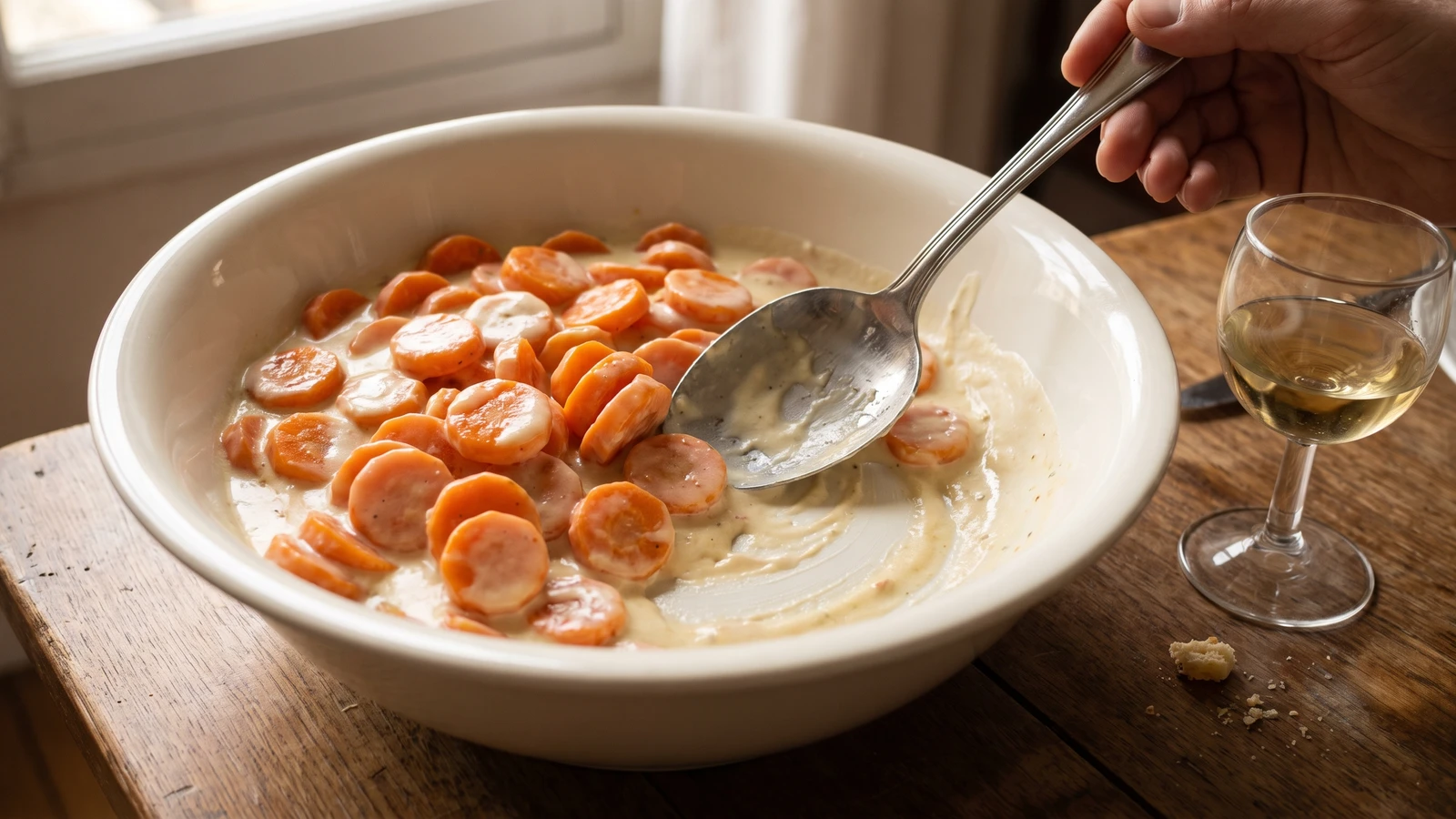
Carottes à la Crème teaches the order that makes the dish: glaze the carrots to a syrup first, add the cream boiling, then reduce until each piece wears a shining ivory coat.
Carottes à la Crème (carrots finished in cream) teaches sequence, not complication. First comes glacer à blanc (glazing without browning), until the carrots are tender and their buttered moistening has the consistency of syrup; only then does boiling cream enter the pan. Remember that before touching a pan: cream added to watery carrots makes pale soup, not a clinging sauce.
The original entry assumed a vegetable station, a shallow pan watched without interruption, cream already boiling beside it, and a timbale waiting warm for service. It needed neither the stockpot nor the salamander. At home, a wide sauté pan, a small saucepan, and a warm serving bowl do the work. The brigade quantity and dedicated service vessel are scaffolding, so the recipe is scaled to four and the carrots are cut into practical, even coins; the glaze-then-cream sequence is the dish, and it stays exactly where the book put it. One cook, one stove, one evening.
Done properly, the carrots arrive glossy and deeply orange beneath an ivory coat, sweet from themselves rather than from excess sugar. The moment that matters is the syrup: don't let the cream touch the pan until the carrots are tender and only a shining butter-sugar glaze remains beneath them.
Carottes à la Crème belongs to the French cuisine bourgeoise table and the Parisian classical vegetable repertoire, where glazed roots appeared as entremets or garnishes in deep timbales. It isn't specifically Norman simply because it contains cream; its identity lies in the classical two-stage method, with the glaze reduced first and boiling cream reduced around it afterward. Passed from formal service to the home table, it became a generous accompaniment to roast poultry, veal, and ham without losing that order.
Quantity
1½ pounds (680 g)
peeled and cut into even ½-inch (1.25 cm) oblique coins
Quantity
2 tablespoons (30 ml / 28 g)
Quantity
2 teaspoons (10 ml / 8 g)
Quantity
¾ teaspoon (3.75 ml / 4 g)
Quantity
1½ cups (360 ml / 360 g), or enough to barely cover the carrots
Quantity
1½ cups (360 ml / 355 g)
| Ingredient | Quantity |
|---|---|
| medium carrotspeeled and cut into even ½-inch (1.25 cm) oblique coins | 1½ pounds (680 g) |
| unsalted butter | 2 tablespoons (30 ml / 28 g) |
| granulated sugar | 2 teaspoons (10 ml / 8 g) |
| fine sea salt | ¾ teaspoon (3.75 ml / 4 g) |
| water | 1½ cups (360 ml / 360 g), or enough to barely cover the carrots |
| heavy cream, at least 35% fat | 1½ cups (360 ml / 355 g) |
Peel and trim the carrots, then cut them on a sharp bias into even ½-inch (1.25 cm) coins. Split the thick upper portions lengthwise before slicing if necessary. Uniformity matters more than decorative turning because every piece must become tender at the same moment the moistening reaches its syrup.
Arrange the carrots in a single layer in a wide sauté pan. Add the butter, sugar, salt, and just enough water to barely cover them. Bring to a boil, cover, and simmer gently for 12 to 15 minutes, until nearly tender. Uncover and raise the heat to medium, rolling the pan occasionally as the liquid reduces. The bubbles will become slower and clearer, and the remaining moistening will coat the carrots like a thin syrup. Do not let it caramelize. If the liquid disappears while the carrots are still firm, add 2 tablespoons (30 ml / 30 g) boiling water and continue. If the carrots become tender while the pan is still watery, lift them out, reduce the liquid alone to a syrup, then return them.
As the carrot moistening approaches a syrup, bring the heavy cream to a full boil in a small, high-sided saucepan. Watch it closely because cream climbs quickly. Let it boil for about 15 seconds, then take it straight to the carrots. The cream must enter boiling, exactly as the source directs; a cold addition stalls the reduction and can leave butterfat floating around a thin sauce.
Pour the boiling cream over the glazed carrots. Keep the pan uncovered at a lively but controlled simmer, shaking it often and turning the carrots gently once or twice, until the cream has reduced by roughly half and clings to every piece, 8 to 12 minutes. Draw a spoon across the pan floor: the trail should remain visible for a moment before the sauce closes over it. If the carrots are tender but the sauce remains loose, lift them into the warm serving bowl and reduce the cream alone before returning them. If the sauce tightens into paste or beads with butter, remove the pan from the heat and stir in 1 tablespoon (15 ml / 15 g) hot water. Ça se rattrape.
Taste and correct the salt, then transfer the carrots immediately to a warmed deep serving bowl, scraping every ribbon of cream over them. The classical timbale becomes an ordinary warm bowl at the home table, but the prompt service remains essential. These carrots lose their finest gloss if they wait while everything else is organized. Bring them straight to the table. À table!
1 serving (about 250g)
Culinary guides, cultural storytelling, and the editorial depth that makes cooking meaningful.
Discover Culinary ExplorerChef Juliette
Boulettes au suif, poached beside salt beef, turn equal weights of flour and finely chopped suet into tender, rich dumplings. Keep the beef liquor at a bare tremble and the old garnish works beautifully at home.

Chef Juliette
Bread, flour, frangipane, and rice become four cool, supple panades for binding forcemeats, each changing body and flavor while preserving tenderness. The finest Mousselines need none, and knowing that distinction is the lesson.

Chef Juliette
Panade au pain is bread, milk, salt, heat, and attention: stir until the paste releases cleanly, butter it against a skin, and you have the quiet binder behind tender French farces.

Chef Juliette
Panade de farine teaches the drying stroke behind pâte à choux: flour meets boiling buttered water, then stays over the fire until the paste gathers, smooths, and quits the pan cleanly.