Chef Juliette
Suet Dumpling
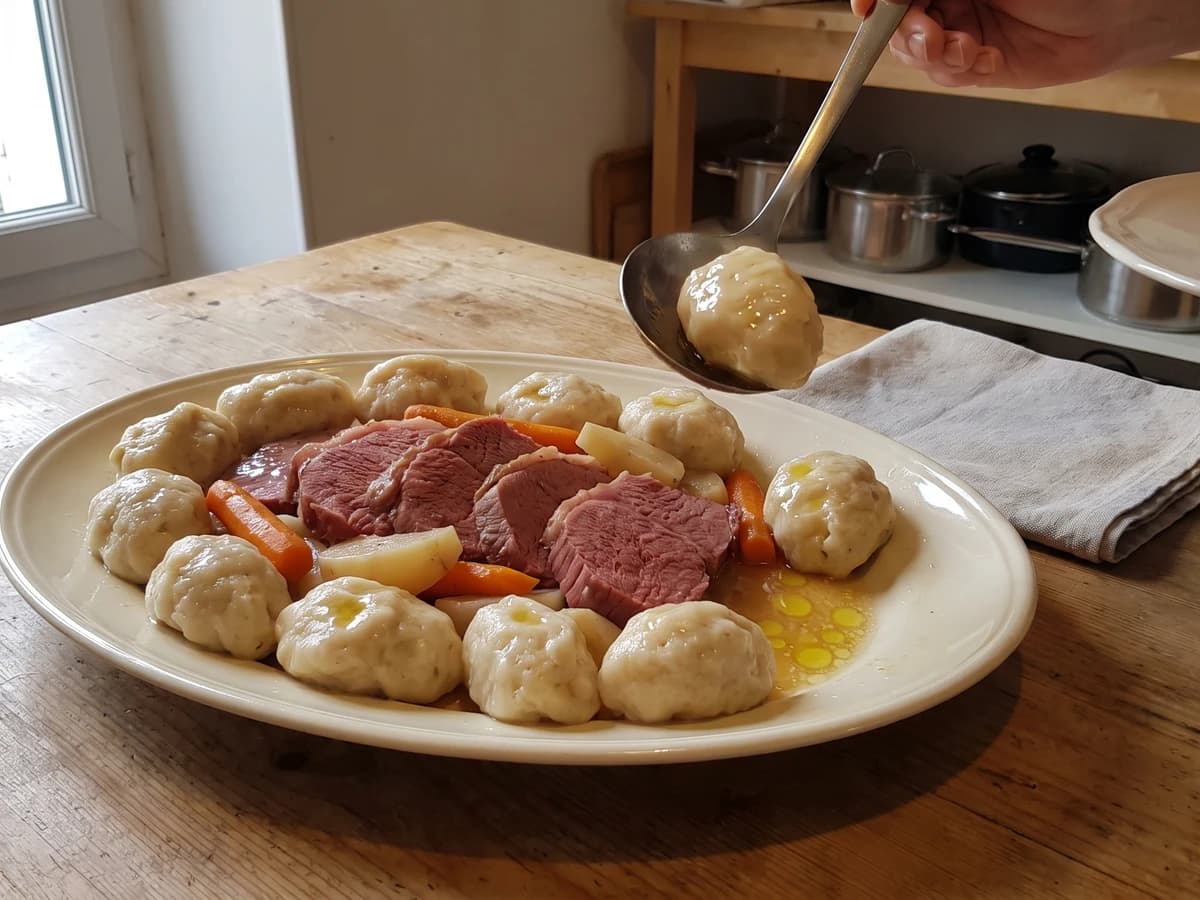
Boulettes au suif, poached beside salt beef, turn equal weights of flour and finely chopped suet into tender, rich dumplings. Keep the beef liquor at a bare tremble and the old garnish works beautifully at home.
A cooking platform built around craft, culture, and the stories behind what we eat.

Created by Chef Juliette
Based on No. 2042, Asperges à la Polonaise, from Le Guide Culinaire (1907) by Auguste Escoffier
Asperges à la Polonaise turns tender green spears into a lesson in timing: sieved yolk and parsley first, then beurre noisette with fresh crumbs poured over the heads at the last possible moment.
Asperges à la Polonaise (asparagus in the Polish manner) teaches one essential truth: a crisp finish requires a dry vegetable beneath it. Tender asparagus receives sieved yolk and parsley, then beurre noisette (hazelnut-browned butter) carrying very fine fresh crumbs. Water left clinging to the spears turns that gilded finish soft.
The original entry assumes a brigade's vegetable station and a saucier on staff: the asparagus appears already cooked, thoroughly drained, and hot, while the beurre noisette is made at the instant of service. It needs neither standing stock nor a salamander, so the home equivalent is one wide pan for the spears and one small, light-colored pan for the finish. Four servings retain the source's four-to-one weight ratio, 4 ounces butter to 1 ounce crumb. The brigade's holding is scaffolding and goes; drying the asparagus and frying the crumbs in butter at the last moment are the dish and stay. One cook, one stove, one evening.
The finished platter is generous and bright: green spears in orderly rows, yellow yolk and parsley over their heads, crisp golden crumbs shining with butter. Prepare the yolk garnish first and have the platter waiting. The step that matters most is the towel-drying after the boil; once the asparagus is truly dry, everything else falls into place.
Asperges à la Polonaise belongs less to a French agricultural region than to the classical Parisian table, where à la polonaise became a defined garnish for boiled vegetables: hard-cooked egg, parsley, fresh crumbs, and browned butter. The name records a Polish manner absorbed into French service and applied not only to asparagus but also to cauliflower and other vegetables. Its distinction lies in sequence, not ornament: the egg and parsley remain loose while the crumbs fry in butter immediately before serving.
Quantity
2 pounds (900 g)
woody ends trimmed and lower stalks peeled if fibrous
Quantity
2 tablespoons (30 ml / 36 g)
for the cooking water
Quantity
2
Quantity
3 tablespoons (45 ml / 12 g)
very finely chopped
Quantity
½ cup (120 ml / 4 oz / 113 g)
Quantity
½ cup (120 ml / 1 oz / 28 g)
| Ingredient | Quantity |
|---|---|
| medium asparaguswoody ends trimmed and lower stalks peeled if fibrous | 2 pounds (900 g) |
| fine sea saltfor the cooking water | 2 tablespoons (30 ml / 36 g) |
| large eggs | 2 |
| flat-leaf parsleyvery finely chopped | 3 tablespoons (45 ml / 12 g) |
| unsalted butter | ½ cup (120 ml / 4 oz / 113 g) |
| very fresh fine white bread crumbs | ½ cup (120 ml / 1 oz / 28 g) |
Place the eggs in a small saucepan, cover them with cold water by 1 inch, and bring the water just to a boil. Lower to a steady simmer and cook for 10 minutes, then cool the eggs in cold water and peel them. Halve the eggs, remove the fully set yolks, and reserve the whites for another meal. Press the yolks through a fine-mesh sieve into a bowl, add the chopped parsley, and lift them together lightly with a fork. Keep the mixture loose and granular rather than working it into a paste.
Bring about 3 quarts (2.8 L) water and the salt to a full boil in a wide pan. Lay in the asparagus with the heads facing the same direction and cook at a lively simmer for 3 to 6 minutes, depending on thickness. A knife should enter the stalk just below the head with slight resistance, and the spear should bend without collapsing. Drain immediately, spread the asparagus in one layer on a clean absorbent towel, and roll it gently to remove every bead of water. If moisture gathers after the spears reach the platter, lift them back onto the towel, dry them again, and wipe the dish. Nothing is lost.
Transfer the warm asparagus to a long serving platter, arranging the spears in two orderly rows with all the heads aligned. Scatter the sieved yolk and parsley mixture generously over the heads, leaving most of the green stalks visible. Set the platter near the table. The butter and crumbs must not be made until everyone is ready to eat.
Melt the butter in a small, light-colored saucepan over medium heat. As soon as it is fully melted and foaming, scatter in the fresh crumbs and stir continuously. The crumbs must fry while the butter's milk solids turn from pale gold to hazelnut brown, about 2 to 3 minutes; stop when the mixture smells nutty and the crumbs are crisp and deep gold. If the crumbs begin racing toward dark brown, pour everything into a cool metal bowl and keep stirring. Ça se rattrape: removing the mixture from the stored heat of the pan stops the browning. If it smells acrid or carries black flecks, remake it, because burned butter cannot be disguised.
Without waiting, spoon the beurre noisette and its fried crumbs evenly over the dressed asparagus heads, allowing a little butter to run along the stalks and pool lightly on the platter. Serve at once, while the asparagus is tender and the crumbs still answer under the teeth. À table!
1 serving (about 275g)
Culinary guides, cultural storytelling, and the editorial depth that makes cooking meaningful.
Discover Culinary ExplorerChef Juliette
Boulettes au suif, poached beside salt beef, turn equal weights of flour and finely chopped suet into tender, rich dumplings. Keep the beef liquor at a bare tremble and the old garnish works beautifully at home.

Chef Juliette
Bread, flour, frangipane, and rice become four cool, supple panades for binding forcemeats, each changing body and flavor while preserving tenderness. The finest Mousselines need none, and knowing that distinction is the lesson.

Chef Juliette
Panade au pain is bread, milk, salt, heat, and attention: stir until the paste releases cleanly, butter it against a skin, and you have the quiet binder behind tender French farces.

Chef Juliette
Panade de farine teaches the drying stroke behind pâte à choux: flour meets boiling buttered water, then stays over the fire until the paste gathers, smooths, and quits the pan cleanly.