Chef Juliette
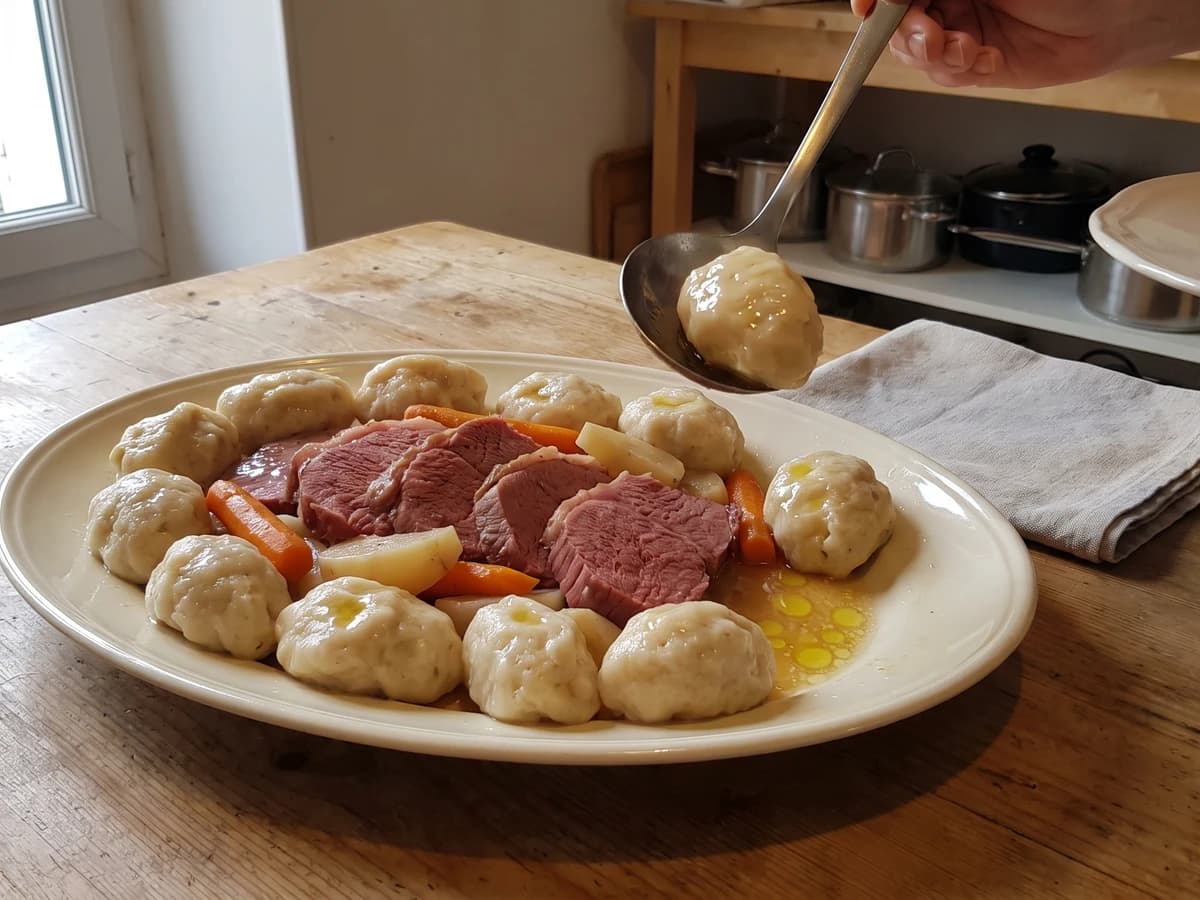
Suet Dumpling
Boulettes au suif, poached beside salt beef, turn equal weights of flour and finely chopped suet into tender, rich dumplings. Keep the beef liquor at a bare tremble and the old garnish works beautifully at home.
A cooking platform built around craft, culture, and the stories behind what we eat.

Created by Chef Juliette
Based on No. 2041, Asperges à la Milanaise, from Le Guide Culinaire (1907) by Auguste Escoffier
Asperges à la Milanaise turns four plain ingredients into a lesson in timing: tender asparagus, Parmesan, and beurre noisette, glazed only until the cheese catches and the butter gleams.
Asperges à la Milanaise (asparagus glazed with Parmesan and butter) teaches readiness. The one true thing to know before touching a pan is that beurre noisette (hazelnut-browned butter) waits for no one. The asparagus must be cooked, thoroughly dried, arranged with its cheese, and waiting beneath a hot broiler before the butter begins.
The book's entry assumes hot asparagus arriving well drained from the vegetable station, a saucier free to brown the butter at the last instant, and a salamander, the brigade's fierce overhead grill, ready to glaze the cheese. At home, a wide pot, a small pale skillet, and a household broiler do the same work for four. The station handoffs and brigade scale are scaffolding and can go; the draining, successive Parmesan-dusted rows, copious butter, and slight glaze are the dish and stay. No stock is called for, so none is invented. One cook, one stove, one evening.
When it is right, the asparagus stays green and supple beneath ivory-gold Parmesan, with butter pooling around the heads and smelling of toasted nuts. Take the butter to hazelnut brown and no farther. That is the step that decides the plate.
In French classical nomenclature, à la Milanaise is an appellation borrowed from Milan, used here to signal Parmesan and butter rather than a French regional larder. The preparation passed easily from the grand kitchen to the cuisine bourgeoise because its equipment is modest and its effect generous: cooked asparagus, a buttered dish, and fierce overhead heat. Unlike the breaded cutlet associated with the same adjective, these asparagus take no crumbs; Parmesan and beurre noisette make the slight glaze.
Quantity
2 bunches, about 2 pounds (900 g)
woody ends trimmed and lower stalks peeled if fibrous
Quantity
3/4 cup (180 ml / 65 g)
finely grated
Quantity
6 tablespoons (90 ml / 85 g)
divided
Quantity
1 tablespoon (15 ml / 18 g)
for the blanching water
| Ingredient | Quantity |
|---|---|
| medium green asparaguswoody ends trimmed and lower stalks peeled if fibrous | 2 bunches, about 2 pounds (900 g) |
| Parmesanfinely grated | 3/4 cup (180 ml / 65 g) |
| unsalted butterdivided | 6 tablespoons (90 ml / 85 g) |
| fine sea saltfor the blanching water | 1 tablespoon (15 ml / 18 g) |
Set an oven rack about 6 inches (15 cm) below the broiler and heat the broiler fully. Butter a 14-inch (35 cm) heatproof oval gratin dish with 1 tablespoon (15 ml / 14 g) of the butter, reaching into the corners, then scatter 2 tablespoons (30 ml / about 10 g) of the Parmesan across the bottom. Have the remaining cheese, a small light-colored skillet, and a cool heatproof cup beside the stove. Once the butter starts browning, there is no time to hunt for equipment.
Cut away the dry woody ends so the spears fit comfortably inside the dish. If the lower stalks feel tough beneath a fingernail, peel their bottom third with a vegetable peeler; leave tender medium stalks alone. Rinse the asparagus without soaking it.
Bring a wide pot of water to a full boil and add the salt. Lower in the asparagus, keeping the tips facing the same direction so they are easy to lift, and cook until a knife enters the thick end with slight resistance, about 4 to 6 minutes after the water returns to the boil. A stalk should bend without collapsing. If the boil dies under the quantity, cook in two batches; crowding gives you grey tips and uneven stalks.
Lift the asparagus into a colander, let it drain for a full minute, then spread the spears on clean kitchen towels and blot them carefully. Be thorough. Water trapped between the spears dilutes the butter, washes away the Parmesan, and prevents the slight glaze this dish requires. If the towels become wet beneath them, move the spears to a dry patch and blot again.
While the asparagus is still warm, arrange it in two or three successive, slightly overlapping rows in the buttered dish. Keep the tips pointing in the same direction and begin each row a little lower than the one before it, leaving every band of heads visible. Sprinkle the remaining Parmesan copiously over the heads of each row, with only a light dusting down the stalks.
Melt the remaining 5 tablespoons (75 ml / 71 g) butter in the light-colored skillet over medium heat. Let it foam, swirling the pan often; as the foam thins, watch the milk solids on the bottom turn from pale gold to the warm brown of a hazelnut and smell for toasted nuts. Pull the pan immediately. If the color starts racing, lift it from the heat and decant through a fine-mesh strainer into the cool cup. Ça se rattrape. Black flecks and an acrid smell mean it has burned, and the only honest answer is to begin again with fresh butter.
Pour the beurre noisette at once and copiously over the Parmesan-covered heads, letting the rest run between the rows. Set the dish beneath the broiler for 30 to 90 seconds, watching without interruption, until the cheese fuses into a delicate ivory-gold glaze and the butter bubbles at the edges. Do not chase a dark crust. If one side colors first, rotate the dish rather than leaving the asparagus under longer. Carry it straight to the table in its dish. À table!
1 serving (about 225g)
Culinary guides, cultural storytelling, and the editorial depth that makes cooking meaningful.
Discover Culinary ExplorerChef Juliette
Boulettes au suif, poached beside salt beef, turn equal weights of flour and finely chopped suet into tender, rich dumplings. Keep the beef liquor at a bare tremble and the old garnish works beautifully at home.

Chef Juliette
Bread, flour, frangipane, and rice become four cool, supple panades for binding forcemeats, each changing body and flavor while preserving tenderness. The finest Mousselines need none, and knowing that distinction is the lesson.

Chef Juliette
Panade au pain is bread, milk, salt, heat, and attention: stir until the paste releases cleanly, butter it against a skin, and you have the quiet binder behind tender French farces.

Chef Juliette
Panade de farine teaches the drying stroke behind pâte à choux: flour meets boiling buttered water, then stays over the fire until the paste gathers, smooths, and quits the pan cleanly.