Chef Juliette
Suet Dumpling
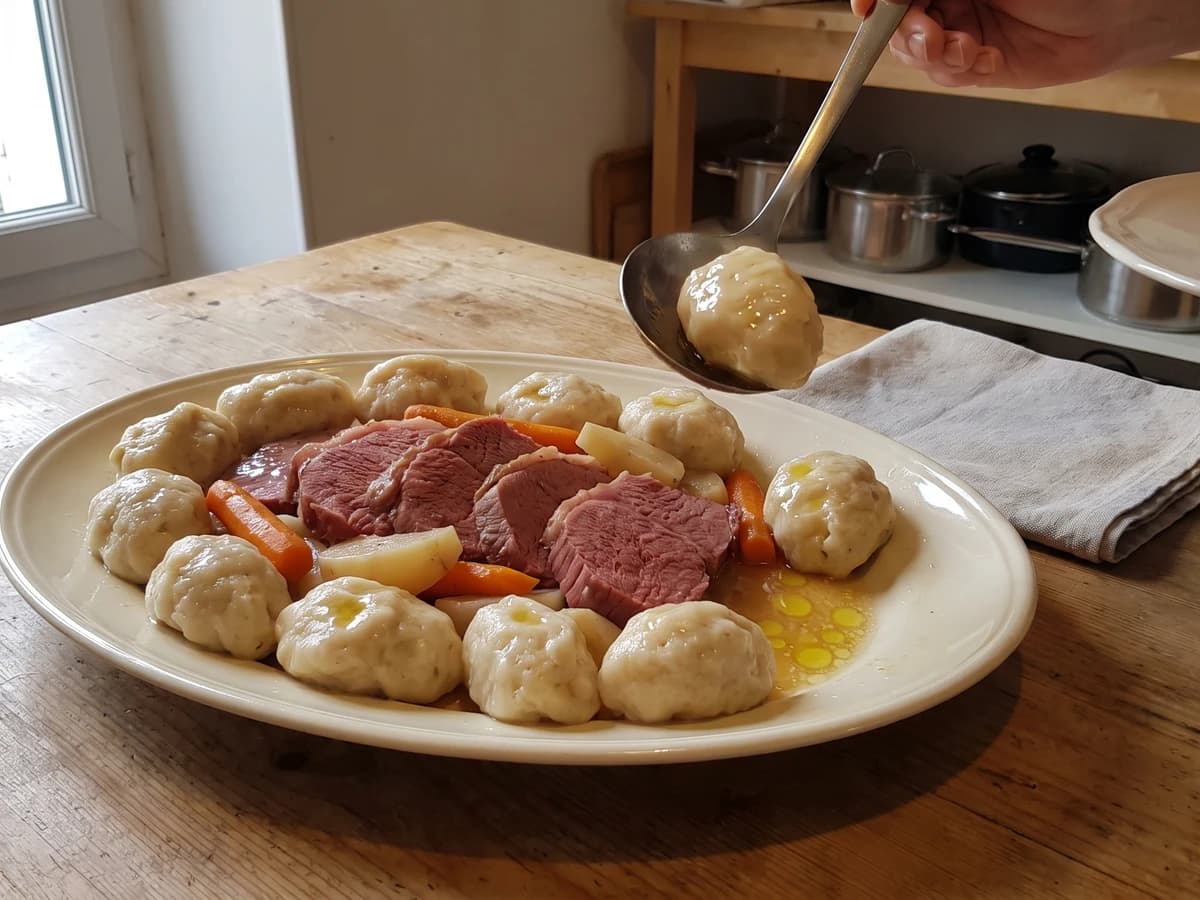
Boulettes au suif, poached beside salt beef, turn equal weights of flour and finely chopped suet into tender, rich dumplings. Keep the beef liquor at a bare tremble and the old garnish works beautifully at home.
A cooking platform built around craft, culture, and the stories behind what we eat.

Created by Chef Juliette
Based on No. 2031, Artichauts à la Provençale, from Le Guide Culinaire (1907) by Auguste Escoffier
Artichauts à la Provençale turns a tight lid into technique: small artichokes, sweet peas, and lettuce soften in olive oil and their own juices, emerging tender, green, and quietly glossy.
Artichauts à la Provençale (small artichokes with peas and lettuce, cooked in olive oil) teaches cuisson à l'étouffée, cooking tightly covered in the vegetables' own moisture. The one true thing to know before touching the pan is this: the lid makes the dish. Let the moisture escape or drive the heat too fiercely, and the vegetables scorch before they soften.
The canonical entry assumed a saucier could watch an earthenware stewpan over a perfectly judged fire; unlike many dishes around it, it calls for neither stock never off the fire nor a salamander. Your honest equivalent is a heavy 10-inch sauté pan with a close-fitting lid. The separate service pan is brigade scaffolding and can go, but the hot olive oil, ten-minute head start for the artichokes, and covered cooking without added liquid are the dish and must stay. The book speaks in twelve artichokes; this version uses eight, with the peas and lettuce reduced to two-thirds, keeping its proportions intact for four people. One cook, one stove, one evening.
When it lands correctly, the artichokes are tender through their bases, the peas remain sweet, and the lettuce has collapsed into silky green ribbons, all carrying a fine gloss of olive oil and vegetable juices. Prepare the peas and lettuce before trimming the artichokes, then guard that covered pan. Every unnecessary look under the lid costs you moisture.
Artichauts à la Provençale belongs to the spring market cooking of Provence, built around petits violets, young peas, tender lettuce, and olive oil. In passing into the classical repertoire, the preparation remained close to the home pot: cuisson à l'étouffée, with no stock or other added liquid. Its name is sometimes mistaken as license for garlic, tomato, and herbs, but here Provençal means the region's young produce, olive oil, and restrained method, nothing more.
Quantity
8 (about 1½ lb / 680 g total)
trimmed and kept whole
Quantity
1⅓ cups (315 ml / 200 g)
Quantity
⅔ medium head (about 4 packed cups / 140 g)
cut in a coarse julienne
Quantity
3 tablespoons (45 ml / 41 g)
Quantity
¾ teaspoon (4 ml / 4 g)
Quantity
¼ teaspoon (1 ml / 0.5 g)
| Ingredient | Quantity |
|---|---|
| very small Provençal artichokes or baby artichokestrimmed and kept whole | 8 (about 1½ lb / 680 g total) |
| very tender freshly shelled peas | 1⅓ cups (315 ml / 200 g) |
| butter lettucecut in a coarse julienne | ⅔ medium head (about 4 packed cups / 140 g) |
| extra-virgin olive oil | 3 tablespoons (45 ml / 41 g) |
| fine sea salt | ¾ teaspoon (4 ml / 4 g) |
| freshly ground black pepper | ¼ teaspoon (1 ml / 0.5 g) |
Shell the peas and cut the lettuce in a coarse julienne, broad matchstick-like strips about ⅜ inch (1 cm) wide. Have both waiting before you touch the artichokes. Snap away each artichoke's dark, tough outer leaves until the paler tender leaves appear, pare the stem and base, and cut away the prickly top third. If a developed purple choke is visible, scoop it out with a teaspoon; truly small artichokes usually have none. Keep the artichokes whole and work briskly. A little darkening on the cut surfaces does no harm, while soaking them would bring unwanted water to a dish built on controlling moisture.
Heat the olive oil in a heavy 10-inch (26 cm) sauté pan over medium-high heat until it flows freely and shimmers without smoking. Dry the artichokes well, add them carefully, and roll them through the oil. Season with the salt and pepper, then cover at once. Lower the heat to medium and cook for 10 minutes, shaking the closed pan firmly after about 3 minutes and again after 7 minutes so the artichokes turn without releasing their moisture.
Lift the lid once, add the peas, and mound the coarse julienne of lettuce over them. The lettuce will look absurdly abundant. It is exactly right. Fold everything together quickly so the vegetables pick up the seasoned oil, then replace the lid immediately. If the lid fits loosely, lay a round of parchment directly over the vegetables before covering; that cartouche closes the gap without changing the method.
Reduce the heat to low and cook, tightly covered, for 10 to 15 minutes. Listen for a quiet, moist rustle rather than a hard frying sound. Check once after 10 minutes: a paring knife should enter the thick base of an artichoke with little resistance, the peas should be tender, and the lettuce should have collapsed into silky ribbons. If you hear a dry crackle or smell catching before the artichokes are ready, take the pan off the heat and add 1 tablespoon (15 ml / 15 g) water around the edge, then cover and return it to low heat. The proper method adds none, but a poor lid may already have stolen what the vegetables supplied. Ça se rattrape.
When the artichokes are tender, turn them gently through the peas, lettuce, oil, and captured juices. If more than a spoonful of liquid remains pooled in the pan, uncover and cook over medium heat for 1 to 2 minutes, turning carefully, until the juices cling in a light gloss rather than collecting beneath the vegetables. Taste for salt and pepper, then bring the pan directly to the table. No separate platter is needed. À table!
1 serving (about 165g)
Culinary guides, cultural storytelling, and the editorial depth that makes cooking meaningful.
Discover Culinary ExplorerChef Juliette
Boulettes au suif, poached beside salt beef, turn equal weights of flour and finely chopped suet into tender, rich dumplings. Keep the beef liquor at a bare tremble and the old garnish works beautifully at home.

Chef Juliette
Bread, flour, frangipane, and rice become four cool, supple panades for binding forcemeats, each changing body and flavor while preserving tenderness. The finest Mousselines need none, and knowing that distinction is the lesson.

Chef Juliette
Panade au pain is bread, milk, salt, heat, and attention: stir until the paste releases cleanly, butter it against a skin, and you have the quiet binder behind tender French farces.

Chef Juliette
Panade de farine teaches the drying stroke behind pâte à choux: flour meets boiling buttered water, then stays over the fire until the paste gathers, smooths, and quits the pan cleanly.