Chef Juliette
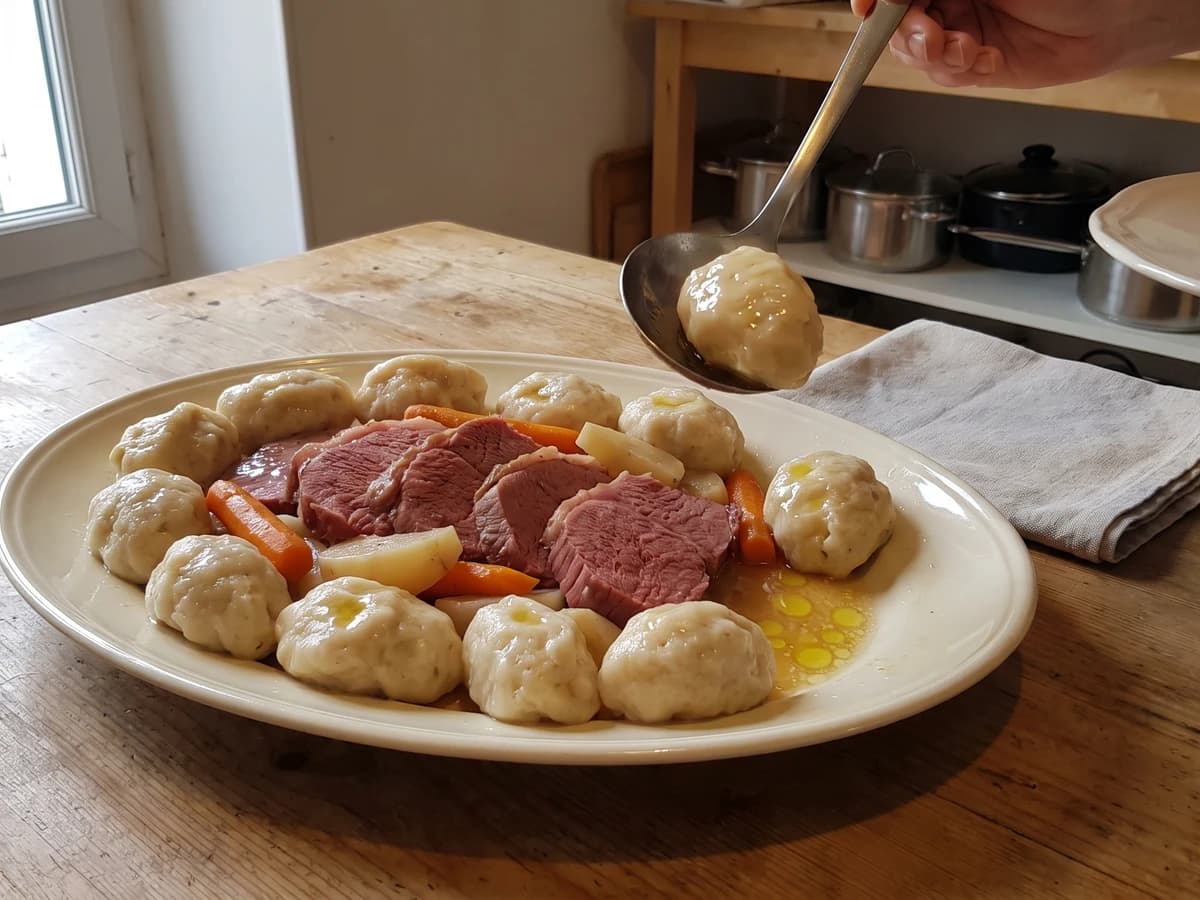
Suet Dumpling
Boulettes au suif, poached beside salt beef, turn equal weights of flour and finely chopped suet into tender, rich dumplings. Keep the beef liquor at a bare tremble and the old garnish works beautifully at home.
A cooking platform built around craft, culture, and the stories behind what we eat.

Created by Chef Juliette
Based on No. 2028, Artichauts à la Barigoule, from Le Guide Culinaire (1907) by Auguste Escoffier
Artichauts à la Barigoule turns tender artichokes into little braising vessels, packed with mushrooms and fat bacon, wrapped, wine-braised, then dressed with only a spoonful of dark, concentrated sauce.
Artichauts à la Barigoule (artichokes stuffed with mushroom duxelle and bacon, then braised in white wine) teaches concentration. Know one thing before touching the pan: the braising liquor must be strained, stripped of fat, and reduced hard with demi-glace until only a little glossy sauce remains. Leave it thin and the artichokes taste watered, however carefully you prepared them.
The original entry assumed finished Duxelle for Stuffed Vegetables (No. 224), a saucier on staff, and good half-glaze sauce drawn from a stockpot never off the fire. At home, the referenced Duxelle still arrives as a finished component, while prepared low-salt veal demi-glace gives the braising liquor its honest foundation. The quantities here serve four, and a close-fitting saucepan does the work once entrusted to a broad braising station. One cook, one stove, one evening.
The separate sauce station is brigade scaffolding and can go. The parboiling, stuffing, bacon wrapping, gentle wine braise, and final reduction are the dish, so they stay. Take particular care with that reduction: it should coat the spoon and pool beneath the artichokes, never flood them.
Artichauts à la Barigoule belongs to Provence, where the word barigoule is associated with a local name for the saffron milk-cap mushroom, a clue to the mushroom stuffing found in this grand-kitchen form. The name also covers a Provençal olive-oil braise of unstuffed artichokes with aromatic vegetables, and the two preparations are related without being interchangeable. This version follows the stuffed branch of the canon, with fat bacon, white wine, and demi-glace carrying it from a southern vegetable dish into the formal repertoire.
Quantity
4 medium (about 3 lb / 1.4 kg total)
Quantity
2
Quantity
2 qt (1.9 L / 1.9 kg)
Quantity
2 tsp (10 ml / 12 g)
divided
Quantity
½ tsp (2.5 ml / 1 g)
Quantity
¾ cup (180 ml / 150 g) Duxelle for Stuffed Vegetables (No. 224)
cooled
Quantity
3 tbsp (45 ml / 38 g)
very cold and finely grated
Quantity
2 tbsp plus 2 tsp (40 ml / 38 g)
softened
Quantity
8 slices (about 4 oz / 120 g)
Quantity
1½ cups (360 ml / 360 g)
Quantity
⅓ cup (80 ml / 85 g)
unsalted or low-salt
| Ingredient | Quantity |
|---|---|
| very fresh and tender globe artichokes | 4 medium (about 3 lb / 1.4 kg total) |
| lemons | 2 |
| water | 2 qt (1.9 L / 1.9 kg) |
| fine sea saltdivided | 2 tsp (10 ml / 12 g) |
| freshly ground black pepper | ½ tsp (2.5 ml / 1 g) |
| Duxelle for Stuffed Vegetables (No. 224)cooled | ¾ cup (180 ml / 150 g) Duxelle for Stuffed Vegetables (No. 224) |
| fresh unsmoked fatbackvery cold and finely grated | 3 tbsp (45 ml / 38 g) |
| unsalted buttersoftened | 2 tbsp plus 2 tsp (40 ml / 38 g) |
| very thin unsmoked streaky bacon or pork belly | 8 slices (about 4 oz / 120 g) |
| dry white wine | 1½ cups (360 ml / 360 g) |
| prepared veal demi-glaceunsalted or low-salt | ⅓ cup (80 ml / 85 g) |
Bring the water to a boil in a large nonreactive pot with half the salt. Meanwhile, pull away only the toughest outer leaves from each artichoke, cut the stem flush so it will stand upright, and slice about 1 inch from the top. Rub every exposed surface firmly with the cut lemons as you work, then squeeze the remaining juice into the boiling water.
Lower the artichokes into the lemon-salted water and parboil for 10 to 12 minutes. They should soften enough for the leaves to open without becoming tender all the way through. Drain them upside down until cool enough to handle, then pull out the pale central cone of leaves and scrape away every strand of fuzzy choke with a teaspoon or melon baller. Keep the fleshy bottom intact. If a leaf tears, don't fret; the bacon and string will hold the shape during the braise.
Season the cavities with the remaining salt and the pepper. Fold the cooled Duxelle for Stuffed Vegetables (No. 224) together with the grated fatback and softened butter, keeping the book's ratio of four parts Duxelle to one part fatback and one part butter by weight. Divide the filling among the artichokes and mound it firmly inside. Wrap each artichoke with two thin bacon slices, then secure it around the middle and over the top with cotton kitchen string.
Stand the wrapped artichokes snugly in the smallest heavy, nonreactive saucepan that holds them in one layer. Pour the white wine around them, cover the surface with a parchment round, then fit the lid. Bring the wine just to a simmer and braise gently for 30 to 40 minutes, until a thin knife enters the fleshy base with little resistance. Keep the liquid at a bare tremble. If the pan threatens to dry before the bases are tender, add a spoonful or two of warm wine and cover again.
Lift the artichokes carefully onto a warm platter. Cut away every piece of string and remove the bacon wrappers, which have given their fat and kept the filling in place. Cover the artichokes loosely while you finish the sauce. Handle them from beneath rather than gripping the leaves, because they are tender now.
Strain the braising liquor through a fine sieve into a wide saucepan without pressing the solids. Let it stand briefly, then skim away every visible bead of bacon fat. Add the prepared veal demi-glace and boil briskly until reduced to about ½ cup (120 ml / 125 g), glossy enough to coat the back of a spoon. This is the step that decides the dish. If the sauce runs like broth, keep reducing; if it becomes salty, sticky, or too tight, ça se rattrape: whisk in warm water one teaspoon at a time until the gloss and balance return.
Set the artichokes upright and spoon only a little reduced sauce over and around each one, about 1 to 2 tablespoons. The leaves should glisten and a shallow mahogany pool should collect beneath them, with the mushroom filling still visible at the center. Bring the remaining sauce separately if there is any. À table!
1 serving (about 260g)
Culinary guides, cultural storytelling, and the editorial depth that makes cooking meaningful.
Discover Culinary ExplorerChef Juliette
Boulettes au suif, poached beside salt beef, turn equal weights of flour and finely chopped suet into tender, rich dumplings. Keep the beef liquor at a bare tremble and the old garnish works beautifully at home.

Chef Juliette
Bread, flour, frangipane, and rice become four cool, supple panades for binding forcemeats, each changing body and flavor while preserving tenderness. The finest Mousselines need none, and knowing that distinction is the lesson.

Chef Juliette
Panade au pain is bread, milk, salt, heat, and attention: stir until the paste releases cleanly, butter it against a skin, and you have the quiet binder behind tender French farces.

Chef Juliette
Panade de farine teaches the drying stroke behind pâte à choux: flour meets boiling buttered water, then stays over the fire until the paste gathers, smooths, and quits the pan cleanly.